

Here you will find everything you need to begin your Path in the magical arts of Seiðr-Craft.
This is more than a collection of words; it is a woven series, crafted by the hands and voice of a modern-day völva, seer, and spiritual practitioner walking the old northern ways. Within these teachings lie both foundation and depth: guidance for the first steps and signposts for those who already wander further along the staff-road.
Seiðr is not a game, nor a fleeting fascination. It is the art of weaving with wyrd, of shaping through song and silence, of grounding your spirit in the roots of Yggdrasil while reaching toward the hidden. These writings are intended to guide you through the essentials: cleansing, grounding, centring, and aligning - and then onward into the deeper mysteries of seiðr, galdr, runes, and visionary work.
Each lesson comes from lived practice - not just lore, but the meeting point between ancient wisdom and modern experience. The aim is not to hand you shortcuts, but to show the frame of the craft itself: the laws, the discipline, and the reverence required to walk this path with steadiness and honour.
Whether you are newly drawn to the mysteries or returning with years of practice, this series offers you a way to anchor your steps, deepen your vision, and strengthen your hamingja.
This is the threshold. Step with reverence, and the path of Seiðr-Craft unfolds before you.

Not all resistance is meant to be overcome. In seiðr, there are moments when guidance no longer supports your direction - when paths close, signs withdraw, and silence becomes the answer. This chapter explores how to recognise misalignment, respond to correction, and walk forward with clarity after being shown you were wrong.

True guidance is rarely loud. It does not arrive to control your life or remove uncertainty, but to bring clarity, restraint, and alignment. In seiðr, guidance often appears through small corrections, ordinary life, silence, and the body’s quiet knowing. This chapter explores how to recognise real direction, avoid projection, and walk forward with responsibility even when certainty is incomplete.

As awareness deepens, the boundary between ordinary life and deeper perception becomes thinner. What once felt separate begins to overlap, and the ability to move between states becomes easier. But this is where many lose direction. Walking between worlds is not about going further - it is about staying anchored, maintaining control, and not losing yourself as the work develops.

As awareness deepens, contact no longer remains something separate from daily life. It begins to follow you into ordinary moments, changing how you perceive and respond to the world. But this is where balance is tested. Living with contact is not about becoming consumed by it - it is about learning to carry awareness while remaining fully grounded in yourself.

True contact is not measured by what you experience, but by how you begin to change. This chapter explores the quiet transformation that unfolds over time.. shifts in behaviour, perception, identity, and responsibility that reshape how you move through the world. In seiðr, the deepest work is not dramatic. It is lived.

In seiðr, not every sign is a message and not every moment requires explanation. This chapter explores the difference between noticing a sign and turning it into a story. By learning to observe without forcing meaning, practitioners allow patterns, timing, and repetition to reveal their place within the wider weave of events. Sometimes the wisest response is not interpretation, but patience and restraint.

The unseen does not speak in words. It moves through sensation, timing, silence, and subtle shifts in behaviour long before it forms anything the mind can name. In this chapter of Seiðr Craft, we explore how meaning is perceived rather than interpreted, why the body is the first translator, and how misreading or forcing understanding can break contact. This is a study in restraint, ethics, and learning to live the language of the unseen without claiming ownership of it.

There comes a point on the seiðr path when the work stops feeling like study and starts feeling like response. Not because you forced a sign, but because something noticed you were listening. This chapter explores how the old gods tend to approach quietly through pattern, timing, dreams, and silence, and how to meet that attention with restraint, discernment, and grounded boundaries.

Initiation in Seiðr is not marked by ceremony or applause. It arrives in silence - in the unraveling of who you were, the aching reshaping of the self, and the slow return of the unseen when you are ready. These are the quiet initiations, the ones that change you without witness, that refine you into someone who can walk deeper than before.

To read the weave is to listen to wyrd - not to control it. True sight is quiet, careful, and rooted in responsibility. This chapter explores how to witness threads without grasping them, how to separate intuition from projection, and how to hold vision with humility rather than power.

Landvættir are not elementals or guardians to command, but neighbours to meet with respect. This chapter explores how to approach the land as a living being, offer without demand, read response, and build trust through slow, consistent presence. When we learn to listen instead of take, the land listens back.

Power can move the unseen, but presence determines whether it stays. This chapter explores why force exhausts, why presence endures, and how the old ways taught that true authority is held in stillness, not display.
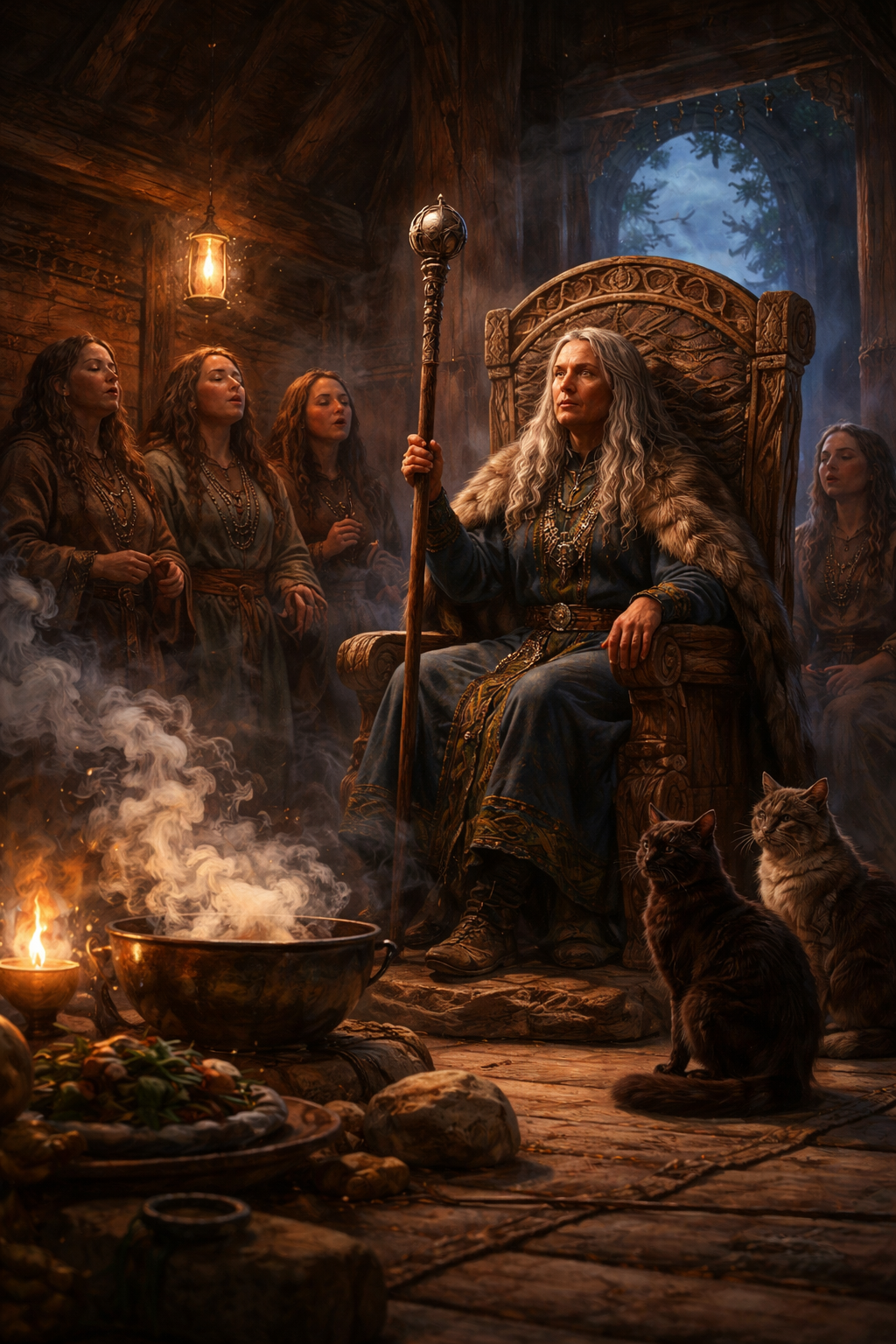
The völva was one of the most powerful and complex figures in the Norse world. Far from a simple “witch,” she was a respected seeress, ritual specialist, and keeper of ancestral knowledge. Appearing in the Eddas, sagas, and archaeological record, the völva practised seiðr, delivered prophecy, and offered counsel that could shape the fate of individuals, families, and even kings. This article explores who the völva truly was, what the historical sources tell us about her role, and how modern interpretations often misunderstand her place in Norse society.
Deeper seiðr does not open to hunger or haste. It waits for stability, restraint, and the quiet strength to stand without reaching. This chapter explores the threshold where readiness is tested and the ground must truly hold.
In seiðr, three voices speak within the practitioner: instinct from the bones, emotion from the heart, and vision from the deep eye of the craft. This chapter teaches how to hear them clearly, hold them in balance, and choose the thread that truly holds.
Speech in seiðr is not expression but consequence - every word a thread cast into the unseen. Silence sharpens the voice, and the voice shapes fate. In this chapter, we walk the edge where breath becomes power and utterance becomes destiny.
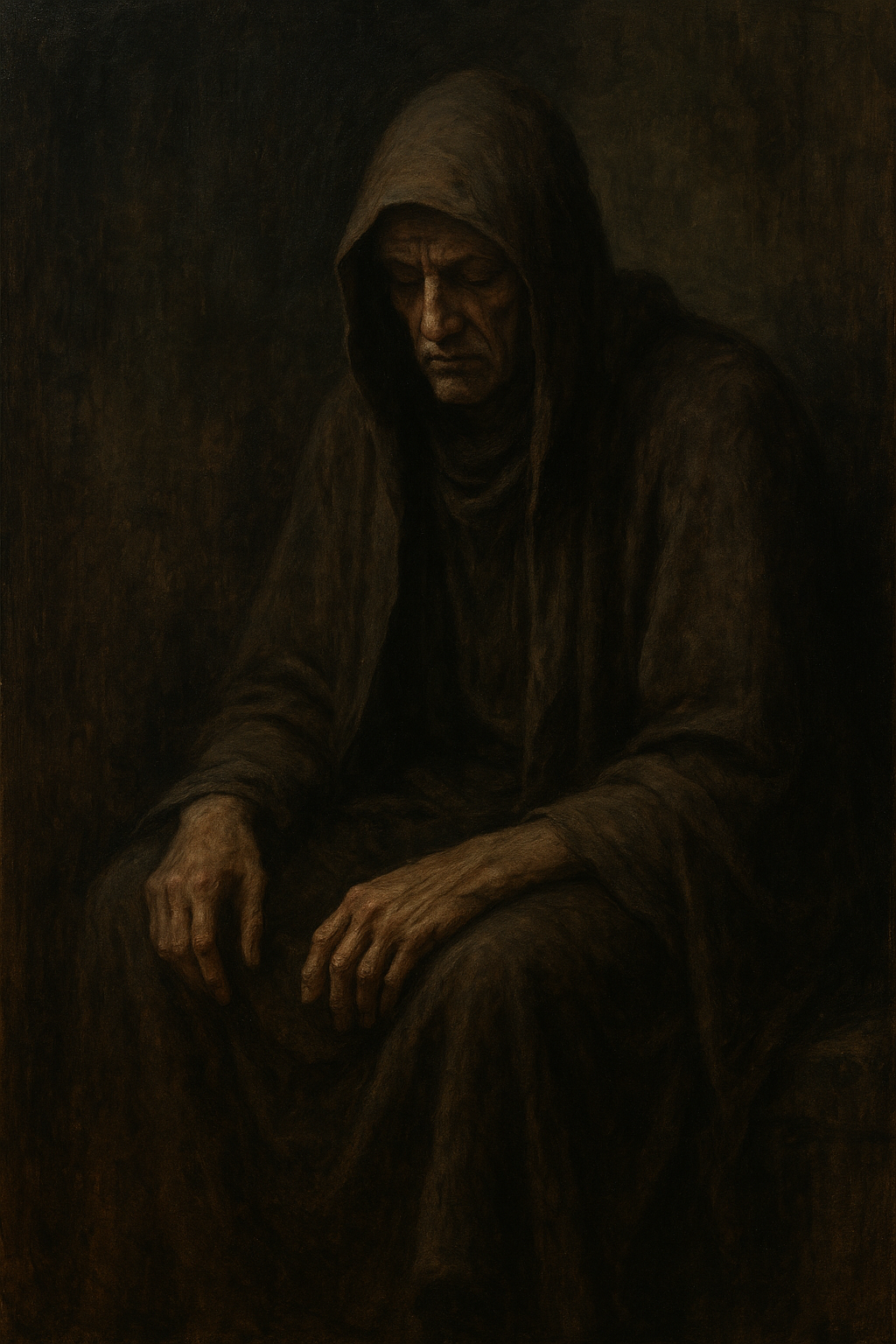
There comes a point in every practitioner’s journey when the spirits grow quiet - not in the way of deep, living silence, but in the way of distance. Their presence softens, their signs fade, and the pathways that once opened easily feel closed or unreachable. It is not abandonment, nor punishment. It is a recalibration, a necessary withdrawal that reveals the state of your craft far more honestly than praise or visions ever could.
In seiðr, the spirits step back for many reasons: because your grounding has slipped, your boundaries have blurred, your life has become misaligned, or simply because you are being asked to grow without the comfort of constant contact. Withdrawal is part of the relationship. It tests your steadiness, your patience, your discipline, and your sincerity.
This chapter explores those moments of distance - why they arise, how to recognize them, and how to walk through them without panic or projection. Silence does not mean you are lost. It means you are being reshaped.
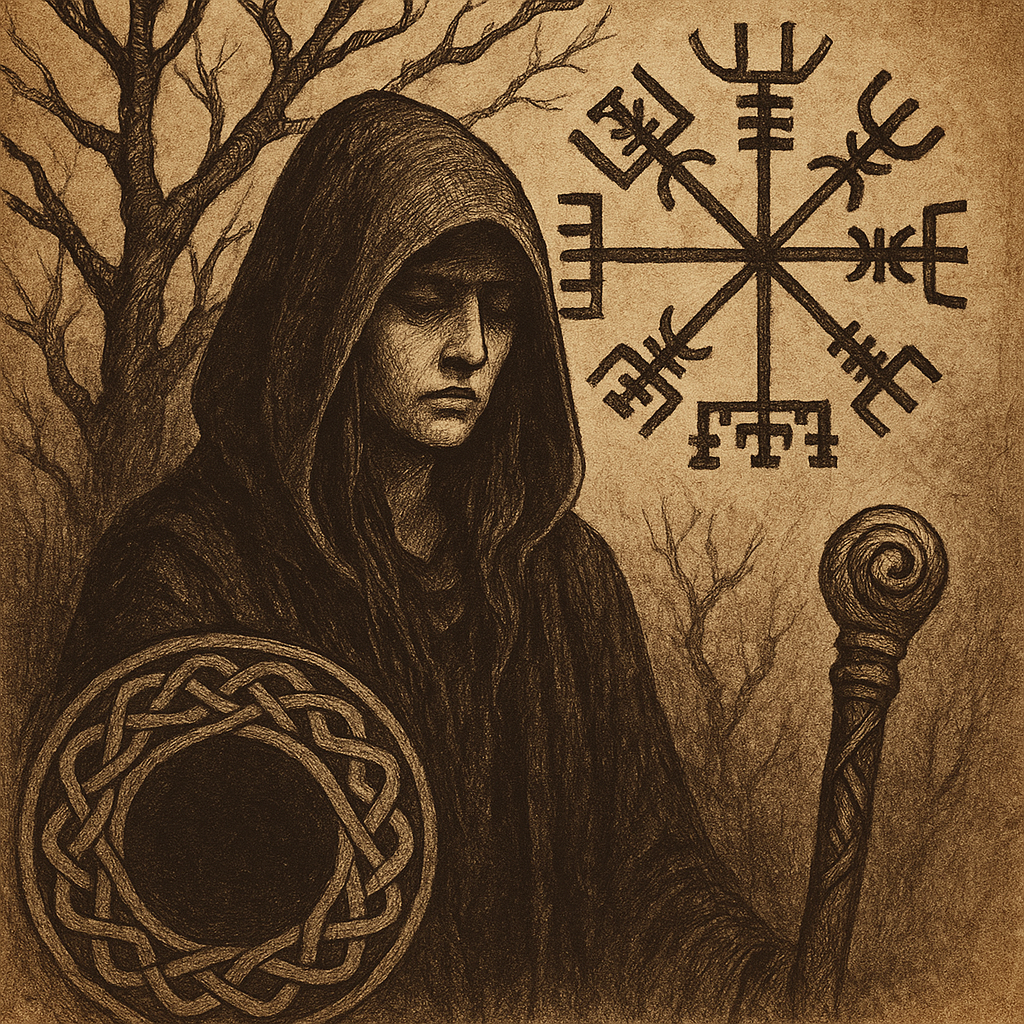
Silence is not emptiness - it is the deepest presence in seiðr. Long before visions form or voices rise, silence is the first threshold every practitioner must learn to cross. It reveals your fears, steadies your sight, and tests the strength of your grounding. In its weight and texture, the unseen world begins to listen back.
Chapter 10 explores silence as a realm, a teacher, and an initiation.
You’ll learn how to sit inside it without filling it, how to recognise the difference between silence and true absence, and how to read the subtle movements through which gods, ancestors, and land-wights actually speak.
This chapter is not about chasing messages - it is about preparing yourself to receive them. When you can stand inside silence without fear, your seiðr changes forever.

Trance is not the dramatic plunge many imagine. It is a subtle shift in the body, a softening of the senses, a loosening of the everyday self until the worlds draw close enough to touch. In Chapter 9 of Seiðr Craft, we explore the real texture of trance: the descent of the body, the breath that opens the threshold, the sharpening of inner sight and the quiet tests that reveal misalignment. This chapter shows how Samhildr weaves through every moment of trance, shaping what you perceive, how you interpret it and how you return home.
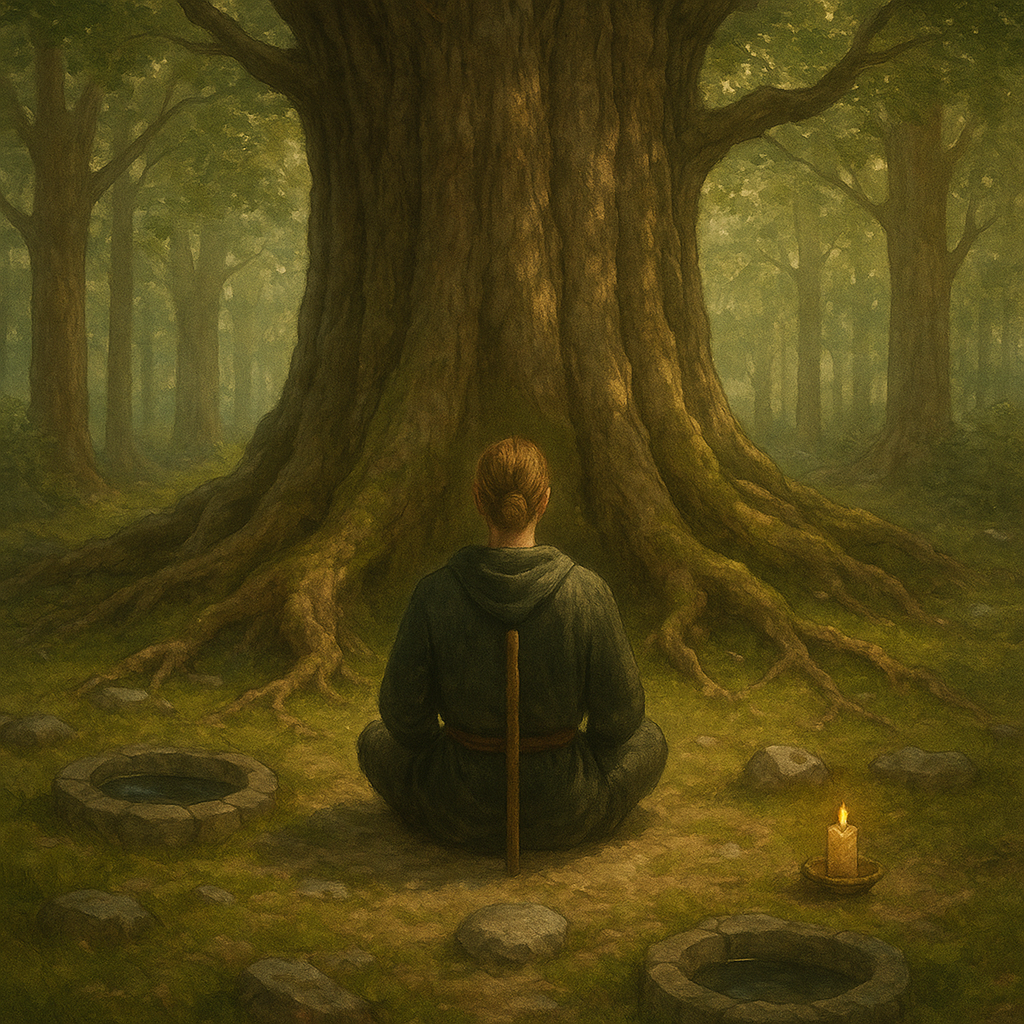
Standing grounding is the spine of seiðr. Before you call to the gods, ancestors, or landvættir, you must become properly placed: rooted, aligned, and fully present. This chapter explores the Norse foundations of grounding through the cosmology of Yggdrasil, shows how historical sources hint at this preparation, and gives you a complete step-by-step ritual to root, center, and steady yourself. When you stand well, the craft opens. When you don’t, everything wavers.
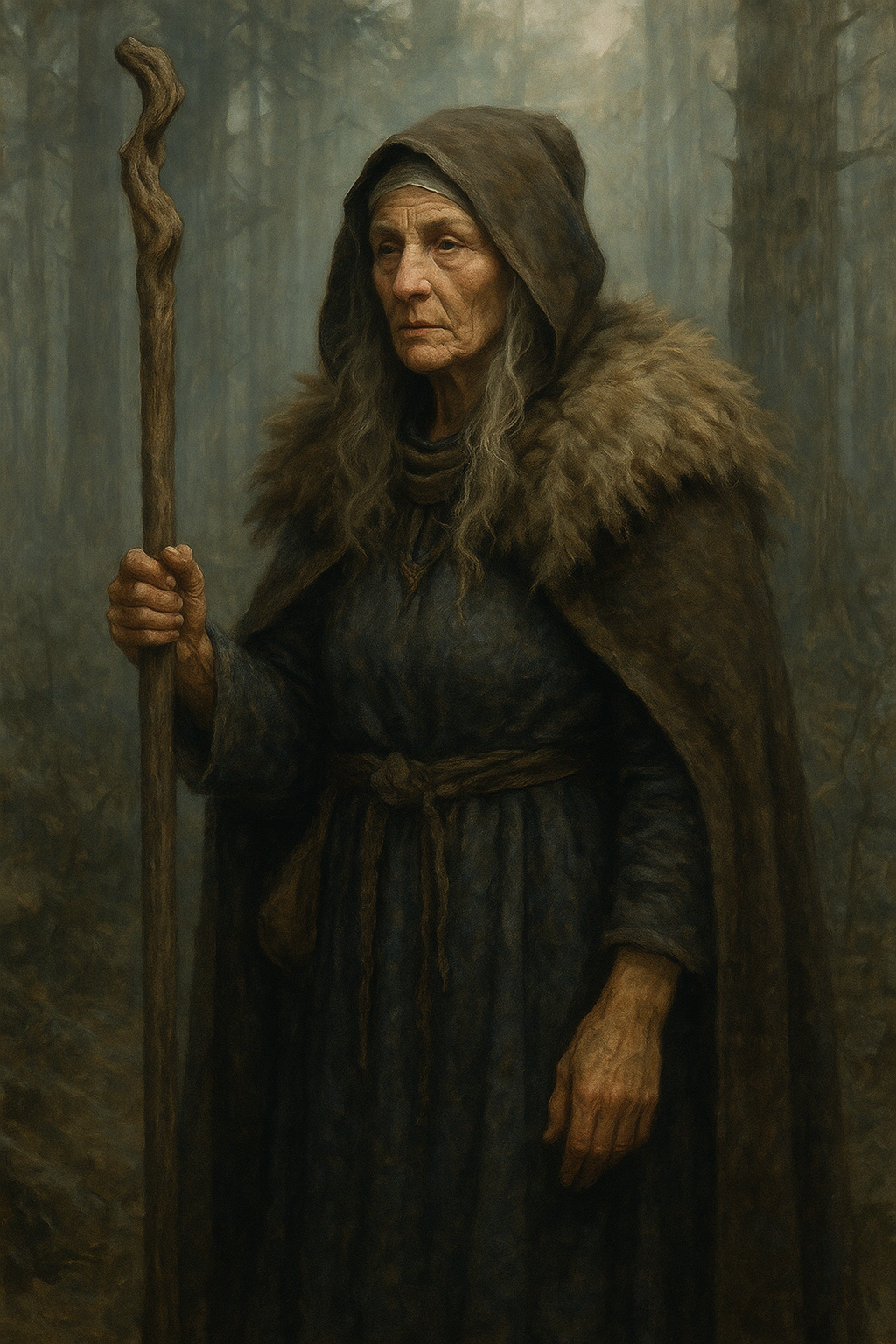
There is a quiet turning point in seiðr where the craft stops being a list of rules to remember and becomes a rhythm that moves through your body on its own. Before that point, the laws sit in the mind like lessons to recite. After it, they weave themselves together instinctively, shaping your breath, your timing and your presence without conscious effort. This shift from memorising to weaving is the essence of Samhildr - the moment the craft stops being something you perform and becomes something you inhabit.

Irresponsibility in seiðr is never harmless. Every working is an exchange, and every thread you pull demands a price. The careless speak of fate as if it is a game, but wyrd does not forget. Power without honour becomes poison. This chapter reveals why responsibility is the foundation of true seiðr - why consent, consequence, and disciplined aftercare are not moral niceties but essential laws of the craft. Those who ignore them pay in silence, sickness, or tangled fate. Those who uphold them walk with steady power. This is not a path for the reckless - it is a path of weight, truth and sacred accountability.

Truth in Seiðr is not gentle. It is the fire that strips illusion from sight, the torch that burns away deception until only clarity remains. To live in sannindi is to see as Odin saw — through pain and sacrifice — and to speak as the völva spoke, plainly and without flattery.
In this chapter, we walk the path of truth: how to recognise it, live it, and speak it even when it cuts deep. For without truth, Seiðr collapses into delusion. With it, the staff becomes a torch that lights the way between worlds.

In Seiðr, power without mörk - without boundary, soon turns to chaos.
Mörk is the art of standing firm between worlds: the law that guards the soul, the hearth that keeps the flame alive. Without it, the seer becomes porous, open to every spirit and storm. With it, the völva becomes a sanctuary of strength and clarity, walking the staff-road in safety.
This chapter explores the sacred craft of boundaries: how to shield, how to close, how to honour your own edges so that the voice of the gods can be heard clearly. For in Seiðr, as in life, it is not enough to open - one must also know how to close.

In seiðr, nothing is gained through haste. The old paths move at the pace of roots and rivers, not lightning. Þolinmæði (patience) is not quiet suffering, but sacred endurance: the willingness to keep returning to the work even when the gods are silent and the visions do not come.
Through Odin’s nine nights upon Yggdrasil, through Freyja’s long teaching of seiðr, the lore shows that power is not seized - it is cultivated through rhythm, repetition, and the slow shaping of the soul.
This lesson calls the practitioner to honour stillness, to embrace the silence between moments, and to learn that true mastery is not in commanding the unseen, but in remaining — steadfast as the tree, calm as the deep earth below it.

Discover the ancient Norse way to bless and protect your home through Frigg’s Hearth Ritual — a practice of peace, honour, and connection with the goddess Frigg, Queen of Asgard. Rooted in the old traditions of the North, this simple and mindful ceremony invites the warmth of the hearth, the strength of the ancestors, and the protection of the land spirits into your household. Learn how to prepare sacred offerings, invoke Frigg’s presence, and weave harmony and courage into the fabric of your daily life.

Seiðr Craft – Chapter 2: Virðing (Respect) explores the heart of Norse magic through the ancient principle of virðing — the deep respect that binds all things in the web of being. Before the chants, before the visions, comes honour: to gods, to land, to ancestors, and to oneself.
Through stories from the sagas, lessons of reverence, and modern practices, this chapter reveals how seiðr is more than ritual — it is relationship. It teaches that power without respect becomes chaos, and that every act of magic begins with humility. When we honour what sustains us, our craft grows clear, steady, and alive.
This is a guide to walking the path of the völva with integrity, rooted in frith, woven into wyrd.

Among the many mysteries of the Norse world, none burns more brightly — or more enigmatically — than seiðr. Ancient, fluid, and powerful, seiðr was the magic of the gods and the wise — a sacred art of weaving fate, calling spirits, and walking between worlds. Practised by goddesses like Freyja and Frigg, and mastered by Óðinn himself, seiðr was both honoured and feared - a craft that crossed the lines between gender, power, and the visible world.
To understand seiðr is to glimpse the spiritual heart of Norse belief: a world alive with spirits, woven with destiny, and bound by respect. It is not a lost art, but a living conversation — between will and wyrd, reverence and power, the seen and the unseen.

Seiðr-craft is not a pastime or performance. It is an ancient Northern art that bends the will, pierces the veil, and weaves into wyrd itself. Before trance, vision, or rune-song comes something quieter but far more essential: learning how to stand — to ground, to centre, to take your place within the web of fate.
In this opening chapter, I share the foundations of the craft of seiðr. We look at spiritual gifts and growth paths, the chaos cycles that repeat until their lessons are learned, and the importance of aligning your hugr (spirit-mind) and hamingja (fortune, spiritual strength) before you attempt deeper work.
Most importantly, I introduce the Five Laws of Seiðr: Virðing (Respect), Þolinmæði (Patience), Mörk (Boundaries), Sannindi (Truth), and Ábyrgð (Responsibility). These are not restrictions, but alignments. They are the frame of the high-seat and the grain of the staff — the laws that hold your practice steady and safe.
This is the beginning of the staff-road. Without these roots, no branch can hold.
Receiving is only the beginning. The deeper challenge is learning how to carry what remains afterwards. Chapter 27 of Seiðr Craft explores the weight of knowledge, the difference between receiving and possessing, knowing when to speak or remain silent, respecting the boundaries of others, and recognising when something was never yours to keep. Because the measure of a practitioner is not simply what they can receive - but how responsibly they carry it.