
Seiðr Craft - Chapter 9: The Texture of Trance
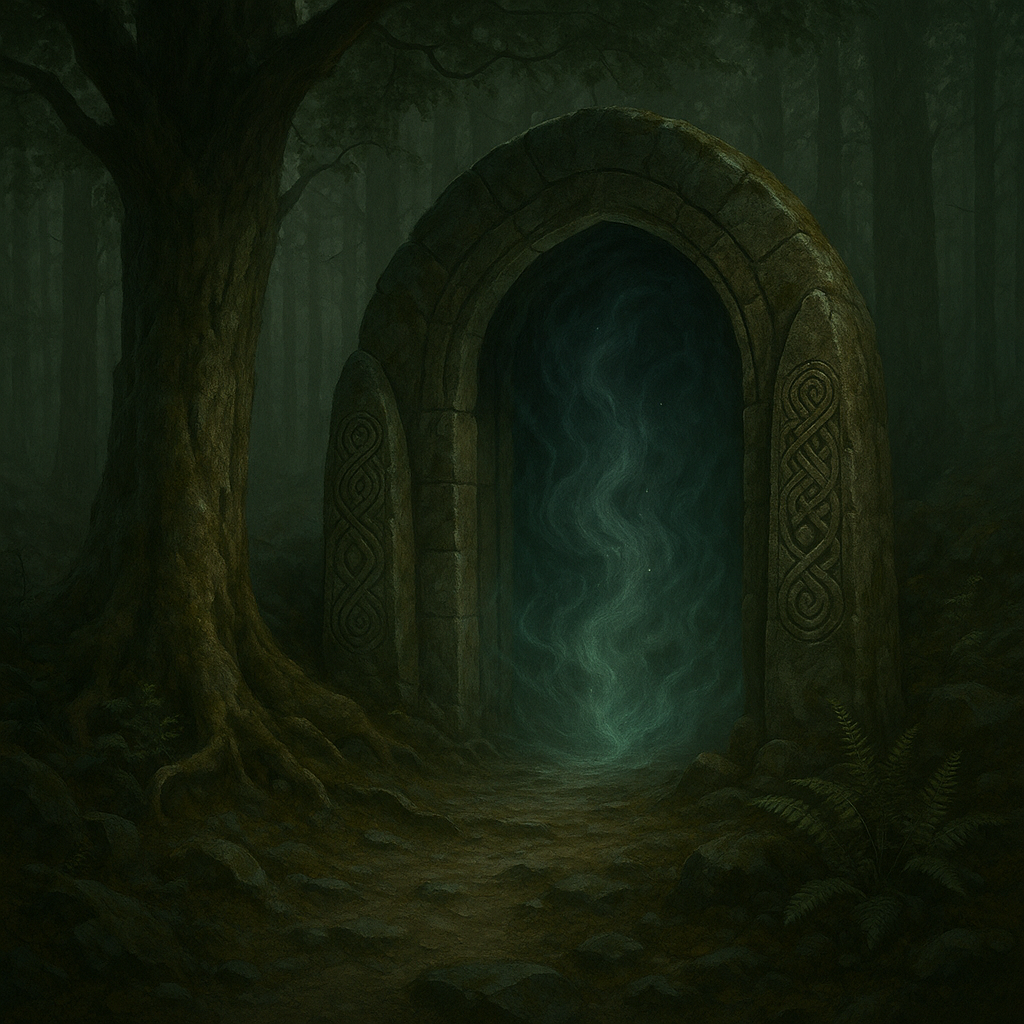
Trance is one of the most misunderstood aspects of seiðr. People imagine it as a plunge into darkness, a tearing of the veil, a dramatic collapse of ordinary consciousness. They picture eyes rolling back, voices shifting, visions pouring in like lightning, the worlds opening with a roar. And for some, in rare moments, trance can look like that. But those moments are exceptions, not the rule. The real texture of trance is quieter, softer, more intricate, more human. It is not a spectacle.. It is a shift.
Trance begins long before the visions arrive. It begins in the body, in the breath, in the subtle loosening of the mind’s grip on itself. It begins with the laws you’ve been shaping since the start of this path. Respect steadies the posture. Patience slows the breath. Boundaries outline the self. Truth clears the inner space. Responsibility anchors the intention. Return hums quietly at the edge of awareness. When these laws gather, trance does not need to be forced; it unfolds.
Most practitioners expect trance to be a doorway they kick open. But it is more like a door that softens under your hand. It yields because you are aligned, not because you push hard enough. Trance is a conversation, not a command. A meeting point between your inner stillness and the presence of the unseen. It is the place where your senses unhook from the world just enough to slip sideways, into a different texture of awareness.
This chapter is not about how to “get into trance” through tricks, breathwork or intensity. You already know how to breathe. You already know how to sit still. And you already know that seiðr is not a performance. This is about something deeper: learning to recognise the feel of trance as it rises, how it moves through your body, how it shapes your perception and how it reveals your state of alignment with the laws.
Trance has its own weather. Some days it settles over you like fog, gentle and subtle. Other days it arrives like a change in air pressure, sharp and undeniable. Sometimes it flickers at the edges of your awareness, inviting you but not insisting. Other times it holds you with such quiet certainty that you barely notice you’ve crossed the threshold until the vision has already begun. Knowing these textures prevents you from mistaking imagination for sight or strain for depth.
Trance also reveals the truth of your inner landscape. It amplifies whatever you carry. If your boundaries are weak, the trance becomes porous. If your truth is shaky, the visions twist. If impatience drives you, the trance becomes unstable. If respect falters, the worlds grow distant. Trance does not lie; it reflects. And what it reflects is your relationship with the laws.
This chapter will teach you to feel trance rather than chase it. To recognise its signals. To understand the difference between drifting and descending, between silence and emptiness, between presence and projection. It will show you how the laws behave once you’re inside trance, how they hold the edges of your awareness, how they prevent distortion and keep you from losing yourself in the fog of imagery or emotion.
Because trance is not an escape. It is a discipline. A refinement of attention. A listening that spans worlds.
When Samhildr settles within you, trance becomes less of a climb and more of a slide. Less about effort, more about surrender. Less about spectacle, more about precision. And in that precision, the unseen begins to trust you differently.
This is the texture of trance. The subtle, living fabric that makes seiðr possible. Let’s step into it..
What Trance Actually Is (and Isn’t)

Trance is one of the most romanticised, distorted and over complicated aspects of seiðr. People chase it like a mystical high, imagining it as a dramatic escape from ordinary consciousness - a sweeping plunge into other realms, a possessionlike state, a cinematic moment where the practitioner becomes something unrecognisable. But trance, in truth, is far more grounded. Far more subtle. Far more practical.
Trance is not a state of being “gone.”
It is a state of being shifted.
You do not leave yourself; you deepen yourself. You do not abandon awareness; you refine it. You do not black out; you narrow the lens of consciousness so that certain senses sharpen while others soften. Trance is not disappearance - it is reorientation.
The first misconception is that trance requires intensity. Some expect shaking bodies, altered voices, dramatic gestures. But intensity is not trance; it’s overwhelm. True trance feels like slipping into a different rhythm - quiet, steady, deliberate. The outer world doesn’t vanish; it simply becomes less important. The inner field becomes more vivid. Your attention sinks rather than rises. Your breath anchors rather than excites. Trance is a descent, not a flare.
Another misconception is that trance is always visionary. It is not. Vision is one expression of trance, not its essence. Some trances bring images, others bring sensation, others bring knowing, others bring subtle shifts in pressure or temperature or emotion. Trance is the state that allows communication, not the communication itself. Thinking trance must be visual is one of the quickest ways to force imagery and drift into fantasy.
Trance is also not the same as imagination. Imagination creates. Trance receives. Imagination pushes outward. Trance listens. Imagination answers its own questions. Trance waits for answers that come from beyond the self. This distinction is subtle but vital. In trance, you are not fabricating; you are perceiving. The difference is felt, not thought.
Trance is not an escape from reality. It is an expansion of it. A widening, a softening, a reaching into layers that are always present but rarely noticed. If you enter trance to avoid your problems, the trance will show you your problems more clearly. If you enter to feel powerful, the trance will reveal your insecurity. Trance is honest in a way the waking mind often isn’t. You cannot hide in it, not for long.
Trance is not chaotic.
It has structure, even if the structure is subtle.
The laws shape that structure. Boundaries hold the edges. Patience allows the descent. Respect sets the tone. Truth clears distortion. Responsibility stabilises the experience. Return ensures the work remains clean. Remove these and trance becomes a soup of emotion and projection. Keep them, and trance becomes a doorway you can enter and exit safely.
Most importantly, trance is not outside you.
It is not a magical state you hunt through ritual or intensity.
It is a natural capacity of the human mind - one you have used since childhood without naming.
The soft slip before sleep.
The deep focus while shaping something with your hands.
The moment you stare into the distance and the world fades just slightly.
The quiet awareness that rises when you’re walking alone and the land suddenly feels alive around you.
These are the edges of trance. The beginnings. The thresholds.
Seiðr does not invent trance; it trains it. It teaches you how to enter deliberately, deepen safely, listen clearly and return cleanly. Anyone can fall into trance accidentally. Not everyone can navigate it. The craft is in the navigation, not the descent.
Trance is not a spectacle or a display of spiritual achievement.
It is a skill.
A muscle.
A tool.
And once Samhildr takes root, trance becomes less mysterious. Not less sacred - but less dramatic. You recognise it as a shift in texture, a change in inner weather, a settling of awareness. You stop chasing it and start recognising it. You stop forcing it and start letting it unfold. The worlds become easier to approach because you are no longer trying to tear open the veil - you’re simply listening in the right direction.
Trance is not about becoming someone else.
It is about becoming more precisely yourself in a different layer of reality.
That is what it really is. And understanding that truth is what keeps the craft clean, steady and sane as you move deeper into the work.
The Body’s Descent
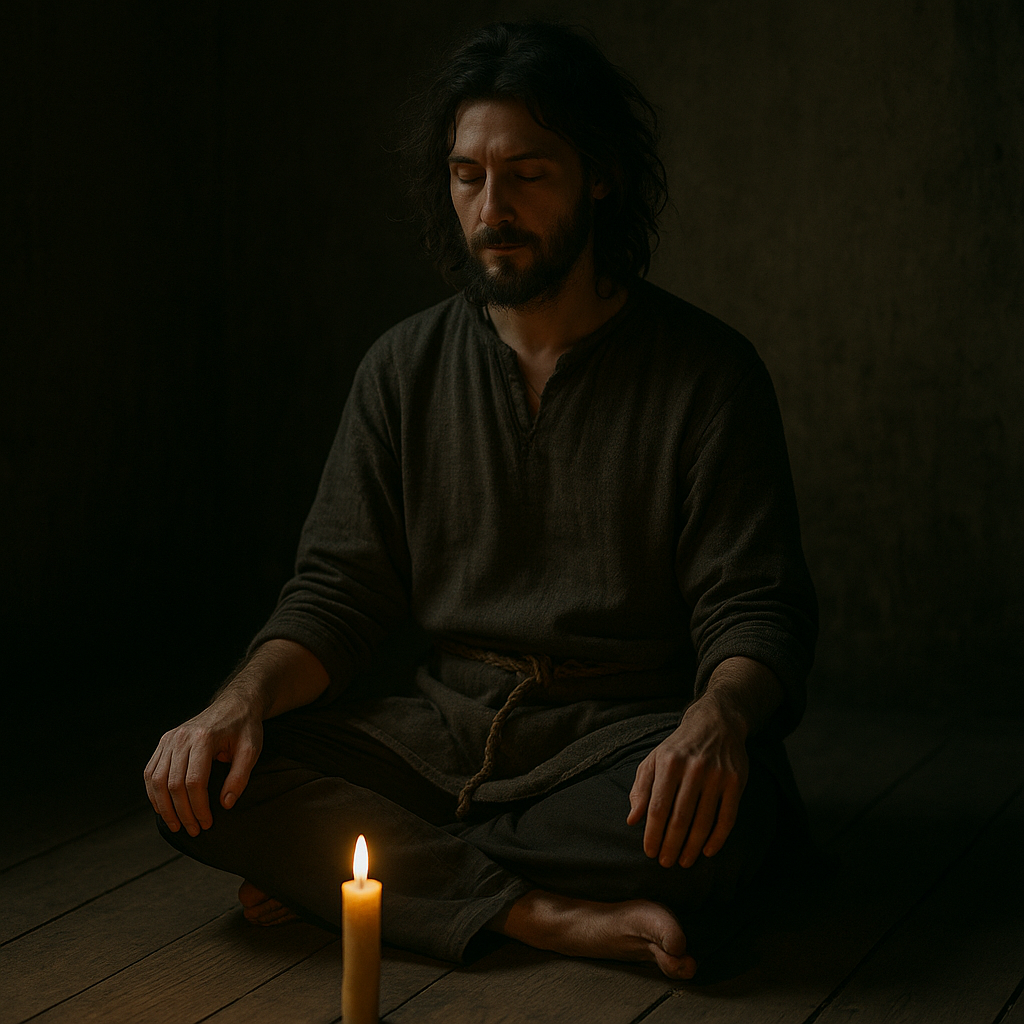
Before the mind can cross thresholds, the body must agree to follow. Trance is not an escape from the flesh, nor a lifting out of it; it is a sinking into it. A descent. A settling. A loosening of the surface tension that keeps you fixed to ordinary awareness. Most practitioners imagine trance as something that rises upward, expanding into light or vision. In truth, the first movement is downward.
The body must drop before the sight can rise.
The descent begins in the breath. Not some elaborate ritual pattern, but the natural slowing that comes when you give yourself permission to stop performing and simply be. The breath widens. The ribs soften. The exhales lengthen until they feel like they are falling down your spine. This is the first sign that the gates are unlocking. The nervous system shifts out of vigilance and the body remembers that it can rest without danger.
Then comes the weight. A subtle heaviness in the limbs, the kind that feels like you are sinking into the ground rather than sitting upon it. Some feel it in the thighs, some in the hands, some in the base of the spine. Wherever it lands, this weight is not fatigue; it is the beginning of surrender. Your body is telling you that it can hold you without your constant intervention.
As the body descends, the senses recalibrate. Sound grows both sharper and more distant. The eyes, whether open or closed, stop tracking the room. The skin becomes a field of awareness - not in the dramatic “tingling” way that people romanticise, but in a quiet widening. You feel more and less at the same time: more present inside yourself, less entangled with what is outside you.
This is where many novices panic, mistaking the descent for losing control. But descent is not collapse. It is alignment. When the body relaxes, the thread of awareness becomes more precise, not less. You are not falling away; you are falling inward.
The spine is the axis of the descent. A straightened spine is not about posture for its own sake; it is the channel through which both grounding and opening occur. When the spine softens into its natural alignment, trance deepens effortlessly. If it collapses or strains, trance becomes unstable. You will either drift into daydreaming or snap back into ordinary consciousness. This is why the old depictions of völva show them seated upright: not rigid, not stiff, but supported, rooted, ready.
Then comes the threshold sensation - the moment the body feels both undeniably present and slightly softened around the edges. As though you are sitting inside yourself rather than wearing yourself. This is the doorway. Your awareness sinks below its usual chatter, finding a quieter current beneath thought. Vision does not yet arrive, but the conditions for vision begin to form.
The key truth:
Trance is not produced by the body being forgotten. Trance is produced by the body being fully inhabited.
Without the body’s descent, the mind’s ascent becomes fantasy. Without the body’s steadiness, the spirit wavers. Without the body’s consent, the unseen has nothing stable to meet.
The deeper you walk this craft, the more you will understand that trance is not a flight but a rooting. The descent of the body is what anchors the work. It is what steadies the sight. It is what allows the spirits to approach without disrupting you - because you have already settled into yourself so completely that nothing they bring can unseat you.
Before every seiðr, the body falls first. The rest of you follows.
The Breath as Threshold

Breath is the oldest doorway into trance, older than staff, song or rune. Long before there were formal techniques or written instructions, there was the simple fact that breath changes the state of the body, and the state of the body shapes the state of the spirit. Breath is the hinge between worlds, the quiet mechanism that invites the descent without forcing it.
Most people breathe shallowly without ever noticing. The inhale catches high in the chest, the exhale is thin, the rhythm uneven. This kind of breathing keeps the mind restless and the body on alert. It is fine for ordinary life, but it will never take you into seiðr. Trance requires a different kind of breathing, one that signals to the nervous system that it can loosen its grip, widen its attention and step out of the narrow corridor of daily consciousness.
The threshold begins in the exhale. Many assume that trance is entered through deep inhalation, but it is the release that opens the gate. A long, slow exhale tells the body that it is safe to soften. It lowers the pulse, slows the mind and begins the shift into the liminal. This softening is what allows the inner senses to rise. It is not the only step, but it is the first one the body recognises.
As the breath deepens, it begins to create space. Not literal space, but perceptual space. Sounds seem softer. Colours dim. The edges of your awareness widen. This widening is not imagination; it is physiology. The breath coaxes the nervous system out of vigilance and into spaciousness. Seiðr happens in that spaciousness. The breath prepares the ground so the craft can take root.
The rhythm of the breath also determines the rhythm of the trance. Fast breath scatters. Slow breath steadies. Even breath anchors. The body follows the pattern you give it. If the breath is uneven, the trance will be uneven. If the breath is stable, the trance will be stable. This is why seiðworkers spend time learning their own breathing patterns. Breath is not decoration in seiðr. It is structure.
There is a moment, usually subtle, when the breath stops feeling like something you control and begins to feel like something that is happening through you. That moment is the threshold. When the breath takes on its own pace, its own depth, its own pull, you are no longer forcing descent. You are surrendering to it. The breath becomes the guide. It will lead you where posture, will and concentration cannot.
The breath also teaches you how to return. Just as the exhale opens the gate, the inhale helps bring you back. A steady inhale draws awareness upward, reawakens the edges of the body and calls the spirit back toward the surface. This is why breath work is not optional in seiðr. It is the beginning of the road in, and the first step on the road out.
When the laws of Samhildr are active within you, the breath responds to them. Patience slows it. Boundaries contain it. Truth clears it. Respect softens it. Responsibility steadies it. Return echoes through it. The breath becomes a reflection of your alignment. When you breathe cleanly, the trance opens cleanly.
Breath is not magic. It is mechanism. But mechanism, used with intention, becomes doorway. And for the seiðworker, that doorway is the simplest, oldest and most reliable path into the unseen.
The Softening of the Senses

One of the earliest shifts in trance is not vision or spirit presence, but the quiet rearrangement of your senses. The world does not vanish. It simply loosens its grip. The senses do not shut down; they soften. They step back from their usual vigilance and allow your awareness to widen beyond the physical.
This softening is not dramatic - no sudden silence, no immediate dimming, no cinematic blur. It is gentle, gradual, like lowering a lantern’s flame rather than extinguishing it.
Hearing is usually the first sense to change. Sound becomes layered. The loud noises recede, while subtle tones (airflow, heartbeat, distant rustling) seem to rise. It does not mean your hearing is sharpened. It means the filter shifts. The body is no longer scanning for danger, so it makes room for the quieter parts of the world to be noticed.
Then comes the shift in sight. Even with eyes closed, visual perception loosens. Colours feel less solid. The internal darkness becomes textured instead of flat. If your eyes are open, the edges of objects soften as if the world is stepping gently out of focus. You are not losing sight; you are easing away from the rigid clarity required for ordinary tasks. The softening allows inner sight to begin forming beneath the surface.
The skin changes next. Sensation becomes diffuse. Rather than feeling the world press against you (air, temperature, fabric) you begin to feel through the skin rather than on it. Some describe it as a widening, others as a gentle numbness, others as a boundary becoming more permeable. This is the body shifting from outward attention to inward awareness.
Even the sense of balance alters. You may feel slightly taller or slightly lower, as though the body is no longer fixed in a single shape. You may feel a light sway even while sitting still. This is not disorientation; it is the nervous system relaxing its constant micro-corrections. When those corrections quieten, the trance can deepen.
But the most important part of sense softening is the emotional tone behind it. In ordinary life, your senses are sharpened by expectation - the constant readiness to respond, react, interpret. In trance, those expectations ease. You stop listening for something, looking for something, bracing for something. You simply receive.
This shift from searching to receiving is what allows seiðr to happen.
If you try to force visions while your senses are still sharp, the mind will project rather than perceive. If you try to interpret sounds before your hearing softens, you will chase meaning rather than let it rise. If you cling to tight bodily awareness, trance will remain shallow.
Softening is surrender, not loss.
It creates the space where the unseen can brush close without being drowned out by the noise of the waking world. It allows messages to arise gently rather than being dragged into being. It prepares you to meet the worlds as a participant, not a controller.
The laws of Samhildr are woven into this softening.
Respect creates openness.
Patience slows the senses into quiet.
Boundaries keep the softening safe rather than porous.
Truth stops you from chasing illusions.
Responsibility ensures you remain anchored.
Return reminds you that every perception carries consequence.
When your senses soften, you are not leaving the world. You are preparing to listen to it in a different way.
Trance begins in this softening - the moment the physical loosens just enough for the inner senses to find breath.
Boundaries in Motion
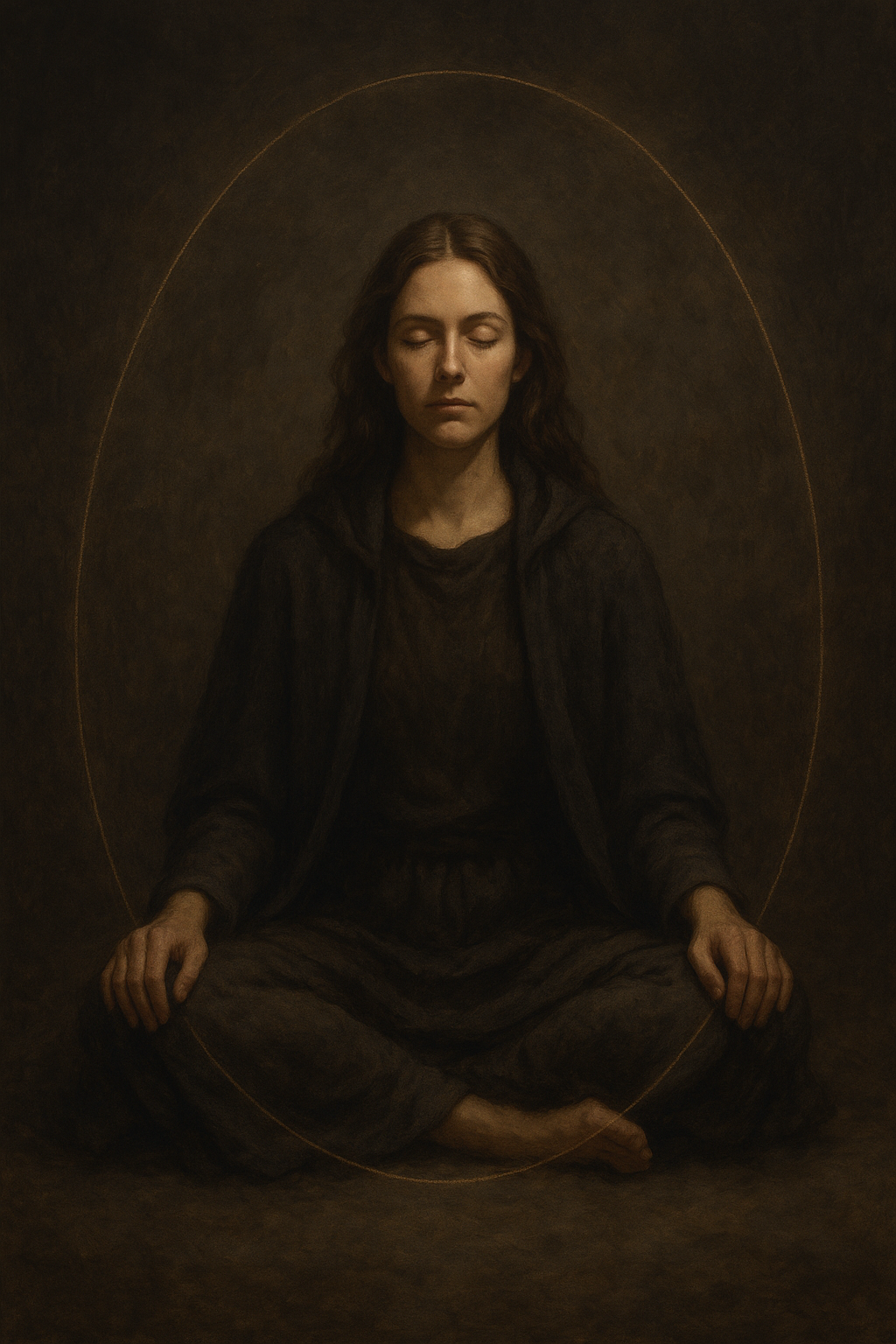
Most people imagine boundaries as fixed lines, like stones placed along the edge of a path. But in trance, boundaries are not static; they shift, tighten, widen and breathe in response to what you’re doing and what is touching your field. The boundary you hold in waking consciousness is not the same boundary you hold at the threshold, and it is certainly not the one that protects you once you cross fully into the altered state. In seiðr, boundaries are alive.
When trance begins to deepen, the first shift is internal. Your awareness draws inward, collecting itself like a tide pulling back from the shore. This is the moment your boundary begins its motion. The outer world blurs, not because you reject it, but because you are gathering yourself into a smaller, denser centre. You become less scattered, less porous. Your edges tighten with quiet intention.
As the senses soften and the breath deepens, the boundary changes again. It becomes more permeable - but selectively. This is the subtle skill many miss. A practitioner in trance is not open to everything; they are open in one direction. You allow certain currents to approach while holding others firmly out. It is directional permeability. You are not dissolving. You are choosing.
And the choosing is constant.
You may feel a pressure at the edge of your awareness - a presence, a whisper, an image forming from the dark behind your closed eyes. Your boundary responds before your mind does. It pulls tighter or relaxes slightly, offering a tiny yes or no. This movement is instinctual, and the more you trust it, the safer and clearer your trance becomes.
Boundaries also protect your return. As your consciousness reaches further from the body and nearer to the threshold, a thin strand remains rooted in your physical form. This is not a leash; it is a lifeline. When boundaries are well tended, that strand stays taut and luminous. When boundaries are weak, it frays, and returning becomes jarring, disorienting or exhausting.
In deep trance, the boundary shifts one more time. It expands outward, becoming a sphere rather than a skin. This sphere doesn’t separate you from the unseen; it creates a clean field in which the unseen can communicate without distortion. Think of it as a vessel - the cup into which experience pours. Without this container, the visions spill into emotion, imagination or confusion. With it, they take form.
The motion of boundaries in trance is not something you force. It is something you sense. Over time, you learn the unique language of your own edges:
the slight tightening that signals caution,
the soft opening that signals welcome,
the sudden contraction that signals danger,
the widening calm that signals presence.
Boundaries in motion are the heartbeat of safe trance. They let you lean into the unknown without losing the thread of yourself. They let you listen without being swallowed, see without being overwhelmed, and return without fragmentation.
This is why Samhildr must precede deep seiðr: only a practitioner whose boundaries are already aligned in waking life can move them fluidly in trance. When the laws are woven through your body and breath, your boundaries do not collapse when the worlds begin to speak. They shift with precision. They respond with clarity. They protect without rigidity.
In trance, your boundaries are not armour. They are the vessel that makes the work possible. They move with you, breathe with you, and keep you tethered to the self that must always return - the self who began the journey, and the self who will carry its meaning back into the waking world.
The Opening of Inner Sight

Inner sight does not arrive like a door flung open. It opens the way dawn does: gradually, subtly, in layers of perception that deepen rather than brighten. Many new practitioners expect the moment of sight to feel dramatic, like a veil lifting or a new world revealing itself in a sudden flash. In truth, inner sight is much quieter. It begins as a shift in the texture of attention, a softening of the inner noise, a widening of the space where perception can rise.
The first opening is sensory, but not in the way most people think. It is not about seeing something with the mind’s eye. It is about recognising the difference between imagination and reception. Imagination pushes; sight receives. Imagination is shaped by will; sight arrives unbidden. Imagination strains; sight flows. When inner sight begins to open, you feel a subtle change in the direction of perception, like a tide beginning to move toward you instead of away from you.
The second opening is emotional. Sight rises most cleanly when the emotional waters are calm. Not empty, not numb, but steady. Trance loosens the grip of the surface mind, and with that loosening comes a shift in the emotional tone of the moment. You may feel a wash of neutrality, a sense of spaciousness, or a soft, grounded clarity. This is not the message itself. This is the clearing of the channel where the message might land.
The third opening is somatic. The body speaks long before the vision does. You may notice temperature shifts, subtle tingles along the shoulders or spine, the sensation of weight or pressure in the chest, a pull behind the eyes, a slow spreading warmth in the hands. These are not the signs of sight. These are the signals that the channel is adjusting, aligning, and preparing to receive. Your job is not to react to them, but to follow them inward.
Then, slowly, the impressions begin. They may come as shapes, feelings, fragments, tones, colours, movements, sounds, or simply knowing. Most practitioners confuse the beginning of sight with the product of sight. The beginning is subtle: a sense of direction, a shift in attention, a faint pull toward the inner landscape. The mind may still speak softly, but you will feel a deeper current beneath it, something quieter and more stable than imagination.
Inner sight is not about seeing with the “mind’s eye” as though you are watching a film. It is about perceiving with the whole self. The heart, the breath, the bones, the instincts, the emotional body, the pattern-sensing mind. The more parts of you that listen, the clearer the message becomes.
The fourth opening is relational. Sight does not open into a void; it opens into presence. Not always a spirit or deity. Sometimes it is the presence of your own deeper self, your own silence, your own pattern of being. Other times it is the echo of the land you sit upon, or the memory of something older than language. As inner sight matures, you begin to recognise the difference between these presences, not by logic but by resonance.
The final opening is surrender. Not loss of control, but release of force. Sight cannot be dragged forward. It cannot be commanded. It comes when the body is receptive, the breath is steady, the boundaries are held, and the inner self is quiet enough to notice the subtleties moving through the dark. When sight arrives, it often feels like a soft click, a sense of shifting from one layer of awareness to another.
And even then, it may bring only a single thread. A sensation. A direction. A whisper. Inner sight rarely arrives fully formed. It assembles itself piece by piece, if you hold steady and refrain from filling the blanks with desire or assumption.
The opening of inner sight is not a single moment. It is a relationship. A dialogue. A gradual deepening of your ability to listen beneath your own thoughts, to feel beneath your own emotions, to sense beyond the surface. It grows with each trance, each breath, each act of patience, each moment of alignment.
To open inner sight is to learn to see from the inside out. Not with the eyes, but with the whole of your being.
The Still Point
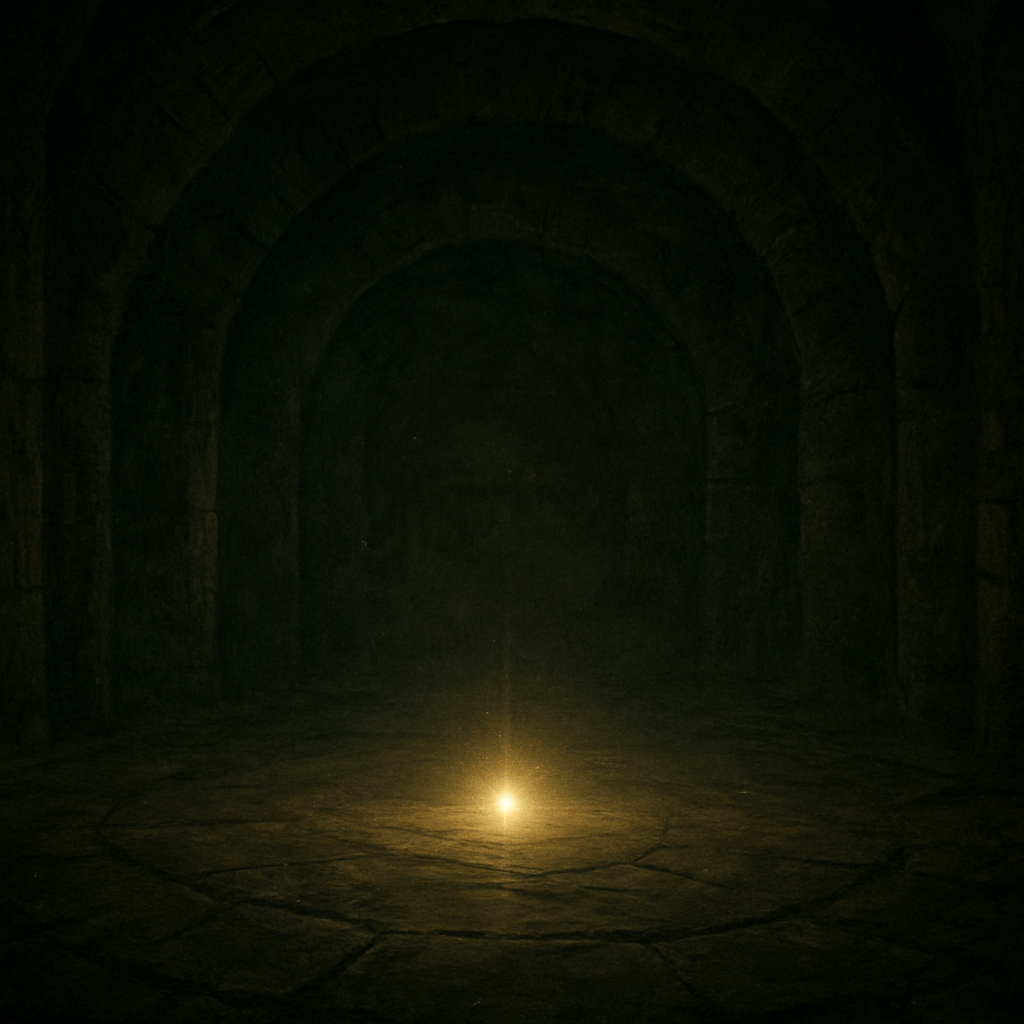
Every trance has a centre. A moment where the movement stops moving, the descent stops deepening, the senses stop shifting and something inside you becomes perfectly, impossibly still. This is the still point. Not the end of trance, not the height of it, but the quiet heart around which the rest of the experience turns.
You do not force the still point. You arrive at it the same way a stone arrives at the riverbed: by sinking.
The still point is not silence in the way most people imagine silence. It is not empty, blank or void. It is dense. Alive. Heavy with presence. It is the moment where your awareness holds itself without effort, like a lantern suspended in air. Nothing shakes it. Nothing pulls it. Nothing distracts it. You are not gripping focus; focus is simply there, like a second skin.
In the still point, your inner world stops behaving like imagination and starts behaving like environment. Images stop fluttering. Sounds stop muddling. Sensations stop flickering. Everything that is true stabilises, and everything that is false falls away. The craft becomes clean.
The still point is also where time loosens. The breath slows without you slowing it. Minutes pass without passing. You might sit in trance for fifteen minutes and emerge feeling you were gone for hours, or sit for an hour and feel it was five breaths long. This is the nervous system shifting into deep coherence. This is your mind stepping out of human pacing and into the rhythm of seiðr.
But the still point is not passivity. It is readiness.
It is the moment where:
• The body is fully rooted.
• The breath is steady but unselfconscious.
• The senses are open but not leaking.
• The boundaries are strong but permeable.
• The mind is quiet but awake.
You are not reaching outward. You are not pulling anything in. You are simply aligned, and in that alignment, the unseen knows it can approach without chaos.
This is the threshold where the world begins to listen.
Some practitioners mistake the rise of imagery for the still point. Others confuse emotional release with it, or the thrill of altered consciousness, or the heaviness of the body, or the drifting of thoughts. But the true still point has a signature: clarity.
It feels like a deep exhale you didn’t realise you were holding.
It feels like standing in a doorway that wasn’t there a moment before.
It feels like the entire inner landscape has paused not because you’ve stopped it, but because something is paying attention.
This is where real sight begins. Where real contact becomes possible. Where your craft steadies long enough for the thread between worlds to tighten and hold.
Some days the still point arrives quickly. Some days it refuses to come at all. That is not failure; it is weather. A practitioner aligned with Samhildr does not chase the still point. They prepare their vessel and allow the stillness to rise in its own time.
The more your daily life reflects the laws, the easier the still point becomes to reach. When your boundaries are respected, your patience embodied, your truth lived, your responsibility held and your respect rooted, the still point becomes a natural resting place rather than a rare visitation.
The still point is the centre of trance.
But more importantly, it is the centre of you.
When you learn to touch it, even outside of ritual, your entire craft shifts. Your speech softens. Your reactions slow. Your presence deepens. You begin to carry the still point with you like a hidden ember, always warm, always steady, always ready to be fanned into the full fire when the work calls.
The still point is not something you create.
It is something you uncover.
And it is always waiting.
When the Worlds Brush Close

When the worlds brush close, it never arrives like a door swinging wide or a horn sounding across the veil. It begins with the smallest shift in the room’s texture, a change so subtle the untrained mind would ignore it. But in trance, your senses are tuned differently. You notice the way the air thickens, how the silence gains weight, how your body feels ever so slightly less singular. The boundary between your inner landscape and the greater weave softens, not dissolves, and in that softening something ancient leans near.
This moment is not spectacle. It is resonance.
A presence touches without touching. A pressure gathers without force. A mood enters the space that is not yours, yet it does not intrude. It feels like standing at the edge of a vast forest at night, aware that something is watching from between the trees - not with threat, but with attention. The worlds do not approach casually. They come with intention, even when their intention is silence.
Your body knows before your mind does. A pulse steadies in your ribs. Your breath shifts of its own accord. The fine hairs along your arms lift, not from fear but from recognition. This is the craft’s quiet truth: contact begins in the body long before it becomes vision or sound. If you ignore the body, you miss the threshold entirely.
When the worlds brush close, your boundaries become luminous. You feel the edge of yourself with clarity, not defensiveness. You are aware of where you end and where the presence begins. The boundary is neither barrier nor invitation; it is a point of acknowledgement. Both sides recognise the other. Both pause. Both listen.
Sometimes what comes is a single note of feeling (sorrow, warmth, curiosity, warning) carried on a tide that does not belong to your own thoughts. Sometimes it is an image, faint as breath on glass. Sometimes it is nothing more than a deepening of the hush around you. Spirits do not always speak. The gods do not always reveal. The landwights do not always step forward. Contact is not always communication. Sometimes the brush is simply recognition, like passing someone familiar on a winding path and sharing a glance rather than a conversation.
The danger here is haste. The inexperienced practitioner lunges for meaning, imagines dialogue, forces clarity. But rushed interpretation damages the thread. In this moment, your task is to hold still, breathe slow and allow the presence to define the depth of the contact. You do not reach. You do not grasp. You do not assume. You let the worlds decide how near they wish to come.
If you are steady, the brush may thicken into guidance, or image, or a shift in the landscape of your inner sight. If you are not steady, the presence recedes. Not as punishment, but as protection - for you, and for the integrity of the craft.
When the worlds brush close, your task is simple: hold the boundary, soften the mind, and listen with the whole of your being. Not for messages. Not for omens. For truth. Presence speaks in truth long before it speaks in words.
This moment (the quiet, the pressure, the sense of being seen) is the heart of trance. Not the visions. Not the journeying. Not the spectacle. The brush between worlds is where relationship is born. Honour it, and the path deepens. Ignore it, and the worlds grow distant.
When the brush comes, let it be enough. Let it shape you. Let it teach you how to meet the unseen with steadiness, humility and the calm recognition that you are not alone in the great weave, nor ever have been.
Distortion and Drift

Distortion and drift are the quiet thieves of trance. They rarely arrive with obvious disruption. They slip in through small cracks: a moment of tiredness, a flicker of emotion, a lapse in breath, a boundary that wasn’t set quite firmly enough. You don’t fall out of trance in an instant. You drift (slowly, subtly, almost gracefully) until the work you’re doing is no longer seiðr, but the echo of your own mind posing as revelation.
Every practitioner faces this. Drift is not failure. It is a signal.
Distortion begins with the slightest shift in tone. A vision that started clean becomes oddly tinted. An image that felt steady begins pulling you toward something that feels more dramatic than true. Interpretation creeps in too early. Your desires begin colouring the edges. Your fears begin whispering beneath the symbols. None of this looks like chaos. It looks like clarity wearing the wrong face.
The body always knows first. Drift begins in the breath - a tightening, a shallowing, a sense of leaning forward instead of resting back. The spine curves. The muscles clench. The pulse picks up. You may not consciously notice it, but your inner posture has changed from receiving to reaching. And reaching is where distortion feeds.
Your inner sight becomes restless. Images flash too quickly. Sensations spike without reason. You find yourself chasing meaning rather than allowing it to unfold. The worlds feel farther away, yet your imagination feels louder. This is the surest sign: when imagination begins to shout and the unseen begins to grow quiet.
Emotional drift is the most dangerous. Anger, hope, longing, fear, pity - any of these can take the reins if the boundaries within you weaken even slightly. Emotion is not the enemy, but in trance it becomes a powerful dye. If it spills into the water, every vision becomes tinted. A simple image becomes a warning. A nudge becomes a prophecy. A presence becomes a threat or a comfort depending on your own inner weather. Distortion doesn’t happen because spirits deceive you. It happens because you have slipped out of alignment with yourself.
Mental drift is subtler. You start thinking about what you’re seeing. Analysing too soon. Organising the vision before it has finished arriving. You step one foot back into ordinary consciousness. The thread frays. The trance becomes shallow. You think you are still within the work, but really you are hovering awkwardly between worlds, neither fully in nor fully out.
Physical drift often follows. The body fidgets. The jaw tightens. The shoulders rise. You feel the urge to shift, open your eyes, or control the experience. This is the body saying: you have lost the centre point.
The most deceptive drift is spiritual overreach. When your desire to “get something” grows stronger than your willingness to listen, you begin pushing. You lean forward in spirit. You pry. You chase. And the worlds (wisely) step back. What fills the gap is not presence, but projection. Not truth, but noise.
When drift happens, the visions become glossy but hollow. The messages become elaborate but unanchored. Everything looks significant but feels thin. You may walk away thinking you received something profound, but the aftertaste tells the truth: you feel unsettled, fatigued, overextended, or strangely disconnected. Real trance leaves you grounded. Drift leaves you buzzing and brittle.
Correcting drift is simple, but it requires discipline:
Stop reaching. Return to breath. Return to spine. Return to the boundaries. Refuse the urge to force meaning. Step back into stillness until the presence of the worlds returns - or until the session ends cleanly without further insight. Ending a working early is not failure; it is integrity.
Distortion and drift are not punishments. They are reminders. They show you where your weaving is loose, where your emotions have too much influence, where your boundaries were softened, where your patience slipped. Drift teaches you humility. Distortion teaches you precision.
A practitioner who can recognise the earliest signs of drift becomes someone the craft can trust. Because they know when the work is true… and when it is simply their own reflection in a pool they have accidentally disturbed.
The Law of Return Inside Trance

Most people think of return only after the working is done, as if consequence waits politely outside the circle until you open your eyes again. But return is already moving inside trance. It shapes the path while you walk it. It colours the visions while you witness them. It responds to your inner state in real time, not as a delayed echo.
In seiðr, every breath you take inside trance is part of the offering. Every intention you hold (spoken or silent) is a thread already moving through wyrd. The Law of Return does not begin when you complete the rite; it begins the moment you enter the altered state. You are already in exchange, already in relationship, already in the flow of consequence.
Inside trance, your thoughts are not idle. They have weight. Not the same weight as actions in the waking world, but enough to nudge the pattern. Enough to shift the tone of what approaches you. Enough to alter what the unseen chooses to reveal.
This is why emotional steadiness matters. If you enter trance tangled, the return of that tangle begins immediately. Fear echoes back as distortion. Desire echoes back as illusion. Impatience echoes back as confusion. The unseen does not punish these states - it simply mirrors them more sharply. Return is a teacher, not a weapon.
The Law of Return also governs how presences approach you. Spirits, ancestors, landwights, even guidance from the Norns respond to the shape of your inner posture. If you are aligned, the contact is clean. If you are chaotic, the contact becomes filtered, warped or withdrawn. What you receive is shaped by what you bring.
In this way, trance is not only a state of reception - it is a state of influence.
Your breath influences the depth of the journey.
Your truth influences the clarity of the vision.
Your patience influences the pace of revelation.
Your boundaries influence which beings draw near.
Your responsibility influences the weight of what you are shown.
Your respect influences the manner in which the unseen responds.
Return is not a future event; it is the atmosphere of the entire practice.
There are moments in trance where you will feel the thread shift slightly, as if something inside the working has taken note of your choice. A thought held too sharply. A boundary softened too much. A desire slipped in unnoticed. These moments have texture — a small pull at the edge of awareness, a ripple in the stillness, a tightening or loosening of the space around you. That is return adjusting the weave.
If you ignore these shifts, the trance becomes muddled.
If you respond with steadiness, the thread corrects itself.
Return also governs what you carry back with you.
If you journey with clarity, you return grounded.
If you journey with desperation, you return drained.
If you journey with arrogance, you return scrambled.
If you journey with sincerity, you return with insight rather than residue.
Inside trance, return is not karmic. It is structural.
It is the physics of the unseen: every movement creates a counter movement, every opening invites a balancing, every offering shapes the flavour of what comes next.
This is why seasoned practitioners treat trance with such care.
Not fear - care.
Not caution - precision.
They know that what they receive is partly determined by the posture they bring. They know that return is not something to dread but something to respect. They know that the exchange begins long before the working reaches its height.
When you understand the Law of Return inside trance, you stop treating the experience as a quest for visions and start treating it as a dialogue - a living, breathing conversation between your inner world and the wider weave.
And you move through that conversation with the steadiness of someone who knows that every breath shapes the next.
Knowing When to Stop

One of the most overlooked skills in trance work is the ability to end. Not drift out accidentally, not collapse from fatigue, not claw your way back because something felt wrong, but stop - deliberately, cleanly, with awareness and authority.
Knowing when to stop is not weakness. It is one of the highest forms of discipline in seiðr.
Many practitioners push too far. They mistake endurance for depth, intensity for truth, pressure for potency. They believe that the longer they stay in trance, the stronger the working will be. But trance is not a tunnel you push through. It is a river. Stay too long, and it erodes your banks. Leave too late, and what you bring back is muddied, tangled or unfinished.
Stopping well begins with recognising the signs inside your own body. When the breath that once guided you starts to fragment. When your muscles tighten rather than soften. When your heartbeat grows sharp instead of steady. These are the body’s signals that the vessel is nearing its limit. Ignoring them is not bravery; it is recklessness. Your body is not working against you. It is protecting the channel you rely on.
There are mental signs too. A subtle fog replacing clarity. Images becoming repetitive rather than revelatory. Thoughts creeping in sideways, pulling your attention back toward yourself. The world of trance begins to feel stretched thin, as if you are walking along the edge of something that no longer supports your weight. These shifts are invitations to return.
Spirit signs are gentler still, but unmistakable when you learn to recognise them: presences withdrawing, pathways dimming, the atmosphere thinning. The unseen rarely slams doors. It simply steps back. When you feel that withdrawal, it is a cue to rise. Staying past that point does not grant more guidance; it only invites distortion.
Stopping at the right moment also means respecting the Law of Return. Every working has a cost, and that cost must be absorbed by someone — ideally, by a practitioner who is grounded, steady and capable of integrating what they’ve received. Leaving trance too late leaves you unprepared to handle the return that follows, and the consequences ripple out into your body, your emotions and your life.
A mature practitioner closes the working before their clarity breaks. They rise while the thread is still strong, rather than waiting for it to snap. They understand that depth is not measured by duration, but by coherence.
To stop well, you must:
• Recognise the shift between openness and strain
• Accept that the working has given what it will give
• Withdraw cleanly, without rushing but without lingering
• Ground fully, returning breath, posture and presence to the body
• Seal the edges, so nothing reaches for you while you are unprepared
• Reflect, so you understand why the end came when it did
A clean ending strengthens the next beginning. Each time you stop with awareness, you teach your spirit that trance is not a place you fall into or escape from, but a state you enter and leave with intent.
The practitioner who knows when to stop does not leave the worlds behind in a state of disarray. They close the door gently. They bow to the forces they’ve touched. They return to their body with respect.
Stopping is not closing the magic.
Stopping is honouring it.
Reclaiming the Body
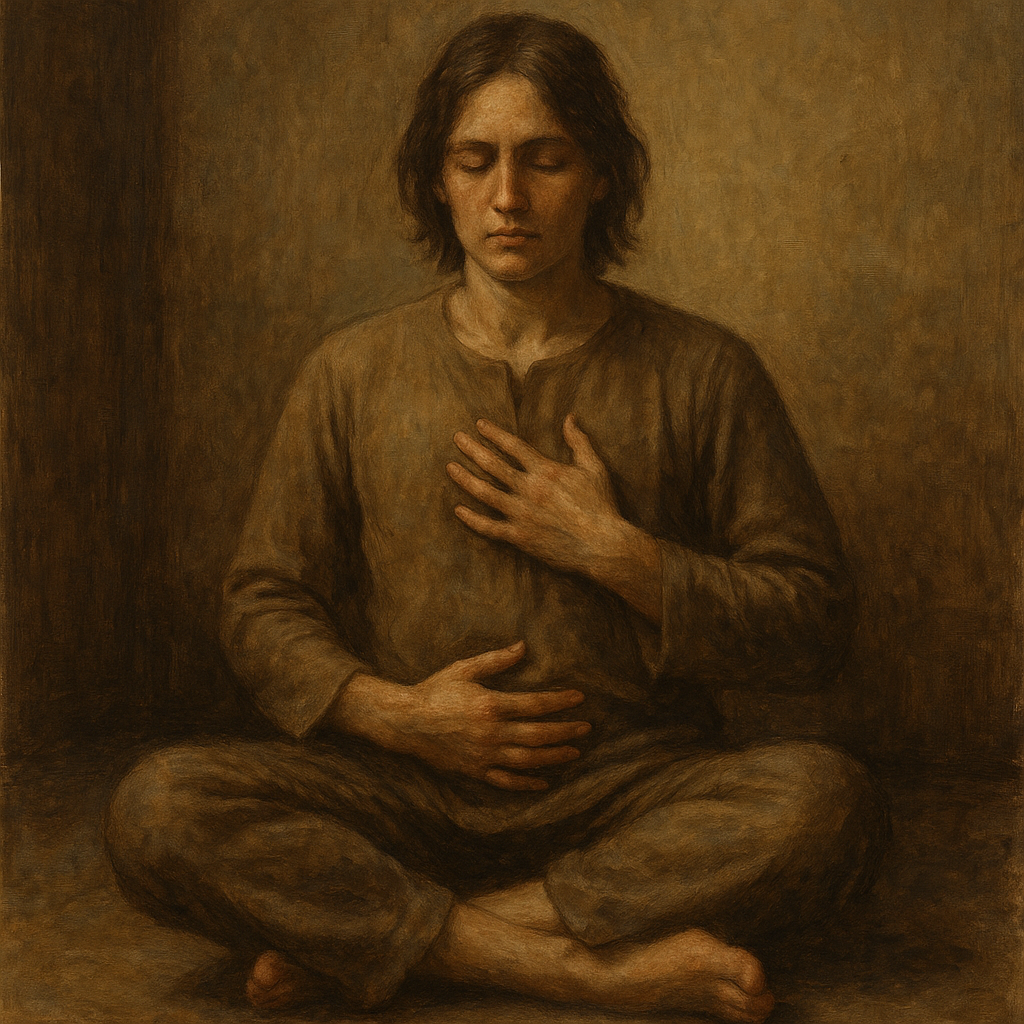
Coming out of trance is not a clean on/off switch. It is a return, a re-entry, a reconnection to the vessel that held the work. Many practitioners forget this part entirely. They assume that once the visions fade and the senses sharpen, the body simply “comes back online.” But trance bends the inner tides. It loosens certain anchors and tightens others. If you don’t consciously reclaim the body, part of you stays drifting. That drifting is what leads to headaches, emotional fog, irritability, exhaustion, or the strange feeling of being slightly behind yourself for the rest of the day.
Reclaiming the body is an act of responsibility. It is the moment you acknowledge that you were not “gone,” but you were shifted. And now, you are choosing to return fully.
Start with breath. Not deep breaths, not forced ones. Just honest ones. Let the inhale remind you that you are inside a body built for living, not only for crossing thresholds. Let the exhale signal that your sight is returning inward from wherever it wandered.
Then, feel weight. The weight of your hands. The weight of your legs. The weight of your spine. Trance lightens the body, sometimes dramatically. Reclaiming the body means inviting the weight back, welcoming gravity as a grounding ally instead of something pulling you down. Let the bones settle into their rightful heaviness.
Touch helps. Press your palms against the floor, the chair, your own thighs. You are reminding your senses: this is the boundary of me. This is where I end. This is where the world begins again. Boundaries need re-anchoring after deep work, and touch is one of the oldest and most reliable ways to do it.
Speak something simple aloud. Not poetry. Not ritual language. Just a sentence that belongs to the waking world: “I am here.” “The work is closed.” “This is my body.” Your voice helps stitch your awareness back into your form. Sound is a bridge, and you are using it deliberately.
Move gently. Wiggle fingers. Roll shoulders. Stretch your neck. These movements don’t “break” trance; they complete it. They escort your awareness back into the structure that supports it. Movement is what reinscribes the laws into the flesh after they’ve been working elsewhere.
If you can, eat something small or drink water. Taste is one of the strongest anchors to embodiment. A single sip can pull you fully back into yourself faster than any grounding visualization. It reminds the body that it is alive, not drifting halfway between the worlds.
Finally: acknowledge the vessel. Thank it. Trance is not mind-only work. Your body holds the shift, bears the strain, channels the rhythm. It deserves recognition, not neglect. When you treat the body as a partner rather than a background prop, your trance becomes safer, deeper and cleaner over time.
Reclaiming the body is the last step of every working. No matter how powerful the vision or how subtle the trance, the path always leads back to flesh. Seiðr may move through many realms, but it is lived through the body. Your vessel is the first tool, the last boundary and the place where all the laws land.
Return to it fully. Let it hold you again. That is the real closing of the work.
Aftertaste and Echo

Every trance leaves something behind. Not always a vision. Not always a message. Sometimes the most important part of the working is the residue it leaves in your body, the subtle shift in your senses, the quiet echo that hums through your awareness long after you’ve closed the rite. This is the aftertaste of trance, and learning to read it is one of the marks of a mature practitioner.
The aftertaste is the emotional flavour that lingers in you once the sight has dimmed. It may be clarity, heat, heaviness, steadiness, unease or relief. It is not the trance itself, but the imprint the experience pressed into your spirit. This imprint is information. It tells you whether the working was clean, whether your boundaries held, whether your truth remained intact, whether something pressed too close or whether you moved with alignment.
A clean trance settles like warm water. Your breath evens. Your thoughts slow. The body feels neither drained nor buzzing, just quietly grounded, as if you’ve stepped into a deeper layer of calm. The echo of a clean working is soft, sometimes even tender. It carries no urgency. It doesn’t demand action right this second; it simply invites reflection.
A muddied trance leaves a different taste. The jaw tightens. The breath sits high in the chest. The mind feels foggy or overstimulated. Your emotions may spike strangely, or the world may feel slightly “tilted”, as if you’re one or two degrees off centre. This is what happens when boundaries slipped or when something inside you wasn’t ready for what you tried to do. The echo of a muddied trance is not punishment; it’s a warning to slow down.
There are also trances that leave a whispering echo - not a message, not a vision, but a faint pull somewhere within your awareness. A thread you can feel but not follow yet. These are usually workings that opened something that has yet to unfold. The echo says: pay attention. Not now, but soon. Let the thread ripen before tugging at it.
And then there are the trances that leave nothing at all - no echo, no aftertaste, no lingering. These are often the clearest. The work happened, the thread was touched, and the pattern closed without residue. Silence is its own affirmation.
The echo is where your instincts speak. It’s the space after the working where Samhildr tests its strength in you. Do you rush to interpret? Do you panic when you feel nothing? Do you cling to the emotional high? Or do you give the working room to breathe?
A practitioner aligned with the laws sits with the aftertaste the same way they sit with a vision: gently, without chasing it. They feel the body. They notice the threads. They respect the silence. They let the echo settle into meaning naturally instead of forcing interpretation.
The aftertaste also teaches you how your body processes the unseen. Some practitioners feel echoes in the heart, others in the belly, others in the spine or limbs. Over time, this becomes a language - a way of knowing which threads touched you, which beings brushed close, which truths stirred inside you.
Echo is the final stage of the trance, but it is also the beginning of integration. How you treat it shapes what the working becomes. Honour the aftertaste. Sit with it. Let it tell you where you are aligned and where you must adjust.
Trance does not end when the vision fades. It ends when the echo quiets, when the body settles, when the thread returns you fully to yourself.
This is the last imprint of the worlds on your senses, and the first imprint of your choices upon the path ahead.
Interpreting Without Distortion
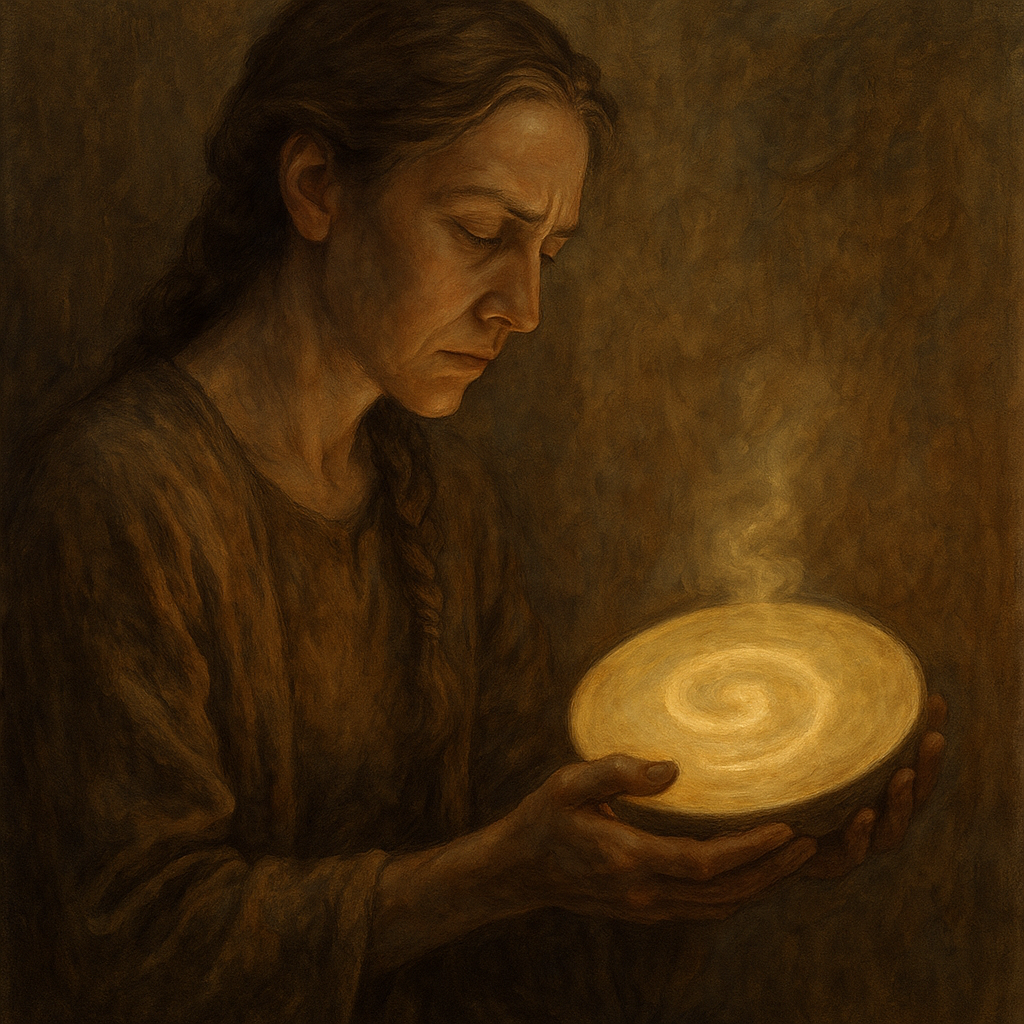
Interpretation is where many practitioners lose their footing. The trance itself is only half the work; the other half is making sense of what you were shown without twisting it through the filters of ego, fear, longing or assumption. Sight is vulnerable to distortion because it must pass through you — your wounds, your hopes, your imagination, your desires. Samhildr is what steadies that passage.
To interpret without distortion, you must first accept a difficult truth: not everything you see is meant to be understood immediately. Some visions arrive complete, like a clean sentence spoken into your ear. Others come like fragments, symbols, textures, gestures. Interpretation becomes distortion when you try to force clarity where clarity has not yet formed.
Start with what is certain. Not what you think it means. What you know you witnessed. Strip the vision back to its bones. What did you actually feel? What did you actually hear? What did you physically sense in the body? These are the anchors. Everything else is story, and stories are where distortions take root.
Do not reach for meaning too quickly. The mind hates ambiguity and will often rush to fill the silence with whatever answer feels emotionally convenient. If you hope for a message, you are more likely to imagine one. If you fear a truth, you are more likely to distort it. Hold the vision lightly. Let it breathe on its own terms.
Pay attention to the emotional tone of the trance. Emotion is not meaning, but it is orientation. A sharp fear may indicate a boundary issue, not a prophecy of danger. A wave of relief may signal release, not approval. Interpretation fails when emotion becomes content rather than context.
Ask yourself: What part of me benefits from this meaning?
If the answer centres your ego, your preferences, your desires or your avoidance, set the interpretation aside. Truth rarely flatters. True sight is often simpler than you want and harder than you expect.
Speak the interpretation aloud. The voice reveals what the mind conceals. If it feels unsteady on your tongue, if the words crumble or inflate as you say them, something is off. Interpretation should feel clean, grounded and real - not inflated, not dramatic, not hollow.
Consult the laws. Respect asks whether you are honouring what was given rather than shaping it to fit your narrative. Patience asks whether you are trying to interpret too quickly. Boundaries ask whether the vision even belongs to you. Truth asks whether you are being honest with yourself. Responsibility asks whether you are prepared for the consequences of your interpretation. Return reminds you that whatever meaning you claim will shape what comes back to you.
Interpretation is not about confidence; it is about clarity. A practitioner aligned with Samhildr is willing to say: I do not know yet. That is truth. That is integrity. That is protection against distortion.
Finally, remember that meaning often unfolds over time. Some visions arrive before you are ready to understand them. Others make sense only when life moves and the pattern reveals itself. Let meaning ripen. Let the echo settle. Let the world show you where the vision belongs.
Interpreting without distortion is not an act of brilliance. It is an act of restraint, humility and alignment. It is choosing clarity over certainty, truth over drama, steadiness over spectacle. And when you interpret this way, the unseen learns that your tongue can carry its messages cleanly - and it will trust you with more.
Trance as a Mirror of Samhildr

Trance does not create alignment; it reveals it. Whatever lives in you before the descent will surface during it. Whatever laws you uphold with sincerity will strengthen the trance. Whatever laws you neglect will twist it. In this way, trance becomes a mirror - one that reflects your inner state with far more honesty than ordinary life ever does.
When Samhildr is alive within you, trance feels coherent. The descent is smooth, the breath settles naturally, and the edges between worlds soften without tearing. Your body does not resist. Your emotions do not claw for attention. Your instincts rise cleanly, like water finding its level. This is because the laws are already woven into your fibres. Respect shapes your posture. Patience sets your rhythm. Boundaries form a steady container. Truth sharpens your sight. Responsibility roots your intention. Awareness of return keeps your touch gentle and precise. All of this happens before the vision even begins.
But when Samhildr is unsteady, trance reflects that too. The body fidgets. The breath shortens. The mind becomes loud even as the senses fade. Boundaries flicker, letting in too much or too little. Visions blur, twist or fragment. Your emotions flare or numb. You may feel pulled, stretched or muddied. Nothing is wrong with the trance - it is showing you, without hesitation, where your weaving has loosened.
Trance mirrors not only the laws themselves, but your relationship with them.
If your respect is thin, the space will feel brittle or unresponsive.
If your patience is shallow, the vision will appear forced or hollow.
If your boundaries waver, you will feel invaded or disoriented.
If your truth is clouded, the imagery will become symbolic noise rather than message.
If your responsibility is weak, the trance will feel scattered or chaotic.
If you resist return, the closing will feel incomplete, leaving you adrift.
This is not failure. This is information.
Trance becomes one of the most honest teachers you will ever have because it does not care about your intentions, your excuses, your self-image or your spiritual ambition. It responds to what is actually present within you. No mask can be worn there. No performance can hold. You descend into yourself as much as into the unseen, and the laws show themselves with ruthless clarity.
A practitioner rooted in Samhildr does not fear this mirror. They welcome it. They enter trance knowing that whatever rises (clarity, confusion, beauty, difficulty, silence) is part of the truth they need to see. They treat the experience not as entertainment, but as reflection. They ask, after every working: What did the trance show me about myself? Not about the spirits. Not about omens. About themselves.
And with time, trance becomes not only a mirror but a compass. It guides your internal growth. It points to the laws that need tending. It reveals where your roots are deep and where they have grown thin. It teaches you how aligned you are long before the consequences show themselves in waking life.
This is the hidden gift of Samhildr: when the laws are woven within you, trance stops being a place of confusion and becomes a place of clarity. When the laws are neglected, trance shows the cost immediately, allowing you to correct your course before misalignment becomes a pattern.
In the end, trance is not an escape from yourself. It is a returning to yourself. A deeper self. A truer self. A self woven through the laws. A self held in the rhythm of Samhildr.
The worlds do not reveal more to you because you are talented. They reveal more because you are aligned. And trance will always show you exactly where you stand.