
What Is Jól (yule)? A Beginner’s Guide to Norse Midwinter
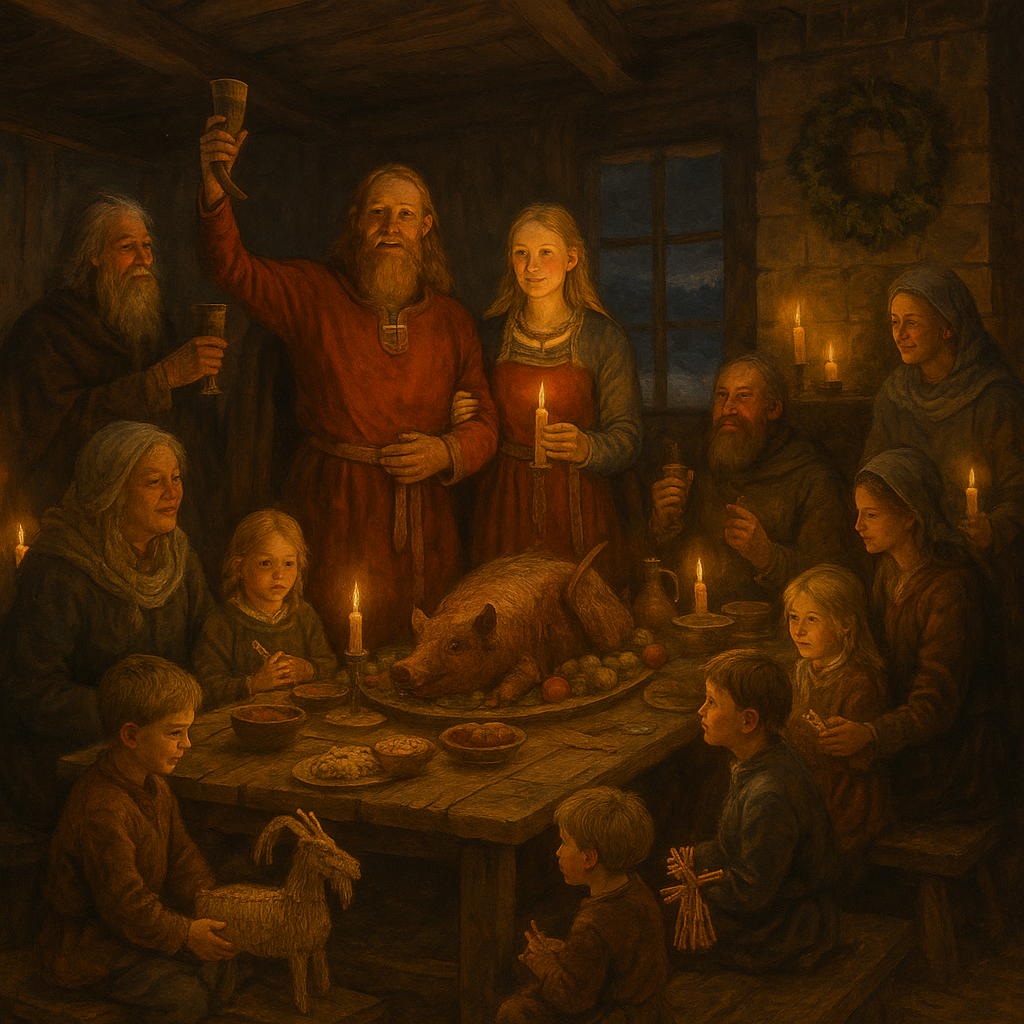
Long before electric lights pushed back the winter darkness and modern calendars filled December with familiar holidays, the peoples of ancient Scandinavia gathered around their hearths to honour one of the most important turning points of the year: Jól, the Norse Midwinter. For them, this wasn’t simply a festive season.. it was a sacred threshold, a moment when the world felt thinner, the spirits more active and the fortunes of the coming year seemed to rest upon how the season was observed.
As the sun sank lower with each passing day and long nights settled over the land, the Norse understood winter as both a challenge and a reminder of nature’s power. Jól (also known as yule) grew out of this relationship: a celebration of survival, a welcome to the returning light and a time to strengthen ties with family, ancestors, gods and the unseen beings believed to share their homes and fields. It was a season of stories, omens, feasting and ritual, all intended to invite protection, luck, and renewal.
Today, many people are rediscovering Jól - not to perfectly recreate the past, but to reconnect with the natural rhythms and communal spirit that shaped it. Yet the customs, symbolism, and timing of Norse Midwinter can seem tangled, especially as later Scandinavian folklore and Christian traditions layered themselves over older practices.
This guide aims to untangle that web. Whether you’re exploring Norse paganism for the first time, looking for historically grounded ways to celebrate with your family, or simply curious about the true origins of “Yule”, this beginner friendly introduction will take you through the heart of Norse Midwinter - its meaning, its deities, its customs and the way it unfolded across the Twelve Nights of Jól.
Let’s step back into the firelight and see how the Norse welcomed the rebirth of the sun..
What Does ‘Jól’ Mean?
The word Jól is one of the oldest and most evocative terms in the Norse world.. ancient enough that even medieval writers seemed to accept it as something inherited rather than explained. Unlike many seasonal words that have clear agricultural origins such as “harvest” or “spring,” Jól stands in a category of its own. It is a word shaped by the deep winter landscapes of Northern Europe: cold, dark, communal, mystical and profoundly tied to the rhythm of survival. By the time Norse scribes began recording traditions in the sagas and Eddas, Jól was already centuries old and carried layers of meaning that stretched far back into the Germanic past.
The earliest linguistic traces of the word show that Jól was never exclusive to the Norse. Its close relatives appear in Old English as Geola and in Old High German as Jôl or Jūl, confirming that this midwinter festival was known across much of the Germanic world. These shared roots suggest that the term may date to the Proto-Germanic period, long before the ‘Viking Age’ and possibly as early as the first centuries AD. Even the Romans, when commenting on northern tribes, hinted at large winter feasts, though they did not record the name. What this tells us is that Jól was already an established, pan Germanic winter celebration before Scandinavia developed the distinct Norse cultural identity we recognise today.
In Old Norse, Jól referred not to a single event but to an entire season of midwinter observance. It marked a cluster of feasts, gatherings, offerings and rituals held when the days were shortest and the sun’s return was both hoped for and spiritually celebrated. It was a time when travel slowed, work paused and communities came together around fire and hearth. The sagas speak of people “sitting Jól” (sitja jól), meaning that the festival was something experienced over several days - “keeping” it rather than simply attending it.
One of the clearest signs of Jól’s importance is the way it appears in relation to the gods. Odin himself bears the epithet Jólnir, meaning “the Yule One,” and sometimes “He Who Brings Yule.” This title places him at the heart of the festival’s mythic character, tying him to winter wandering, wisdom, hidden knowledge and the eerie procession of spirits known as the Wild Hunt. That such a powerful deity should be associated with the festival indicates that Jól was not simply a secular winter celebration but a spiritually charged period with cosmic significance. Other gods, particularly Freyr, associated with peace, prosperity and the returning sun, were also central to Jól rites.
The historical meaning of the word itself is less clear. Scholars have proposed a number of theories across the past two centuries. Some argue that Jól may come from an old word relating to feasting or “celebratory drinking,” linking it to the ritual toasts (minni) made to gods and ancestors during midwinter. Others believe the term may have originally referred to a cycle or wheel, symbolising the turning of the year at the solstice and the rebirth of light - a theory supported by the appearance of sun wheel motifs in Scandinavian folklore. Another possibility is that the word is connected to ancestral practices, as midwinter was the time when the dead were thought to draw closest to the living. None of these theories has been universally accepted and it is entirely possible that Jól once carried several overlapping meanings that have long since faded.
The written records give us glimpses, though never a full definition. In the Icelandic sagas, Jól is mentioned matter of factly, as if requiring no explanation. The Heimskringla for instance, notes that King Hákon the Good attempted to shift Jól to align with Christian Christmas, a detail that reveals both the festival’s established timing and its deep emotional importance to the people. Snorri Sturluson also refers to “drinking Jól” emphasising the combination of communal feasting, ritual toasting and sacred obligations. The very fact that Christian kings sought to move, replace or redefine Jól shows just how culturally powerful the festival (and the word itself) had become.
From this ancient root comes the modern English word “Yule,” carried over from early Germanic languages into Anglo-Saxon England and preserved through medieval usage. Over time, as Christianity spread, the celebration of Jól slowly fused with Christmas traditions across northern Europe. Yet the word endured, surviving linguistic upheaval, religious transition and cultural change.
When Was Jól Celebrated?
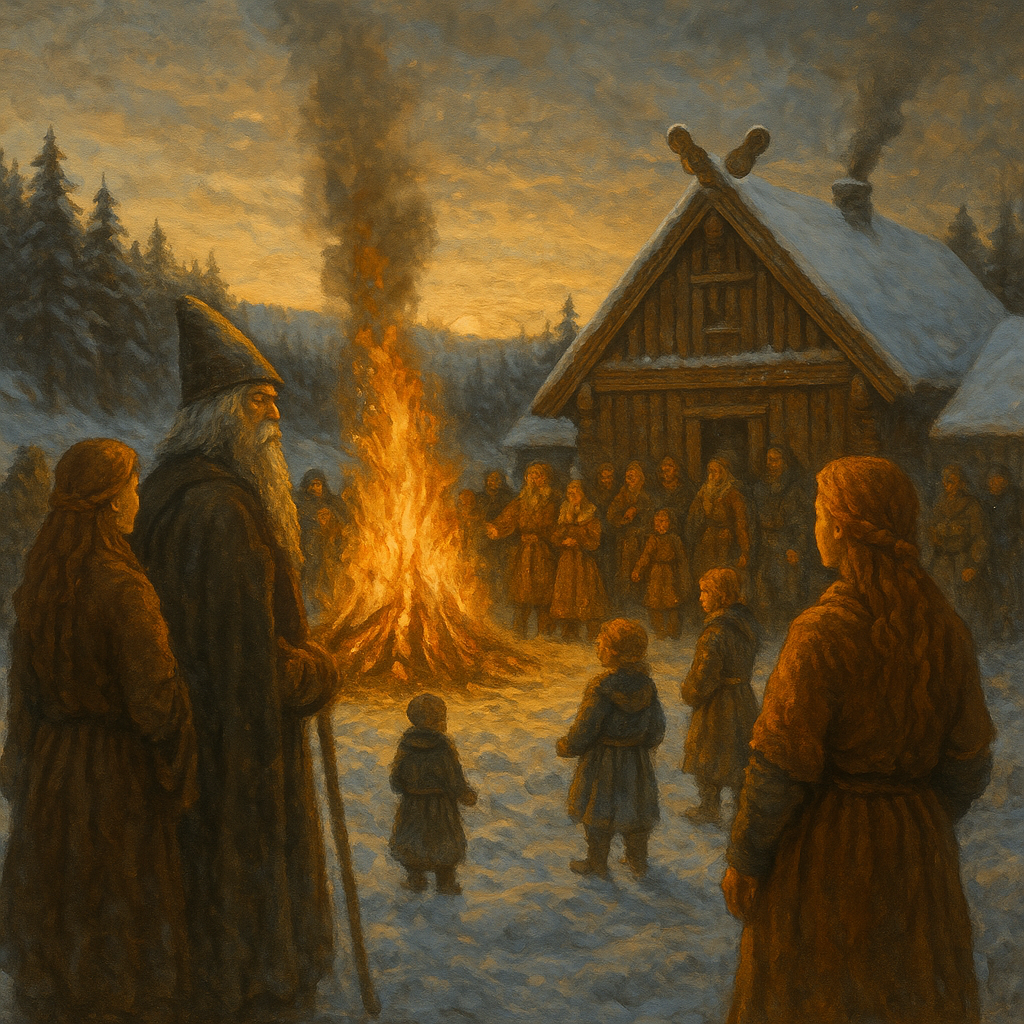
Pinning down the exact timing of Jól is surprisingly challenging, because the festival belongs to a period before fixed calendars and Christian dating systems took hold in Scandinavia. Rather than being attached to a single immovable date, Jól was a seasonal midwinter celebration, timed according to natural cycles, lunar phases and long standing cultural tradition. What we do know, from both medieval sources and later scholarship, is that Jól was tightly bound to the heart of winter - the moment when daylight reached its lowest point and the turning of the year truly began.
One of the strongest clues comes from the Heimskringla, where Snorri Sturluson describes King Hákon the Good’s attempt to shift the old Jól celebration so it would align with Christmas. This tells us two things: first, that Jól originally had its own timing and second, that the festival was deeply enough rooted that changing its date was considered a matter of political and religious importance. According to Snorri, the pre Christian Jól was held “mid winter” (miðsvetr) rather than on a specific date such as 25 December, which was introduced later with Christianity.
For the Norse, midwinter did not necessarily mean the exact winter solstice though the two were related. In some communities, midwinter was calculated as the halfway point of the winter season, which in their calendar might place it about twelve weeks after the first winter month - potentially falling in the first days of January by modern reckoning. In other regions, particularly where older Germanic customs persisted, Jól may have begun at the solstice or very close to it aligning the festival with the symbolic rebirth of the sun.
Another layer of complexity comes from the fact that much of Scandinavia originally used a lunisolar calendar, where months were counted by the moon but aligned loosely with the solar year through occasional adjustments. Some evidence (supported by linguistic and comparative traditions) suggests that in certain areas of pre Christian Scandinavia, the start of Jól could occur on the first full moon after the winter solstice. If this was the case the festival would naturally shift slightly from year to year, as lunar phases rarely match the same dates twice.
What is consistently clear across sources is that Jól was not a one night observance but a multi day festival, often described as lasting three nights, twelve nights or even longer depending on regional practice. The idea of the “Twelve Nights” is particularly resonant, appearing strongly in both Scandinavian and wider Germanic tradition. These nights marked a period - a stretch of time considered spiritually potent, when the boundaries between the human world and the spirit world were believed to thin. Whether counted from the solstice or from mid winter proper, these nights formed the core of the celebration.
Later Christianised traditions preserved echoes of this long observance, which is why “the twelve days of Christmas” still exist in parts of northern Europe. Though the religious context changed the older structure (the idea of a sacred winter period lasting more than a single day) remained remarkably persistent.
Historical Jól vs Modern
The celebration of Jól in the ‘Viking Age’ was very different from the modern Yule commonly observed today. Historical Jól was a lunar timed, three night event focused on sacrifice, community feasting, sacred toasts and the renewal of peace. It belonged to a world shaped by longhouses, agricultural cycles, and the expectations of honour and reciprocity that governed Norse society.
Modern Yule, on the other hand, is a blend of revived themes, reconstructed symbolism, folklore from later centuries and entirely modern spiritual practice. Over the last hundred years, practitioners have created new traditions that echo the atmosphere of the old feast but do not claim direct continuity. Ideas such as the Twelve Nights of Yule, Mother’s Night as an opening rite, ancestor focused nights, divination nights, or themed “days” of the cycle are creative additions rather than preserved Norse customs.
Understanding the difference between the attested historical festival and modern reinterpretation allows practitioners to celebrate Yule with honesty and intention. It honours both the ancient feast and the living tradition that continues to evolve today.
Below is a clear distinction between what we know the Norse historically practiced and what belongs to later tradition or modern innovation.
Historically Attested Norse Jól (‘Viking Age’ and Earlier) -
These practices are supported by saga material, archaeology, early medieval sources, or strong scholarly consensus:
Lunar timing of Jól: The feast occurred on the first full moon after the winter solstice.
Three-night festival: Jól’s Eve, Jól Night (Jólablót), and the Second Night of Jól.
Boar-oath rite (sónargöltr): Oath swearing on the sacred boar on Jól’s Eve.
Animal sacrifice (blót): Typically cattle, pigs, or horses; blood sprinkling (hlaut).
Communal feasting: Eating sacrificial meat, especially the Yule boar.
Ritual drinking (minni-toasts): Toasts to Odin, Njörðr, Freyr, ancestors, and leaders.
Feast-peace (Jólafriðr): Suspension of violence during the sacred days.
Gift-giving during feasts: Not as a fixed date tradition, but arising naturally from hospitality.
Storytelling, genealogy recitation, poetry, boasting
Social and honour-binding components.
Hospitality and sharing of food
A central virtue tied to the feast.
Seasonal timing after slaughter and brewing.
Connected to winter preparation.
These form the core of historical Norse Jól.
Practices Not Historical to Norse Jól (Later or Modern Developments) -
These are not attested in Norse religion and either come from Anglo-Saxon tradition, later Scandinavian folklore, Christian influence, or modern pagan revival.
Twelve Nights of Yule as a fixed cycle: A modern structure influenced by medieval Christian “Twelve Days of Christmas.”
Mōdraniht (Mother’s Night): Anglo-Saxon, not Norse; recorded by Bede.
A structured nightly sequence with specific themes. Modern spiritual framework.
Ancestor-focused nights at Yule. Historically, ancestor rites (Dísablót, Álfablót) occurred not in midwinter.
Calling the solstice itself “Yule”. A modern association; Norse Jól was not a solstice festival.
Wild Hunt as part of Yule. A later medieval and early modern folk motif, not Viking Age religion.
Twelve-night divination cycles a modern pagan concept.
House cleansing and blessing as a Yule-specific rite. Historical cleansing rituals existed, but not tied uniquely to Jól.
Formalized nightly rituals for prosperity, love, renewal, reflection, etc. Entirely modern thematic structuring.
Christmas-style gift exchanges on a set night. Historical gift giving was informal and tied to feasting, not fixed to a date.
Wheel-of-the-year style sabbat observance. A modern neopagan system, not Norse.
Yule logs as a ritual item. Post-medieval Christian tradition.
Use of runic divination specifically at Yule. A modern addition; rune casting was not tied to a seasonal festival.
Symbolic offerings for each night of a cycle. Contemporary interpretations.
Historical Jól consisted of:
A lunar-timed, three-night feast
Oaths, sacrifice, communal feasting, sacred toasts, and enforced peace
Modern Yule consists largely of:
A creative, thematic, multi-night cycle
Ancestor nights, solstice celebrations, divination nights, blessings, symbolic rituals, and structured spiritual progression
Both have value, but they belong to different contexts.
The Gods of Jól
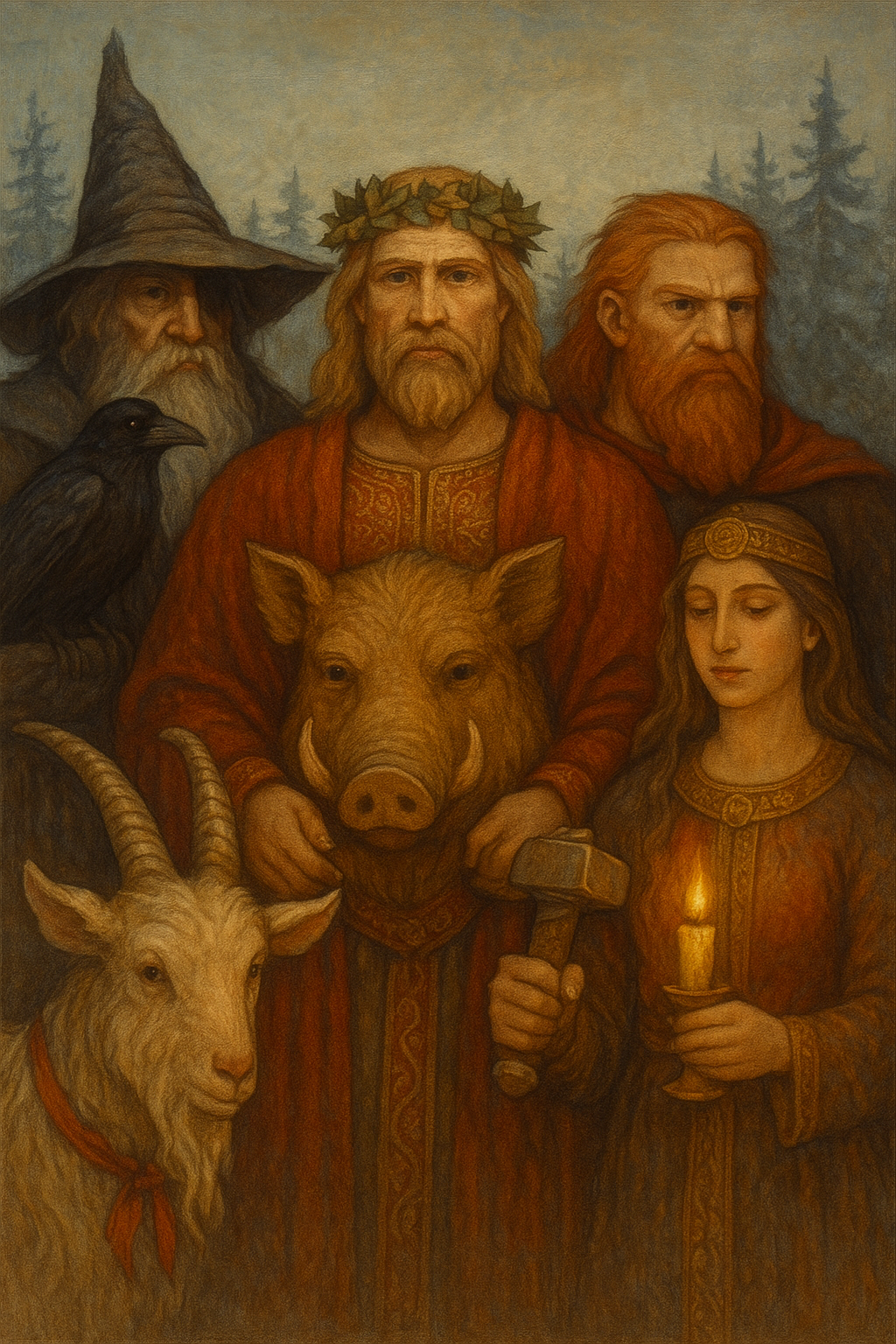
Jól was one of the most spiritually important times of the Norse year, and several gods and spirits were closely associated with the season. Midwinter was viewed as a powerful, liminal, and in some ways dangerous time, when the turning of the year brought both hope and uncertainty. Because of this, the deities connected to Jól were those who governed protection, blessing, death, rebirth and the slow return of the sun.
However, it is important to distinguish between what is historically attested in Norse sources and what belongs to later Scandinavian folklore or modern reinterpretation.
Historical Jól was primarily a three night sacrificial feast, and only certain divine associations come from Viking Age or medieval evidence. Many other connections familiar today developed centuries later or emerged in modern Heathen practice.
The following section explains each deity or spirit, while clarifying which parts are historically Norse, which come from later folk tradition, and which are modern additions.
Odin - The Winter Wanderer (Jólnir):
Odin is the god most directly connected to historical Jól. In the skaldic corpus, one of his names is Jólnir (“The Yule One”), showing a genuine pre-Christian association between him and the midwinter festival. During Jól, Odin received the first toast of the feast for victory, wisdom, and inspiration, especially during the ritual drinking known as minni.
His connection to the Wild Hunt, however, is not Viking Age. The Wild Hunt as popularly imagined comes from later medieval and early modern folklore across Europe. While Odin may have been adapted into this tradition in Scandinavia, the idea of him leading a ghostly procession at Viking Age Yule is not historically attested.
Historically:
Odin’s heiti Jólnir
Ritual toasts made to him at the Jól feast
Association with wisdom, kingship, and victory
Later folklore or modern:
Odin roaming at Yule as a winter wanderer
The Wild Hunt linked directly to Jól
Offering food to Odin specifically during Yule
The older, historical core is his role as the honoured figure of the first toast and his title Jólnir.
Freyr - God of Peace, Plenty, and the Returning Sun:
Freyr’s connection to Jól is strongly attested and historically central. He was invoked for peace (frith), prosperity, fertility and a good year ahead, all of which were crucial concerns during winter. The Yule boar (sónargöltr) that was mentioned in Hervarar saga ok Heiðreks, was associated with Freyr, and oaths were sworn upon this sacred animal on Jól’s Eve.
Freyr’s role in ensuring agricultural success and renewing the land positioned him as a natural focus for midwinter rites. His golden-bristled boar Gullinbursti, symbolised the returning light of the sun, though this symbolic connection is more poetic than explicitly recorded.
Historically:
Freyr honoured at Jól through toasts
The Yule boar associated with him
Symbol of peace, prosperity, fruitfulness
Likely central to renewal rites
Later and modern:
Explicit symbolic identification of the boar as “the sun”
Broader modern spiritual associations with the winter solstice
Freyr’s importance during Jól is historically sound; embellishments developed later.
Thor - Protector of Home and Hearth:
Thor is not uniquely tied to Jól in historical sources, but he was one of the most widely worshipped gods and naturally invoked for protection during harsh winter months. Toasts to Thor were part of many feasts, including Jól, especially in rural and farming communities.
The Yule Goat (julebukk) is not a ‘Viking Age’ Jól emblem. Its connection to Thor’s goats is a later folk interpretation. The Yule Goat appears prominently in post medieval Scandinavian Christmas tradition, not in historical Norse ritual.
Historically:
Thor toasted for protection and strength
General winter association due to storms and safeguarding households
Later folklore:
The Yule Goat as a midwinter symbol
Goat traditions tied to Thor’s chariot
Modern:
Explicit Yule rituals invoking Thor’s goats
Thor-centered winter celebrations
Thor’s presence at Jól is reasonable but not central in the medieval record.
The Dísir - Guardian Female Spirits:
The dísir were powerful female spirits linked to fate, ancestry and protection. Their worship is historically attested through the Dísablót, though that feast was held at various times of the year, often in autumn or early winter depending on region.
The association of the dísir with Jól is therefore possible but not directly documented. Midwinter was considered a spiritually active time, and ancestor spirits were believed to draw near. Because of this, many modern practitioners honour them during Yule, even though historical sources tie their major rites elsewhere.
Historically:
Dísablót as a major rite (timing varied; often not at Jól)
Dísir linked to family fate, protection, lineage
Modern adaptations:
Honouring the dísir specifically during Yule
Dedicating a night of Yule to female ancestors
This is spiritually meaningful, but not historically tied to the Yule feast.
House Spirits and Land Spirits (Húsvættir and Landvættir):
The Norse honoured house and land spirits throughout the year. These beings protected homes, fields, and local landscapes. Leaving food for them at midwinter is grounded in later Scandinavian folk custom, not directly recorded in ‘Viking Age’ Yule.
However, the belief that the unseen world became more active in winter has deep roots across the North, making this a natural and widely accepted modern practice.
Historically:
Belief in house spirits and land spirits
Offerings to them (general practice, not tied to a specific festival)
Later folklore:
Midwinter offerings (especially porridge)
House-spirit appeasement during the Christmas season
Modern:
Offering food to húsvættir specifically as a Yule rite
Integrating house-spirit blessing into Yule structure
This is consistent with northern folk tradition, even if not an attested ‘Viking Age’ Yule custom.
Historically Attested Gods Honoured at Jól
The clearest historical evidence for divine worship at Jól comes from Hákonar saga góða in Heimskringla, which records the order of ritual toasts made during the Yule feast. The first toast was dedicated to Odin (Óðinn). This victory toast (sigurminni) was drunk for success in battle, for wisdom, and for general good fortune in the year ahead. Odin’s role in this ritual is explicit and firmly attested, making him the most clearly documented god honoured during the historical Jól festivities.
The second toast was dedicated to Njörðr, who is named directly in the same saga as one of the gods invoked at Yule. He was honoured for the granting of good seasons, peace, and prosperity - qualities especially valued during the harshness of midwinter. His presence in the Yule toast ritual shows that he held an important position in the feast’s ceremonial order.
Paired with Njörðr in the second toast was Freyr (Frey), who was invoked for fertility, peace, and bountiful harvests. Freyr’s connection to Jól is further strengthened by the account of the sónargöltr, the Yule boar, described in Hervarar saga ok Heiðreks. According to the text, a boar was brought into the hall on Jól’s Eve, and important oaths were sworn upon it. This practice directly links Freyr to the midwinter rites, making the god of peace and plenty one of the central divine figures of the historical festival.
The third toast of the Yule feast was given not to a god but to the ancestors - the dead of the family line, departed kin, and earlier leaders. This toast is also recorded in Hákonar saga góða as an official and formal part of the ritual drinking. While modern interpretations sometimes overstate Jól as an “ancestor festival,” it remains historically accurate that honouring the dead was one of the core elements of the Yule ceremony. The ancestors held a respected place within the feast, receiving a dedicated toast alongside the major gods.
Key Traditions of Norse Midwinter
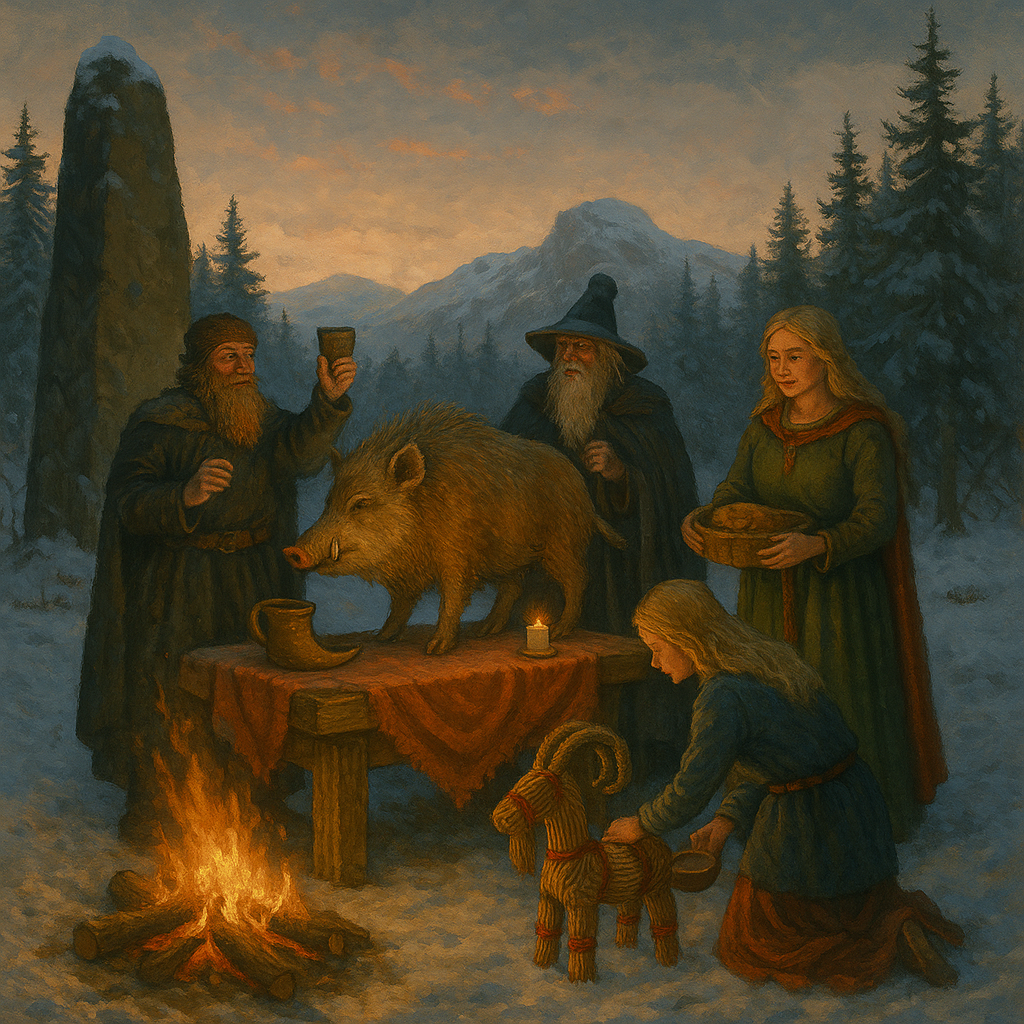
Norse midwinter was a rich blend of ritual, community and seasonal meaning. Historical Jól, as practiced in pre-Christian Scandinavia, was centred on sacrifice, feasting and the renewal of luck and peace. It was not a collection of twelve themed nights, nor a broad cycle of rituals. Instead, it was a three night, full moon timed midwinter feast with a small number of attested rites.
Modern Yule, by contrast, includes many practices inspired by later Scandinavian folklore, Anglo-Saxon custom, Christian-era traditions and contemporary pagan creativity. These later or modern elements now shape what many people recognise as “Norse Yule,” even though they were not part of historical Jól.
The following text preserves your explanations, but now clarifies which elements are historical, which belong to later Germanic or Scandinavian tradition, and which are modern interpretations.
Jólablót - The Historical Feast and Sacrifice (Historical):
One of the most important elements of historical Norse midwinter was the Jólablót - the central Yule feast and sacrifice. This event is clearly described in Hákonar saga góða and other saga material. It was a communal rite in which families and communities gathered to honour the gods, drink ritual toasts, and seek luck and peace for the new year.
Meat from the sacrifice, ale brewed for the season, and ritual toasts (minni) formed the core of this feast. The blót unified the community through shared food, strengthened bonds of frith (peace), and invoked blessings during the darkest period of winter.
This (not a long list of themed nights) is the true historical heart of Jól.
Sónargöltr - The Yule Boar (Historical):
The Yule boar (sónargöltr) is firmly attested in Norse tradition. Hervarar saga ok Heiðreks ddescribed boar brought into the hall on Jól’s Eve, upon which oaths were sworn. In some regions, a boar was sacrificed and eaten during the feast.
This was a deeply symbolic act linked to Freyr, the god of peace, fertility and abundance. The boar represented courage, prosperity and the hope of renewed life in the coming year.
The symbolic boar bread or pastry sometimes used today is a modern continuation, but the practice itself is grounded in a historical rite.
Mōdraniht - Mothers’ Night (Anglo-Saxon, Not Norse):
Mōdraniht or Mother’s Night was not part of Norse Yule. It is an Anglo Saxon festival recorded by Bede and connected to the Matronae and the Disir like ancestral female spirits.
Although modern Heathens often place it at the beginning of Yule, there is no evidence that the Norse held this rite at midwinter.
However, the Norse did honour the dísir at Dísablót, which was held in autumn or early winter depending on the region, and not tied to the Jól feast.
Thus, Mother’s Night is:
Historical Anglo-Saxon, not Norse
Adopted into modern Norse Yule practice
House Spirits - Húsvættir (Historical but Not Yule Specific):
The Norse believed deeply in house spirits (húsvættir) and land spirits. Offerings of food, milk or ale to them are very old, but not exclusively tied to Yule in the ‘Viking Age’.
The custom of offering porridge or butter to the house spirit at midwinter appears in later Scandinavian folklore, especially with the Christian era nisse or tomte.
Thus:
Belief in house spirits = historical
Midwinter porridge offerings = later folk custom
Adoption into Yule rites = modern
The Wild Hunt - (Later Scandinavian and Germanic Folklore):
The Wild Hunt associated with Odin is not part of historical Norse Jól. While Odin is linked to the season under the name Jólnir, the storm riding procession of the dead comes from later medieval and early modern folklore across northern Europe.
Its association with Yule is a post-Viking development, though it has become a powerful modern motif.
Thus:
Odin at Jól = historical
Wild Hunt at Yule = later folklore adopted into modern Yule
The Hearth Fire and Yule Log - (Later Tradition):
Keeping a strong hearth fire through winter is universal and likely very old, but the specific idea of a Yule log is not attested in Norse paganism. It enters Scandinavian tradition after Christianization and is influenced by broader European Christmas customs.
The symbolic meaning (protection, warmth, renewal) fits well with Norse themes, but its practice as a formal Yule custom is later and modern, not historical.
The Yule Goat - (Post-Medieval Scandinavian Folk Tradition):
The Yule Goat (julebukk) is one of the most iconic Scandinavian midwinter symbols, but it does not appear in ‘Viking Age’ sources. Its connection to Thor’s goats is a folkloric explanation, not a historical one. The goat tradition evolved after the medieval period, becoming part of Christmas festivities.
Thus:
Goat = post-medieval Scandinavian custom
Modern Heathen Yule goat = modern adaptation
Evergreens, Indoor Decorations, and Symbolic Objects - (Later and Modern):
Bringing evergreen plants indoors is a pan-European custom not specifically tied to Norse Jól. It becomes common in post-medieval Scandinavian Christmas tradition. Modern Heathen practices using fir, holly or juniper at Yule are symbolic additions rather than preserved Norse rituals.
Divination, Dream Work, and Themed Nights - (Modern Pagan Practice):
While midwinter was seen as a spiritually “thin” time in many cultures, there is no evidence that the Norse performed special Yule divination or had designated “nights” for different themes.
Dream interpretation, rune work, and nightly rituals are modern spiritual additions that enrich contemporary Yule but do not reflect historical practice.
Storytelling, Hospitality, and Genealogy -(Historical):
These were part of historical Jól. Feasting halls were places for:
Storytelling
Poetry
Boasting
Genealogy recitation
News sharing
Strengthening communal bonds
These elements form one of the strongest continuities between historical and modern Yule.
Historical Jól was a three-night lunar feast that focused on:
Sacrifice (blót)
Ritual drinking
Feasting
Oath making
Peace and unity
Honour to Odin, Freyr, Njörðr and the ancestors
Modern Yule blends this ancient core with:
Anglo Saxon Mothers’ Night
The Twelve Nights structure
House spirit offerings at midwinter
The Yule Goat
Evergreen symbolism
The Wild Hunt at Yule
Modern divination and themed nights
Christmas-influenced customs
Together, these elements create a rich modern tradition that honours the spirit of the season - while openly acknowledging that much of it developed long after the ‘Viking Age.’
What Norse Families Actually Did
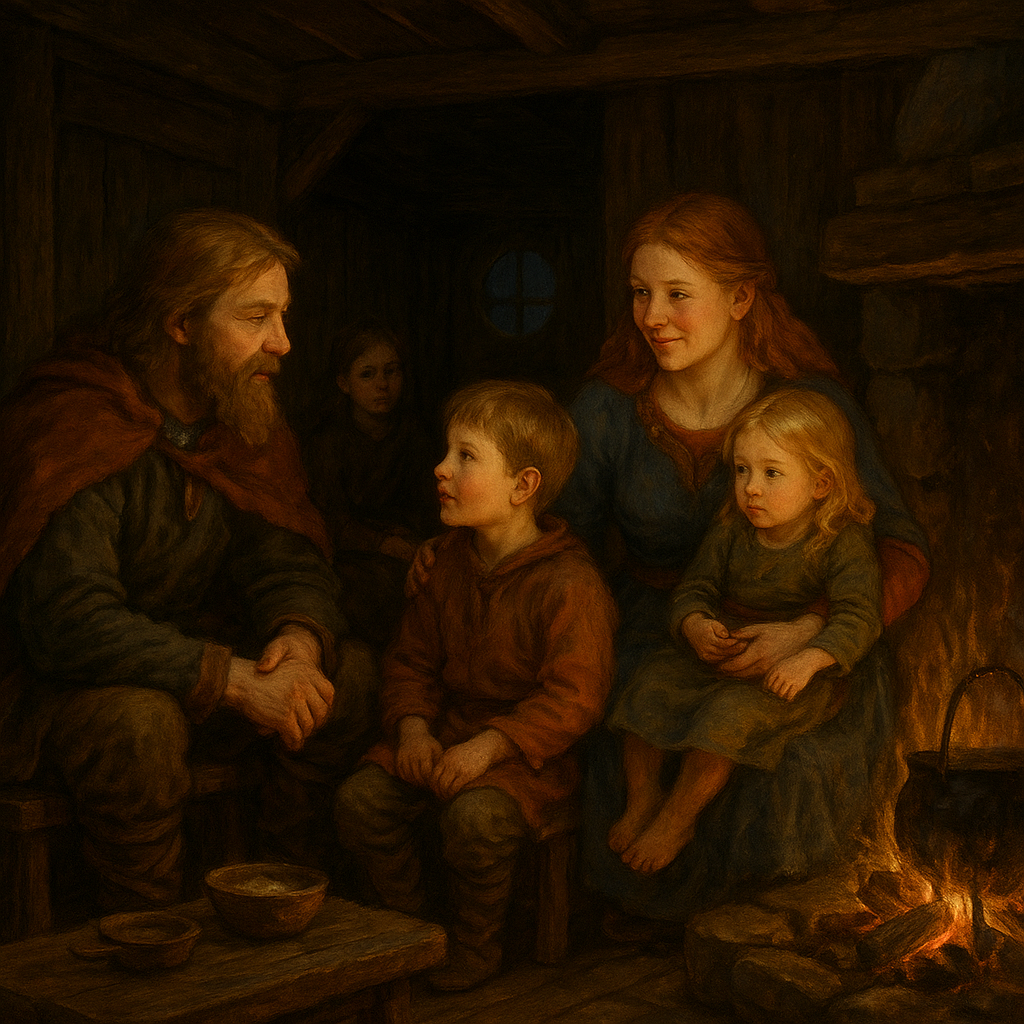
Although Jól carried deep religious meaning, it was also a very practical and family centred season. For most Norse households, midwinter was a rare pause in the year: farming work had slowed, travel was difficult, and the long nights brought families together indoors. Because of this, much of Jól was spent in ways that strengthened the home, maintained tradition and offered comfort during the darkest point of winter.
The most important part of family life during Jól was the feast. Preparing for it took days: animals were slaughtered earlier in winter, ale had been brewing for weeks, and women of the household worked together to bake bread, create special dishes and set aside the best food and drink for the blót. When the feast finally began, families sat together with guests, sharing meat, ale and stories. Children were included in the celebrations, learning songs, riddles, and traditional tales.
Inside the home, the hearth became the centre of everything. Fires were kept burning not only for warmth but also for protection and symbolism. Families gathered around the light to tell stories of gods, heroes, and ancestors. The long nights encouraged creativity: recited poetry, folktales, games, and friendly competitions helped pass the hours. Storytelling was vital in Norse culture, and midwinter was one of the main times when family history and cultural memory were passed down to the next generation.
Many families also took part in quiet household rituals, especially offerings to the spirits connected to their home. A small dish of porridge, butter, bread, or ale might be placed near the hearth or barn for the húsvættir, the house spirits who protected the property. These offerings were made with respect, since an unhappy house spirit was believed to cause mischief or hardship. Honouring the household spirits helped ensure harmony, luck, and protection for the coming year.
Children often played an active role in these customs. They helped gather firewood, carried food, kept the main room tidy for guests, and sometimes placed the offerings for the spirits themselves. Simple winter crafts (such as making straw ornaments or small animal figures) were common ways to keep younger family members occupied indoors. The Yule Goat also appeared in many families’ traditions, sometimes as a straw figure placed by the hearth, sometimes as a costumed visitor who brought small gifts or asked children to behave well.
Another part of family life during Jól was the careful observance of omens and taboos. Certain nights were believed to be more dangerous or spiritually charged than others, especially when the Wild Hunt was thought to pass overhead. On these nights, families stayed inside, shut their doors tightly, and avoided making unnecessary noise. It was also common for families to leave an empty seat or a small portion of food for the ancestors, acknowledging their presence during the liminal season.
Although Jól had many sacred elements, it was also a time for rest. Winter farming tasks were limited, and the long hours of darkness gave families a chance to slow down. People repaired tools, mended clothing, and prepared for the coming year. The quieter pace of life brought families together and strengthened bonds within the household.
Despite its cold and darkness, Jól was a season of warmth, sharing, and connection. Norse families blended sacred rituals with everyday comforts: they honoured the gods and spirits, tended their hearths, cared for their kin, and kept hope alive for the return of the sun. Through these simple but meaningful acts, they transformed the hardest time of the year into one of unity, memory, and renewed strength.
How Jól Influenced Later Scandinavian Traditions
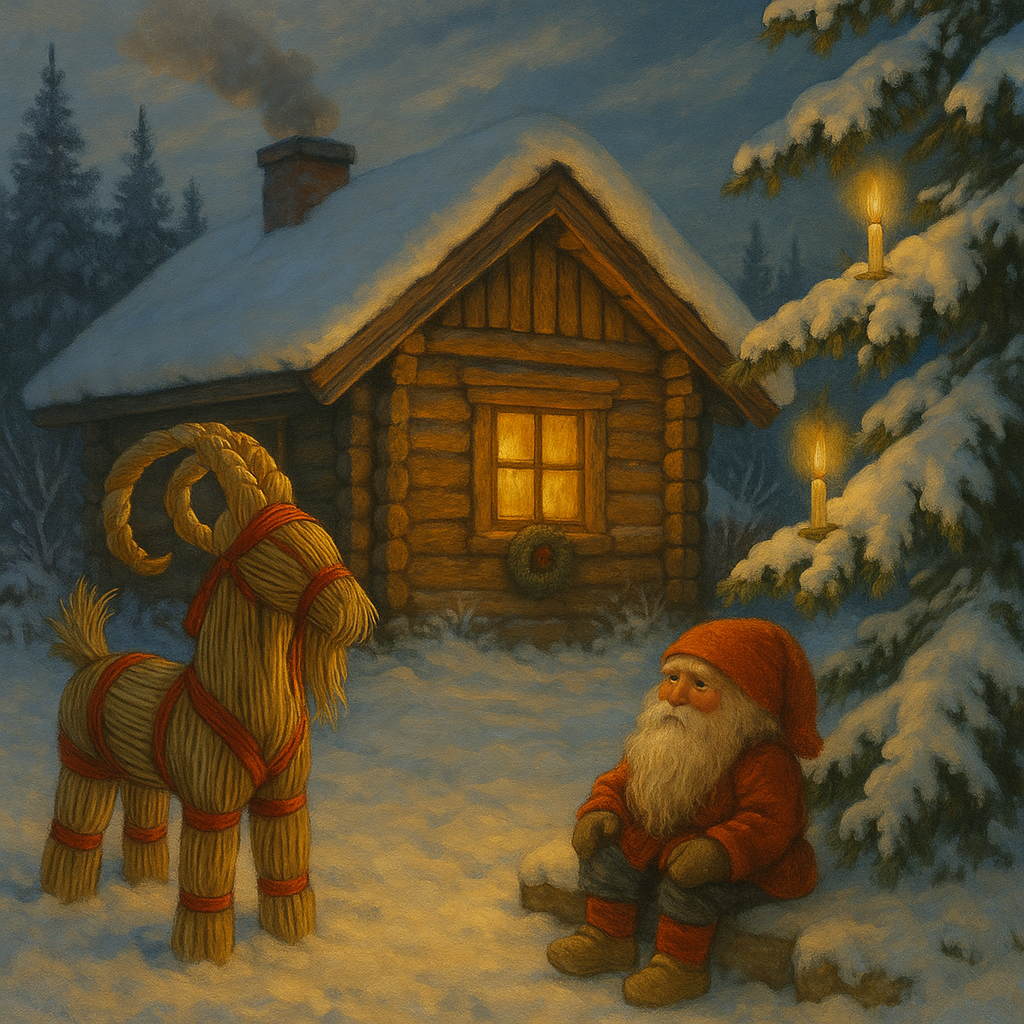
Although the old Norse religion faded as Christianity spread through Scandinavia, many of the customs surrounding Jól proved far too deeply rooted to disappear. Instead, they were reshaped, renamed or quietly carried forward in everyday life. Across Norway, Sweden, Denmark and Iceland, echoes of the pre Christian midwinter festival can still be seen in traditions that have survived for centuries. These practices show how strongly Jól shaped the winter season and how its spirit continues even today.
One of the clearest examples is the Yule Goat, or Julebukk. While modern versions may appear as straw ornaments or festive decorations, the goat has far older origins. Its connection to Thor’s goats, and to older fertility and protection customs, made it a powerful symbol in Norse midwinter. In later folklore, the Yule Goat sometimes acted as a gift bringer or visited homes in costume, a direct continuation of earlier beliefs where spirits or costumed figures moved between households during midwinter. Even in modern festive markets, the straw goat stands as a quiet reminder of ancient Norse symbolism.
Another tradition with deep roots is the custom of leaving out food for the household spirit. In modern Scandinavian folklore, this being is often called the nisse or tomte, a small guardian spirit who expects a bowl of porridge on Christmas Eve. Yet this tradition is clearly tied to the earlier Norse practice of offering food to the húsvættir, the house spirits who protected the home and its prosperity. The Christian calendar may have shifted the date, but the idea remains the same: a spirit connected to the house must be honoured to ensure luck for the coming year.
Elements of the Jól feast also survived well into later traditions. The midwinter table continued to feature pork, ale, bread, and foods preserved earlier in the year - the same essentials that were part of the Jólablót. Toasts made at Christmas or New Year still echo the older custom of raising formal drinks to gods, ancestors and the household’s well being. The importance of gathering, sharing food, and celebrating together is one of the strongest through lines from early Norse culture to modern Scandinavian winter celebrations.
The idea of the Twelve Nights (a special, spiritually charged period stretching beyond a single holiday) also persisted. This period became associated with Christmas and New Year, but its deeper rhythms can still be seen in folk beliefs about omens, dreams and the “quiet” nature of these nights. In some regions, it was believed that the weather or events of each of the twelve nights predicted the months of the coming year, a belief that may reflect older practices of watching for midwinter signs or interpreting the natural world during the turning of the season.
The darker, more mysterious side of Jól also left its mark. Tales of the Wild Hunt remained in Scandinavian folklore long after the old gods were officially forgotten. The leader of the spectral procession changed names in different areas (sometimes Odin, sometimes a local figure) but the core idea remained the same: a ghostly ride sweeping across the winter sky. These stories show how deeply the Norse fear and wonder of midwinter became woven into cultural memory.
Even domestic practices, such as bringing evergreens into the home, lighting candles, or performing small threshold blessings, can be traced back to earlier customs linked to protection and the endurance of life through winter. While Christianity reframed these acts in new language, the essential meaning - inviting good fortune, keeping harmful forces out, and celebrating the return of the sun - remained unchanged.
Perhaps the most lasting influence of Jól is its general spirit of togetherness. The old festival was designed to hold communities together through the hardest part of the year, and that sense of warmth, sharing, and resilience continues to shape Scandinavian winter traditions. Even modern Christmas in the North carries a distinct atmosphere (quiet, reflective, and deeply connected to nature) that sets it apart from other winter celebrations. This unmistakable character is a direct inheritance from the ancient Norse Jól.
In many ways, Jól never vanished; it simply transformed. Beneath the surface of today’s Scandinavian winter customs lie the same beliefs, fears, hopes, and rituals that guided Norse families a thousand years ago. The old gods may no longer preside over the season, but the essence of Jól (light in darkness, protection in winter, and community in the cold) continues to shine through.
Celebrating Jól Today
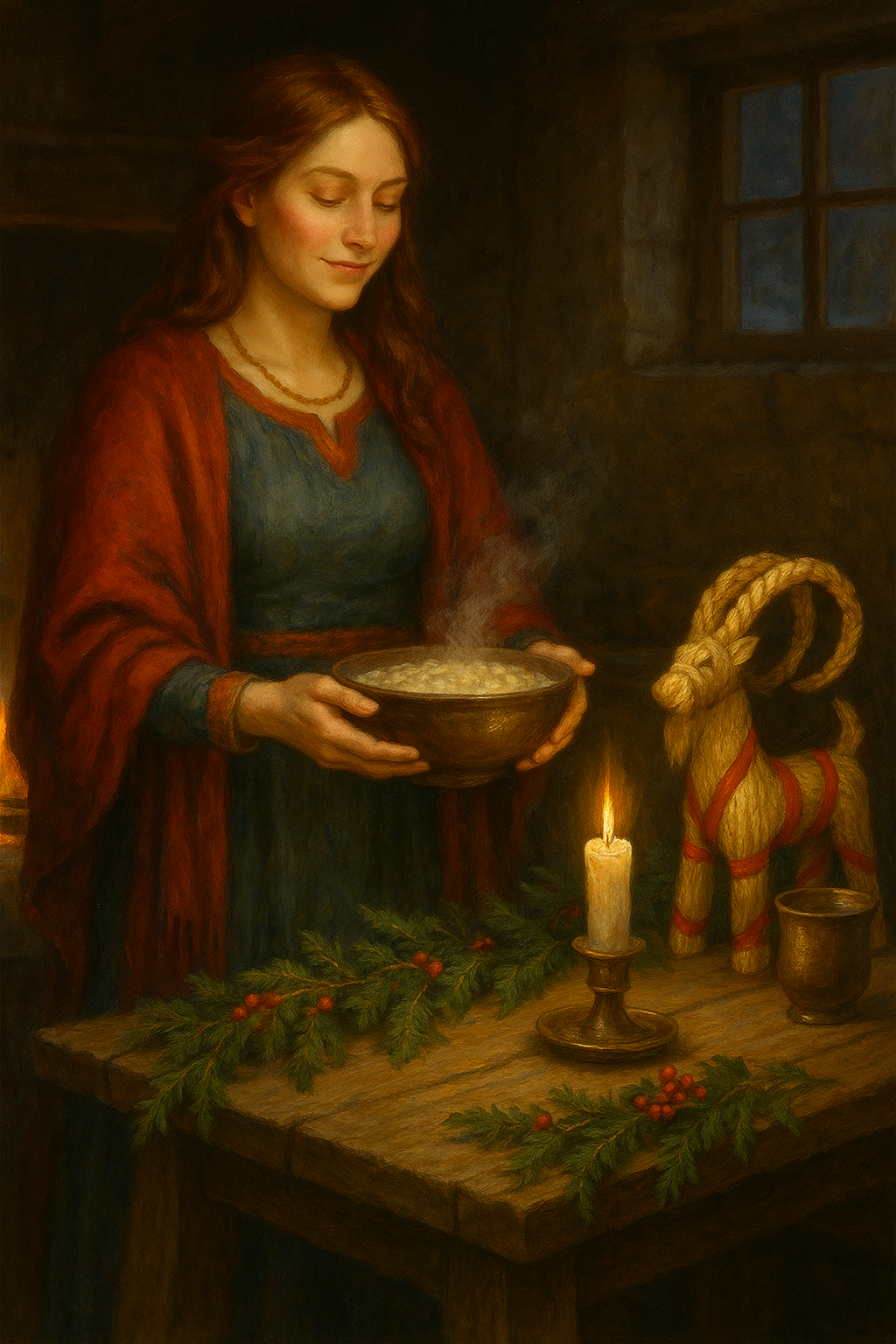
Although the ancient Norse no longer gather in longhouses or swear oaths on a sacred boar, many people today feel drawn to honour Jól in ways that respect its history while fitting modern life. Because Jól was originally a season rather than a single day, contemporary celebrations often focus on creating a sense of warmth, reflection, and connection throughout midwinter. The aim is not to perfectly recreate the past, but to capture the spirit of the festival: the return of light, the strength of community, and the respectful relationship between humans, ancestors, the land, and the unseen world.
One of the simplest and most meaningful ways to celebrate Jól today is to create a midwinter feast inspired by the old Jólablót. This does not need to be elaborate or historically exact. What matters is the act of gathering with family or friends, sharing food, raising toasts, and marking the turning of the year together. Pork dishes, bread, root vegetables, mead or ale, and winter spices echo older flavours, but any well prepared, communal meal carries the same intention. A few thoughtful toasts (to the gods, the ancestors, one another and the coming year) help connect the modern table to the old traditions.
Lighting a hearth-fire or candle is another powerful practice. Fire remains the heart of midwinter symbolism, representing warmth, protection, and the returning strength of the sun. A Yule candle or fire can be kept burning during the feast or through the longest night. This is a quiet, reflective act that honours the same values the Norse held: endurance in darkness and the promise of renewal.
Many modern households incorporate Mothers’ Night (Mōdraniht) as the opening of the Jól season. This evening is dedicated to honouring female ancestors, the dísir, and the family line. Lighting candles, placing a small meal or drink aside, telling stories of women in the family, or simply setting aside time for peace and reflection is all it takes to carry this tradition into the present day. It creates a thoughtful beginning to the Jól season.
The custom of honouring the house spirits continues naturally into modern life. Whether one views them as symbolic, spiritual, or cultural, leaving a small bowl of porridge, milk, or bread near the hearth or back door shows respect for the home and the unseen forces that protect it. This tradition blends easily with contemporary Scandinavian folklore surrounding the nisse or tomte, keeping a living connection to older Norse beliefs.
Decorating the home with natural evergreens (pine, fir, holly, and juniper) remains another way to bring Jól into the present. These plants symbolise life surviving the cold and were historically used to protect the household and refresh the indoor space during winter. They also help create the calm, wintry atmosphere associated with Northern midwinter celebrations.
Some people choose to honour the Yule Goat by crafting or displaying straw goats near the hearth. Others celebrate Freyr’s connection to the season by baking or shaping a symbolic Yule boar, whether from bread, marzipan, or pastry. These practices help keep alive some of the most visually recognisable aspects of old Scandinavian tradition.
The Wild Hunt is often acknowledged through simple acts of awareness and respect: lighting a lantern during stormy nights, spending time indoors with family, or observing a moment of quiet. This reflects the old belief that midwinter is a liminal time, and that stillness, caution, and reflection are appropriate when the dark is at its height.
Jól is also an excellent time for intention-setting, mirroring the old practice of oath-swearing. Modern versions might include writing down goals for the year ahead, making promises to oneself or others, or choosing a symbolic action that reflects hope or renewal. These do not need to be grand gestures - Jól is about meaningful, sincere commitments rather than dramatic proclamations.
Finally, one of the most authentic ways to celebrate Jól today is simply to slow down. Reduce outside obligations, enjoy warm food and drink, take quiet walks in the cold, and use the longer nights to rest and reconnect. The Norse understood that midwinter required conservation of energy, closeness with family, and appreciation of the present moment. In a busy modern world, this aspect of Jól may be more important than ever.
Celebrating Jól today is less about rebuilding the past and more about honouring the values that shaped it: gratitude for what we have, respect for the unseen, remembrance of those who came before, and the quiet hope carried by the returning sun. Whether observed with ritual, feasting, or simple moments by the fire, Jól remains a reminder that even in the darkest season, warmth and renewal are always on their way.