
The Danelaw: The Shadow Kingdom
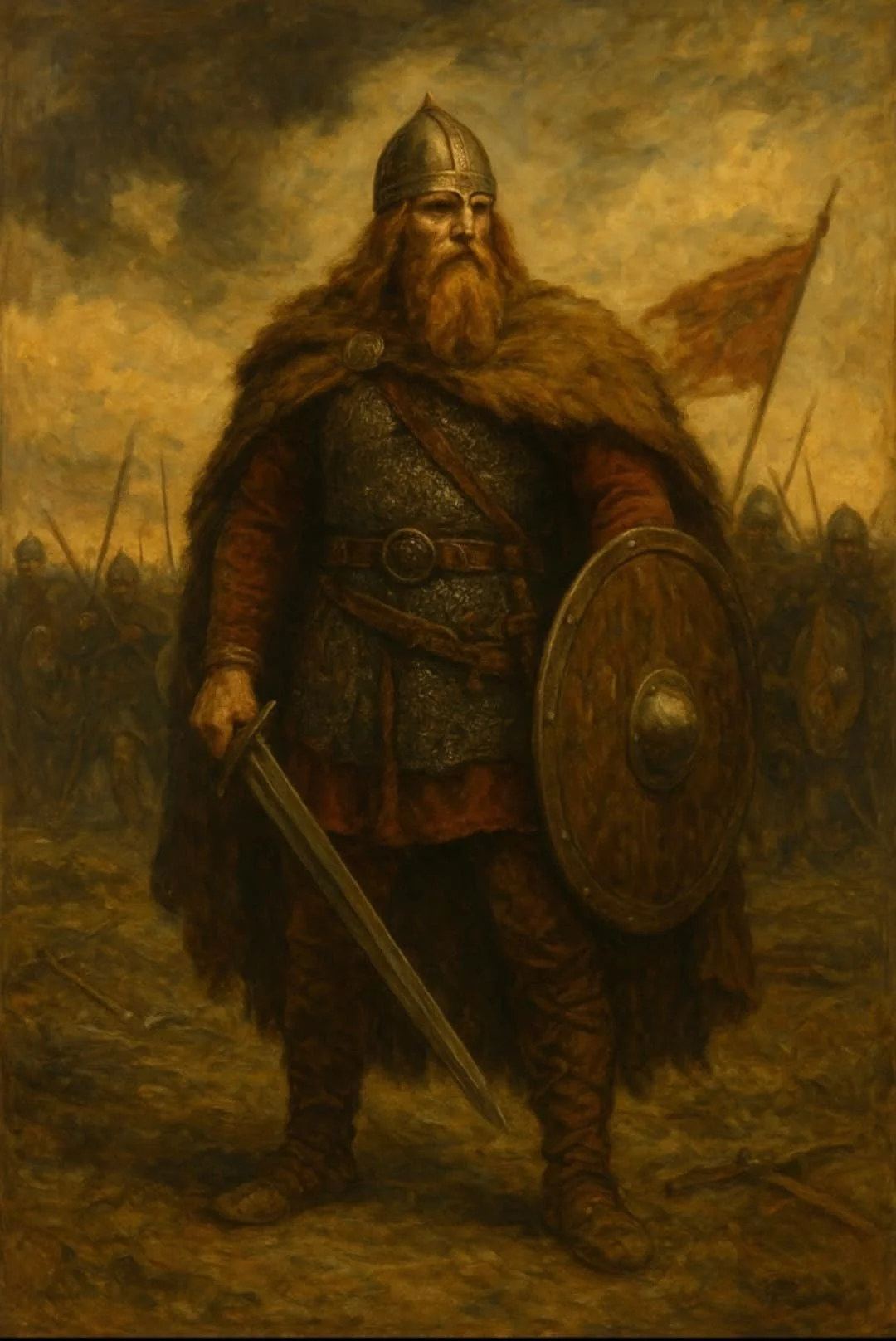
Before the ravens of war darkened the skies, England was a tapestry of light and shadow, stitched together by kings, ealdormen, and the sweat of peasants. Northumbria stretched from the craggy hills of the north down to the Humber, a land of stone abbeys, fertile fields, and warriors hardened by raids from the Scots and the sea. Mercia, once the heart of England, bore the scars of civil strife; rival lords and princes warred for dominion, leaving the kingdom hollowed by ambition. East Anglia thrived in green meadows, where silver gleamed in monastic coffers and churches rose like spears toward heaven. Wessex, smallest yet shrewdest, lay on the southern edge, its borders shadowed by marshes, rivers, and watchful eyes, waiting for what might come from the northern waves.
The people tilled their fields with hands calloused and prayers whispered under breath. In stone churches, monks copied sacred texts, their quills scratching fate into vellum, unaware that their work would one day serve as the testimony of survival - or of doom. Wyrd, the inexorable web of fate, held all kingdoms alike in its silent grasp. Every crown, every plough, every sword was bound by its unseen threads.
Beyond the sea, the Northmen stirred. Denmark, Norway, and Sweden were lands of fjords and forests, where longhouses smoked beneath pale skies, and the bond between man and sea was sacred. The longship was not merely a vessel; it was a bridge between worlds, a chariot for gods and mortals alike. Here, men lived by the code of drengskapr - courage, honor, and loyalty - and all believed their lives were threads already cut or woven by the Norns. And soon, the winds from that distant North would carry not just men, but destiny itself, to the green shores of England.
The Whisper of the Waves
The first stirrings of terror arrived quietly, almost like a rumor. In 793, the monastery of Lindisfarne, perched like a jewel on the North Sea, was struck. The monks recorded it with trembling hand: “The ravages of heathen men came from over the sea; their ships glided in like shadows.” Silver was stolen, relics desecrated, and lives taken. Yet these early raids were not the full storm, they were only the whisper, the warning.
The Anglo-Saxon kingdoms learned a bitter lesson: the sea was no longer a barrier, but a road. In these raids, the Vikings showed cunning and precision. They struck quickly, vanishing before relief forces could arrive. Monasteries, repositories of wealth and learning, became easy prey, for the monks were scholars, not soldiers. These attacks, though brief, sowed fear and uncertainty, fracturing the confidence of kings and nobles alike.
Still, many Saxons could not imagine the scale of what was coming. The Northmen were more than raiders; they were patient predators, masters of rivers and coasts. The first whispers of the waves would, in time, swell into the roar of a tide that would reshape England itself.
The Gathering of Wolves
By 865, the scattered bands of Norse raiders were called together by something larger than ambition - by vengeance, destiny, and vision. From Denmark, Norway, and Sweden, warriors answered the summons of Ragnar Lothbrok’s sons: Ivar the Boneless, Halfdan Ragnarsson, and Ubba. Ivar, crippled in body but sharp of mind, was a strategist whose intellect became the backbone of the army. Halfdan, iron-willed and relentless, embodied the force of the North itself. Ubba, youngest and fiercest, carried a wrath that was almost elemental.
The host that gathered was unlike any seen before: thousands of warriors, their axes and spears polished, their shields varnished dark with tar, their longships ready to spill over coastlines like steel waves. They did not raid merely for plunder; they sought settlement, power, and legacy. Families and craftsmen traveled with them, so that conquest was immediately followed by colonization. Every man knew that in this army, deeds would outlive kings - that glory, once carved into the sagas, would never fade.
The English, unprepared for such a convergence, could not grasp the enormity of the threat. Kingdoms were fractured, militias inconsistent, and rivers were vulnerable to the nimble craft of the Vikings. The Gathering of Wolves, as future generations would call it, was not a fleeting storm. It was a season of destiny arriving on the tide.
The Breaking of Kingdoms
The first kingdoms to fall were already fractured. Northumbria, torn between Ælla and Osberht, offered no unified defense. York - the Roman Eoforwic - became the jewel seized by the Norse. Its walls, trade wealth, and strategic location made it a perfect stronghold. Rival kings attempted to reclaim it, only to be slaughtered in narrow streets that turned into killing grounds. Legends whisper that Ivar the Boneless oversaw Ælla’s death, exacting vengeance in a ritual of blood that became myth.
East Anglia, rich in fertile plains and silver, could not resist. Saint Edmund, king and martyr, refused to renounce Christianity and died by the hands of the Norse, tied to a tree and pierced with arrows. Mercia, once the dominant kingdom, fractured under pressure. Royal exiles fled, alliances crumbled, and the English world trembled.
These early conquests were not only military victories; they were psychological. They sent a message to Wessex and other kingdoms: no ruler could ignore the tide of the North. The Danelaw was born not through negotiation, but through fire, blood, and terror.
The Siege of Wessex
Wessex, the last unconquered kingdom, felt the storm in its marrow. Alfred, the young king, watched his elder brothers die in battle, villages smolder, and hope fade like mist in the morning. The Vikings landed with renewed forces, now bolstered by new raiders from Denmark. They captured Wareham and Exeter, threatening to make the heart of Wessex their winter camp.
In response, Alfred retreated into the marshes of Athelney. There, in reed and swamp, he became the Phoenix King - a leader reborn in exile. From this hidden fortress, he trained the fyrd, forged alliances, and prepared to strike back. Every Saxon who could carry a spear was called to service. Alfred understood the Vikings not as demons but as mortal men - clever, disciplined, and capable of extraordinary violence - and he knew he would need cunning and patience to survive.
In the marshes, Alfred also contemplated more than military strategy. He began to consider how kingdoms could endure, how law and culture could protect a people even after devastation, and how England might one day rise from shadow into light.
The Fathers of the Danelaw: Key Figures
The architects of the Danelaw were more than raiders; they were men who forged kingdoms from storm and shadow. Guthrum, later baptized as Æthelstan, became the ruler of East Anglia. His mind was sharp as the edge of a Dane-axe, his will tempered in battle, yet after Edington, he sought a new path: peace by covenant rather than conquest. Coins minted in his name, archaeological evidence of church-building, and his documented treaties with Alfred suggest a ruler capable of blending Norse pragmatism with Anglo-Saxon governance (Sawyer, The Age of the Vikings, 1971).
Ivar the Boneless, ever enigmatic, embodied cunning more than brawn. Chroniclers describe him as immobile, yet his influence radiated like a shadow across Northumbria. Halfdan Ragnarsson governed the northern realms of the Danelaw, extending Norse control into York and beyond. Ubba, lost to history at Cynuit, was the last echo of raw fury, a reminder that not all power could be tamed by law or treaty.
Each man left traces in history: coins, runes, chronicles, and the enduring memory of law and settlement. Archaeology confirms their presence not only as conquerors but as city-builders: the streets of York, Lincoln, and Nottingham bear the stamp of their strategic foresight, designed for trade, defense, and dominance.
The First Encounters
Before the storm of the Great Heathen Army fully descended, the coasts and rivers of Anglo-Saxon England whispered warnings in the form of raiders and skirmishes. Small contingents of Norse warriors struck monasteries, towns, and trading posts - lightning-fast raids that left devastation and rumor in their wake. Monks recorded these early attacks with trembling ink, noting the gleam of axes, the roar of the Norsemen, and the terror that rippled through the countryside. Even these minor clashes carried a weight far beyond their immediate destruction: they were harbingers of a greater force, an army unlike any that England had ever known. Archaeological digs at coastal settlements suggest that some raiders came equipped with not only swords and shields, but also long-term intentions, leaving traces of timber platforms and temporary fortifications that hinted at a capacity for occupation rather than mere plunder.
Diplomacy and Tribute
Not all conflict began with blood. Early Norsemen often sought negotiation, demanding tribute in silver, cattle, or hostages. East Anglia’s rulers, wary of total annihilation, agreed to terms: horses for the army, oaths to keep peace, and safe passage for settlers. Such agreements were double-edged - survival for some, and strategic advantage for the Norse. Saxon chroniclers viewed these acts as weakness, while Norse sagas framed them as cunning, demonstrating that diplomacy was as much a weapon as the axe or spear.
Psychology of War
Fear, rumor, and reputation were invisible yet lethal forces. Tales of Ragnar Lothbrok’s sons, of pitiless slaughter and blood eagles, spread faster than armies. Towns surrendered preemptively; soldiers hesitated on battlefields. Skalds and chroniclers alike attest to the psychological toll: the mere whisper of the Great Heathen Army could crumble morale. War was not only fought with weapons, but with stories, omens, and terror, a mental landscape as crucial as the physical one.
Scouting and Intelligence
The Norse understood the land as well as the sea. Scouts moved along rivers and forests, mapping Saxon positions, noting fortifications, and assessing food supplies. Spies infiltrated towns, while defectors and coerced guides revealed hidden roads and weak points. Anglo-Saxon leaders attempted counterintelligence, but the rapidity and cunning of the invaders often left them behind. Intelligence shaped every campaign, from choosing the site of York’s siege to the ambushes in Mercia, proving that victory lay as much in foresight as in steel.
Leadership and Rivalries
The Great Heathen Army was not a monolith. Ivar the Boneless plotted strategy, Halfdan sought dominion, and Ubba struck vengeance. Yet personal rivalries and ambition threaded through the host. Jarls jostled for prestige; alliances shifted; sometimes the army’s cohesion threatened to fracture. Chronicles hint at quarrels over winter encampments, looting, and authority. Yet even in rivalry, the Norse understood the primacy of shared purpose: land, wealth, and legacy. Leadership was earned in blood and cunning, not inherited, shaping campaigns and, ultimately, the Danelaw itself.
Crossing the Threshold - Interactions with the Saxons
The Danelaw was born not in isolation but through interaction. Vikings did not simply conquer; they negotiated, coerced, and coexisted. In East Anglia, locals agreed to supply horses and provisions in return for temporary peace. In Mercia, alliances formed through marriages and hostages, subtle diplomacy that allowed Norse law and Saxon tradition to intertwine.
Textual evidence from the Anglo-Saxon Chronicle and legal codices indicates that these interactions were complex. Free Saxons often retained property rights under Norse rulers, and local elites could hold office if they pledged allegiance to the jarls. The Danelaw became a hybrid society: Norse and Saxon languages mingled, names of towns and individuals merged, and laws reflected a fusion of customs. Scholars such as Peter Sawyer and Judith Jesch emphasize that this fusion was both practical and ideological: a way to stabilize conquered territories without endless bloodshed.
Negotiation and Covenant - Law as Armor
After Edington and the Treaty of Wedmore, law became a weapon as vital as sword or shield. Alfred’s vision was clear: a kingdom defended not only by walls but by words, oaths, and shared legal frameworks. The Danelaw codified this blending.
Norse thing assemblies combined with Saxon witan councils, allowing local freemen to participate in governance. Wergild - the system of compensation for injury or death - was adapted, ensuring that justice could bridge cultural divides. Place-name evidence, combined with surviving law codes (e.g., the Danelaw Code), indicates that urban centers such as Derby, Leicester, and Lincoln became judicial as well as commercial hubs. Law, in this sense, was both sword and shield - a means to cement conquest and protect the lives of those under it.
Who Was Affected - The Human Toll
The arrival of the Norse was cataclysmic. Monks who had transcribed the Gospels into gold-tinted letters saw their manuscripts burn. Farmers watched homes reduced to ash, crops trampled under hooves, and livestock taken as tribute or plunder. Royal houses were shattered: Northumbrian kings perished; Mercian lords fled into exile; East Anglian rulers were martyred, leaving children orphaned and kingdoms ungoverned.
Yet ordinary people adapted. Archaeology at Danelaw settlements shows continuity in farming practices, suggesting that daily life resumed despite political upheaval. Families of mixed Norse and Saxon descent became a new class, inheriting lands and traditions from both sides. Linguistic traces - words like sky, egg, law, and husband - indicate that this fusion penetrated not just politics but the intimate life of communities.
Who Gained - Power, Trade, and Legacy
The Danelaw, for all its violence, produced winners as well as victims. Norse leaders secured permanent holdings, minting coins that announced their legitimacy. Towns like Jorvik (York) became nodes of trade: furs from the north, silver from Frankia, slaves from the British Isles, and luxury goods mingled under Norse stewardship.
Alfred of Wessex also gained in subtle ways. The threat of Norse power catalyzed administrative reform: fortified burhs were constructed, a standing army was conceptualized, and literacy and law were promoted to unify a threatened people. Archaeological surveys of burhs such as Wareham, Winchester, and London demonstrate systematic planning, suggesting that Alfred’s gains were structural as much as territorial.
The landscape itself became a testament to adaptation: forests cleared for farms, towns fortified, trade routes secured, and rivers controlled. Both conquerors and the conquered became architects of a new England, a hybrid realm forged in fire, law, and settlement.
Winter Camps and Logistics
Winter was not a pause from war, but a season of preparation, consolidation, and survival. Camps at Repton, Torksey, and other sites became small cities: longhouses for chieftains, tents for warriors, workshops for smiths, and huts for families. Storage pits held grain, salted meat, and provisions, while fortifications were reinforced against raiders and elements alike. Archaeological finds reveal patterns of timber palisades, hearths, and even recreational spaces, suggesting a life maintained between battles. For the Norse, wintering was also a psychological tool: it allowed the army to plan, recuperate, and maintain discipline. Feasts, games, and oath-swearing reinforced cohesion, ensuring that when spring returned, the storm would surge anew.
Allies and Recruits
The Great Heathen Army was never purely Norse. Saxons, Britons, and other local populations joined either by choice or coercion. These recruits brought knowledge of terrain, local politics, and enemy weaknesses, and they bolstered manpower at critical moments. Chronicles describe defectors guiding the army along secret roads and warning of ambushes, while sagas recount Saxons who took oaths of loyalty in exchange for land or status. The inclusion of local recruits was both a practical measure and a political strategy, ensuring integration and control over newly conquered territories.
Siegecraft and Engineering
The Norse demonstrated remarkable ingenuity in siege warfare. Wooden walls were constructed to protect camps; battering rams and siege towers enabled the assault of fortified towns; fires were used both to weaken structures and terrorize inhabitants. The siege of York highlights their adaptability: Roman walls, narrow streets, and gates were obstacles turned into tools. Archaeological evidence confirms timber reinforcements, weapon caches, and the remains of makeshift engines, showing that the Vikings combined brute force with engineering skill. Siegecraft became a bridge between raiding and occupation, a key factor in the transformation of the Danelaw from battlefield to governed territory.
Naval Operations
Longships were the arteries of Norse power. Their shallow drafts allowed movement inland along rivers, enabling rapid troop deployment, raids, and supply transport. Rivers like the Trent, Ouse, and Humber became highways of conquest, with detachments moving silently to strike where least expected. Ships transported horses, supplies, and siege engines, turning a seaborne raiding force into a versatile inland army. Maritime prowess also fostered communication and logistics, allowing the Norse to outmaneuver Anglo-Saxon forces and maintain momentum across campaigns spanning hundreds of miles.
Signals and Communication
Coordination across the sprawling army depended on a sophisticated system of signals: horns, flags, banners, and messengers relayed orders across battlefield and camp. Horn blasts marked charges, feigned retreats, and strategic withdrawals. Flags indicated troop movements and locations, while riders carried instructions between encampments. Such communication allowed the army to operate in dispersed formations, coordinate feigned retreats, and synchronize attacks across multiple theaters. Success was often decided not only by courage or skill, but by clarity and speed of command, a testament to the organizational genius behind the legendary storm.
Battles of Shadow and Fire
The Danelaw was forged on fields where shields clashed like thunder and axes sang a chorus of death. York fell first, a city of stone and trade, reduced to a Norse fortress. Northumbria’s twin kings, Ælla and Osberht, were slain in its narrow streets - a victory both brutal and symbolic. Chronicles describe the scene in stark terms: the city became a slaughterhouse, and the river, once a route of commerce, ran red with blood.
Further south, East Anglia burned. Edmund, the martyred king, refused to yield faith for life. The hagiographies of Abbo of Fleury recount his death in arrow-studded agony, tying his sacrifice to the wider narrative of Christian resistance. Wessex, the last kingdom standing, saw the cunning of Alfred tested in battles at Reading, Ashdown, Basing, and Wilton. Archaeological evidence at Ashdown Ridge hints at shield-wall formations, spearheads, and arrow points, confirming both textual accounts and the intensity of combat (Biddle, 1990).
These battles were more than military encounters; they were ritualized expressions of honor, vengeance, and destiny. Each clash wrote a stanza in the epic of England, leaving marks on land and memory alike.
Strategy and the Mind of War
The Danelaw warriors were not mere brutes. Every campaign reflected cunning, foresight, and understanding of both geography and psychology. The Great Heathen Army, and its successors, mastered mobility: rivers became highways, marshes protective buffers, and forests concealment for ambush.
The Saxon response mirrored this intelligence. Alfred’s strategy combined guerrilla tactics with fortress networks, allowing him to harry the invaders, strike decisively, and retreat when necessary. Archaeology shows that burhs were systematically located to control rivers, trade routes, and arable land, reflecting strategic sophistication. Military historians note that these campaigns combined classical principles of logistics and psychology with the unique fluidity of Viking warcraft (Sawyer & Jesch, 1991).
Tactics of the Northmen
Shield walls (skjaldborg) were the iron spine of Norse tactics, absorbing blows while advancing like a living organism. Svinfylking, or wedge formations, pierced enemy lines, concentrating force on weak points. Feigned retreats lured Saxon levies into traps, a deadly dance of deception.
Behind the lines, axe-men, spearmen, and archers worked in concert. Commanders used horns, banners, and shouted signals to maintain cohesion, a testament to discipline amidst chaos. Contemporary sources, from the Anglo-Saxon Chronicle to sagas like Ragnarssona þáttr, attest to the coordination and adaptability of these forces. Material evidence, including weapons caches at Repton and York, supports descriptions of diverse arms, from seaxes to swords and shields with iron rims.
Weapons of Fate
Axes, spears, swords, and bows were extensions of a warrior’s will. Long axes could cleave shield and helm; spears could pierce rank and formation. Swords, often inscribed with runes or intricate knotwork, were as much symbols as instruments of death. Round shields, often reinforced with iron, absorbed blows, while javelins and bows disrupted formations from a distance. Helmets, conical with nasal guards, protected the head but allowed vision and mobility, contradicting the popular myth of horned Viking helmets.
Archaeological finds confirm this diversity. Graves in Repton and Torksey reveal men buried with weapons, coins, and personal amulets - material culture that demonstrates the intertwining of martial prowess, spiritual belief, and social status. Every weapon told a story: of clan, of oath, and of a future forged in iron and blood.
The Five Boroughs - Centers of Power
After conquest, the Norse established administrative hubs, known as the Five Boroughs: Derby, Leicester, Lincoln, Nottingham, and Stamford. Each became a nexus of trade, law, and military oversight. Archaeological evidence indicates fortifications, marketplaces, and workshops, reflecting both practical governance and symbolic authority.
Within these boroughs, Norse and Saxon laws blended. The Danelaw code allowed wergild, compensation, and inheritance practices that incorporated both cultures. Markets thrived on the exchange of silver, furs, and imported goods, binding conquered populations into a functional, if uneasy, economic and social network. The Five Boroughs became the beating heart of the Danelaw - centers from which culture, power, and commerce radiated across the Midlands.
Settlements and Society
The Danelaw was not just territory but a living, breathing civilization. Towns and villages reflected Scandinavian and Anglo-Saxon hybridization. Archaeological digs reveal longhouses, timber-framed homes, communal halls, and workshops for smithing, weaving, and trade. Streets were laid out for defense and commerce, weaving function and form. Norse settlers introduced new farming techniques, drainage systems, and craft practices, blending with local traditions. The people were both warriors and artisans, bound by kinship, oath, and the rhythm of land and sea.
Language and Place
Language became the thread weaving Danelaw society together. Old Norse mingled with Old English, creating a dialect rich in hybrid vocabulary. Words such as sky, egg, law, and husband entered everyday speech. Place names preserved memory: villages ending in -by (farmstead), -thorpe (secondary settlement), and -thwaite (clearing) marked Norse presence. Linguists and historians alike note that these place names acted as living monuments, encoding conquest, settlement, and cultural fusion for centuries (Cameron, English Place-Names, 1996).
Religion and Belief
The Danelaw was a crossroads of gods. Pagan Norsemen and Christian Saxons lived side by side, each respecting the other’s rites, at least outwardly. Norse sagas describe feasts to Odin, Thor, and Frey, while churches in Lincolnshire and East Anglia testify to Christian continuity. Archaeological finds - amulets of Thor alongside crosses, burials oriented both east-west and west-east - reveal a landscape of negotiation, adaptation, and spiritual coexistence. Over time, Christianization became dominant, but traces of Odin’s shadow lingered in rituals, folk tales, and the enduring reverence for martial valor.
Faith and Conversion - Between Cross and Hammer
Conversion was neither instant nor absolute. Across the Danelaw, old gods and new creeds coexisted in uneasy harmony. Pagan amulets depicting Thor’s hammer were worn beside crosses; sacred groves stood near wooden churches. The conversion of leaders such as Guthrum after his treaty with Alfred in 878 symbolized a political rather than spiritual submission. Yet over generations, Christianity seeped into Norse communities, reshaping rituals and burials. Runestones began to bear crosses; prayers were carved in Latin and Old Norse. Archaeological layers reveal graves transitioning from cremation to inhumation, reflecting belief’s evolution from fire to earth. Faith became a mirror of the Danelaw itself - neither purely Norse nor Saxon, but a synthesis of both, molded by necessity and adaptation.
Trade and Economy
The rivers of the Midlands were veins of commerce. Silver coins, weights, and scales have been unearthed at Danelaw settlements, indicating thriving markets. Wool, furs, and agricultural produce moved alongside slaves, crafted goods, and imported luxuries from the Continent. Norse traders maintained connections with Scandinavia and Frankia, while local Saxons provided grain and livestock. This hybrid economy created wealth, stability, and social mobility, with markets becoming places of negotiation, exchange, and cultural fusion.
The Land and the People - Ecology of Conquest
The Danelaw’s landscapes were both battlefield and lifeblood. The Norse sought fertile river valleys, meadows for cattle, and arable plains for grain. Rivers such as the Trent, Witham, and Ouse were arteries for transport and sustenance, while the fens and marshes provided natural defenses. The transformation from raiding to settlement reshaped the environment: forests were cleared for farms, wetlands drained for pasture, and new market towns carved from wilderness. Environmental evidence - pollen analysis, soil layers, and deforestation patterns, shows how human ambition altered the land. The Norse adapted swiftly to its rhythms, blending Scandinavian agricultural methods with Saxon traditions. The landscape, once witness to war, became a partner in endurance, reflecting humanity’s ancient struggle to master nature and survive its cycles.
Law and Governance
The Danelaw’s legal system was an amalgam of Norse thing assemblies and Anglo-Saxon witan. Local freemen could debate laws, adjudicate disputes, and enforce compensation. Wergild systems codified justice, allowing victims or families to claim restitution rather than seek vengeance. Scholars note that this fusion of law not only preserved order but created legitimacy: the Norse rulers were conquerors but also administrators, using law as a tool to integrate and stabilize the land (Sawyer, 1971).
Daily Life in the Danelaw
Life in the Danelaw was a dance of survival and culture. Men farmed and hunted; women spun, brewed, and oversaw trade. Children learned both Norse sagas and Christian prayers. Clothing combined wool and linen, decorated with intricate patterns or jewelry displaying runes. Archaeological finds of combs, tools, cooking implements, and jewelry reveal a society rich in craft, continuity, and adaptation. Despite conquest, daily rhythms persisted, linking generations and blending cultural memory.
Women of the Danelaw - Keepers of Hearth and Law
The women of the Danelaw were not passive figures in the shadow of conquest. They were merchants, artisans, settlers, and matriarchs who carried memory and identity through generations. Norse and Saxon women both held influence within household and law: widows could inherit property, and female traders often negotiated contracts and disputes at local things (assemblies). Archaeological finds - ornate brooches, keys, spindle whorls, and burial goods - reveal social status and economic participation. In contrast to many European societies of the time, Norse women had relative autonomy, reflected in sagas describing “shieldmaidens” and merchant widows steering estates. Anglo-Saxon Christian influence introduced different norms, yet the fusion of cultures in the Danelaw created a unique space where women’s voices shaped community life. They were custodians of kinship, mediators of faith, and preservers of stories that outlasted both sword and crown.
Military Legacy
Even in peace, the Danelaw retained echoes of war. Fortified towns, watchtowers, and strategic roads reflected the Norse mastery of mobility and defense. Veteran warriors became town guards, military advisors, and law enforcers. Tactical knowledge, once wielded in open battle, now underpinned governance, demonstrating how the Danelaw transformed martial skill into societal stability.
Cultural Fusion and Identity
The children of the Danelaw were born of blended worlds. They spoke a mixture of Norse and Saxon tongues, worshipped in both churches and sacred groves, and inherited lands from both lineages. Over generations, distinct identities blurred, producing a hybrid Englishness - a culture rooted in conquest, resilience, and adaptation. Place names, coins, clothing, and language bear witness to this synthesis.
Myths, Sagas, and Memory
The Danelaw inspired stories that endured long after the shields were sheathed. Icelandic sagas remembered Ivar, Halfdan, and Ubba as demigods of strategy and strength. Saxon chronicles recounted martyrdoms and heroism, from Edmund’s arrows to Alfred’s marshland victory. Legends became history, history became myth, and the memory of conquest transformed into cultural identity. Even today, the shadow of Odin and the echo of the longship linger in place names, folklore, and the imagination.
The Danelaw and the Making of English Identity
The Danelaw did not merely divide England; it helped create it. Out of the clash and fusion of two cultures emerged a new sense of belonging - Englisc, an identity rooted in hybridity. Language evolved into Middle English; governance fused Norse assembly traditions with Saxon law; trade and marriage bound former enemies. The legal distinctions between “Danelaga” and “Englalaga” eventually dissolved, leaving behind a unified yet diverse realm. Historians such as F. M. Stenton and Peter Sawyer note that the Danelaw accelerated the creation of a more centralized English state, where Alfred’s successors built upon the administrative structures left by their rivals. The blending of Norse resilience with Saxon literacy forged a nation both martial and mindful, pragmatic yet visionary, a legacy that still breathes in English institutions, law, and language.
Epilogue: Reflection and Legacy
The Danelaw was both storm and settlement, destruction and creation. Its warriors became settlers; its battles became laws; its conquest became culture. England, once fractured, emerged more unified - forged in fire, tempered in negotiation, and shaped by both Saxon and Norse hands.
The rivers still trace the paths of longships; towns whisper of jarls and kings; language carries the echoes of foreign tongues woven into English speech. The Danelaw was not simply land claimed, but a crucible where identities fused, economies flourished, and laws endured.
It reminds us that history is not merely events, but the living memory of those who built, fought, and dreamed - a legacy written in stone, earth, language, and blood. The Danelaw remains, invisible yet enduring, a testament to resilience, adaptation, and the human capacity to remake the world from chaos.
Memory and Myth - The Echo of the Danelaw
Even centuries after its decline, the Danelaw lived on in story, law, and lineage. Sagas told in Iceland and England preserved its memory, recasting historical figures as heroes and semi-divine ancestors. Chronicles blended myth with fact, turning Guthrum into a penitent king and Alfred into a philosopher-warrior. Place names - Derby, Grimsby, Whitby, Ormskirk - became linguistic monuments, their syllables carrying the echoes of Norse settlers long vanished. In later centuries, national identity itself would draw upon these intertwined myths: Vikings as symbols of freedom and enterprise; Saxons as keepers of faith and order. The Danelaw’s shadow remains in English imagination not as an age of darkness, but as a crucible of transformation - where fire and faith, war and wisdom, gave birth to a shared destiny.
Coda - The Whisper Beneath the Ashes
The Danelaw is gone, yet it endures. Its boundaries have long since blurred into soil and memory, but beneath the ploughed fields and city streets, the echo of oaths and iron still hums. Every village ending in by,, every river whose name carries the syllables of the North, is a heartbeat from that vanished kingdom - a reminder that conquest and creation are twinned, that no culture ever truly dies, it only changes its form.
The Norse brought fire; the Saxons brought faith; together they forged a realm that outlived them both. In the mingling of tongues, in the laws that still shape justice, in the stubborn endurance of the English spirit - pragmatic, restless, resilient - the shadow of the Danelaw still moves, silent but eternal.
History does not end; it transforms. And as we trace the relics of that age - a buried coin, a carved stone, a word still spoken, we confront not merely what they built, but what they became. Their blood is in the earth, their language in our speech, their defiance in our bones.
So now, as the last embers fade and the saga closes, one question remains:
- Wyrd and Flame 🔥
