
Seiðr Craft - Chapter 16: Relational Craft: Working With Landvættir
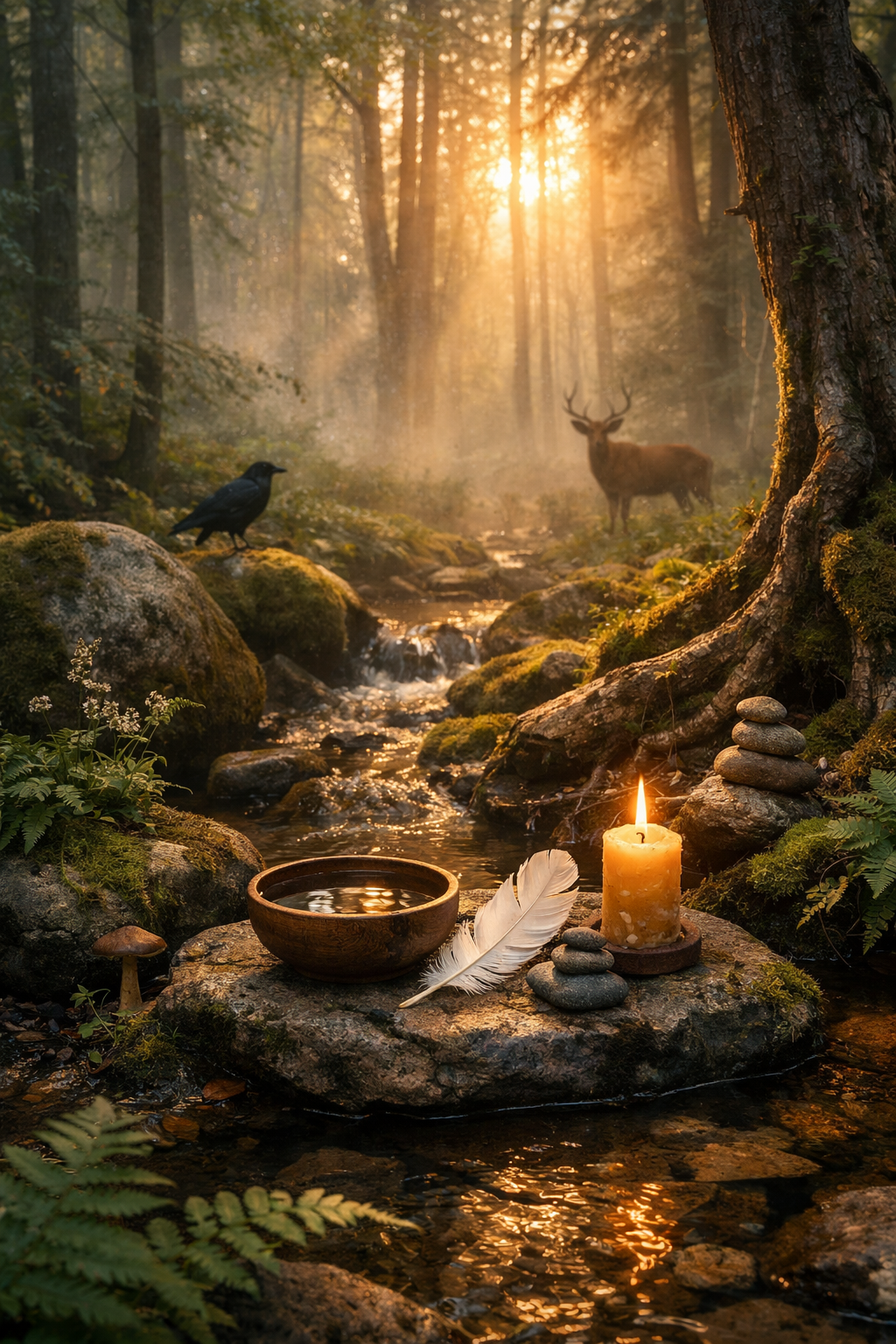
Working with landvættir is not a practice of command, but of relationship. These spirits are woven into the land itself - into hills, rivers, stones, fields, moss, wind and root. They are not abstract beings. They belong to place. They notice how we walk, how we speak, what we take and what we give back.
In seiðr, relationship with landvættir forms part of the foundation of deeper work. It teaches patience, respect and awareness. You cannot rush them and you cannot assume their welcome. Trust is built slowly, through presence and reciprocity, just as one might build friendship with another living being.
This chapter is about learning how to approach, listen and work alongside the spirits of land without force or expectation. It is about meeting the land as an equal, not as a resource. It will explore how to recognise response, how to offer without demand and how to maintain relationship long after ritual ends.
Landvættir are not here to serve us.
But if we learn to walk gently, they may walk beside us.
The Nature of Landvættir
Landvættir are the spirits that live in the land itself. They are not loud or dramatic, and they are rarely seen in a clear form. Instead, they are a quiet presence in nature - part of the soil, the trees, the water, the wind. Every place has its own spirits, and each one feels different depending on the land’s history, weather, and how people have treated it over time.
Some landvættir are calm and gentle, like those in open fields or peaceful gardens. Others may feel more watchful or protective, especially in wild forests, old ruins, or lonely coastlines. A place that has been cared for often has friendly spirits, while a place that has been harmed, ignored, or disrespected may feel heavy or closed. The land remembers.
You may not see landvættir with your eyes, but you might feel them in small ways. When you step into a place and suddenly feel peaceful or uneasy - that may be the spirits noticing you. The wind might stop for a moment, a bird might call once and go silent, or you might feel as though someone is paying attention. Nature behaves differently when something is present. You simply know something has changed.
Working with landvættir is not about power or control. It is about respect and relationship. You do not command them - you approach them as you would a neighbour or guest. You watch how you walk on the land. You speak kindly. You take only what you need. And when you take, you give back. Building trust takes time, sometimes seasons or years, and that is normal. Relationships with land grow slowly, just like roots.
Offerings are a simple way to show respect. These do not need to be grand or expensive. Bread, milk, honey, or clean water can be poured into the earth. You can leave a smooth stone, a flower, a feather. You can tidy litter, care for a plant, or simply sit quietly and breathe. The gift is not the object - it is the attention, gratitude, and care behind it.
If you rush or demand a response, the land may go still and distant. If you walk with care and patience, the land may begin to feel welcoming. You may notice clearer intuition, gentle signs, or a sense of being supported. Over time, the spirits might guide you - not with words, but through feelings, paths, weather changes, or subtle nudges that help you move in harmony with the place.
To understand landvættir, one must learn to slow down. Listen to birdsong. Feel the ground under your feet. Notice how the air moves. Spend time in a place without asking for anything, simply being present. When you give the land your quiet, the land may answer in its own quiet way.
Landvættir are not here to serve us. They are here to be met with respect.
When approached with patience, kindness, and honesty, they respond - gently, slowly, but truly.
Not Elementals, Not Guardians.. But Neighbours
Landvættir are often misunderstood. Some people think of them like elementals - spirits of fire, water, earth, or air. Others treat them like guardians or protectors of the land. While they can protect and they do belong to the land, these labels miss something important. Landvættir are not forces to command or beings to worship from afar. They are neighbours, living presences that share space with us.
Neighbours are not above us or below us. We do not own them, and they do not own us. A good neighbour is one you treat with respect, greet politely, offer help when needed, and trust over time. The relationship grows slowly, through kindness and patience - not demand or expectation. This is how it is with landvættir.
They are part of the land we walk on every day. They feel our footsteps, hear our voices, notice when we take and when we give. They see how we behave when we think no one is watching. And like neighbours, they respond to how we treat the place they call home.
If we act with care (picking up litter, tending plants, speaking gently) they may grow warm towards us. If we act careless (stamping, breaking branches, taking without thought) they may pull away or become unsettled. Not in anger, but in caution, the same way a person becomes distant when trust is shaken.
Landvættir do not need grand rituals to connect with us. A greeting spoken softly, a small offering left with thanks, or simply walking with respect is enough to begin. Sitting quietly at the edge of a woodland or by a river, noticing the world around you, is often more meaningful than any formal ceremony. Neighbours grow close through presence, not performance.
When you understand landvættir as neighbours, the craft changes. It becomes less about seeking power or signs, and more about building a living relationship with place. You start to feel when the land is happy, tired, restless, or welcoming. You learn when to enter, when to leave, and when to simply sit and listen. Just as you would not barge into a neighbour’s home uninvited, you do not barge into the land expecting reward.
They are not elementals to summon.
Not guardians to command.
But neighbours.. present, aware, alive.
When we approach them with respect, honesty, and patience, we are met not with spectacle, but with belonging.
Approaching the Land as a Living Being
In seiðr, the land is not scenery. It is not a backdrop for ritual. It is not just earth and stone beneath our feet. The land is alive - breathing, watching, remembering. When we approach it as a living being, rather than an object or resource, everything changes. Our pace slows. Our awareness sharpens. We step differently, speak differently, listen differently. We enter relationship instead of ownership.
To approach the land as living is to recognise that every place has mood, memory, and character. A hill might feel proud and open. A marsh might feel cautious and deep. An old oak might carry patience like a heartbeat, while a young birch grove might feel curious and light. These impressions are not fantasy - they are how the land speaks. Through sensation. Through feeling. Through the way the world shifts when we pay attention.
When you enter a place, pause. Do not walk straight in with purpose. Stand at the edge. Breathe. Notice the sound of wind in leaves, the creak of branches, the feeling in your chest. This is your first greeting. You are saying without words: I see you. I am here with respect.
Sometimes the land feels open and welcoming. Sometimes it feels closed, heavy, or distant. Neither is good or bad - just like a person may be tired, busy, or wary of a stranger. If the land feels uneasy, step gently. Sit for a while. Offer something simple - a whispered greeting, clean water, a stone placed with care. Do not push. Trust that relationship takes time.
Words matter, but presence matters more. You do not need long chants or complex ritual. A quiet thank you spoken with sincerity carries more weight than any rehearsed speech. The land responds to attitude, not performance. If you come with honesty and patience, the land will feel it.
Approaching the land as living also means recognising its boundaries. Not every tree wants to be touched. Not every river wants company. Sometimes you may feel that you are being asked to leave - a sudden restlessness, a shift in the air, birds falling silent. When this happens, respect it. A living being has the right to say no. Stepping back is an offering too.
With time, something changes. You begin to feel when a place knows you. Paths seem clearer. Wind softens instead of biting. You notice details you never saw before - the way moss holds water, how shadows move at dusk, the scent of rain before it falls. The land opens slowly, like a friend sharing a little more of themselves each visit.
This way of approaching is not about taking power from the land, but sharing space with it. It teaches humility. It teaches patience. It teaches that spirituality is not always in vision or magic, but in walking gently, watching closely, and remembering that we are guests here.
The land is alive, and when we treat it as such, we stop standing on it and start standing with it.
In that small shift, relationship begins.
Seeing with the Body Before Seeing with Sight
Before vision arrives, the body knows. This is one of the first truths in working with landvættir. We are taught to look with our eyes, to wait for signs, lights, shapes or messages. But sight is the last sense to awaken in this work. The body speaks first - in pressure, in warmth, in a change of breath, in the feeling of being welcomed or watched.
This is not imagination. It is instinct. Animals feel it. Children feel it. We once felt it too, before we learned to ignore what does not shout. When you walk through woodland or stand beside a river, there is often a moment where your skin tingles, or your stomach shifts, or your attention sharpens for no clear reason. That is the body seeing.
To practise this, you must slow down. When you move too fast, you miss the small signals the land gives. Walk as though you are entering someone’s home. Pause. Let your feet settle into the earth. Feel how your body responds. Notice if you breathe deeper or hold your breath. Notice if your shoulders loosen or tense. The body reacts to presence even when the mind has not caught up.
Sometimes the land feels wide and open, like an exhale. Sometimes it feels close, like a room filled with quiet eyes. You might not know why. You don’t need to. Your task is not to decode, but to sense. Name the feeling gently. Safe. Heavy. Curious. Quiet. The words matter less than the awareness they come from.
Sight in this craft is not always visual. It might be a picture in the mind, a thought that does not feel like your own, or a sense of shape rather than form. But before any of this happens, the body will already know. If you learn to trust that knowing, vision comes more naturally. If you ignore the body and chase the image, you build the wrong foundation.
This is why grounding matters. A grounded body listens better than a restless one. When your breath slows and your weight settles into your feet, the subtle shifts become louder. You might feel a coolness behind your neck, a warmth in your hands, or a slight pull toward a certain tree or stone. These are invitations.
There will be times when the body feels unsettled, even if the land looks beautiful. Do not force the experience to match expectation. If the body senses unease, step back. Look, but do not push. The unseen values caution more than boldness. A relationship built through gentleness will always go farther than one built on assumption.
Seeing with the body is a skill, not a trick. It grows with practice, with time spent outside screens and walls, with slow walks and unhurried attention. It teaches humility. It teaches that the unseen does not owe us spectacle. It offers presence instead.
When we trust the body before the eyes, we stop hunting for vision and begin to receive it.
And the land (patient, ancient) begins to answer.
Offerings as Conversation, Not Transaction
Offerings are often mistaken for payment. People think if they leave a gift, they will receive a blessing in return, as though the land is a shop and the spirits behind it are traders. But landvættir do not barter, and the land itself does not keep score. An offering is not a transaction. It is a conversation. A way of saying I am here, I see you, thank you for letting me walk this place.
When you give to the land, you are not buying favour, you are opening a thread of relationship. Just as you might bring bread when visiting a neighbour, an offering says you recognise that you are stepping into someone else's home. It shows respect. It shows presence. It says you have come to connect, not to take. Even the smallest gesture can hold weight when placed with care.
Offerings do not need to be grand or dramatic. A little bread. Fresh water poured into the soil. A berry left where fox or bird may find it. A stone you found and carried back to rest in a quiet place. Time spent listening. Rubbish carefully removed from a stream. The object is not the point - the intention is. A simple gift given with sincerity speaks far more clearly than any ritual done out of habit or hope for reward.
Before leaving an offering, pause. Hold it for a moment. Let your breath settle. Speak a gentle thank you, even if only in thought. This slows the mind, softens the moment, invites the land into awareness. You do not need long prayers. A single honest breath is enough. You place the offering, not as payment, but as acknowledgement. A small gift in return for the space you have been allowed to share.
Sometimes the land responds immediately - the air grows lighter, a sense of welcome spreads through the chest, birds resume their song. Sometimes nothing moves at all, and that too is fine. Conversations do not always give answers on the first word. Landvættir move slowly, and trust is built over seasons, not minutes. You do not give to get. You give to be in relationship.
When offerings are made only to seek power or vision, the thread frays. When offerings are made as greeting, gratitude, and care, the thread holds. Over time, the land begins to know you. Footpaths feel kinder beneath your steps. Stillness deepens instead of pushing you away. You begin to feel when a place is pleased, wary, or watching you closely. This is how relationship forms - through presence, reciprocation, and patience.
An offering is not a key to unlock the unseen.
It is a hand extended.
A quiet hello.
A promise that you will walk gently here.
And the land replies in its own time.
Reading Response: Signs of Welcome or Withdrawing
When you begin to form relationship with landvættir, the land itself will answer, but its language is quiet. It does not speak in words. It speaks in feeling, in small signs, in the way the world reacts to your presence. Learning to read this response is part of the craft. It takes patience, attention, and a willingness to listen more than you assume. There are moments where the land opens to you, and moments where it steps back. Neither is a judgement. Both are part of building trust.
A welcome is rarely loud. It may feel like a softening in the air, as though the place exhales. Your body settles without effort. The wind stirs gently rather than sharply. Birds continue their chatter instead of falling silent. You may feel warmth in the chest, a sense of being noticed, or an unexpected calm that invites you to stay. Sometimes the world seems brighter, colours sharper, as if the land is letting you see a little deeper than before. These are signs of an open door.
Withdrawing feels different. The space grows still, but not in a peaceful way. Birds stop singing. A feeling like being watched from a distance may appear. Your body tightens without clear reason or your mind becomes restless. The place might feel heavier, as though the ground does not want more footsteps. You may sense that you should leave, or simply sit and not go further. This is not rejection. It is boundary. It is the land saying, gently, not today.
Welcome and withdrawal are both conversation. The land answers what you bring. If you come rushing, loud in energy or intent, you are more likely to meet distance. If you come with patience, respect, and no expectation, the land often softens. But it has moods, just as you do. Rain, season, animal tracks, even unseen work beneath the soil can change how a place feels. A welcome yesterday does not guarantee one tomorrow. Relationship is alive, always shifting.
The key is not to push. If you feel welcome, stay, listen, and give thanks. If you feel held at arm's length, step back or sit quietly a while. Do not demand. Do not chase sensation. Trust that you are being shown what you need for that moment. Sometimes the most respectful act you can offer is to leave the place in peace. The land remembers this.
Over time, patterns emerge. You begin to recognise how welcome feels in your body, and how caution feels too. You learn which woods open to you easily, which hills like company, which rivers prefer silence. You learn that response is not earned once, but maintained through ongoing care. The more you listen, the clearer the language becomes.
To read the land is to be in relationship with it.
Not to command, but to notice.
Not to assume, but to attend.
In every visit, ask quietly with your presence:
May I be here?
And let the land answer in its own way.
When Silence Means Wait
There will be moments in this work where nothing moves. No softening in the air, no shift in breath, no sense of welcome or refusal. The land does not open, but it does not push you away either. It simply remains still. This silence is its own kind of speech. It is not a door shut, but a door not yet opened. A quiet asking for patience. A reminder that relationship unfolds in its own time.
Silence often unnerves those new to the craft. We are used to signs, to answers, to feeling something happen. In silence, doubt creeps in. Am I doing this wrong? Has the land turned from me? But silence is not absence. Silence is pause. It is the land holding its breath, watching how you respond when there is nothing to gain. It is here that your intentions are revealed most clearly.
When silence meets you, do not rush to fill it. Do not demand an answer or push deeper hoping for sensation. Sit. Breathe. Let the moment be what it is. The land may be resting. It may be measuring your presence. It may simply not be ready to share more. A seed does not sprout the day it is planted. Growth hides beneath the soil long before it breaks the surface. Silence is part of that rooting.
Waiting teaches humility. It softens ego. It reminds us that seiðr is not instant magic, but relationship. A good neighbour does not knock on the door every day expecting welcome. They visit with care. They return at the right times. They know that closeness grows slowly. So it is with the land. If silence asks you to wait, honour it. Offer a simple greeting, a small gift if it feels right, and leave the place gently. Trust that you will be welcomed when the thread is ready to move.
Sometimes, after many quiet visits, something shifts. A single bird calls where there was none before. A breeze stirs the grass. A feeling rises in the chest like recognition. Not dramatic, but real. The land speaks when trust forms, not when we demand it. Silence prepares you to notice that whisper when it comes.
To wait is to show you are not here for sensation alone. You are here for relationship. And relationships are not rushed. They unfold through time, presence, patience. The land sees how you behave when nothing responds. That is often when it learns who you truly are.
When silence meets you, take it as invitation. Not forward, but still.
Not to act, but to attend.
In waiting, you show respect.
In patience, you root deeper.
And in time, the quiet will open.
Building Trust Through Consistency
Trust with landvættir is not built in a single visit. It grows slowly, like moss across stone, like roots finding their way through soil. A one time offering or a single respectful walk is a beginning, not a bond. The spirits of place learn us the same way we learn them, through repetition, through presence, through returning without demand. Consistency is the language that speaks louder than any ritual.
When you visit the same place often, something familiar begins to form. The land remembers your footsteps. The air recognises your breath. You start to feel when a space is glad to see you, and when it is quiet and inward. This is not imagination, it is relationship settling in. Just as friendship is built through shared time rather than grand gestures, the land opens to those who come back gently and often.
Consistency does not mean constant action. It means showing up. It means offering care even when nothing is given back. It means returning in rain as well as sunshine, in quiet moods as well as hopeful ones. Each small visit lays another thread, and over time those threads weave into something strong enough to hold connection.
Some days will feel bright and open. Others may feel still, or distant, or weary. Do not take this as failure. A neighbour is not always in the mood to talk, yet the relationship remains. When you keep arriving with respect, the land sees that you are not here only when it suits you. This is what builds trust. Not asking for signs, but simply being present. Not waiting for reward, but tending the thread anyway.
Consistency also teaches your body to attune. The more you return, the quicker you feel the mood of the land. You will begin to sense subtle changes you once overlooked. A different tone in the wind. A shift in bird calls. The way your breath settles faster or slower. These small things become familiar, and from familiarity grows understanding.
Trust builds quietly. One visit at a time. One offering at a time. One moment of listening instead of speaking. There is no rush. The craft is not a race. It is something lived, walked, returned to again and again until presence becomes known on both sides.
Go back to the same grove. The same hill. The same stream. Sit. Greet. Listen.
Let the land learn you, as you learn it.
In this steady rhythm, trust takes root. And once rooted, it grows deeper than any sudden moment of power could ever reach.
What the Land Remembers (Even When You Forget)
The land forgets nothing. Even when you move on with your day, even when seasons change, even when your visits become less frequent, the land holds memory the way soil holds water after rain. It remembers the footsteps that walked gently and the ones that rushed through without thought. It remembers the offering left with gratitude, and the careless shout that startled birds into flight. It remembers how you entered, how you behaved, how you left.
This is not memory as humans understand it. It is not a list of events written in thought. It is a felt memory, stored in atmosphere, in the behaviour of birds, in the way the wind meets you when you return. A respectful visit settles like calm across the ground. Disrespect lingers like a disturbance in still water. In time, the land responds to the pattern more than the moment. One kind gesture means something. Ten gentle visits mean much more.
The land notices sincerity. It recognises when you come only for experience, only when you want something, only when you feel mystical. It also recognises when you come simply to be present, to listen, to greet without expectation. These visits settle deeper. They leave a trace of warmth, a familiarity, the beginning of welcome. Even if you forget how many times you have returned, the land does not.
Sometimes you might come back after weeks or months, unsure if the relationship still stands. You may expect to begin again from nothing, but the land remembers. You might feel it in the way the air meets you, or how your breath falls into rhythm more quickly than expected. You may find that trust built through slow presence remains waiting, like an ember that only needs a little breath to glow again.
This memory is a gift, but also responsibility. Carelessness is remembered too. A tree once disrespected does not instantly forgive because you have changed your mind. Trust must be rebuilt through patience. If you leave a place in anger or haste, return with softness. Let your presence become gentle again. Offer time, not excuses. Relationship with the land heals like a wound, slowly and with attention.
The land remembers weather and seasons and footsteps. It remembers where the fox crossed, where the dew first touched, where your hand rested on bark the day you were grieving. It remembers the tone of your voice. It remembers if you said thank you. These memories are not stored in thought, but in feeling. And feeling is the language of this craft.
Even if you forget why a certain grove feels like home, the land does not. Even if you forget the words you spoke by the river, the water carries them still. When you return, the memory rises to meet you, soft and quiet, like someone who recognised your face long before you recognised theirs.
The land remembers kindness.
It remembers patience.
It remembers presence.
And in time, it remembers you.
The Weight of History in a Single Field or Stone
Some places feel heavy the moment you step into them. You might not know why. There are no signs, no stories written on plaques, no obvious reason for the shift in the air. Yet something in the body pauses. Breath changes. A quiet awareness rises that this ground has seen more than you ever will. A single field can hold centuries. A stone can carry memory older than language.
History lives in the land long after people forget it. Battles we no longer speak of. Births and burials. Harvests and hunger. Joy, fear, prayer, blood. All of it settles into the soil like layers. Grass grows over it, but the feeling remains just beneath the surface. You can sense it in the way wind moves through the space, in how animals behave, in whether the land feels open or guarded. Not because the place is haunted, but because it is full.
Sometimes the weight is gentle, like walking into a meadow that feels safe, familiar, held. You do not need a story to know that laughter once lived here, or that people gathered in peace. The body relaxes without effort. The land meets you softly. Other times the weight is sharp. A field might carry old grief or conflict. A stone might once have stood beside an ancient road, watching generations pass. In those moments, the land asks for respect before anything else.
To recognise this weight is not to claim secrets or visions. It is simply to listen. You do not need to know the exact history. You only need to acknowledge that history exists. Stand a moment longer. Place your hand on the stone. Let the body feel what the mind cannot name. Offer a breath, or a quiet greeting. This is not about unlocking knowledge. It is about entering relationship.
Landvættir notice when a human senses history without trying to own it. They notice when you approach with humility rather than entitlement. Some places might open slowly, like an old door that has not been touched in years. Others may remain closed, not out of hostility, but out of caution. A field may welcome you only after you have returned many times. A stone may speak only when silence has become natural.
The land does not forget what has happened on it. It carries memory the way bone carries age. When we walk across it, we are stepping into a story already long underway. To honour land is to recognise that we are not the first to stand here, and will not be the last. Our part is brief, but it matters how lightly or heavily we tread.
A single field can hold the echo of old footsteps.
A single stone can carry the weight of a thousand years.
And when you listen, really listen, you might feel the past breathe back.
Differences Between Wild Land and Tamed Land
Wild land and tamed land have very different feelings, and learning to notice that difference helps you approach each place with the right kind of respect. Wild land often feels raw, unpredictable, and alive in its own rhythm. Paths shift, wind changes suddenly, animals watch you from the tree line. You are a guest there, not the centre of anything. The land holds its own rules, and you must move with care, awareness, and patience. Wild places do not rush to greet you; they watch first. They decide whether to let you in.
Tamed land carries another kind of presence. It has been shaped by human hands, ploughed, fenced, tended, or built upon. The spirits there often know humans well. Sometimes they are warm and used to contact - gardens, farms, old orchards that feel friendly and familiar. Other times they are tired, flattened, or quiet from long years of being taken from without being given to. Tamed land is not weaker than wild land, only changed. Its stories are mixed with people’s stories, and its trust is built through care, not conquest.
In wild places you might feel small, alert, and humbled. The body listens more. You walk slower. You ask permission without words. In tamed places you may find the land listens back more easily - if you move gently, tend something, offer water or bread, or simply sit without demanding anything. Wild land teaches respect. Tamed land teaches relationship.
Neither is better. They are just different. One asks you to step back and witness. The other invites you to participate. But both carry spirit, memory, and presence. Both require attention. Both notice how you behave.
The key is to enter each place as it asks - not how you wish to.
The Ethics of Entering Spaces You Do Not Own
When you step onto land that is not yours, you enter a place with its own memory, spirit, and rules. You are not in charge there. You are a guest. This means arriving softly, without assuming you have the right to walk, take, or do work there. Even if no humans are present, the landvættir and the land itself notice you. Entering quietly is the first sign of respect.
Before you go further, pause. Look around. Listen. A moment of attention is like knocking before entering a house. You do not demand space. You ask for it with patience and care. Sometimes you will feel welcome - the place feels open, your body relaxes, birds continue to sing. Other times something in you pulls back or feels tight. That is a sign to slow down or to stay outside.
Taking things from land you do not own is never the starting point. Stones, feathers, plants, wood - they are part of that place, not objects to collect. If the land does not clearly offer something, it stays where it is. If you ever take something with genuine permission, you also give something back. A little food, water, a moment of thanks, a quiet thought of gratitude. It is not payment - it is good manners and balance.
If the land belongs to people as well as spirits, that boundary matters. Respect fences, gates, paths, and signs. Do not sneak, damage, or behave as if access is owed to you. A respectful visitor moves lightly, leaves no trace, and does not take what is not theirs. Spirit and human both hold memory of behaviour.
The most important thing is this: not every place is for you. Some land welcomes you in time. Some only lets you stand at the edge. Some stays closed no matter how polite you are. Listening to these signs keeps the relationship healthy. Leaving when asked is a strength, not a failure.
Respect travels far. A place treated with care is far more likely to open again.
When You Are Not Welcome and Why That Matters
Sometimes the land will not open to you. You may feel it quickly or only after standing there for a while. The air feels heavier, the birds go quiet, your body becomes tense for no clear reason. You might feel watched in a way that is not invitation, but boundary. This is not misfortune. It is communication.
Not being welcome does not mean the land is hostile. It means the relationship is not there yet, or the place is not open to visitors at this time. The land may be resting, grieving, protecting something, or holding memory that does not want to be stirred. There may be history in the soil that is not yours to touch. There may be oaths or old agreements you do not know about.
Leaving when you are not welcome is an act of respect. It shows the landvættir that you listen instead of take. It proves you are not there to force your way in. Many practitioners create harm by pushing through a boundary they felt clearly but ignored. The work might continue, but trust does not. The land remembers those who stay gentle when asked to step back.
Sometimes you may return later and feel a difference. The land softens, the quiet becomes calm instead of heavy, the sense of being watched feels neutral or curious instead of closed. This change is earned by patience, not insistence. When you honour a boundary, the land learns it can trust you.
Being unwelcome is not failure. It is part of the relationship. It teaches humility, listening, and care. The spirits of place are not there to entertain, serve, or give us experiences on demand. They have their own lives, rhythms, and needs. When you respect that, you stand beside them rather than above them.
A closed gate can become an open one in time. Or it may never open. Both are truths worth listening to.
How to Ask, Not Take
Asking is the heart of relational craft. It means you do not assume you are allowed to enter, work, gather, or speak on land that is not yours. Asking is not begging. It is respect. It is the difference between partnership and taking.
To ask is to pause at the boundary of a place and offer your presence first. Stand still. Breathe. Let the land feel you. You might speak softly with your voice or with your thoughts. A simple greeting is enough. You are saying, "I am here. I mean no harm. May I step closer." There is no demand in this. Only openness.
An offering can follow the ask, but only if it feels right. A single drop of water, a piece of bread, a song hummed under your breath. Keep it simple. Do not trade gifts for permission. You are not buying access. You are starting a conversation. You offer because you want to show care, not because you expect reward.
If the land feels calm, safe, and open, then step forward gently. Notice how the place responds. Birds may move normally, the body may soften, the air may feel welcoming. If you sense tension or pushback, take one step back. Wait. Listen longer. If it remains closed, you leave.
Asking takes more time than taking. It is slower and quieter. It requires patience and humility. But it builds a foundation no force can give you. A place that you enter with consent becomes a place you can return to again and again. It remembers that you came with respect.
Taking without asking might give you experience, but it does not give you relationship. And relationship is what seiðr is built on.
Shared Work Instead of Extraction
Shared work means you enter the land to give as much as you receive. You do not visit only when you want something. You do not ask only when you need help. The landvættir are not resources to be used. They are neighbours to work alongside.
Shared work looks different each time. You might clear rubbish from a riverbank. You might tend a small patch of earth, even if it is only picking dead branches so the ground can breathe. You might sit in quiet presence so the land knows you come with calm rather than hunger. You might bring offerings during good seasons, not only during struggle.
Extraction is the opposite. It is when someone takes herbs, wood, energy or guidance without giving anything back. When the land only hears from you when you want. When you rush through a place leaving no gratitude, no care, no trace except absence. Extraction wears down a relationship, even when you think the land does not mind.
Shared work builds memory. The land notices when you return again and again with kindness. It remembers who carried water during drought. Who left bread for the birds in winter. Who sang softly on a cold morning just to bring warmth into the air. These small acts root you into place.
Over time the balance becomes natural. Some visits you give more. Some visits you receive more. But the heart of it stays equal. You are part of the rhythm, not outside it. The land is no longer a location. It becomes a relationship.
This is how trust grows. Not through big rituals or dramatic offerings, but through steady presence and shared care. When you give without taking first, the land listens. When you take only with permission, the land responds.
Shared work is not a rule. It is a way of walking so that both you and the land grow.
Boundaries Between Human Need and Land Need
Sometimes what you need and what the land needs are not the same. You may come looking for calm, guidance or power, while the land needs rest, stillness, or time to heal. A good practitioner knows how to feel that difference and respects it even when it is disappointing.
Human need can feel urgent. You might want answers, support or energy from a place you trust. But if the land feels tired, closed, or unsettled, pushing forward breaks relationship. You are asking more than the land can give. You risk taking from a place already carrying weight. This is where listening becomes more important than desire.
The land also has needs. Water after drought. Quiet during nesting season. Space when storms or human damage have strained its strength. Sometimes the best offering is stepping away. Sometimes the right action is tending instead of asking. The land may need healing long before you seek help from it.
When human need is strong, pause and check. Are you asking because you are aligned, or because you are desperate? Are you listening, or are you reaching? If hunger speaks louder than respect, you wait. You ground. You return another time. This is not rejection. It is responsibility.
Boundaries protect both sides. They stop you from drawing life from a tired place. They stop the land from giving beyond its capacity. A healthy relationship forms when you are able to say, "Not today," to yourself as easily as you accept it from the land.
In time, you learn the difference in feeling. Open land feels spacious, warm, or curious. Closed land feels heavy, quiet, or distant. When you honour these signals, the land grows to trust your presence. It knows you will not take beyond what it can spare.
Healthy relationship means both needs matter. Yours. And the land’s. Neither is above the other.
What Changes When Landvættir Trust You
When the land begins to trust you, something shifts. Not suddenly, not like a door swinging open, but slowly and quietly, like moss spreading over stone. The feeling of the place changes. What once felt neutral or distant feels aware of you, not watching with caution but with recognition.
Paths that seemed tangled feel easier to follow. You notice small details you missed before. A certain bird lands closer. The wind moves differently around you. The land is no longer simply a place you visit. It becomes somewhere you are allowed to stand.
Trust does not give you ownership. It gives you relationship. The land does not offer power freely, but it shares presence. A calm that sinks into the bones. A sense that your thoughts settle faster. Your breath deepens without trying. You are not just on the land. You are with it.
In this trust, offerings feel different. Not gifts given to impress or to earn something. They become part of a rhythm. You give because the connection matters, not because you want a result. The land responds not with spectacle, but with steadiness. The silence feels full instead of empty.
Sometimes guidance arrives without words. A pull to sit beneath a certain tree. A feeling to walk left instead of right. Answers that rise like water from the ground of the mind. These are not visions forced by hunger. They are responses to being present, respectful, and known.
Trust builds a way of moving. You walk more gently. You take less. You listen more. You stop asking the land to carry everything you bring, and instead you bring yourself as someone who carries too.
In time, you may feel the land greet you. Not like a voice, but like a welcome. A warmth beneath the feet. A softening in the chest. A knowing that you are safe here, and that you are not a stranger.
This is what changes. The work stops feeling like reaching outward, and begins feeling like meeting halfway.
Gifts Given, Gifts Returned.. Slow Reciprocity
Reciprocity with landvættir is slow. Not traded like coin, not earned through grand gestures, but grown over time like roots beneath soil. Gifts given are not payments. They are part of a conversation. A rhythm. You offer something of yourself, and one day the land offers something in return.
The first gifts are often small. Clean water poured into thirsty ground. Bread shared with quiet gratitude. A moment of stillness offered without asking for anything back. These things seem simple, but the land feels intention, not price.
When trust deepens, the land answers in its own way. Not always how you expect. Sometimes with calm when your thoughts are storming. Sometimes with a path that opens on a day you needed direction. Sometimes with a sense of being held when grief is heavy. These are gifts, even if they arrive without shape or story.
Reciprocity is not fast. You might give for months before you feel anything change. You might offer with open hands and walk away unsure if it mattered. This is why patience is the heart of relational craft. You are not farming results. You are tending relationship.
If you give only to receive, the thread weakens. If you offer with pressure or expectation, the land grows distant. But if you give because the bond itself matters, because presence is enough, then something subtle begins to grow. A shared understanding. A quiet welcome.
Some days, the land may give you nothing you can name. Other days, something small yet meaningful will arrive. A feather at your feet. A shift in wind that answers a question you barely spoke. A dream that feels like guidance. Gifts like these are not taken. They are given freely.
Slow reciprocity teaches patience, respect, and listening. It teaches that real relationship is not measured by what you get back, but by how your presence changes when you return. You stop being a visitor. You become part of the place.
This is the quiet magic of relational craft. No rush. No demand. Just steady give and steady receive, over seasons, not moments.
When the Land Speaks First
There may come a moment when you do not speak first. You do not make the offering, you do not start the conversation, you only arrive and listen. And something in the land moves towards you. Quiet, but unmistakable. A feeling that you have been noticed.
It is rarely dramatic. The land does not shout. It leans. A breeze that rises without wind. A crow that lands and stares as if expecting your answer. A sudden warmth or stillness that settles like a hand on the shoulder. It is not imagination or wish. It is the land speaking in the way it knows how.
Sometimes it comes as a pull to sit, or to stay longer than you planned. Sometimes the body softens, as though the ground beneath you has become safer, more familiar. The mind stops racing. Time feels slower. You realise you are no longer just present on the land, you are present with it.
When the land speaks first, it is never noisy. It is permission. Welcome. Recognition. It might last a minute, or an hour, or only long enough for you to breathe and feel held. It is not a gift to chase or repeat. It is a sign that your presence has become part of the place.
You do not need to respond with words. A touch to soil is enough. A whisper of thanks. Stillness held with care. The conversation is simple: it begins with listening, and continues with respect.
When the land speaks first, you understand something important. Relationship is not created by how much you do, or how often you visit. It grows deeper in moments where you stop asking, and start noticing.
This is the beginning of real connection. Not imagined. Not forced. Mutual.
Departure as Part of the Craft
Leaving is also part of the craft. A visit does not end when you walk away. The way you close the moment matters as much as how you began it. Many people forget this. They take the quiet, the peace, the signs, and then simply go. But relationship is shaped in leaving just as much as arriving.
When you prepare to go, pause. Notice how the land feels. Notice how your own body feels. Are you lighter than when you arrived? More steady? More clear? These changes are part of the exchange. A soft thank you spoken aloud, or only held within, marks the ending with respect. It shows you did not come only to take, but to meet and to listen.
Sometimes departure feels natural. A gentle sense that the moment is done, like a candle that has burned to its end. Other times you may feel held for a little longer, as if the land is asking you to stay. If you can, honour that feeling. If you cannot, leave slowly. Presence lingers even in stepping away.
There will also be times where you must end the visit earlier than hoped. Rain begins. Tiredness arrives. The land grows quiet in a way that asks for space. Leaving early is not failure. It is awareness. It is knowing that relationship breathes in and out, not all in one steady line.
Departure is a closing of the thread. You might touch a tree with your fingertips, place a stone back where it was found, or simply turn your head once more to look before you go. These small actions tell the land that you were here with care.
When you leave with respect, you return differently. You return recognised. Not as someone who visits for gain, but as someone who knows how to step back as well as step forward. In time, the path to and from the place becomes part of the relationship itself.
Leaving is not the end of the work. It is part of the rhythm that keeps the bond alive.
Maintaining Relationship Beyond Ritual
Relationship with the land does not end when ritual ends. Craft is not only what you do in sacred moments. It lives in how you walk, how you speak, how you return. Many think connection must be deep or dramatic to matter, but most of the relationship is grown in ordinary time.
You maintain bond by showing up, even when you do not need anything. A short visit. A quiet breath at the gate. A hand on the bark of a familiar tree. These small acts remind the land that you are still here, that you remember, that the thread between you has not been dropped.
You can also maintain relationship through how you live away from the place. Respecting the land you cannot see. Reducing harm. Picking up litter on another path. Pouring water on a plant at home. These small gestures ripple outward. The land knows when your care is wide, not narrow.
Speaking to the land in your thoughts or heart keeps the connection warm. You do not need ritual words. You can say, “I will return,” or “thank you for last time,” or simply hold the feeling of that place for a moment. Presence travels further than steps.
Long gaps do not break relationship if respect remains. The land does not count days. It notices intention. It remembers those who arrived with patience, who listened more than they asked, who offered without cost. When you return after absence, greet the place as if greeting an old friend.
Maintaining relationship is not about effort. It is about continuity. A steady thread that does not snap when life becomes busy. You carry the land in you, and the land carries your footprint in return. Over months, or years, this grows into something strong, quiet, and enduring.
A relationship that lives beyond ritual becomes part of who you are, not something you only do.
The Long Memory of Stone and Root
Stone remembers longer than any human lifespan. Roots hold stories older than language. When you work with landvættir, you step into a relationship with beings who carry memory far beyond your years. This is why patience matters. The land does not rush. It moves in seasons, not moments, and it remembers how you walked upon it long after you have gone.
Some places hold joy. You feel it as a lightness, a gentle welcome that settles the breath. Others carry grief, echoing battles, burials, or loss that has soaked into soil. You may feel heavy for no reason you can name. This is not imagination. It is memory, alive beneath your feet.
Stone remembers every hand that touched it with respect, and every hand that took without asking. Root remembers every water offering, every song, every quiet visit. Over years, these memories become part of the place. Your presence becomes a thread in the story of that land.
You cannot change old memory quickly. You cannot heal what happened centuries ago in a single ritual. But you can add to the story with care. You can offer gentleness where there was violence. You can bring stillness where there was fear. You can help the land breathe again, slowly.
Sometimes you will feel that a place softens after many visits. What once felt guarded begins to open. Birds move closer. The air warms around you. Paths seem clearer. This is not a reward. It is history learning to trust you. Your consistency becomes part of the long memory carried through stone and root.
Even when you are gone, even when you move far away, a trace of you remains where you stood with awareness. The land holds it. A footprint in time. A kindness stored like seed beneath the soil.
Working with the long memory of land is knowing that you are part of something that outlives you.
Landvættir in Dream, Omen, and Instinct
Sometimes the land speaks when you are not standing on it. It comes through dreams, through small signs in the day, through instinct that rises without clear reason. Landvættir do not only live in soil and water. They move through memory, imagination, and the quiet spaces of the mind, reaching out when the waking world is too loud to hear.
In dreams, their presence is rarely dramatic. You might see a path you know well, but the colours feel deeper, or the wind feels aware of you. You might meet an animal that watches you closely, or find yourself standing beside a tree that seems alive with meaning. These dreams do not always carry messages to decode. Sometimes they are reminders that the bond continues while you sleep.
Omens appear in the waking world in the same quiet way. A feather placed where you will notice. A sudden bird call at the moment of decision. A stone that draws your eye again and again. The sign is not the omen alone. It is the feeling inside you when it arrives. Calm, clarity, or the soft pull to pay attention.
Instinct is the voice of relationship. When you work with landvættir over time, you begin to know things without thinking. You hesitate before stepping off a path and only later notice the hidden nest. You take a longer route home and find the way unusually peaceful. Instinct guides you like a hand at your back, not pushing, but supporting.
These forms of contact are subtle. You cannot demand them or chase them. They come when the connection is alive and when the moment calls for it. If you try to force meaning into every sign or dream, you drown out the gentle truth beneath it. Let understanding unfold naturally.
Dream, omen, instinct. Three ways the land reaches beyond the boundary of place, reminding you that relationship is not limited to where your feet stand. The thread stretches into thought, sleep, and feeling. It follows you until you learn to listen in more than one world.
When you trust these quiet forms of contact, they grow clearer. Not louder. Clearer.
When the Work Moves to a New Place
There will come a time when the work asks you to move. A new woodland, a new riverbank, a new hill that feels strange at first. The relationship with the old land is not lost. It becomes part of you, carried in memory and in the way you walk. But new land brings new voices, new lessons, and a new rhythm to learn.
When you arrive somewhere unfamiliar, do not rush to take what you had before. Start again. Slow. Quiet. Stand, breathe, listen. Feel the difference in the air, the soil, the sound of birds. Every place has its own personality. Some greet quickly. Some watch from a distance. Some remain silent for a long time to see if you will stay.
You do not replace one relationship with another. You grow another thread beside it. The old land still holds you in its long memory. You might dream of it. You might feel it call during certain seasons. Honour that. But give the new place time to know you without carrying expectation from the last.
Offer something small. A cup of water. A moment of gratitude. Not as a request, but as a hello. Wait for response over weeks, not hours. The land does not hurry. Connection comes when it is ready, not when you want it.
There may be resistance at first. A sense of distance, or nothing at all. This is not rejection. It is boundary. You are a stranger in a living world that remembers who has come before. Let your presence be gentle. Let your visits be regular, even short ones. Familiarity builds slowly like roots taking hold.
And when the land finally speaks, even softly, you will know. A moment of warmth. A shift in breeze. A calm that settles unexpectedly. It feels like being seen.
Moving to a new place reminds you that craft is not one bond but many. Each site teaches differently. Each spirit has its own language. You learn again how to listen, how to wait, how to stand without taking.
You do not carry ownership. You carry respect.
Closing a Working with Respect
Ending work with the land is as important as beginning it. A closing done with care leaves the space balanced, the thread intact, and the relationship strengthened. Many people forget to close, walking away while the moment is still open. This can leave the land unsettled and your own energy scattered. A respectful ending brings everything back to calm.
Take a breath before you leave. Feel your feet on the ground. Notice the space around you one last time. Let your body soften, as if saying, "I am still here, and now I go." Small actions matter. A hand laid gently on a tree. A bow of the head. A quiet thank you spoken aloud or inside. This tells the land that the exchange is complete.
You do not need grand words or ritual formality. Honesty is enough. You might say, "Thank you for this time," or "I will come back when I can." The land hears tone more than language. Gratitude carried in the chest is clearer than any chant.
If you took water, herbs, or anything from the ground, make sure you gave something in return. If you moved stones or touched branches, place them back with care. Leave the place better than you found it, even in small ways. Respect is shown through action more than intention.
Sometimes you will feel a subtle release as you close. The air may lighten, or a quiet sense of completion settles in your body. Other times you may feel nothing at all. This does not mean the closing failed. Craft is built on consistency, not constant sensation.
Once you step away, hold the moment gently for a few breaths. Do not rush into noise or distraction. Let the connection fade naturally, like a candle dimming rather than being blown out too fast. A soft ending keeps the thread smooth for next time.
Closing with respect teaches the land that you do not come only for what it can give. You come as someone who notices, cares, and leaves with grace. In time, this becomes part of how the land remembers you.