
Seiðr Craft - Chapter 11: When the Spirits Step Back
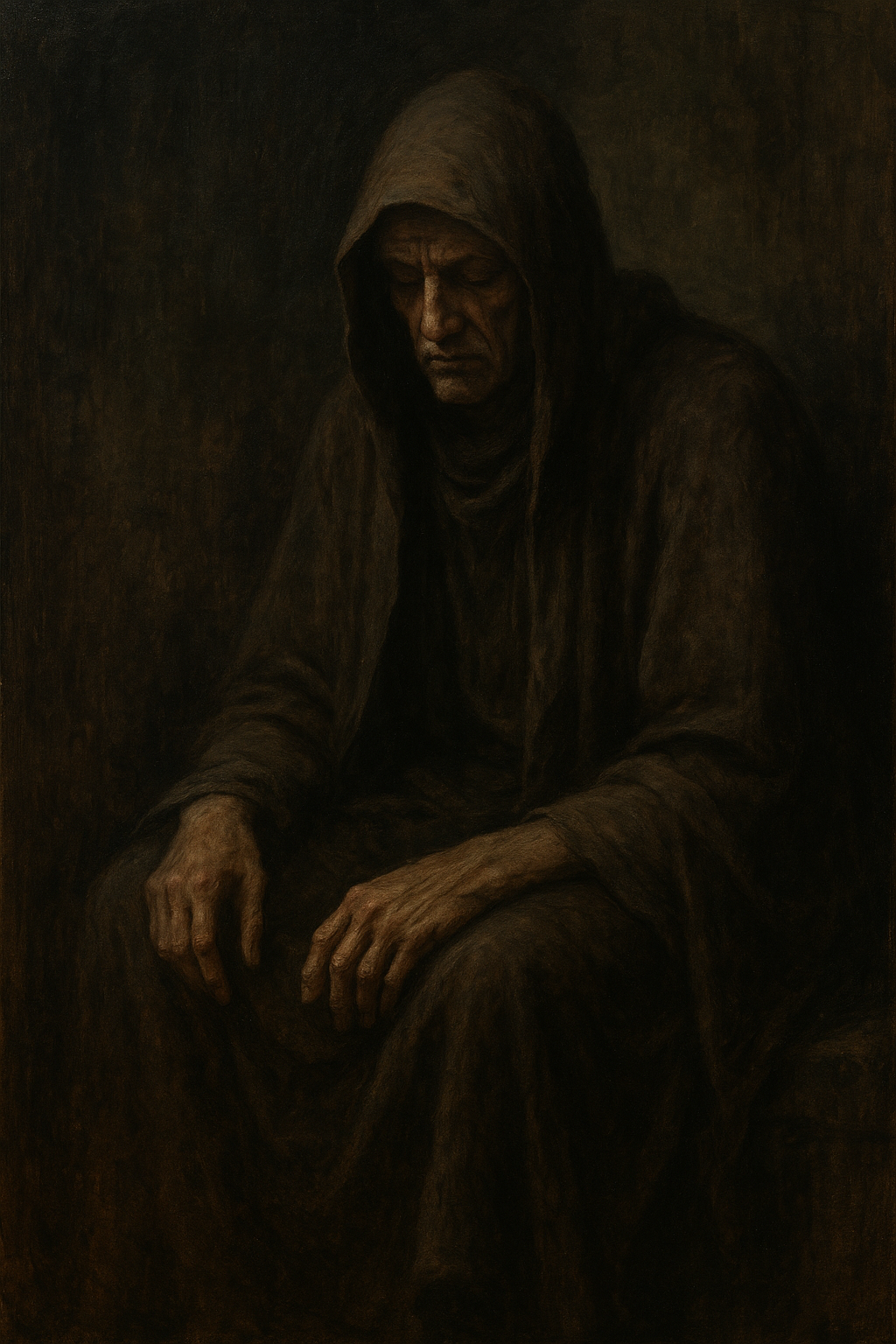
There comes a point in every serious practitioner’s path when the unseen pulls away.
Not in anger.
Not in punishment.
Not because you’ve “failed” or been forgotten.
But in a way that feels like frost creeping across the inner world - quiet, distant, unreachable. The gods who once felt like a breath against your thoughts become muted shadows. The ancestors who once warmed your bones with presence fall silent. The land wights give no ripple in the senses, no subtle shift in the room, no stir in the earth.
What once felt alive now feels like stone.
This withdrawal is one of the most misunderstood phases in seiðr and spirit work. Beginners fear it. Adepts grit their teeth through it. Masters understand it as part of the natural rhythm of relationship - one as old as myth, as old as the Tree itself. And yet even knowing this truth does not soften the ache of it. The first time it arrives, it feels like banishment. As if the spirits have slammed shut a door you thought you had finally learned to open.
But that ache is built from illusion, not from reality. The sagas and seiðr traditions tell a quieter truth: Withdrawal is woven into the relationship.
Even the gods step back.
Even the honoured dead fall quiet.
Even the wights of land and boundary retreat into their own rhythms when they choose.
The unseen world is not an oracle machine waiting for us to push the right buttons. It is not obligated to meet us at every call. It breathes. It cycles. It contracts and expands. It teaches through closeness, but equally through distance.
Think of Odin on the Tree. He waited in silence, in emptiness, in a void so profound it carved him open. Only after the waiting did the runes rise.
Think of the völva on the high seat. She did not command visions. She waited for what chose her.
Think of the Norns. They weave neither at the pace of human fear nor human desire.
Distance has always been part of the craft. In the quiet months (or for some, quiet years) the spirits are not gone. They are rearranging the relationship. They are testing your internal stance. They are watching how you move when you are not being guided and how you act when nobody is watching from the other side.
They want to know:
Do you still honour them when the warmth disappears?
Do you still ground yourself when there is no vision waiting?
Do you still practice without reward, without spectacle, without affirmation?
Do you still listen when there is nothing to hear?
Because anyone can be devoted when the wind is thick with voices. Only a practitioner of depth continues when the sky is empty.
This chapter is about that emptiness. It is about the space where contact thins, presence fades and the glamour of the craft burns away, leaving only discipline, honesty and the bare bones of your relationship with the unseen. It is here (when you are stripped clean of external confirmation) that the most important work begins.
Here, the ego dissolves.
Here, the mind stops grasping.
Here, the practitioner grows roots instead of chasing clouds.
In this chapter, you will learn:
what withdrawal actually means (and does not mean)
how to tell it apart from silence, stagnation, or dissociation
why spirits step back and what that retreat signals
the common mistakes practitioners make in these phases
how to stabilize yourself so you do not spiral into fantasy or despair
how to realign your craft so that contact returns naturally, cleanly, and safely
and why relationships with the unseen deepen after withdrawal, not before
This chapter is not about reclaiming constant contact. It is about learning to stand in your own presence.
Because sometimes the greatest gift the spirits can give you… is stepping back far enough that you finally meet yourself. And in that meeting, the path forward begins.
The Withdrawal: When the Unseen Grows Quiet
There comes a moment (sometimes a day, sometimes a season, sometimes a full turning of the years) when the unseen withdraws like a tide. Not violently. Not cruelly. But in a way that feels unmistakably like distance. What once felt near now feels unreachable. What once moved through your awareness like wind through leaves now becomes still, opaque, unresponsive.
At first, the practitioner feels disoriented. The inner senses reach… and touch nothing. The familiar currents of presence soften. The subtle signatures of gods, ancestors and land wights flatten into quiet.
This withdrawal can feel like a veil dropping between worlds. It can feel like your cord to the unseen has been severed or muted. It can feel like the heart of your craft has suddenly gone cold. But in truth, this phase is not a loss of connection - it is a change in contact.
In seiðr, true withdrawal never arrives abruptly or as punishment. It develops like winter frost: gradually, subtly, until one day you realize the landscape has shifted. The spirits are not gone; they have simply moved their presence beneath the surface.
During these times, your senses will behave differently:
Your trance states don’t deepen as quickly.
Your intuition feels muffled, like sound underwater.
Your rituals lack the “echo” of response you’ve grown used to.
Your dreams become plain, or symbol-lite, rather than charged.
The land feels quiet, as though watching rather than greeting.
This can stir fear. It can stir grief. It can stir doubt so sharp it feels like a blade under the ribs. But if you step back from the panic, you will notice something else: The space is not empty..It is simply still. The unseen world does not vanish - it changes posture.
Contact shifts from active to dormant, from expressive to evaluative, from ‘we speak’ to ‘we watch.’ Often the withdrawal coincides with transitions you haven’t recognized yet: shifts in your wyrd, changes in direction, initiatory thresholds or periods where your own inner landscape needs to rearrange itself before further contact can occur safely.
And while the absence of familiar presence feels unnerving, there is a deeper pattern at play:
The unseen is recalibrating your relationship.
Your senses are being refined.
Your practice is entering a new phase.
The withdrawal is the space where growth becomes possible. It is the pruning before the next season of fruit. It is the silence before a new form of sight emerges. It is the test of whether you can stand in the craft without being carried.
When the unseen grows quiet, the work is not ending. It is beginning again, at a deeper level.
Why the Spirits Step Back
When the spirits retreat, most practitioners assume they have done something wrong. They search for the cause like someone retracing their steps through a burned forest - looking for the spark they must have dropped.
But withdrawal is almost never punishment. It is almost never rejection. It is far more often a natural, rhythmic part of how the unseen maintains balance, teaches discipline and preserves the integrity of the relationship.
The worlds do not function according to human desire; they function according to alignment, timing and wyrd. When the unseen steps back, it is because something in that alignment is shifting - either in you, in the spirits or in the weave between you.
The first and most common reason for withdrawal is integration. After periods of intense spiritual contact (visions, trance work, deep seiðr sessions or initiatory experiences) the human system becomes saturated. Your nervous system, your psyche, your subtle body, your emotional landscape all need time to absorb what occurred.
Spirits understand this far better than most practitioners do. They step back to prevent overload, distortion or collapse. What feels like abandonment is often the necessary silence that allows what you’ve learned to settle into your bones. Just as the soil must rest after harvest, so must the practitioner after revelation. Without these rest cycles, perception becomes warped and the practitioner begins mistaking overstimulation for spiritual truth.
Another reason is calibration. The unseen does not rush. It does not indulge impatience. Spirits withdraw when your system, boundaries or grounding need strengthening. Think of it as a master craftsman stepping back so you can learn the skill yourself. You cannot lean on the spirits forever. A relationship built on dependency is not a relationship - it is imbalance. When the spirits pull away, they are testing whether you can maintain discipline, clarity and dedication without constant reassurance. They are assessing if you have the internal structure to hold deeper contact. This is not a test you “pass” or “fail” - it is a maturation process. Just as a teacher watches a student practice alone, the spirits watch how you move through the work without their immediate presence.
A third reason is misalignment, which is not the same as wrongdoing. Sometimes your life shifts - stress, illness, grief, upheaval, emotional instability, trauma resurfacing. These states do not make you impure or unworthy, but they do change your energetic orientation. The spirits may step back not because you are doing something bad, but because you are not currently in a position to receive clearly. They withdraw so you do not project your pain onto them, or confuse emotional turbulence with messages. The unseen does not want to be misinterpreted, and it does not want to intrude in a way that destabilizes you further. Their retreat is a form of protection. It gives you space to rebalance, heal and return to center before contact resumes.
There is also reorientation. Sometimes the spirits step back because your path is about to change. The guides who once worked with you may no longer be the ones who can take you further. A new direction, a new teacher, a new current of fate may be forming - one that requires a brief vacuum so the shift can take place without interference. Many practitioners mistake this vacuum for loss, when in truth it is preparation. Before a new door opens, the old hallway becomes still. Before a new relationship forms, the old one must loosen its hold. This kind of withdrawal feels strange (like being suspended in air) but it is the precursor to profound redirection.
There are times too, when spirits step back because you asked for more, even if you do not remember doing so. When you ask for growth, clarity, initiation, deeper skill or stronger connection, the spirits often respond by creating space for the transformation to occur. Growth rarely happens while you are held tightly. It happens in the spaces where you must choose, act, fail and rise on your own. Withdrawal creates the pressure for evolution. It strips away fantasy, comfort and expectation so the practitioner is forced to refine their craft from the inside out.
And then there is the most mysterious reason of all: their own cycles. Spirits have rhythms, obligations, seasons and tasks unrelated to humans. Ancestors tend to their own dead, their own lineage disputes, their own transformations. Land wights move with the seasons, the weather, the migrations of animals, the shifting health of the land itself. Gods are forces, currents, and consciousnesse - not always anchored in forms we can interact with at will. They are not always available. They are not always oriented toward human contact. Their withdrawal may have nothing to do with you at all. This is perhaps the hardest truth for practitioners to accept: the unseen is not a service. It does not exist for our convenience. It does not revolve around our schedules or desires. It has its own life.
Finally, withdrawal occurs because the relationship itself needs breathing room.
Constant presence breeds entitlement.
Constant contact breeds confusion.
Constant communication creates noise.
Distance creates clarity.
In the space where the spirits step back, you learn who you are without their influence. You learn how much of your practice is genuine discipline rather than dependency. You learn to trust your own grounding, your own discernment, your own strength. The relationship strengthens not through constant closeness, but through healthy ebb and flow. Distance allows devotion to become real. It allows respect to deepen. It allows the practitioner to stand not as a child seeking reassurance, but as an adult capable of walking the path with integrity.
When the spirits step back, something is shifting - within you, around you or ahead of you. Withdrawal is not an ending. It is the darkened moon before renewal. It is the tide pulling away before it returns with greater force. It is the deep inhale before sound emerges. And though it can feel like emptiness, in truth it is often the moment the unseen is working with you most intensely - just not in a way you can yet perceive.
The Practitioner’s First Shadow: The Panic Response
The first true withdrawal of the spirits is a crucible - subtle in appearance, devastating in effect. Even seasoned practitioners remember their first encounter with it, because it strikes at the core of what most people never admit: dependence on contact.
When the unseen pulls away, the mind reacts before the spirit does. It panics. It spirals. It grasps for any sign, any flicker, any echo that confirms you still belong to the work. The sophisticated language of devotion disappears and beneath it rises the raw, childlike fear of being abandoned by something greater than yourself.
This panic is not logical; it is instinctual. You have spent months or years cultivating your senses, opening your field, deepening your intuition, shaping your life around a relationship with the unseen. You have followed omens. You have spoken to your ancestors. You have felt the weight of presence in ritual. You have rested your awareness in the breath of the land and felt it breathe back. Then suddenly.. nothing.
The shift is so stark that practitioners often feel it physically: a hollowing in the chest, a tightening in the throat, a numbness where there was once warmth. The world feels less magical, less inhabited, as though someone dimmed a lantern inside the soul.
From that moment, the panic begins to take shape. Some rush to perform more rituals, piling on offerings, prayers, runes, chants - anything to force the door open. Others start doubting themselves, rewriting their entire spiritual history in the harsh light of fear: Was it all imagination? Did I make everything up? Were the gods ever truly listening? Some grow angry, interpreting the withdrawal as punishment. Others fall into despair, interpreting it as rejection. But beneath all these reactions lies a single fear: “If I am not being spoken to, who am I in the work?”
This is the first shadow every practitioner must face: the collapse of identity that comes when the spirits stop validating your path.
Panic arises because contact has become part of your self definition. When it disappears, it feels as though the ground has fallen away. You may question whether you’ve offended the gods, broken an oath, failed your ancestors or been spiritually “replaced.” You may scour every moment of your practice looking for mistakes. This desperation often leads to frantic attempts to recreate sensations - forcing trance, imagining signs or grasping for messages that don’t actually come. In this state, projection becomes louder than perception, and the practitioner becomes vulnerable to delusion, fantasy and self inflicted confusion.
But here is the difficult truth: The panic is part of the initiation.
It reveals attachment. It reveals insecurity. It reveals where the practitioner has been using the spirits as a mirror instead of a relationship.
In the sagas, no practitioner (no god, no seeress, no poet) was given constant affirmation. Odin endured silence so total it broke him open. The völva in prophecy did not summon visions; she waited, sometimes for hours, sometimes for days, wrapped in a stillness so deep it bordered on death. The great ritual specialists of the ancient world were shaped not by constant conversation, but by their capacity to hold stillness without unraveling.
The panic response exists because modern practitioners often enter seiðr with an unconscious expectation that the unseen will behave like a stable companion -consistent, immediate, accessible. But the unseen is not a pet, a tool or a therapist. It is a realm with its own will, timing and logic. Panic emerges when the practitioner meets that truth for the first time.
As the panic deepens, another shadow rises: the urge to quit. Many practitioners walk away from their path during their first withdrawal because they assume the absence is a verdict. “If the gods wanted me, they would speak.” But withdrawal is not the negation of your path - it is the refinement of it. The unseen is watching how you behave without their constant presence. This is the moment where devotion becomes genuine, because it is carried not by enchantment, but by integrity.
The panic eventually shifts into resignation, and then into clarity - if you endure it. Once the emotional storm passes, you begin to see what the panic was hiding: your dependence on external validation, your discomfort with stillness, your fear of your own inner landscape and the parts of your psyche that you had been masking behind the noise of constant contact.
This is why the first withdrawal is a threshold.
It strips you of illusions.
It reveals where your roots actually are.
It shows whether you practice for connection or for confirmation.
And when the panic finally dissolves, something remarkable takes its place: self trust. The practitioner who has survived the first shadow without collapsing, forcing or quitting emerges with a steadier hand, a clearer mind and a more grounded relationship with the unseen. From this side of the initiation, you begin to understand what the spirits have known all along:
If you cannot walk without being led, you are not ready to walk with them.
Distortion in the Void
When the spirits retreat, most practitioners imagine they are stepping into ‘nothing.’ But the void left behind is not empty.. it is a pressure chamber. And whatever is already inside you begins to echo louder than ever before.
This is one of the most dangerous phases in seiðr practice, not because of spirits, but because of the mind unanchored.
In the absence of contact, your inner world expands to fill the space. And if you are unprepared, that expansion distorts everything.
The Mind Hates Vacuum - So It Fills It Nature abhors a vacuum and the psyche is no different. When the unseen grows quiet, three things typically happen:
1. Emotions swell to fill the silence.
Long suppressed anger, grief, longing, fear (whatever you have avoided) suddenly feels cosmic.
2. The imagination tries to substitute for contact.
Images, sensations, and intuitions that would normally be dismissed as noise suddenly feel significant.
3. Ego steps in as the narrator.
If you do not have spiritual voices to listen to, the ego becomes the loudest voice in the room.
This is why withdrawal is a crucible: without otherworld guidance stabilizing the field, you are left with your own unfiltered psychic content. Most people never face the truth of their inner architecture until this moment.
When the unseen steps back, the practitioner becomes vulnerable to what I call internal imposters - psychological fragments that masquerade as spirit contact.
These can take many forms:
Old traumas presenting as “warnings”
Anxiety appearing as “prophecy”
Desire posing as “guidance”
Fear dressing itself as “intuition”
Internalized authority figures mimicking “deities”
Childhood coping mechanisms performing as “ancestors”
Dissociation imitating “trance”
These imposters are not evil. They are parts of you that have been waiting to be heard. But if you confuse them for spirits, you lose the thread of the craft and slip into delusion, fantasy or obsession.
Many practitioners fall into this trap because the void amplifies whatever you haven’t metabolized yet.
If you haven’t dealt with abandonment wounds, the void feels like punishment.
If you haven’t dealt with worthiness wounds, the void feels like rejection.
If you haven’t dealt with grief, the void becomes a mirror that shatters you.
If you haven’t dealt with ego, the void becomes a throne.
Real seiðr is relational. It involves discernment, surrender, alignment, and listening. But in withdrawal, people stop relating and start projecting.
Without meaning to, they:
fill silence with assumptions
interpret absence as message
treat emotions as omens
turn anxiety into divine instruction
mistake personal desire for fate
perform rituals they’re not ready for
chase signs in every shadow
This is where most “spirit workers” leave the path entirely. Not from malice, but from distortion. The void amplifies whatever is unresolved. If your foundation is shaky, this is where cracks show.
When the unseen steps away, two things rise:
1. The Ego Voice
It says: “I must have done something wrong.” “I need to do more.” “I need signs. Now.” “I will force trance.” “I’ll prove myself to the spirits.”
Ego tries to generate meaning where none has been given.
2. The Wounded Voice
It says: “They’ve abandoned me like everyone else.” “I’m not worthy.” “This is punishment.” “Maybe I never had contact at all.”
Wound tries to collapse the practice before it can mature. Neither voice is true. Both are distortions born from the absence of external input.
This phase reveals the parts of you that have always been loud, but were drowned out by spiritual presence.
Because withdrawal is a purification stage.
It burns away:
dependency
fantasy
delusion
emotional intoxication
spiritual glamour
identity crutches
approval seeking from spirits
trauma echoes mistaken for intuition
the desire to be “chosen”
When the spirits step back, their absence functions as a mirror. And the first thing you see is not wisdom. It is everything you have avoided seeing.
If you try to fill the silence with:
new gods
new guides
new rituals
new techniques
new identities
new spiritual labels
constant divination
frantic offerings
…you bypass the entire purpose of withdrawal. The void is meant to strip away illusion. If you fill it immediately, you preserve the illusion.
This is how practitioners derail their path for years: They skip the purification and cling to whatever voice (inner or imagined) offers comfort.
If you can resist the urge to fill, fix or flee, the void becomes one of the most powerful initiators in the entire craft.
In the void, you learn:
who you are without contact
what parts of you distort your sight
whether you practice for devotion or for dopamine
whether you can hold stillness without panic
whether you can listen without hearing
whether you can trust without reward
whether your craft survives without spectacle
Only when you survive this phase without self deception does the unseen return. And when they do, the difference is unmistakable.
Your voice is steadier.
Your presence is rooted.
Your perception is sharper.
Your ego is quieter.
Your wounds no longer speak for you.
Your sight becomes cleaner.
Your discipline becomes deeper.
And your relationship with the spirits matures past dependency into genuine reciprocity.
Withdrawal shows you what is yours. And what is yours determines how safely and clearly you can meet what is theirs.
The Law of Return in Spiritual Absence
When the spirits step back, something subtle but absolute begins to unfold: the Law of Return. Not karma, not punishment, not cosmic judgement - rather, a natural principle woven through all meaningful relationships, mortal or divine. Whatever you bring into the space of absence will eventually come back to you amplified. The unseen withdraws not to starve you, but to allow the echo of your own practice, your own discipline, your own emotional landscape to return to you with clarity. In presence, the gods fill the air. In absence, you hear your own footsteps.
At first, this can feel brutal. Without the steady hum of guidance or the soft pressure of presence, your inner world becomes louder. Every habit becomes visible. Every fear stands without a shadow to hide in. When the spirits were near, their nearness shaped the atmosphere around you - like walking with someone who shifts the very air. When they pull back, all that is left is what you are generating on your own. For some, this feels like abandonment. In truth, it is a mirror finally unobstructed.
The Law of Return means that whatever you send out during this quiet phase is what will greet you when contact resumes. If you meet the absence with panic, you build a nervous, unstable return. If you meet it with resentment, the relationship weakens. If you numb yourself or abandon the work, the bridge between you and the unseen thins. But if you meet the absence with devotion, steadiness and clarity, the return will be deeper, stronger and more coherent than anything you have previously known.
This is why the sagas and poems are filled with long periods of waiting, fasting, wandering and silence. Odin did not learn the runes in the moment of revelation; he learned them in the long hours before revelation, when nothing answered him. The völva did not speak because the spirits hovered at her shoulders; she spoke because she learned to withstand the moments they did not. The Law of Return is what shaped them. In the absence, they shaped themselves.
An important truth emerges here: absence is not empty. It is active. It rearranges you. It shows you where you stand without scaffolding. It forces you to rely on your grounding rather than on sensation. It invites you (sometimes demands you) to examine your motives. Are you practicing because you crave contact? Or because you honor the path? Are you seeking truth? Or seeking validation? These questions arise only when the external cues are gone.
And this is where the Law of Return becomes less a law and more a blessing. The spirits step back so the practitioner can meet themselves fully. Only then can deeper contact occur without distortion. Only then can you discern true voices from emotional noise. Only then can you stand before the gods without leaning on them like crutches. The unseen retreats so that your sight can sharpen. They step back so you can step into your own shape.
Eventually, when the silence lifts (months or years later) you will notice that the spirits return differently. You will feel the shift in your bones. Contact becomes less overwhelming, less performative, less tangled with your insecurities or expectations. It becomes clean. The communication is clearer because you are clearer. The presence is stronger because your grounding is stronger. The relationship is steadier because you have become steady. This is the Law of Return fulfilled.
And when that moment comes, you realize something profound: the absence was not a pause in the relationship. It was the relationship. It was the training ground, the tempering fire, the teacher you could not yet recognize. The spirits are not punishing you by stepping back. They are preparing you. They are protecting you. And they are giving you a chance to bring something worthy back to them.
For in the end, what you cultivate in the quiet is what greets you when the quiet ends.
The Discipline of Staying the Course
When the spirits step back, most practitioners instinctively reach outward. They look for signs, omens, dreams, synchronicities - anything to reassure them that the bond still exists. But this instinct, while human, is the opposite of what the withdrawal calls for. When the unseen grows quiet, the discipline required is not seeking, not scrambling, not forcing, but staying the course. This is one of the most difficult skills in seiðr, because it requires devotion without reward, practice without confirmation, and depth without external validation.
Staying the course is the refusal to abandon your craft simply because the winds have shifted. It is the ability to continue grounding, chanting, tending your altar, maintaining your offerings, and deepening your presence even when none of it feels alive. This discipline marks the transition between a seeker and a practitioner. A seeker pursues what feels good. A practitioner continues because the work is the work. Withdrawal exposes the difference.
In the sagas, there are long stretches where even heroes receive no counsel. Odin waits. Völur wander. Kings seek prophecy but hear nothing until the moment is ripe. The space between contact is where character is formed. The discipline of staying the course is the cultivation of inner steadiness so that your craft does not rise and fall on whether the spirits are responding today.
This discipline is not blind obedience. It is not self-punishment. It is awareness that real relationships (human or otherworldly) breathe. They expand and contract. To demand constant connection is to treat the spirits as a resource rather than as sovereign beings with rhythms, intentions, and seasons of their own. Staying the course is a form of respect. It is your way of saying: I am here, not because you respond, but because this path is mine.
On a practical level, this discipline often looks deceptively simple. You continue your grounding ritual even when the roots feel dead. You keep your offerings even when the air around the altar feels flat. You maintain your silence practice even when it yields nothing. You chant softly in the evening even when your voice feels like it falls into emptiness. What you are actually doing is maintaining the architecture of your craft so that when the spirits return, there is a place for them to return to.
Many practitioners sabotage this phase by abandoning their core practices and chasing new systems, new deities, new spirits, or new techniques in an attempt to “fix” the withdrawal. This only displaces the relationship further. When the unseen steps back, changing course is the worst mistake. It signals instability. It signals neediness. It signals that your devotion is conditional. Spirits observe these things. They return to those who can be trusted to maintain the thread even when the thread goes slack.
Staying the course also trains patience - the deep, bone level patience required in seiðr. Not the brittle patience of waiting for a message, but the rooted patience that says: I walk this road with or without a companion. This steadiness is the signal the unseen looks for. It shows you are capable of carrying wisdom without dissolving, capable of listening without clawing for answers, capable of responsibility without supervision.
In this phase, your identity as a practitioner shifts. You stop practicing for an experience and begin practicing because it is who you are. The discipline of staying the course is the alchemy that transforms devotion from an emotional state into a spiritual backbone. It burns away the ego’s hunger for validation and reveals the quiet truth underneath: the path does not vanish simply because you cannot see ahead. It remains. It waits. It invites you to match its endurance.
Eventually (slowly, subtly) the silence changes. A single moment of presence returns. A dream stirs with meaning. The altar feels warm again. The land-wights ripple at the edge of awareness. And when that moment arrives, those who stayed the course will be ready to receive it. Their craft will not have decayed. Their grounding will be stronger. Their discernment will be sharper. Their presence will be worthy of approach.
The spirits step back so you can learn to stand alone. The discipline of staying the course is how you show them that you can.
What Must Be Examined in Yourself
When the spirits step back, most practitioners rush outward - seeking signs, omens, reassurance, anything that might confirm that they have not been abandoned. But the truth is far quieter and far more demanding: the moment of withdrawal is an invitation to turn inward. Not as an act of self blame, but as an act of self-reckoning. The unseen world does not retreat to punish you; it retreats so you can finally hear the parts of yourself that are drowned out when the presence of spirits is too loud, too near, too constant. There are things inside you that only silence can reveal.
The first place to look is your intention. Not the intention you speak aloud, but the one beneath it - the intention you might not fully admit even to yourself. Are you practicing seiðr to serve, or to be served? Are you listening to deepen your craft, or to soothe your wounds? Are you engaging with the unseen out of devotion, or out of hunger for validation, power, belonging, or escape? The spirits step back when the motivation has drifted from alignment to need. Not to shame you, but to give you room to see the drift. This is not a moral failing; it is a human one. But it must be confronted if the path is to continue cleanly.
Next, you must examine your emotional landscape. Withdrawal reveals what you use spiritual contact to avoid. Many practitioners, often unknowingly, rely on the gods and spirits to regulate their emotional turmoil - leaning on them when grief rises, when loneliness bites, when anxiety spirals, when identity feels unsteady. But the unseen cannot be your emotional scaffolding. When they step back, you are left standing on your own legs, forced to face your storms without otherworldly shelter. This is not abandonment; it is maturation. It teaches you that spiritual practice is not a substitute for psychological grounding. It demands that you learn to hold yourself as firmly as you once leaned on the spirits to hold you.
Then comes the hardest mirror: the ego. Withdrawal exposes the subtle forms of spiritual entitlement that creep into any practitioner’s heart - the belief that because you have trained, or sacrificed, or devoted years to this work, the spirits owe you their presence. The belief that because you have been a faithful devotee, the gods should be accessible on demand. But seiðr is not a customer–service relationship; it is a living contract. The unseen is not obligated to meet your expectations or perform at your convenience. Ego is rarely loud or dramatic in this craft; often it hides in frustration, impatience and the quiet assumption that you should always be able to “connect.” When contact thins, these hidden threads become visible and must be cut.
Another crucial aspect to confront is your discipline. The spirits often withdraw when your practice becomes inconsistent, distracted, performative, or half-hearted. And this does not mean ritual neglect alone. It includes the small ways you step out of alignment: skipping grounding, rushing trance, approaching tired or chaotic, ignoring boundaries, asking questions you know you are not ready to hold. These are not sins; they are signs. The withdrawal is the world saying: “Slow down. Return to form. Return to structure. Return to the spine of the craft.” In this sense, absence is correction, not punishment.
You must also examine your boundaries -internal and external. Sometimes spirits step back because your life is too loud for them to approach safely. If you are entangled in toxic relationships, drowning in emotional chaos, or living in a state of constant overstimulation, the unseen cannot draw near without destabilizing you further. They withdraw to protect both themselves and you. Spiritual contact demands a vessel capable of holding it. Withdrawal is the invitation to clear your life, your habits, your energy, and your space so that when the spirits return, you are not porous, overwhelmed or fragmented.
Look also to your assumptions about communication. Many practitioners have fixed ideas about how the unseen “should” speak - expecting visions, voices, sensations, or symbolic flashes. But seiðr is not spectacle. Most contact is quiet, subtle, embodied, and slow. If your expectations drown out the actual ways the spirits reach for you, they may step back until you can return to listening rather than hunting. Withdrawal breaks the expectations so that you can rediscover the relationship itself.
And finally, the most delicate examination: your capacity for stillness. Seiðr is a craft of deep presence, and presence can only be cultivated through stillness - inner, emotional and psychological. Many practitioners confuse activity for progress, trance for connection, or stimulation for contact. When the spirits step back, you are forced into stillness, and stillness reveals everything: impatience, fear, avoidance, projection, longing, attachment. It is here that the true work is found, because what you cannot sit with in stillness you will inevitably distort when the spirits speak again.
What must be examined in yourself during withdrawal is not your worthiness but your readiness. Not your failures but your foundations. The unseen retreats so that your inner world can be reorganised. They step back so that when you step forward, you do so with cleaner intention, steadier presence, deeper grounding, and a heart less tangled in ego, fear, hunger and assumption.
Spiritual absence is a crucible. What emerges from it is not the practitioner you were but the practitioner you must become.
Seasons of Practice: The Rhythm of Contact and Distance
There is a natural rhythm to spiritual work that no amount of devotion, force or longing can disrupt. Seiðr, like all relational magic, moves in seasons - cycles of approach and retreat, fullness and famine, revelation and obscurity. These cycles do not follow human desire; they follow the deeper pulse of wyrd. Just as the land shifts from growth to decay to dormancy and back again, the unseen world engages and withdraws in a pattern older than myth. When you become a practitioner of any depth, you stop expecting perpetual spring. You learn to recognise winter when it comes, not as punishment, but as a turning of the cosmic wheel.
There are seasons of abundance, when contact is effortless. The gods speak through dreams. The land wights meet you in the breath between breaths. Ancestors stand so close that their presence feels like a hand on the back of your heart. In these times the work feels alive, fertile, and responsive. Your offerings feel received, your chants resonate, and your ritual space seems to hum with subtle attention. This is the season most practitioners mistake for “normal.” They assume this level of vividness is what the practice should always feel like. But even the myths warn otherwise: Odin does not ride Sleipnir every day. Freyja does not weep tears of gold without cause. The völva is not perpetually seated on the high seat. Contact is a blessing, not a baseline.
Then comes the season of thinning, a transitional state where the voices soften and the signs become subtler. Nothing is gone, but nothing is loud. Your work is still heard, but you must strain to notice the replies. This is the threshold season (like late autumn) where the leaves fall, the air cools and the world begins to pull inward. It is a warning and an invitation at once. Many practitioners panic here. They assume something is wrong. But thinning is simply the world turning its face slightly away so you can see where you stand without leaning on constant companionship. It is the beginning of recalibration.
After thinning comes withdrawal, the winter of the craft. The unseen steps back, the channels quiet, and the practitioner is left with nothing but the baseline practices: grounding, breath, offerings, presence and the discipline of remaining steady when there is no feedback. This season is the crucible of seiðr. You are stripped of glamour. You are stripped of validation. You face your hunger for certainty and your tendency to perform for the unseen. This is where you discover whether your practice is devotion or addiction, discipline or escapism, relationship or fantasy. Withdrawal is holy precisely because it is uncomfortable. The sagas tell us that power does not come to those who chase easy closeness; it comes to those who can endure the long silence without collapsing into self-invention.
Eventually, after the long absence (or sometimes the brief one) the craft turns again toward return. The stillness cracks, the air shifts, dreams stir, and presence creeps back along the edges of awareness. It begins subtly: a pressure in meditation, a sudden inner tug, a dream laden with symbolic weight. The spirits return slowly, like animals approaching a fire they once trusted but now assess again. They test your steadiness. They feel the shape of your patience. They measure how you held yourself in their absence. This season of return is not a reward but a recognition: you remained true to the work even when it offered you nothing. You practiced devotion without applause. You stayed rooted in your craft, so the unseen can safely draw near again.
And then, in its time (not yours) the season of full presence returns. Contact intensifies, synchronicities bloom, the fabric of the worlds feels thinner. You feel not only reconnected, but altered. The absence changed you. The silence sharpened you. The distance fortified you. When the unseen steps forward again, it engages a practitioner who is stronger, clearer, and more aligned than before. Presence, now, is deeper because you have learned to stand in its absence.
The rhythm of contact and distance is not linear. It does not obey calendar time. It is cyclical, archetypal, mythic. Some winters are brief. Some last years. Some transitions are smooth, others abrupt. But the pattern remains: expansion, contraction, return. A true practitioner stops resisting this rhythm and begins to work with it. They learn which practices nourish each season. They learn the signs of transitions. They stop chasing and start listening. They stop panicking and start trusting.
Most importantly, they come to understand that the seasons themselves are the teaching.
Presence teaches channel.
Silence teaches discipline.
Withdrawal teaches integrity.
Return teaches gratitude.
Only in the weaving of all four does the craft mature.
This is the rhythm of seiðr.
This is the rhythm of relationship.
This is the rhythm of a practitioner capable of walking with gods, ancestors, and spirits through both light and shadow.
Reading the Signs of True Return
When the unseen finally begins to move toward you again, it rarely announces itself with the thunderous clarity beginners fantasize about. The return is subtle, incremental, like the first thaw beneath winter ice. It arrives in layers, impressions, and nearly imperceptible shifts. Those who expect sudden visions or loud messages often miss the earliest signs completely, mistaking them for coincidence or imagination. But experienced practitioners learn to track these changes the way a hunter reads prints in snow: patiently, attentively, and without forcing meaning where none exists.
The first sign is usually pressure, a softening or thickening of the inner atmosphere. It may feel like a presence just outside the edge of perception, a faint leaning-in. Not a message.. just proximity. The land-wights may stir as if a breeze has moved through your awareness. The ancestors may brush the edge of your senses like a hand passing near your shoulder. The gods, when they return, often do so as weight before they do as words. Their arrival bends the internal space long before it speaks into it.
The second sign is alignment. Where previously your meditative practice felt hollow or disconnected, things begin to “click” again. Grounding comes easier. Centering feels more potent. Trance states hold steady rather than collapsing into distraction. Your inner axis, which felt brittle or fogged during the absence, suddenly feels like it has depth and strength again. This alignment is not emotional - it is structural. It feels like your craft is remembering itself, returning to its original rhythm.
Then comes symbolic emergence. Not visions.. not yet. Instead, small images rise unbidden: a color, an animal, a movement of water, a faint rune shape. These impressions arrive without pressure, without asking to be interpreted immediately. They are the spirits brushing through your symbolic vocabulary, testing the channels, checking if your listening has matured during the quiet.
Another sign is synchronicity with direction, not desire. People often confuse wishful thinking for spiritual return, but true return has a different flavor. It does not rush to fulfill your hopes. Instead, signs and synchronicities begin to point consistently toward the same theme - healing, discipline, offering, rest, courage, boundary, truth. The direction is coherent across days or weeks, forming a pattern. When the spirits return, they bring movement back into the weave of your life.. movement that can be measured, traced and felt.
As the return deepens, there is a shift in discernment. Messages feel clean again - less tangled with your own fear or hunger. You do not have to chase them. They arrive with clarity instead of pressure. You can feel the difference between intuition and imagination the way you can feel the difference between river water and rainwater on your skin. This clarity is the greatest sign of all, because it marks the completion of the internal work you were meant to do during the absence.
Finally, the most unmistakable sign of true return is recognition. You do not think, “Is that them?” You know. The presence has a signature (weight, rhythm, temperature, texture) that your spirit remembers even if your mind doubts. It is like hearing a voice you have known all your life speak from across a long distance: faint, but unmistakable. You recognize the cadence, the intention, the way your body responds.
And yet, even in their return, the unseen does not rush you. Their reappearance is not permission to revert to old habits. It is an invitation to step into a deeper phase of practice - one in which the relationship matures beyond dependency. They return to those who have learned to stand without them, listen without assurance, and practice without reward. They return because you proved you were capable of holding the silence, tending the craft, and strengthening the vessel.
The return is never loud.
It is honest.
It is measured.
It is earned.
And when you feel it (truly feel it) you understand the purpose of the entire withdrawal: to make space for the practitioner you are becoming.
When Distance Is Protection
There are times when the spirits step back not to test you, not to reshape your path, not to demand inner work.. but to protect you. This truth is difficult for many practitioners to accept, because it contradicts the romanticized idea that divine or ancestral presence is always inherently benevolent. Real spirit-work is relational, dynamic, and deeply affected by your physical, emotional, and spiritual conditions. When those conditions falter, the unseen retreats.. not out of cruelty, but out of care.
Protection does not always feel like protection. Often it feels like abandonment, like the moment a warm hand leaves yours on a cold night. But distance can be the only way the unseen safeguards both the practitioner and the connection itself. Spirits do not simply withdraw from danger in the external world.. they withdraw from instability within you, because instability distorts every channel.
Sometimes the retreat happens when your nervous system is overwhelmed. Stress, trauma activation, burnout, grief.. all of these create internal “noise” that disrupts clarity. In such states, contact can become unsafe. You may misinterpret messages, overreach energetically, or attract what you cannot properly discern. To prevent harm, the spirits step back. They wait for your inner field to settle, to steady, to become a place where contact is once again clean.
There is also the matter of spiritual boundaries. The unseen does not override your agency or consent. If your life circumstances pull you intensely into the mundane (parenting, illness, crisis, survival) the spirits may withdraw so you can focus on what is critically human. The work cannot compete with the needs of your body or your household. The ancestors especially know the cost of ignoring earthly obligations. When they step back in these moments, it is to ensure that your foundation remains intact.
Protection can also arise when your path is shifting. Certain phases of growth require that external influence fall silent so your inner voice can finally be heard without interference. If you rely on spirits for constant guidance, your intuition atrophies. If your visions drown out your instinct, your sovereignty weakens. The unseen steps back to return you to yourself - because a practitioner who cannot stand in their own center is not ready for deeper paths. What feels like loss is often the restoration of your core.
Another form of protection occurs when you are drifting into illusion. If your expectations, desires, or wounds begin shaping what you “receive,” the spirits will withdraw to prevent you from sealing yourself inside your own projections. Contact with the unseen magnifies whatever exists in your psyche; if that psyche is distorted, the magnification becomes dangerous. Withdrawal here is an intervention. It stops you from spiraling into fantasy under the guise of spirituality.
There are rarer moments when the retreat is not about you at all, but about shifts in the unseen world. Just as humans undergo seasons, so do gods, ancestors, and land-wights. Their attention moves through cycles of watchfulness, quietude, and reorientation. Some forces withdraw when the land enters certain phases. Some withdraw during times of imbalance or disorder in the community. Some withdraw because another presence is drawing close, and your attention must not be divided. The unseen world is not static; it rearranges itself constantly, and your access to it changes with that movement.
It is crucial to understand that protection does not always feel gentle. Sometimes it feels like being locked out of your own temple. Sometimes it feels like being told “not now,” even when you’re starving for connection. But there are doors you are not meant to open during certain states of mind. There are spirits you should not approach when you are fragile. There are workings that would break you if you attempted them in the wrong season. Silence is not the safest form of protection - distance is.
If you look closely at your periods of spiritual absence, you will often find signs of subtle guardianship woven through them. Dreams that warn rather than comfort. Fatigue that prevents overreaching. Sudden disinterest in unsafe practices. A sense of being held back rather than cast out. These are not punishments; they are restraints placed gently, quietly, on the parts of you that might rush toward danger without realizing it.
When the spirits step back for your protection, the task is not to chase them or force the door open. The task is to tend to your health, your grounding, and your integrity. The unseen returns when you can meet it without shattering—or twisting it into something untrue. Distance is not the end of the relationship. It is the shield placed between you and what you are not yet ready to meet.
In this sense, withdrawal becomes its own blessing. A pause that prevents misalignment. A silence that preserves clarity. A step back that ensures there will be a future step forward. When you understand this, the absence no longer feels like exile. It feels like a guardian standing at the threshold, saying, “Wait. Not yet. Become steady first.”
And when the spirits return from such a distance, the connection is cleaner, stronger and far more truthful than what came before.
How to Continue the Path with Integrity
There comes a point in every practitioner’s journey where devotion must stop being a reaction to presence and instead become a choice made in absence. Integrity is what carries you through that threshold. When the spirits step back, when the inner worlds fall dim, when your senses yield nothing but stillness, you are forced to ask: Why do I walk this path? For contact or for truth? For validation or for alignment?
This is where your craft becomes character.
Continuing with integrity begins with honesty - an unflinching inventory of your intentions, your expectations, and your fears. Many practitioners discover, in the quiet stretch, how much of their “devotion” depended on being answered. How much of their practice relied on receiving impressions, visions, comfort or confirmation. The absence reveals the scaffolding. It exposes the parts of the self that still negotiate with the unseen: I give, therefore you should give back. True seiðr has no room for this. You must strip the bargain from your devotion. You must learn to offer without anticipating the echo.
Integrity also means maintaining the disciplines that shape the practitioner regardless of reward. Grounding, breathwork, posture, offerings, study, and daily rites are not optional - they are the spine of the path. In a season of withdrawal, these acts become vows you make to yourself. When you keep them, you demonstrate resilience. When you abandon them, you demonstrate that your practice was dependent on being watched.
The spirits see the difference. More importantly: you feel the difference.
It is in these quiet seasons that your relationship to discipline transforms. Instead of performing ritual because the unseen is near, you perform ritual because it shapes your mind, your body, and your wyrd. Instead of making offerings for attention, you make offerings to maintain right relationship. Instead of listening for voices, you listen for your own alignment. The practice becomes both simpler and more potent - pared down to its bones, its essence, its truth. There is no glamour here. Only craft.
Continuing with integrity also means staying grounded in reality. Distance from the spirits often activates the mind’s urge to fill the void - through fantasy, self-blame, or desperate reaching. Integrity requires that you do none of these. You resist the story that you are “forsaken.” You resist the temptation to chase signs where there are none. You resist the impulse to generate your own answers and call them divine. This restraint is strength. It keeps your sight clean and your path honest.
Instead, you turn your attention toward what you can influence: your presence, your capacity, your character, your discipline. You fortify the skills that make you a stable vessel - emotional regulation, grounded perception, discernment, humility, patience. You refine the edges of your craft not because the spirits demand it, but because you respect the work enough to meet it fully prepared.
Integrity also means continuing to honor the spirits who are silent. You do not punish them with your withdrawal. You do not interpret distance as betrayal. You maintain offerings not as bribery, but as continuity. A relationship is not dissolved because one party steps back. Long term practitioners understand this deeply: the unseen does not operate on human timelines, human insecurities, or human expectations. Their withdrawal is not abandonment. It is a shift in the rhythm of contact.
Finally, to continue with integrity is to keep walking your path with your feet firmly in this world. You strengthen your life. You anchor into your body. You cultivate relationships, tend your hearth, commit to your responsibilities, refine your craft, deepen your studies. You remain a human being walking a human life - because this is what the spirits ultimately require: a practitioner who is present, embodied, discerning, and capable of standing on their own axis.
Distance teaches sovereignty. Integrity ensures that you do not abandon yourself in its shadow.
Continuing the path with integrity is not glamorous. It is not dramatic. It does not produce visions or revelations. But it produces something far more valuable to a practitioner of seiðr:
a self that is stable enough to hear the spirits clearly when they return, and strong enough to walk without them when they don’t.
What the Withdrawal Teaches
Withdrawal is not a void; it is instruction delivered without words. It is the curriculum of the unseen - the lessons that can only be learned when the external scaffolding of spirit contact is removed, leaving you face to face with your own presence, your own discipline, your own truth. When the spirits step back, the first and most profound teaching is this: your practice must be able to stand on your own spine. If your connection collapses the moment the otherworld grows quiet, then what you built was dependency, not devotion. Withdrawal forces you to examine the strength of your roots, the steadiness of your axis, and the sincerity of your ritual rhythm. It asks you whether you sought the spirits… or the sensations they gave you.
The absence also teaches humility. Many practitioners (especially in the early years) mistake response for entitlement. They believe that because the spirits have spoken, they should continue speaking. Withdrawal strips this illusion away. It reminds you that contact is a privilege, not a guarantee. In the quiet months or years, you learn to bow.. not in subservience, but in recognition of the scale of what you are working with. The unseen owes you nothing. And yet, in time, it will return - not because it was demanded, but because the relationship has ripened.
Another lesson emerging from withdrawal is clarity. When the spirits pull back, so too does the fog of emotional projection. Without voices to cling to, practitioners begin to see the architecture of their own minds more clearly. You learn which impulses are yours and which are not. You distinguish between intuition and anxiety, between guidance and desire, between presence and memory. The quiet becomes a mirror. Whatever rises in it (your fears, your hopes, your distortions) becomes visible. This is where genuine discernment is forged. You cannot become a clear vessel while you are always being filled.
Withdrawal also teaches endurance. In the sagas, the greatest knowledge is won through waiting - longer than is comfortable, longer than is rational, longer than the ego can tolerate without burning. Odin waited nine nights. The völva waited until the song awakened her. The Norns work at a pace outside human reckoning. Practitioners who survive their first long retreat from the spirits emerge with a strength that cannot be mimicked: the ability to remain steady in the cold. This endurance is the backbone of seiðr. Without it, trance becomes fragile, vision becomes porous, and the craft collapses at the first sign of strain.
Finally, withdrawal teaches sovereignty. When the spirits step back, you are confronted with the truth of your own agency. You learn that your practice does not depend on constant validation, on being held, or on being guided. You learn to walk by your own wyrd-light, to shape your own discipline, to build a relationship that is mature rather than needy. In the silence, you begin to understand that the path is not about being led - it is about learning to lead yourself in such a way that the spirits recognize you as a worthy ally rather than a dependent seeker.
When the unseen eventually returns (and it will, in its own time) it returns to someone changed. Someone steadier. Someone who has learned to carry the craft without being carried by it. Someone who can enter trance without desperation, offer devotion without expectation, and receive presence without losing themselves. Withdrawal reveals what seiðr truly demands: a practitioner who is sovereign, disciplined, patient, and honest enough to stand in the dark without flinching.
That is the lesson.
That is the crucible.
That is the shaping that only silence can accomplish.