
Jól (yule): Historical vs Modern Practice
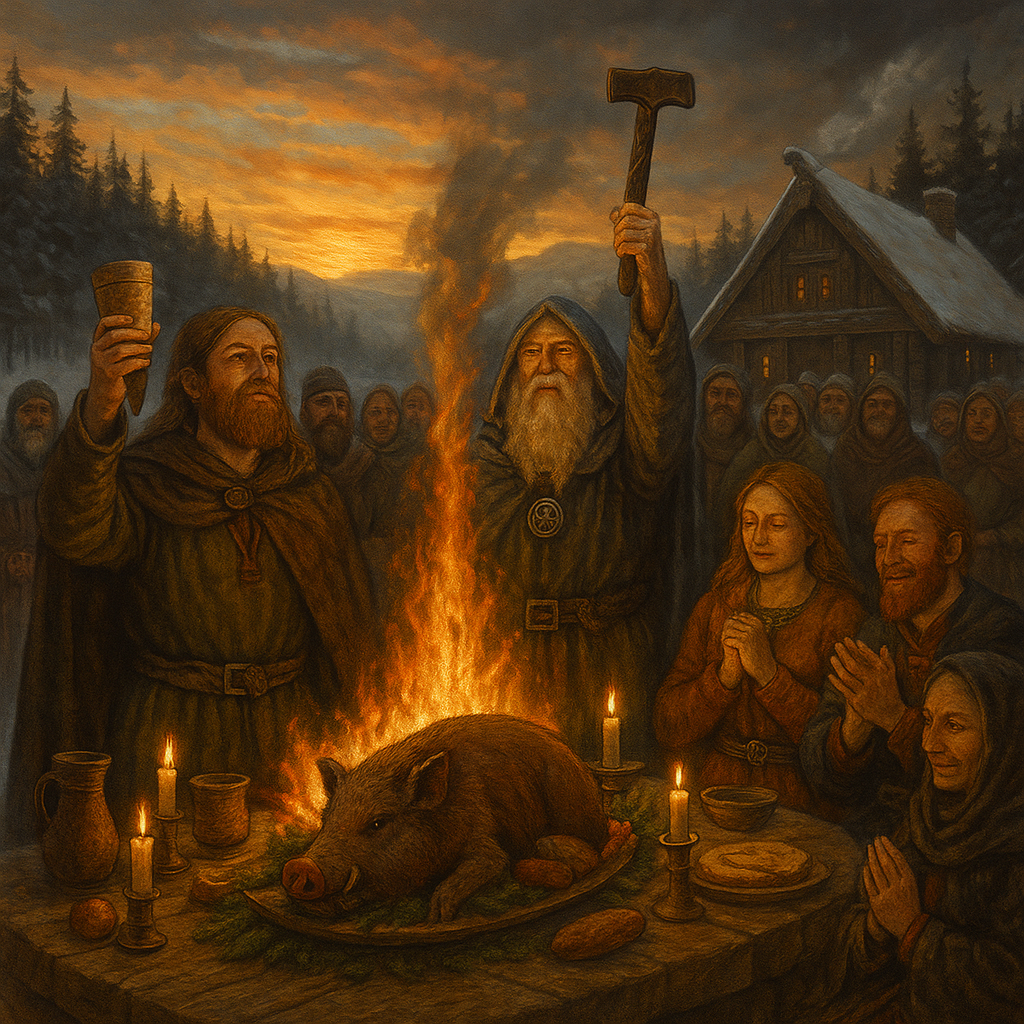
The Twelve Nights of Jól (yule) stand among the most meaningful and lasting traditions of the northern winter season. Long before Christmas lights and modern calendars, people in the old Norse world marked these nights as a sacred turning of the year: a time when the boundaries softened, the ancestors drew close and the deep forces of luck, protection and renewal stirred quietly beneath the winter dark.
The 12 nights of yule is a modern conception altered from the historical accounts from what the old norse did.The Norse did not leave us a single official list of what each night meant or which day it was practised - In this blog i will explain the historical fact and modern concepts. Instead, it gathers what we know from sagas, folklore, medieval law codes, later Scandinavian customs and surviving echoes of Yule traditions. It blends historical understanding with practical ways you can honour these nights today, whether you follow a heathen path, love northern folklore or simply want to reconnect with the old seasonal rhythms.
The Twelve Nights were never just a countdown or a holiday ritual. They formed a bridge between the dying year and the one being born. Each night held its own character: some were for cleansing, some for honouring the dead, some for divination, some for blessing the home, some for feasting and some for welcoming the returning sun. The Norse saw these nights as a pause in the world’s breath, a moment when fate, memory and renewal met in the glow of the hearth.
This guide will walk you through each night, offering historical context, traditional themes and simple ways to mark them in everyday life. You won’t need elaborate tools or grand ceremonies. The heart of Jól lies in intention, hospitality, remembrance and the quiet courage of welcoming the light back into the world.
Whether you are new to the Twelve Nights or looking to deepen your yearly practice, this guide will help you create a meaningful, grounded and personal Jól season rooted in the old Northern spirit: a blend of reflection, warmth, ancestral honour and the steady return of hope during the darkest days of the year.
Read more about Jól (Yule) here >
Historically Attested Norse Yule Practices
The core of historically attested Norse Yule, (as preserved in medieval Icelandic sources) revolves around the Jólablót, the midwinter sacrificial feast that held both religious and social significance in pre Christian Scandinavia.
The clearest accounts appear in Hákonar saga góða within Snorri Sturluson’s Heimskringla, written in the 13th century but describing earlier customs from the ‘Viking Age’ and before. This saga records that Yule was originally held on the full moon of midwinter month, not on the solar solstice and that it lasted for three nights, during which communities gathered in temples or large feasting halls to offer animal sacrifices, prepare vast amounts of ale and perform a structured sequence of ritual toasts.
The first toast was dedicated to Odin for victory and power, the second to Njörðr and Freyr for prosperity and peace, and further toasts honoured ancestors, kings or local leaders. These toasts were made from specially blessed ale, emphasizing the sacred nature of communal drinking as a religious act.
Importantly, This practice was not merely celebratory but integrally tied to the Norse understanding of maintaining cosmic balance and securing divine favor for the coming year. It was only after the Christianization of Norway under King Hákon the Good in the 10th century that the date of Yule was deliberately shifted to coincide with Christmas, marking a major calendrical change but not immediately eliminating the old feast’s deeper cultural significance.
A particularly distinctive element of Norse Yule appears in the saga literature concerning the sónargöltr (sacrificial Yule boar) which stands out as one of the few ritual acts strongly and explicitly tied to Yule. Described in Hervarar saga ok Heiðreks and other sources such as the prose material surrounding Helgakviða Hjörvarðssonar, the ritual involved ceremonially leading a large boar into the hall on Yule Eve.
Participants placed their hands on its bristles and swore solemn oaths (promises regarding future deeds, battles, marriages, voyages, or vendettas) that carried exceptional spiritual and social weight.
Afterward, the boar became a sacrificial animal whose meat was consumed as part of the feast. This rite is closely connected to the god Freyr, who was particularly revered in Sweden and associated with prosperity, fertility, peace and sovereignty. The golden bristled boar Gullinbursti (Freyr’s mythic mount) further anchors this ritual within his practice. Although written down centuries later, these stories are widely accepted by scholars as genuinely preserving earlier practice. This oath swearing ritual is one of the best attested specifically Yule related acts in the Norse world and it offers rare insight into the binding, communal and divinatory aspects of midwinter worship.
Another historically important feature of Norse Yule is the Yule Peace, known in later law codes as jólafriðr or “Yule peace.” While the clearest written evidence for this comes from Christian era law codes such as the Norwegian Gulathing and Frostathing laws of the 12th–13th centuries, these laws almost certainly reflect a much older pre Christian cultural custom.
In the pagan world, major feasts were times when the normal cycle of feuds, avenge killings and violent retaliation was temporarily suspended. The sanctity of the feast created a social and religious obligation to maintain harmony.
Although explicit references to a legally enforced “Yule peace” appear in Christian documentation, the logic of the practice - rooted in communal feasting, sacred obligation and avoidance of violent impurity during ritual time strongly suggests pre Christian origins. Thus, even though this dates to a later era, the underlying idea belongs to the heathen world and reflects the role of Yule not merely as a celebration but as a socially stabilizing sacred season.
Feasting, drinking, gift giving and the formation of social bonds are also essential, historically grounded aspects of Norse Yule. These activities were not entirely unique to Yule, as ritual feasts took place throughout the year but Yule stood as one of the most important communal gatherings.
The ritual toasts (minni) to gods, ancestors and leaders, preserved in multiple sagas, provide key evidence for the religious and social functions of communal drinking. The giving of gifts (often rings, weapons, clothing, or other prestige items) is well documented in Norse society and throughout the broader Germanic world, serving to reinforce social hierarchical bonds between leaders and followers, as seen in both saga sources and earlier works such as the Anglo-Saxon Beowulf.
These practices at Yule helped renew alliances, confirm loyalty, and strengthen frith (peaceful, reciprocal relationships) among the members of a community. The combination of sacred ritual and interpersonal obligation makes the Yule feast one of the pillars of Norse communal life.
Finally, while not tied uniquely to Yule, the general components of blót rituals (including the sprinkling of sacrificial blood (hlaut) using a twig or wand (hlautteinn) onto idols, temple walls, and worshippers) likely formed part of the Yule ceremonies.
Several sagas including Eyrbyggja saga, describe this ritual practice, indicating that such acts were standard in any sacrificial rite. Although no source explicitly describes the sprinkling rite at Yule, logic and religious continuity strongly indicate that a major feast like Yule would have included the full blót liturgy. Thus, even though detailed descriptions are lacking, we can safely conclude that Yule ceremonies resembled other known blót rituals, owing to the consistent structure of sacrificial practice in Norse religion.
Germanic but Not Norse Yule Practice
A major non Norse practice often mistakenly blended with Norse Yule in modern reconstructions is the Anglo-Saxon Mōdraniht meaning “Mother’s Night,” recorded only by the 8th century scholar Bede in De temporum ratione.
According to Bede, Mōdraniht occurred on the night before Christmas in the early medieval Anglo Saxon calendar. He provides no details beyond the name, which has led scholars to connect it to the earlier continental Germanic Matronae groups (Roman era votive stones dedicated to triads of maternal protective spirits worshiped in the Rhineland).
While Norse religion includes the dísir, female ancestral or protective spirits, there is no direct Norse festival equivalent to Mōdraniht. Therefore, although Mōdraniht reflects a broader Germanic tradition of female-spirit veneration it is in fact Anglo Saxon and not Norse. Its association with Yule in modern Heathenry is a creative reconstruction rather than a historical continuity.
Norse Practices Often Mistakenly Attributed to Yule
Two additional important Norse rituals (Álfablót and Dísablót) are not Yule festivals, though modern interpretations often bring them into Yule due to their themes of ancestor and household protection. The Álfablót (“Elf Sacrifice”) is attested in the 11th century skaldic poem Austrfararvísur, composed by Sigvatr Þórðarson.
In this poem, Sigvatr describes traveling through Sweden and being categorically refused entry to several farms because Álfablót was being performed. This ritual took place in late autumn, after the slaughter season and was strictly private, conducted only by the members of the household.. so private that outsiders were unwelcome.
Similarly the Dísablót a sacrifice to the dísir (female ancestral or protective spirits), is often mislocated at Yule in modern retellings, but historically it occurred early spring February/March.
The Swedish Dísablót was associated with the large public assembly and market known as the Disting, held at Uppsala and referenced both in sagas and medieval law codes.
This festival had political, economic and religious implications and although it honored powerful female spirits (figures comparable to the Anglo Saxon Mothers) its timing undeniably differs from Yule. It is therefore incorrect to place the Dísablót within the Yule season historically; its association with Yule is a modern syncretic idea rather than a medieval Norse one.
Later Folklore and Modern Reconstructed Yule Practices
Many beliefs commonly associated with modern Yule celebrations stem from post pagan folklore or modern Heathen reconstruction rather than historical Norse Yule.
One such example is the Wild Hunt, a ghostly procession of the dead, often led by Odin, which sweeps across the sky during dangerous winter nights. While the Wild Hunt is widespread in German and Scandinavian folklore, its detailed descriptions belong to medieval and early modern periods, not the ‘Viking Age’. No pre-Christian Norse text places the Wild Hunt at Yule specifically and the belief likely evolved gradually after Christianization, combining memories of Odin with new supernatural folklore. Modern Heathens associate the Wild Hunt with Yule because of its winter setting and connection to liminal, spirit filled nights, but this is an inspired modern tradition rather than a historically attested pagan practice.
Likewise, the idea that Yule was originally a solstice festival is rooted in modern paganism rather than historical Norse calendars. The Norse operated on a lunisolar system and their Yule feast followed the full moon of the midwinter month rather than the solstice itself.
Although midwinter symbolism makes the solstice an appealing modern date, historical sources indicate that Yule floated and often fell in early January rather than late December. Similarly, the common notion of a “Twelve Night Yule” derives not from pagan Norse practice but from the Christian Twelve Days of Christmas, which solidified across medieval Europe. Norse Yule was a three night feast; the twelve night structure is a Christian framework adopted by modern practitioners.
Another major folkloric element later attached to Yule is the tradition of offering food (especially porridge) to household spirits such as the nisse or tomte, figures well attested in post medieval Scandinavian rural folklore.
These beings guarded the farm, protected animals and punished neglect, and offerings to them at ‘Christmas’ became an established custom by the early modern period. Although scholars consider the nisse/tomte to be a survival of older beliefs in house spirits or land wights, the specific ‘Christmas’ association is a later development. In the ‘Viking Age’, offerings to house spirits likely occurred but we have no evidence that such rites were tied specifically to Yule.
Finally, the modern Heathen practice of celebrating Mother’s Night on Yule Eve is a reconstructed tradition inspired by Anglo-Saxon Mōdraniht and Norse dísir worship, combining related but historically separate customs into a single coherent festival. While this is meaningful for modern spirituality, it should not be mistaken for a direct historical continuation of Norse Age practice.
Historical vs Modern
The Twelve Nights of Jól are not a fixed calendar from the ‘Viking Age’ but a modern concept of living practice that bridges past and present. Historically, Yule was a season of sacrifice and celebration that lasted several nights, while modern Heathens honour each night with its own theme. Both ways carry the same spirit - a balance between remembrance, offering, peace and renewal.
The Twelve Nights of Jól are often spoken of as if they have always been fixed and clearly defined. In truth, the festival of Jól was never a single, rigid calendar. It was a season of sacred nights surrounding midwinter, when people across the Norse and wider Germanic world honoured the gods, the ancestors and the powers that held the world together through the darkness.
In the old North, time itself was measured differently. Festivals were tied to the moon and the turning of the seasons rather than to numbered dates. Jól marked the heart of winter a time of sacrifice, peace and renewal. The number of nights varied, but always it was a period when ordinary rules were set aside. Fires burned through the long nights, families gathered and the boundaries between the living and the dead grew thin.
The modern idea of “twelve nights” comes partly from later Scandinavian and Christian tradition, where the days between the solstice and the start of the new year became a distinct holy tide. Heathens today have rebuilt these nights into a living practice - a devotional rhythm that draws on the old ways while giving each night its own focus and meaning.
Below are two ways to understand the Twelve Nights of Jól: the historical core, built from surviving texts and evidence, and the modern devotional cycle, shaped by contemporary Heathen practice.
The Historically Accurate Norse Celebration of Jól
A historically accurate Norse Jól cannot be fixed to a modern calendar date, because pre Christian Scandinavians followed a lunisolar calendar, not the Gregorian one. The feast was held on the full moon of mid winter month, which usually fell sometime between late December and mid January, often after the solstice. The season leading up to it involved heavy agricultural preparation - animals were slaughtered in late autumn, ale was brewed and fermented, and households stored grain, dried fish, smoked meat, and fuel to ensure survival through the deep winter. When the time of Jól approached, the strongest ale was tapped, the best livestock was selected for sacrifice and chieftains would summon the household, dependents, and guests to gather at the hall or hof. Yule was not a one night event, nor a fixed “twelve days,” but a three-night feast (attested in Hákonar saga góða) that could stretch longer depending on the wealth of the host and the severity of the winter.
The heart of a historical Jól celebration was the Jólablót, the midwinter sacrificial rite. Upon gathering in the great hall, participants would witness or assist in the slaughter of animals chosen for the gods and for communal consumption - cattle, horses, sheep, and especially the sónargöltr, the boar sacred to Freyr. The blood of these animals (hlaut) was collected in a sacrificial bowl and used in the ritual sprinkling of the hall, the idols, and the people with a sacrificial twig. This act spiritually cleansed the space, honored the gods, and united the participants in a shared religious moment. The meat was then boiled or roasted, and the communal feast began. Yule was profoundly noisy, warm, and aromatic - crowded with bodies, smoke, firelight, and the sounds of drinking, singing and storytelling. In Iceland and Norway, this ritual was both civic and religious, binding the community in sacred obligation as much as in celebration.
One of the most distinctive and well attested Yule actions was the oath swearing upon the sónargöltr, performed on the evening before the chief sacrificial feast. The boar was led into the hall, its bristles upright and men placed their hands upon it while declaring their most solemn vows for the coming year. These vows might concern revenge, marriage, exploration, battle or leadership. Breaking such an oath brought severe social shame and was believed to cause divine anger. Afterward, the boar was sacrificed to Freyr and its meat formed part of the central feast. This rite bound the individuals not only to their promises but also to one another and to the divine order, making Yule a time of immense social and spiritual weight. The boar rite is among the clearest historically grounded practices and stands as the defining ritual of Norse Yule.
Throughout the feast, the sacred drinking of ale formed a structured liturgy. The minni toasts (ritual cups passed around the hall) were offered first to Odin for victory and inspired might, second to Njörðr and Freyr for a fruitful year and peace, and then to ancestors, the king, or other leaders. These toasts were not casual drinking; they were understood as invocations, acts of devotion, and communal oaths. The drinking horn or ceremonial cup carried magical and social power and to refuse a toast was to insult the host or the gods. The Jól feast therefore functioned as a reaffirmation of social bonds, religious devotion and political allegiance. Stories were recited, genealogies remembered, past deeds honored, and new plans sealed in drink. In this way, Jól was not merely a religious holiday but a political and social engine that maintained the cohesion of Norse society.
A key element of the historical Jól was the observance of feast-peace, a sacred obligation to suspend violence and maintain frith. While formal legal codification of “Yule peace” appears in later Christian law codes, the concept almost certainly descends from pre-Christian tradition. During Yule, feuding and vengeance were forbidden, and violating this peace was regarded as more grievous than doing so at any other time. The feast created a temporary sanctuary, a period in which kin and community members could gather without fear of violence, allowing alliances to be strengthened and disputes postponed. This enforced harmony amplified the sanctity of the rituals and emphasized Yule’s role as a moment of renewal, stability, and societal recalibration during the darkest point of the year.
The physical environment of Jól was equally important. Halls were decorated with greenery, fires were kept burning continuously, and additional torches or lamps were lit to brighten the interior. These practices were not symbolic “rebirth of the sun” rituals (that symbolism is a modern interpretation) but practical and celebratory responses to winter darkness. Hospitality was a moral duty; the success and honor of a chieftain were judged by how well he hosted Yule. A lavish feast displayed wealth, secured loyalty, and honored both gods and people. Poorer households held smaller feasts, but the basic pattern (sacrifice, ale, toasts and communal gathering) remained universal. For many farms, Jól was the climax of the year’s labor and a vital psychological defense against the long, dark winter still ahead.
The celebration of Jól was ultimately a fusion of religious obligation, social responsibility, and seasonal necessity. While modern Yule observances often emphasize themes of the solstice, the dead or the mystical, the historical Norse Jól was far more concrete: it was about feeding the gods and the people, sanctifying the coming year with oaths and toasts, renewing communal bonds through feasting, and maintaining the sacred peace amidst winter’s harshness. Its practices were rooted in the realities of survival, honor, and reciprocity. If one wished to follow the historical celebration faithfully, one would follow the lunar timing, gather a community for a multi-night feast, sacrifice livestock or symbolically honor that practice with food and drink, swear meaningful oaths, raise ritual toasts to Odin, Njörðr, and Freyr, maintain peace and hospitality, and celebrate the bonds that sustain families and clans through winter’s cold.
THE HISTORICAL NORSE JÓL guide
How to calculate historic yule every year, Step by Step -
1. Identify the winter solstice (Dec 20–23).
2. Find the next full moon after the first new moon after winter solstice.
3. That full moon night = Historical Jólablót (main Yule).
4. Night before = Yule Eve (sónargöltr night).
5. Night after = Second night of Yule (follow-up feast).
NIGHT 1 - Jól’s Eve (Sonargöltr)
Summary:
Date: The night before the first full moon after the first new moon after winter solstice (the historical opening of Jól)
Focus: The boar-oath rite (sónargöltr), the beginning of feast-peace, gathering of kin, preparation for the Yule feast
Offerings: A boar or symbolic boar (bread, carving, pastry), ale, mead, bread, grain, evergreen, winter foods
Themes: Oath-making, truth, courage, honour, peace, renewal of luck, setting intentions for the coming year
Practices: Oath-swearing on the boar, first ritual drinking, blessing ale, declaring peace, preparing the hall, beginning the Yule gathering
Spirit of the Night: Solemn, quiet, fate-shaping – the moment when the year turns and the truth of one’s word is set into motion
What it is:
Jól’s Eve marks the true beginning of the Norse Jól feast. In the historical northern calendar, this night fell not on a fixed date, but on the night before the first full moon after the winter solstice. It opened the three sacred nights of midwinter, when kin gathered in the fire lit hall to honour the gods, renew bonds, and call in prosperity for the year ahead.
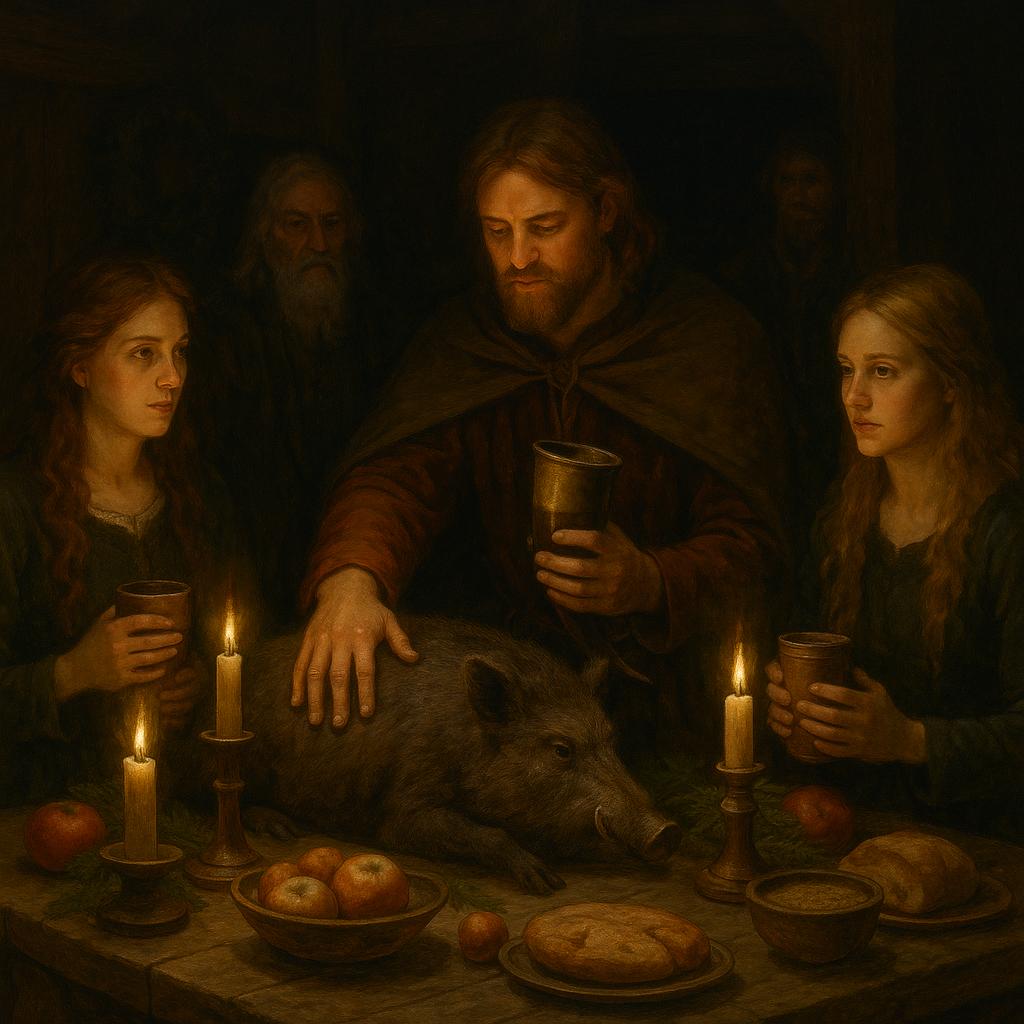
The central rite of this night was the presentation of the sónargöltr, the sacred Yule boar. As described in Hervarar saga ok Heiðreks and preserved in later tradition, the boar was led into the hall and its bristles touched by those who would swear solemn oaths for the coming year. These oaths were binding and public, witnessed by the community and by Freyr, the god associated with the boar and with peace, fertility, and sacred kingship. The act of laying a hand upon the boar connected one’s vow to the cycle of fate and to the prosperity of the land itself.
This night also marked the beginning of feast-peace, during which violence and feuding were strictly forbidden. Fires were lit, ale was prepared and blessed, and the hall became a place of sanctuary and anticipation. Jól’s Eve was not a night of loud celebration but one of intention, truth, and preparation for the great sacrificial feast of the following night.
When it is:
Jól’s Eve is celebrated on the night before the full moon after the winter solstice. This lunar timing reflects the original Norse calendar, in which months followed the moon and major feasts aligned with its phases. The full moon that followed the solstice was regarded as midwinter, and the night preceding it opened the rites of Jól.
Although this date shifts each year, it generally falls between December 24 and January 21, most commonly in early January. This makes Jól’s Eve a floating midwinter observance, rooted in natural rhythm rather than fixed calendar dates. For modern practice, watching the solstice and the next full moon restores the original timing of the feast.
Focus of the Night:
Jól’s Eve is a night of oath, courage, and inward turning. It focuses on the truth of one’s word and on the renewal of frith and peace within the community. The boar-oath rite places personal intention at the centre of the year to come, and the declaration of feast-peace aligns the household with sacred order. This night prepares the hall, the heart, and the community for the deeper rites of midwinter.
How to Observe It:
There is no single fixed ritual from historical sources, but the following actions blend what is recorded in the sagas with meaningful and accurate modern practice:
Prepare the Hall or Home: Before nightfall, cleanse and ready your living space. Sweep, tidy, and light a fire or candles. The warmth symbolises the hall of old and the return of luck and community.
Create a Place for the Boar: Bake a boar-shaped loaf, prepare a roast, or carve or place a symbolic boar figure. Set it at the centre of your table or altar. This represents the sónargöltr upon which oaths were sworn.
Oath-Swearing: Place your hand upon the boar and speak an oath aloud. Choose something achievable and sincere: a task to accomplish, a virtue to embody, a wrong to correct, or a commitment to honour. Speak it with the same gravity it would have held in the old halls.
Bless and Share Ale or Mead: Raise a horn or cup and say words of blessing for the opening of Jól. Offer the first drink to the gods or ancestors, then share among those present. Ritual drinking was central to the opening of the feast.
Declare Feast-Peace: Speak a simple formula such as, “Here begins the peace of Jól. No harsh words, no harm, no strife shall cross this threshold.” This echoes the ancient laws that protected the sanctity of major feasts.
Share the First Meal of Jól: Eat together in a spirit of calm and fellowship. The meal need not be elaborate; what matters is the sense of shared beginning and sacred peace.
Prepare for the Jólablót: End the night by preparing food, offerings, or tools for the next day’s feast, just as the old households prepared for the main sacrificial rites.
Symbolism and Meaning:
Jól’s Eve is the threshold of midwinter, where the old year fades and the new one begins as a spoken promise. The boar symbolises truth, fertility, courage, and the power to plough through the darkest season. To lay one’s hand upon it is to set intention into the coming year with solemnity and resolve.
The declaration of feast-peace symbolises the restoration of harmony within the household and community, reflecting the belief that sacred time required sacred stillness. This night is the inward breath before the outward celebration - a moment of clarity, truth, and quiet strength.
Modern Adaptations:
Modern practitioners can observe Jól’s Eve by crafting a symbolic boar, sharing a drink of blessing, and speaking an oath or intention for the coming year. A candle may be kept burning through the night, or a portion of the meal may be offered outdoors to honour the land and spirits. Families can share stories, speak hopes for the coming year, or simply sit quietly before the feast.
Whether celebrated alone or with kin, the heart of Jól’s Eve lies in truth, peace, and preparation - beginning Yule with honour and sincerity, just as it was done in the old northern halls.
NIGHT 2 - Jól Night / Jólablót
Summary:
Date: The full moon night following the winter solstice (the historical “Yule Day”)
Focus: The central sacrificial feast of midwinter - offering, blessing, toasting, feasting, and renewing bonds of luck, honour, and community
Offerings: Animal sacrifice (historically), symbolic offerings of meat or bread, ale, mead, toasts, evergreen, shared foods
Themes: Sacrifice, blessing, prosperity, divine favour, communal unity, sacred drinking, celebration, frith (peace)
Practices: Blood-sprinkling (historically), ritual toasts, consuming the Yule boar, gift-giving, boasting, storytelling, reciting genealogies, maintaining feast-peace
Spirit of the Night: Warm, powerful, communal - the great midwinter feast where gods and people meet in firelight and abundance
What it is:
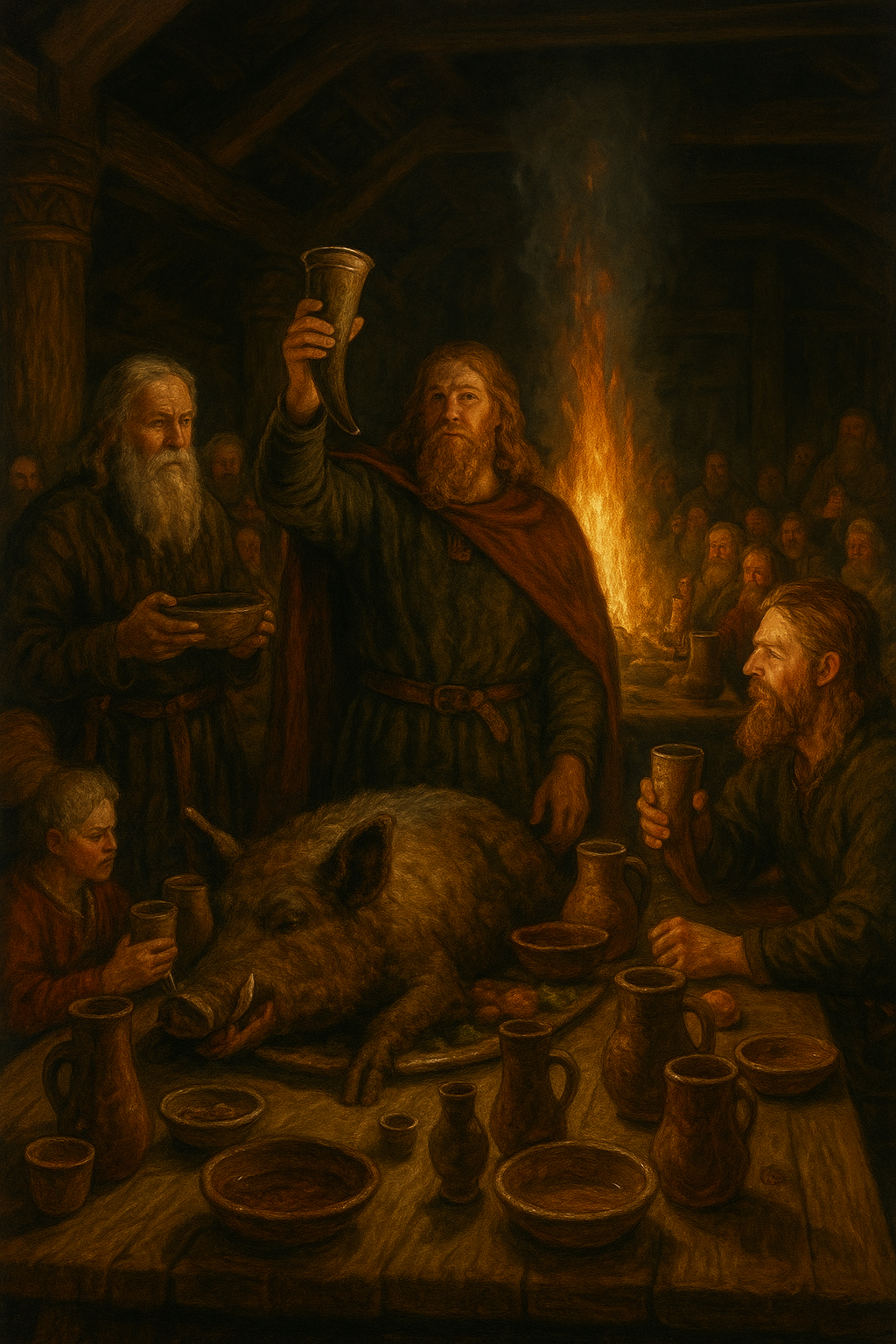
Jól Night, or Jólablót, is the heart of the ancient Norse Yule. It is the central sacrificial feast held on the full moon that follows the winter solstice, the moment the old calendar recognized as true midwinter. This night was the most important communal gathering of the heathen year - a time when people travelled through snow and darkness to share warmth, food, ale, and sacred rites within the hall. According to Hákonar saga góða and other saga sources, Jólablót was marked by animal offerings whose blood (hlaut) was sprinkled upon the idols, walls, and people using the hlautteinn, sanctifying the space and inviting divine blessing.
The gods honoured on this night included Odin, who received the first toast for victory and inspiration; Njörðr and Freyr, who were offered the second toast for peace and good harvests; and ancestors or local leaders, who received further toasts in their honour. The consumption of sacrificial meat (especially the Yule boar sworn upon the night before) bound the community together and symbolically united them with the powers they invoked. Jól Night was also a time for gift-giving, competitive boasting, recitations of lineage, and poetry, all of which strengthened social bonds and ensured that frith, or communal harmony, was upheld during the holy days.
This night was the true “Yule Day” of the old North - not a quiet religious observance but a living, vibrant explosion of hospitality, story, and sacred celebration.
When it is:
Jólablót occurs on the night of the full moon immediately after the winter solstice. In the Norse lunar calendar, this full moon marked midwinter, and the blót held upon it formed the core of the Yule season. The exact date shifts each year, depending on the solstice and lunar cycles, and historically fell anywhere from late December to late January.
For modern observance, Jól Night is kept on the full moon that follows the solstice. This restores the original rhythm of the festival as recorded in saga tradition, aligning Yule with the moonlit heart of the season rather than the fixed solar date imposed later by Christianity. This lunar timing reflects the agricultural and cosmological logic of the old North, where moonlight guided winter travel, timekeeping, and ritual.
Focus of the Night:
The focus of Jól Night is sacrifice and blessing - the exchange between gods and people that renews the bond of prosperity and protection for the year to come. The blót purified the hall and its participants, connecting them to the divine through blood, fire, and ale. The ritual toasts served as both reverence and oath, reinforcing the social order and the spiritual fabric of the community. Gift-giving expressed generosity, a core virtue of the North; storytelling preserved lineage and memory; and boasting allowed each person to declare their worth and ambition before kin and gods.
This night also strengthened frith. All disputes were set aside, and the hall became a space of sacred togetherness. The atmosphere blended reverence with celebration - a rare moment when the entire community stood equal before both gods and winter.
The Jólablót toasts:
When we talk about ancient Norse Yule traditions, one of the most iconic practices is the series of ritual toasts described by Snorri Sturluson in Heimskringla. These “Yule toasts,” or jólskålar, formed the backbone of the Jólablót - the midwinter sacrificial feast. These toasts belonged specifically to the central feast, often an all night event that could spill into the following days.
According to Snorri, the Yule feast opened with a series of sacred drinks, each honoring a god or communal bond:
1. The Toast to Odin - Victory and Sovereignty;
The first cup was raised to Odin, king of the Æsir. This toast sought victory, strength and good fortune for the ruler and his people.
2. The Toast to Njord and Freyr - Prosperity and Good Seasons;
Next came a toast to Njord and Freyr, gods associated with peace, wealth, fertility, and safe seafaring. Their blessing was vital during the dark, risky winter months.
3. The King’s Toast / People’s Toast;
A communal toast followed, honoring the chieftain or king and reaffirming the bonds between ruler and community.
4. The Toast to Bragi - Celebration and Memory;
The fourth toast was made to Bragi, the god of poetry and storytelling, inviting eloquence, festivity and lasting memories into the hall.
5. The Oath Cup (Bragafull);
After the divine toasts came the moment of solemn intensity: warriors and esteemed guests laid hands on the oath cup and swore bold vows - promises to perform great deeds in the coming year.
6. Memorial Toasts;
Finally, toasts were made in honour of deceased ancestors and valued friends, acknowledging the presence of the dead within the circle of the living.
How to Observe It:
Prepare Food and Drink: A shared meal is essential. In place of historical sacrifices, prepare a hearty feast. Pork, beef, bread, root vegetables, and winter foods echo the offerings of old. Ale or mead should be blessed and shared.
Set the Ritual Space: Light candles or a hearth fire. Place offerings on an altar - bread, meat, or symbolic items representing the sacrifice. You may include a representation of the boar sworn upon the night before.
Ritual Toasts: Raise a horn or cup and toast in the traditional order: first to Odin for wisdom and victory; second to Njörðr and Freyr for peace, prosperity, and good harvests; and then to ancestors, loved ones, or honoured figures. Each toast should be spoken aloud and drunk with intention.
Blessing Rite: Sprinkle a small amount of ale or water around the room or upon the altar to echo the ancient hlaut blessing. This symbolizes purification and divine favour.
Feasting and Fellowship: Share the meal with warmth and laughter. This is a night of abundance - allow the feast itself to be an offering. Speak stories of family or ancestors. Recite poetry, sagas, or verses that inspire. Invite boasting or declaration of strengths and intentions.
Gift-Giving: Exchange small gifts or tokens. In old tradition, this reinforced bonds of loyalty and generosity.
Maintain Feast-Peace: For the duration of the night, keep the home free of argument or harsh words. The sanctity of Jól remained protected through frith.
Symbolism and Meaning:
Jól Night embodies the heart of communal life in the old North. It is the moment when the coldest season meets the brightest fire, when hunger meets generosity, and when isolation meets fellowship. The sacrificial feast symbolizes the eternal cycle of giving and receiving - the exchange that binds gods and humans, land and people, past and future.
The toasts express gratitude and hope; the feast celebrates survival and abundance; the storytelling preserves memory; and the boar, consumed by all, represents the courage and fertility of Freyr entering the community. Jól Night is the great renewal - the centre of the year where light is kindled in darkness and blessing is poured into the days ahead.
Modern Adaptations:
A modern Jólablót may replace animal sacrifice with symbolic offerings: bread shaped like animals, poured libations of ale or juice, or shared winter foods. Toasts can be adapted while preserving their traditional order. Families may share stories, reflect on the year past, and speak hopes for the year ahead. Gifts may be simple or handmade, emphasizing thoughtfulness over extravagance.
Celebrants may pour out a small amount of ale outdoors or leave a portion of food for the land spirits in honour of ancient custom. Whether held quietly or in a lively gathering, the essence remains the same: community, blessing, generosity, and sacred celebration in the depth of winter.
NIGHT 3 - Jól’s Second Night
Summary:
Date: The night after the full moon following the winter solstice (the final night of the three-night historical Jól)
Focus: Completion of the feast, renewal of peace and unity, sharing of food, hospitality, and closing blessings
Offerings: Leftovers of the feast, bread, ale, mead, small tokens of hospitality, shared dishes
Themes: Frith, generosity, unity, closure, gratitude, community bonds, carrying blessings forward
Practices: Continued feasting, toasting, sharing remaining food, welcoming guests, reaffirming peace, simple rituals of thanks or farewell
Spirit of the Night: Warm, communal, grateful - the gentle closing of the sacred days, where fellowship lingers and blessings settle into the year ahead
What it is:
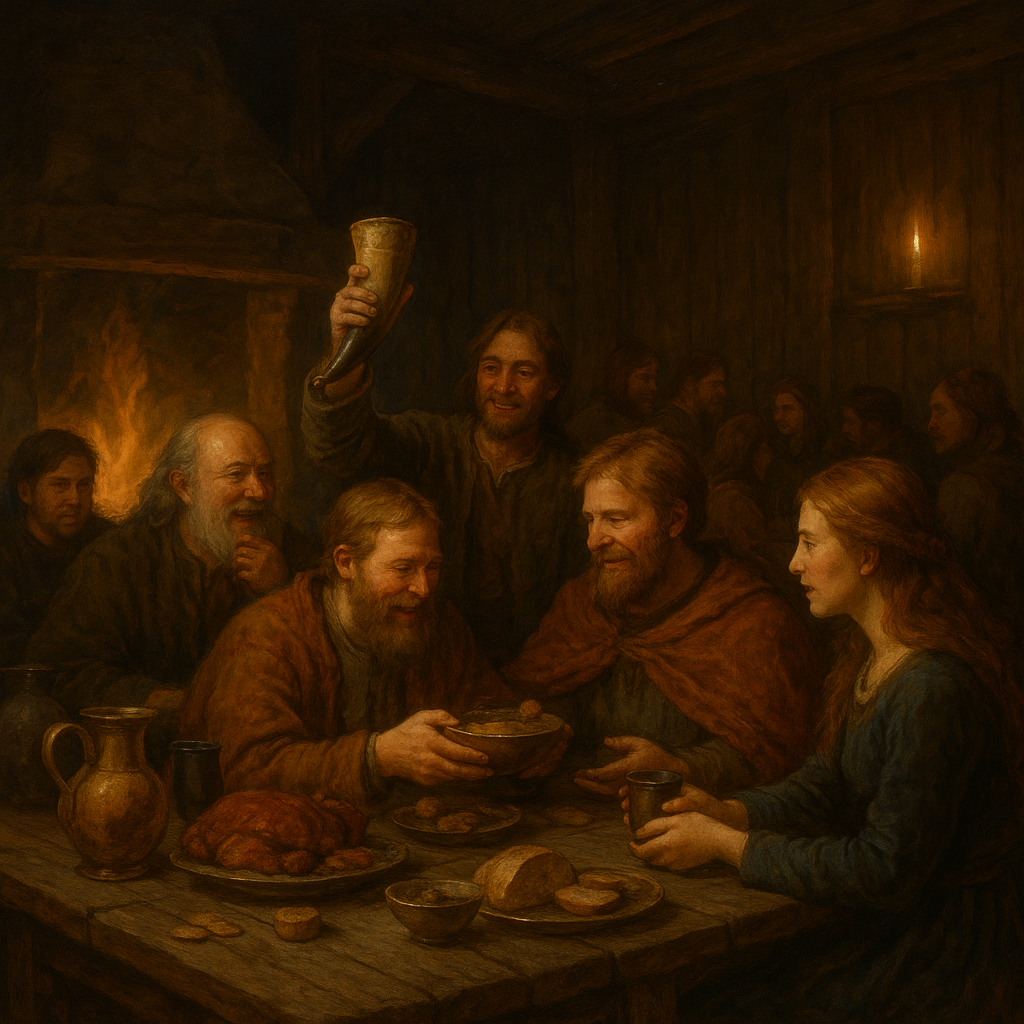
Jól’s Second Night marks the conclusion of the historical three-night Yule feast. After the solemn oaths of the first night and the great sacrificial rites of Jólablót on the second, this final night served as a period of continuation, completion, and communal warmth. While the largest ceremonies were already done, this night remained deeply significant, centered on the virtues of generosity, peace, and shared abundance.
Saga sources suggest that the third night of Yule was devoted to ongoing feasting, the distribution of remaining food, and the strengthening of frith - the sacred peace binding households and communities. Guests who travelled long distances might still be in the hall, and this night ensured they were fed, welcomed, and honoured. Minor blessings or simple rites may have occurred, such as toasts, good wishes, or the giving of small tokens.
This was not a night of ritual intensity, but of community and closure. It allowed the blessings of the blót to settle, the hall to rest from the height of celebration, and the people to re-enter the rhythm of winter life with renewed unity.
When it is:
Jól’s Second Night is celebrated on the night after the full moon that follows the winter solstice. This makes it the final night of the three-night historical Yule cycle: Jól’s Eve, Jól Night, and Jól’s Second Night.
As with the other nights, the date shifts each year according to the lunar cycle. Typically it falls between December 26 and January 22, most often in early January. This night, like the others, belongs to the ancient lunar calendar, not the fixed dates later adopted by Christian tradition. Observing it immediately after the Jól full moon honours the seasonal rhythm of the old northern world.
Focus of the Night:
The focus of Jól’s Second Night is on frith, generosity, and communal closure. It is a time to reaffirm the peace established during Jól, to share what remains of the feast, and to ensure all guests (both mortal and spiritual) leave nourished and welcomed. It is a gentle night, one that softens the intensity of the previous rites and anchors the blessings of Yule in the bonds of family and fellowship.
Hospitality is central. In Norse culture, sharing leftovers was an expression of honour and abundance, demonstrating that no one would go hungry under one’s roof. This night carries forward that spirit. It is a final moment of warmth, song, and companionship before the cold weight of winter resumes.
How to Observe It:
Share the Remaining Feast: Prepare a meal using leftovers from the previous night if possible. This echoes the ancient custom of extending hospitality and abundance.
Toast to Frith and Fellowship: Raise a cup with simple words of gratitude for the peace of Jól, for the company of friends or family, and for blessings carried into the new year.
Offer Hospitality: If celebrating with others, show special kindness and welcome. If celebrating alone, offer food outside for animals or the land spirits as a gesture of openness and generosity.
Simple Blessings: Light a candle or lamp and speak thanks for the feast. You may also offer small tokens, share a story, or reflect on the blessings received.
Quiet Celebration: Sing, tell stories, or speak memories. This night is softer than the previous two - more about warmth and closeness than ceremony.
Close the Feast: Near the end of the night, acknowledge the completion of Yule. Extinguish candles or hearth in a deliberate, respectful way, or leave a single flame burning as a symbol of continuity through winter.
Symbolism and Meaning:
Jól’s Second Night represents the settling of blessings, the strengthening of unity, and the fulfilment of the feast. It is a reminder that prosperity is measured not only in sacrifice or ceremony, but in generosity, peace, and the nourishment shared among kin. The distribution of leftovers symbolises abundance that extends beyond necessity, while the quiet fellowship reflects the heart of community life.
This night carries the lingering warmth of the hall, the voices of those gathered, and the simple, enduring bonds that sustain people through winter. It marks the gentle fading of the sacred days and the transition back into ordinary time, enriched by the gifts and promises of Yule.
Modern Adaptations:
Modern observers may mark this night by sharing a relaxed meal, offering food outdoors, or spending quiet time with loved ones. Light candles, speak words of closure, or exchange small tokens of friendship. Use this night to reflect on what you wish to carry forward into the new year from the blessings of Jól.
Whether celebrated alone or with others, the essence of this night is peace, generosity, and the soft closing of the sacred feast - a final breath of warmth before winter deepens.
12 nights of yule: The Modern Norse Yule Guide
The modern observance of the Twelve Nights of Yule is a framework that has developed over time from a blend of folklore, Christian era tradition and contemporary pagan interpretation. While the number twelve appears in many post medieval winter customs, it was not part of historical Norse practice. The original Jól was a three night feast aligned with the lunar calendar and the “twelve days” familiar today stem largely from later European and Christian seasonal structures.
Despite this, the Twelve Nights have become an important part of modern Heathen and pagan Yule celebrations. They provide a thoughtful way to create rhythm, reflection, and ritual continuity through the darkest days of winter. Over the last several decades, practitioners have shaped these nights into a cycle of themes (honouring ancestors, making oaths, celebrating abundance, seeking guidance, blessing the home, and welcoming renewal) forming a progression that speaks to both personal and spiritual growth.
—
Note** -
There are several different versions of modern Norse yule. Some people celebrate each night on different days, for instance some say ‘the wild hunt’ is on the 2nd night, others the 8th. It is down to you which 12 nights calender you wish to follow. This guide is the most commonly found 12 nights of yule you can find in today’s age.
Jól/Yule eve - The Night of the Boar (Sonargöltr Night)
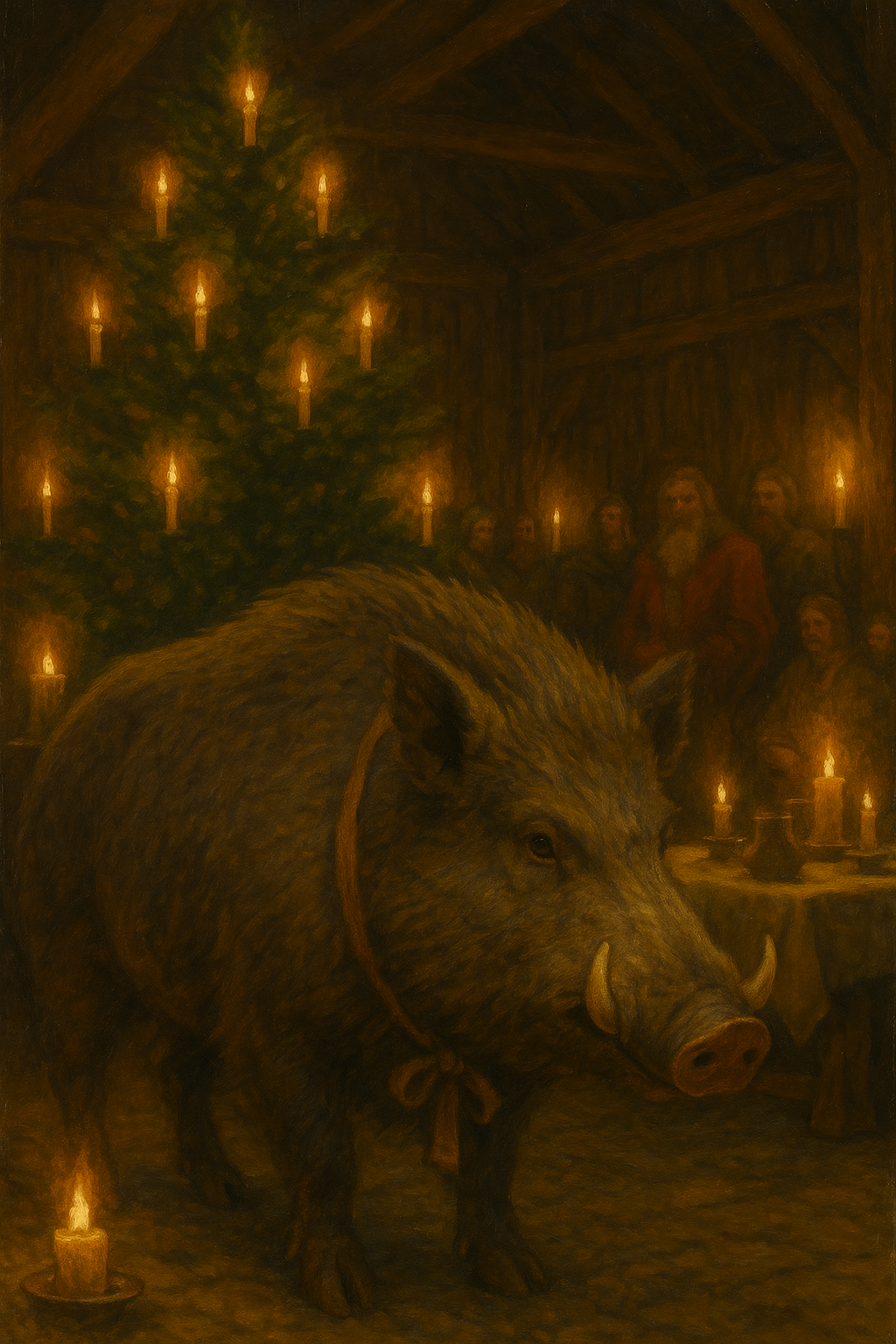
Summary:
Date: December 19th
Focus: Honour to Freyr, peace, renewal, and sacred oaths upon the boar
Offerings: Boar-shaped bread or meat, ale, mead, apples, grain, evergreen, carved wooden boar
Themes: Fertility, prosperity, peace, promise-keeping, renewal of luck
Practices: Oath-swearing on the boar, toasting Freyr, sharing food and drink, blessing for peace and abundance
Spirit of the Night: Joyful, solemn, renewing - the promise of new life sleeping beneath the frozen earth
What It Is
The Night of the Boar (Old Norse Sonargöltr, “the atonement boar” or “sacred boar”) celebrates one of the most important rites of the old northern winter - the feast held in honour of Freyr, god of fertility, peace, prosperity, and sacred kingship.
According to the Hervarar saga ok Heiðreks, during the great Jól feast, a boar was brought into the hall. Warriors and chieftains placed their hands upon its bristles and swore oaths (promises of courage, justice, or future deeds) in Freyr’s presence. The boar was then sacrificed and eaten at the feast, its offering symbolizing the renewal of life and peace between men and gods. The boar was Freyr’s sacred animal, representing fertility, courage and light reborn. His golden-bristled boar Gullinbursti, forged by the dwarves Brokk and Sindri, pulled his chariot across the sky and shone like the returning sun. Thus, this night combines both oath and blessing - the personal vows of Night 8 continue here, deepened by Freyr’s promise of peace and growth for the coming year.
When It Is
The Night of the Boar is celebrated on December 28th, following Oath Night. This continues the sacred theme of truth, honour, and renewal - now blessed by Freyr’s peace and abundance. Historically, Sonargöltr took place at the height of Jól feasting, around the middle of the celebration, marking both the turning of the sun and the renewal of fertility. It was a night of both solemn ritual and hearty communal joy - the feast of fulfilled promise and shared plenty.
Focus of the Night
This night’s focus is renewal through sacrifice and gratitude. The act of offering (and eating) the boar was a way of restoring harmony between people, gods and land - a recognition that all life is an exchange. Freyr embodies this principle perfectly. He is not only a god of crops and pleasure but also of peace, sacred kingship, and balance. He ensures that fields will grow, homes will prosper, and human vows will bear fruit if made in truth and humility. Thus, the Night of the Boar celebrates the returning life of the earth even as snow lies deep - the fire beneath the frost, the seed beneath the soil.
How to Observe It
1. Prepare the Feast and the Boar’s Symbol:
If you eat pork, a ham or roast can serve as the ritual centerpiece.
If not, bake a boar-shaped bread or pastry, or carve a simple wooden boar to represent Gullinbursti.
Place it on your altar or table as the sacred focus.
2. Toast to Freyr:
Pour a horn or cup of mead and lift it to Freyr.
Say aloud:
> “Freyr, lord of peace and plenty, golden-bristled one who brings light from darkness, bless this home and the land that bears us.”
Light candles or lamps as symbols of the returning sun.
3. Renew or Affirm Oaths:
If oaths were made on Oath Night, reaffirm them here in Freyr’s name, sealing them with his blessing of growth and steadiness.
If you did not swear oaths before, this night offers a gentler form - promises of good intent, generosity, or work to be done in the new year.
4. Share the Feast:
Enjoy food and drink in a spirit of joy and fellowship.
The feast itself is sacred: to share it is to participate in Freyr’s abundance.
Pass a horn or cup, and each person may offer a toast of peace, thanks, or goodwill.
5. Offerings to the Land and Spirits:
Set aside a portion of the meal (a slice of bread, meat, or ale) and place it outside under a tree or near your boundary as an offering to the landvættir and Freyr.
Say:
> “As the boar runs and the sun rises, so may peace and plenty return to all the worlds.”
6. Reflection and Blessing:
End the night by meditating on Freyr’s gifts: peace, love, fertility, and harmony.
Ask yourself what seeds you will plant (literal or symbolic) in the year to come.
Symbolism and Meaning
The Night of the Boar embodies the sacred exchange between giving and receiving. Just as the boar gave its life for the feast, humans are reminded that life continues through gratitude and reciprocity. The boar’s strength and fearlessness represent courage in the face of hardship, while its connection to Freyr links it to the return of the sun and renewal of the world.
This night bridges the solemnity of oath-making with the joy of life renewed - transforming personal intention into shared abundance. In many ways, this is the heart of Jól itself: not merely a festival of survival, but of trust in the living cycle - that light and life will rise again.
Modern Adaptations
Make or bake a symbolic boar (bread, cake, pastry, or carving).
Pour a toast to Freyr, asking for peace, love, and fertility in all forms.
Renew a commitment to the land - recycle, plant, care for animals, or give to others.
Use this night for gratitude - write down what you’re thankful for and burn or bury it as an offering.
Families can pass a candle or horn, each person sharing one hope for the year ahead.
This night can be as simple or as grand as you wish.
What matters most is the spirit of warmth, honesty, and joy - Freyr’s light returning through your words and actions.
Spirit of the Night
The Night of the Boar is the beating heart of midwinter - where oaths are sealed in abundance and peace. It is the echo of laughter in longhouses, the scent of roasted bread and mead, the warmth of kinship against the dark. It is also the unseen presence of Freyr, smiling through the firelight, golden and calm, reminding all that life endures. On this night, the promise of light takes root again in the world, and within you.
Night 1 - Modraniht (Mother’s Night)
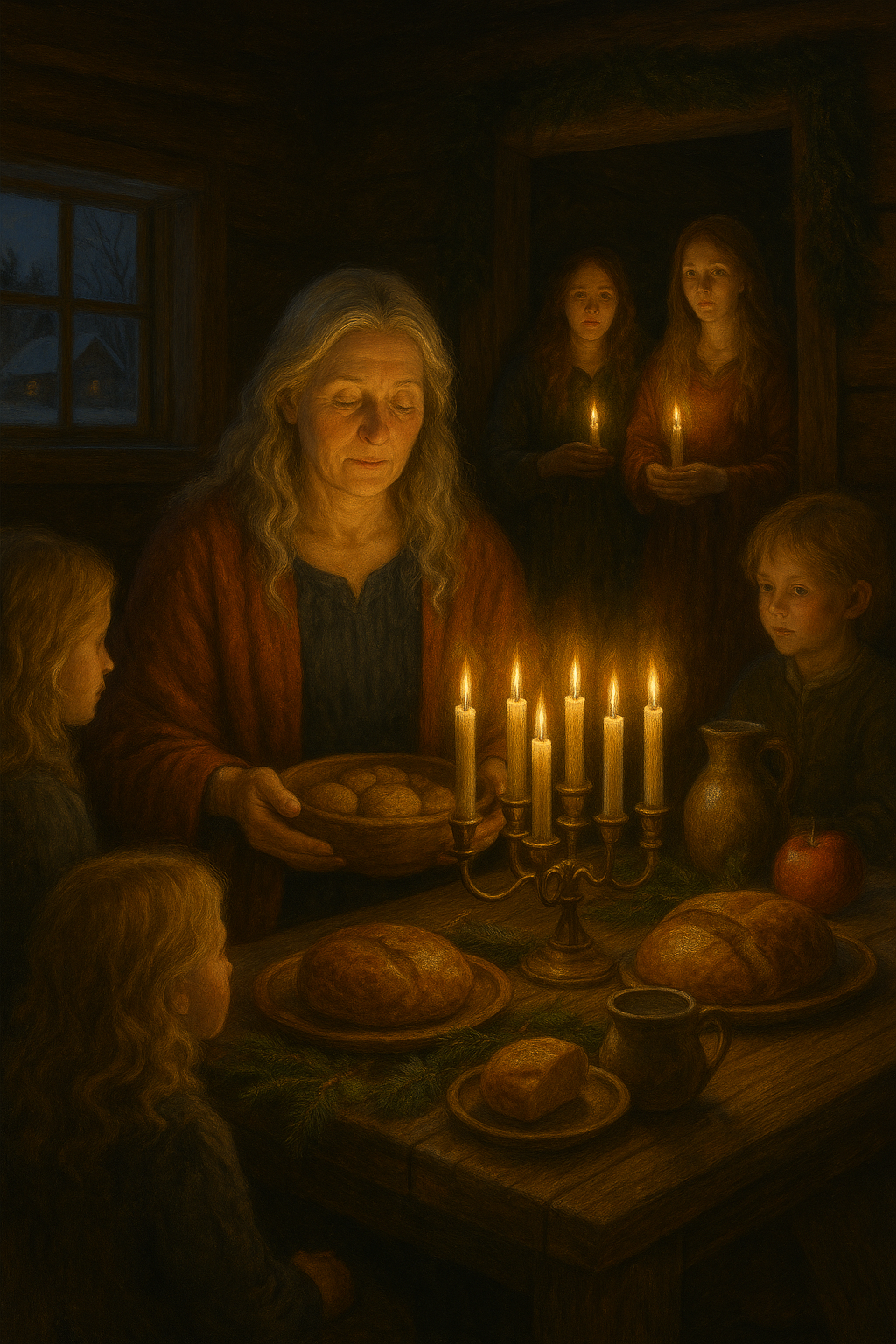
Summary:
Date: December 20th (eve before the solstice, start of Jól)
Focus: Honouring the Mothers - ancestors, Disir, and divine feminine powers
Offerings: Bread, milk, honey, mead, apples, evergreen, family foods
Themes: Cleansing, remembrance, prophecy, renewal, protection
Practices: Home blessing, storytelling, divination, offerings, candle lighting
Spirit of the Night: Quiet, reverent, life giving - the deep breath before the sun’s return
What it is:
Mōdraniht or Mother’s Night, marks the beginning of the Twelve Nights of Jól. The name comes from Old English, meaning “Night of the Mothers.” It was recorded in the 8th century by the monk Bede in De Temporum Ratione (The Reckoning of Time), where he noted that the pagan Anglo Saxons held it as a holy night honouring the mothers. These Mothers were both divine and ancestral - the Disir, Matronae, and foremothers who gave and guarded life. Across the Germanic world, inscriptions and votive stones dedicated to the Matronae have been found, showing women in groups of three, protectors of fate, fertility and household fortune.
In Norse tradition, this night shares kinship with the Dísablót - a sacrificial rite held for the ancestral female spirits. Together, they reveal a common thread in northern belief: that the feminine powers of creation, fate and family deserved deep honour at the turning of the year. Mōdraniht set the tone for all the nights to follow (still, sacred and inward looking) a moment to honour the womb of life itself as the sun prepared to be reborn.
When it is:
Mōdraniht is celebrated on the eve of the winter solstice or the first night of the Jól period.
Historically, the exact timing varied from region to region, but for modern observance it is commonly held on December 20th, the night before the solstice and the beginning of the Twelve Nights of Jól running through January 1st.
This night stands at the threshold between old and new - when the longest darkness gives way to the slow return of light. In mythic terms, it is the hidden night of the Mother, when the sun lies unborn beneath the earth.
Focus of the Night:
Mōdraniht is a night of gratitude and remembrance - a time to honour the Mothers and the Disir, those who gave life, love, wisdom and protection. It celebrates both the women of one’s own line and the greater powers of fertility and fate who shape the world. It is quiet and solemn, unlike the feasting nights to come. In spirit, it is a night of blessing, cleansing and preparation - for in honouring the Mothers, you align yourself with the deep currents of renewal that rise from the heart of winter.
How to Observe It:
There is no single fixed ritual for Mōdraniht, but the following actions blend historical knowledge with meaningful modern practice:
Prepare the Home and Hearth:
Before nightfall, sweep, wash and cleanse the home. The act of cleaning is symbolic - clearing the remnants of the old year to welcome new fortune. If you have a hearth or fireplace, light it and let the first flames of Jól rise for the Mothers. The warmth represents the womb of the earth, nurturing life through darkness.Set an Altar or Table for the Mothers:
Choose a quiet place - the family table, a windowsill, or a small shrine. Lay a cloth and light candles. Offer food and drink that feel personal: bread, honey, milk, mead, apples, or evergreen sprigs. Speak the names of your female ancestors, or if their names are lost, simply say, “To the Mothers who came before.” You may also honour goddesses connected with motherhood and fate - Frigg, Freyja, Eir, or the Norns who weave all destinies.The Offering Meal:
As in older times, share a meal and set aside a portion for the unseen guests. This can be placed outside after dark or on the altar. Bread or porridge are traditional foods of hospitality. You might pour out milk or mead and say:
“For the Mothers who guard us, for the Disir who watch, for the hands that shaped our line.”Divination and Reflection:
Many modern Heathens and Norse pagans use this night for quiet divination - rune casting, dream work, or simply listening for guidance. The Mothers are seen as bearers of wisdom and foresight, and winter nights are thought to thin the veil between worlds.Tell the Stories of the Women in Your Line:
Gather with family or friends and speak the names of mothers, grandmothers, aunts, or teachers who shaped your life. Tell one story about each if you can. In Norse thought, remembrance (minni) is sacred - to speak a name keeps the spirit alive and strengthens the hamingja, the inherited luck, of the family.Candle or Lamp Ritual:
Light one candle for each generation remembered, or let a single flame burn through the night. The light honours both the Mothers and the sun soon to be reborn. You may whisper blessings for health, fertility, and fortune for the year ahead.House Blessing and Warding:
Walk the boundary of your home with a candle, bell, or burning herbs (juniper, spruce, mugwort, or rosemary). Speak protective words such as:
“This house stands in peace, guarded by those who came before.”
This echoes old Norse customs of blessing the home and securing it against restless spirits of winter.
Symbolism and Meaning:
Mōdraniht is the night of hidden renewal. It honours the feminine forces that hold the world together - birth, nurture, memory and fate. In mythic thought, it mirrors the work of the Norns at the Well of Urðr, weaving new beginnings from the darkness of what has been. It is also the night when ancestral blessings are rekindled: the hamingja of the family renewed through gratitude and remembrance.
To honour the Mothers is to honour the continuity of life itself - the unbroken line of hands that shaped your existence.
Modern Adaptations:
Even in the modern world, Mōdraniht can be a beautiful, grounding observance. Light a candle for the Mothers. Bake bread and share it with family. Pour out a libation to the earth, or to the stars, saying:
“To the Mothers, to the Disir, to all who watch over us.”
Reflect on the goddesses who embody motherhood and protection - Frigg’s care, Freyja’s love and power, Eir’s healing, and the Norns’ wisdom.
Whether done privately or with kin, this night marks the still point before Yule’s celebrations begin - a sacred pause, when we honour the forces that birthed us and give thanks before the returning light.
Night 2 – The Winter Solstice (High Yule / Jólablót)
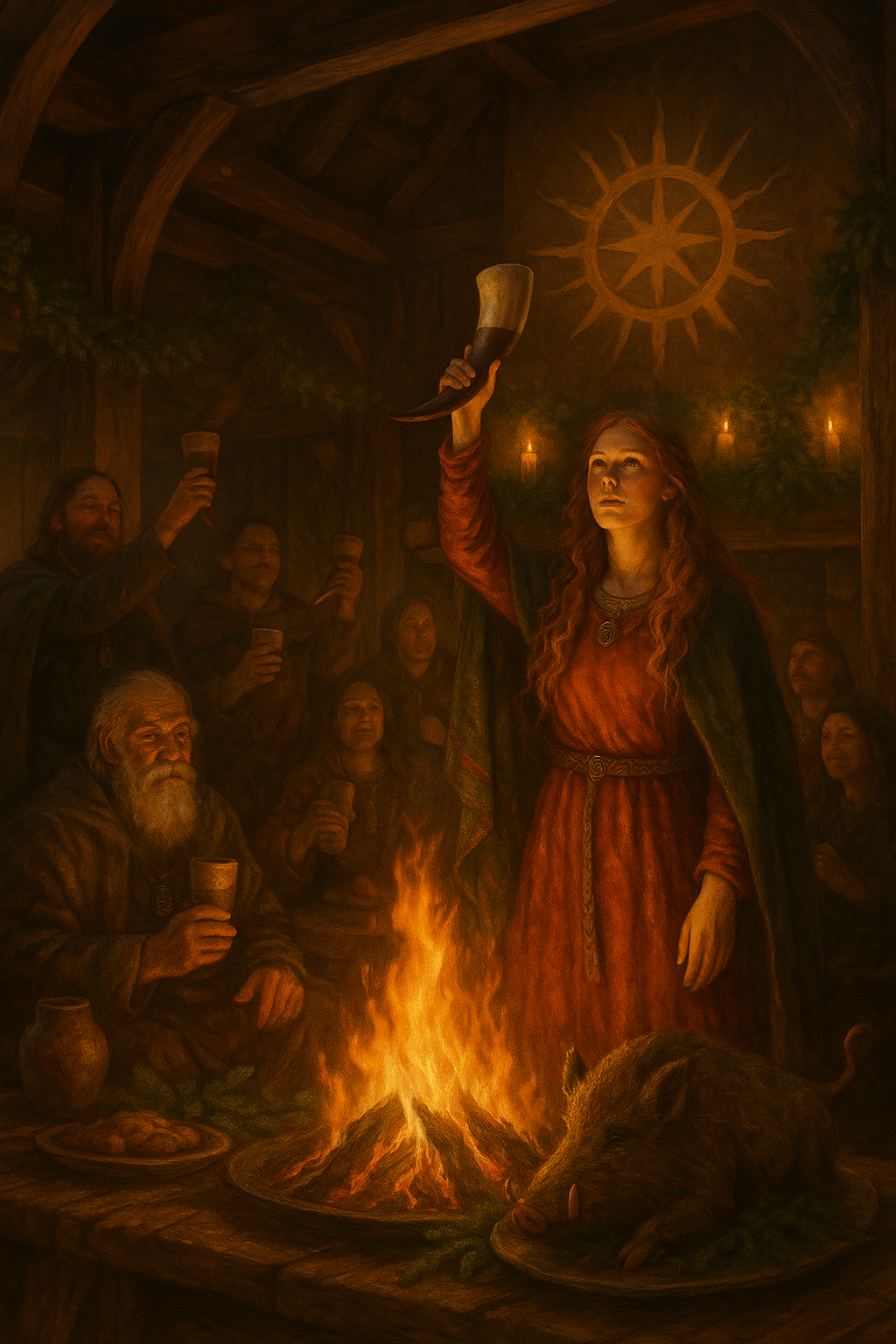
Summary:
Date: December 21st (Winter Solstice - Midwinter Night)
Focus: Renewal of the Sun, victory of light over darkness, blessing for peace and prosperity
Offerings: Ale, mead, bread, boar (or symbolic boar loaf), evergreen, candles, fire
Themes: Rebirth, joy, oath-making, community, hope
Practices: Fire lighting, toasts (sumbel), feasting, offerings, vows for the year ahead
Spirit of the Night: Bright, festive, life affirming - the turning of the great wheel
What it is:
The second night of Jól marks Midwinter, the winter solstice, when the sun’s power begins to return. It is the heart of Yule, the time when the old year dies and the new begins to stir. In Norse and wider Germanic tradition, this was the moment of Jólablót – the great midwinter sacrifice and feast held for peace, fertility, and a good year to come.
Snorri Sturluson, in Hákonar saga góða, wrote that in the old days “it was the custom that at midwinter a sacrifice should be made for peace and a good season.” This was one of the most sacred feasts of the year, held to strengthen the bonds between gods, ancestors, and community. Ale and mead were poured, oaths were sworn, and fires were lit to drive back the longest night.
To the Norse, this was more than celebration - it was participation in cosmic renewal. The sun, imagined as the goddess Sól (Sunna), had reached her weakest point. Through blót, song, and fire, her light was reborn. This act renewed the balance of the worlds and called back strength and warmth to the land.
When it is:
The Winter Solstice falls on December 21st, the shortest day and longest night of the year. Ancient calendars varied, and some held their Yule feast a few days after, but for modern practice, the solstice itself is the fitting time. It represents the turning of darkness into light, the first spark of the returning sun.
This night follows directly after Mōdraniht, creating a natural flow from the quiet honour of the Mothers to the open celebration of life’s renewal. Where the first night looks inward, this one looks outward - to the sun, the gods, and the year to come.
Focus of the Night:
The focus of Jólablót is light, renewal and gratitude. It honours the gods who govern peace, fertility and cosmic order - Odin, Freyr, Frigg, Baldr, and Sunna. Offerings are made to ensure harmony between the seen and unseen worlds. The fire kindled this night is sacred: it symbolises the rebirth of the sun and the life that will grow from it.
This night also celebrates community - the gathering of kin, friends, and neighbours. It was a time to feast, to share ale, and to strengthen bonds through toasts and vows. Words spoken on this night were binding, carried by the renewed luck (hamingja) of the turning year.
How to Observe It:
There is no single prescribed rite for Jólablót, but the following practices draw from both historical sources and modern Heathen tradition.
Light the Fire or Candles:
As the sun sets, light a hearth fire, bonfire, or candles. If you keep a Yule log, this is the night to burn it. Each flame represents the returning sun’s strength. You may say:“From darkness, light is born again. May warmth and peace return to all the worlds.”
Prepare a Feast:
Yule was first and foremost a time of feasting. Bake bread, roast meat, or prepare foods that feel celebratory and nourishing. Traditionally, boar was offered to Freyr, symbolising fertility and plenty. If no meat is used, a loaf shaped like a boar or sun wheel can stand in its place.Make Toasts and Offerings (Sumbel):
Raise a horn or cup and make three toasts;To the gods - for peace, light, and prosperity.
To the ancestors - in gratitude for their strength and guidance.
To the year ahead - for courage, good fortune, and health.
Pour out a portion of ale or mead outside or into the fire as an offering.
Swear or Renew Oaths:
In old Yule feasts, oaths were often made before the gods and the community. You might quietly make a personal vow for the year to come, written on paper and burned in the fire as offering. This act mirrors ancient oaths sworn on sacred rings or horns.Honour the Spirits and the Sun:
After feasting, step outside and look to the stars or horizon. Offer a simple thanks to the returning sun:“Hail Sunna, shining one, who rises anew.
Bring warmth, bring light, bring life again.”Bless the Home:
Carry a candle or torch through your home and say a short blessing at each doorway or window. This drives away the darkness of the old year and welcomes the light of the new.
Symbolism and Meaning:
The Winter Solstice is the heartbeat of Yule. It is the moment when time itself turns, and the old gives birth to the new. To the Norse, this was not symbolic - it was a living truth. The act of keeping fire, of toasting, of offering to the gods and ancestors, helped sustain the world’s renewal.
Spiritually, this night represents hope, joy, and shared strength. It balances the reverence of Mother’s Night with celebration and life. The dark has reached its deepest point; now every day grows longer, every dawn brighter.
To honour this night is to remember that even in the coldest, darkest time, the spark of life endures.
Modern Adaptations:
For modern Heathens and those walking ancestral paths, this night can be as simple or as grand as you wish. Light candles for the sun’s return. Pour out a small libation to the gods and ancestors. Cook something warm, share it with loved ones, and toast to the coming year.
What matters most is the act of renewal - recognising that the world, like the sun, turns again toward light.
Night 3 - The Feast of Ancestors
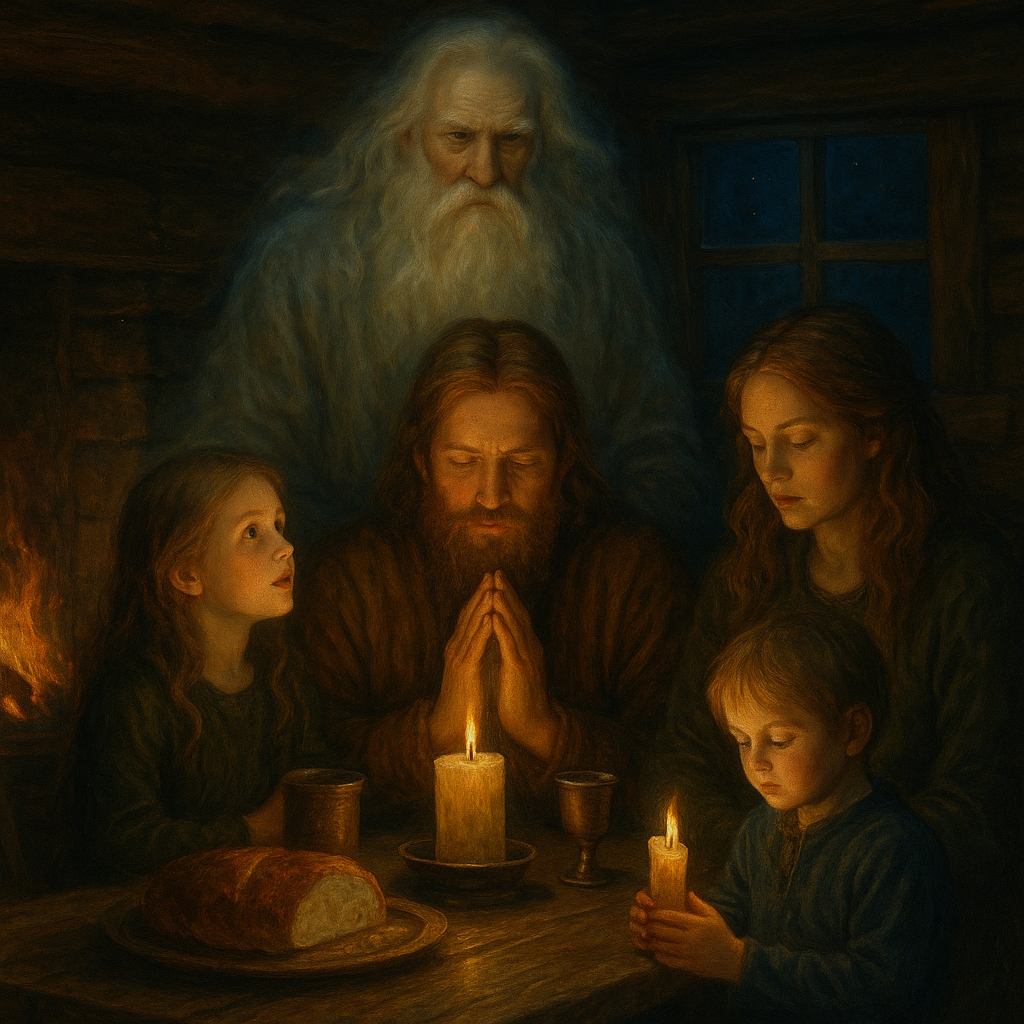
Summary:
Date: December 22nd
Focus: Honouring the ancestors, family spirits, and the household’s living luck
Offerings: Bread, ale or mead, meat, candles, evergreen, family dishes, and a portion set aside for the dead
Themes: Memory, gratitude, continuity, renewal of family luck (hamingja)
Practices: Ancestral offerings, storytelling, candle-lighting, quiet reflection, blessings for the household
Spirit of the Night: Warm, reflective, and protective - a night to remember where we come from and strengthen our roots
What it is:
The third night of Jól turns inward again, from the bright celebration of the returning sun to the quiet light of the hearth. It is the night when families remember their ancestors - those who built, toiled, fought, and loved so that life could continue.
This was not a grand public ceremony, but a household observance, personal and deeply rooted. In the North, winter was the time when the dead were thought to draw near. The warmth of the fire, the glow of candles, and the sound of familiar voices were said to comfort both the living and the departed.
Though Álfablót (the “sacrifice to the elves”) was held earlier in the year at Winter Nights, its spirit lingered into midwinter. The elves (álfar) were often seen as ancestral powers, guardians of land and family fortune. At Yule, that same reverence continued in the home. The dead were honoured, the family’s hamingja renewed, and peace invited into the household.
In this way, the Feast of Ancestors at Yule became a bridge between seasons: a quiet echo of the earlier autumn rites, but now under the reborn sun.
When it is:
The Feast of Ancestors is kept on December 22nd, the night after the Winter Solstice. The sun has just been reborn, but its strength is still fragile. It is a natural moment to look back - to thank those who kept the light of life alive through their own dark winters.
In old Scandinavia, this time was one of stillness. The fields lay under snow, journeys ceased, and the home became the centre of life. Families gathered by firelight, and the dead were never far from mind.
Focus of the Night:
This night is devoted to gratitude and remembrance. It honours the ancestors and household spirits who form the living foundation of luck, protection, and belonging.
In Norse belief, every family carried a shared life-force (the hamingja) that could strengthen or weaken depending on how kin remembered and honoured one another. To remember the ancestors was to keep that current strong.
The focus is not sorrow but connection — knowing that the living and the dead are bound together through love, memory, and fate.
How to Observe It:
1. Prepare the Hearth or Central Fire:
Before sunset, tidy and warm the home. Light a fire or candles to represent the hearth. The flame is the living link between past and present - the same light your ancestors once tended.
You may say:
“This fire burns as theirs once burned.
May it warm us both, living and departed.”
2. Set a Table for the Ancestors:
Lay an extra place at the family table, or create a small altar with bread, ale, or a dish your family has long cherished. These offerings are shared with the unseen guests - not idols to worship, but loved ones to remember.
If names are known, speak them aloud. If they are lost, say simply:
“To those who walked before, whose hands built this life.
You are not forgotten.”
3. The Offering:
When the meal is done, take a portion (bread, meat, or drink) outside or to a quiet place. Leave it with a few words of thanks. In older times, this offering would have been left near a stone, tree, or mound - symbols of continuity and the earth that holds the dead.
4. Storytelling and Remembrance:
Gather your household and speak of the past. Tell stories of parents, grandparents, teachers, or friends who shaped you. Even small memories (a song, a saying, a kindness) honour their presence.
In Norse custom, remembrance (minni) was sacred. To speak the name of the dead was to keep them alive within the family’s fortune.
5. Quiet Reflection:
After the stories, sit quietly by candlelight. You may meditate, listen for guidance, or simply feel gratitude. Some people sense the nearness of loved ones most strongly on this night.
6. Blessing the Home:
Walk through the rooms with a lit candle, saying:
“Peace to this house,
Blessing to those within,
Rest to those beyond.”
Symbolism and Meaning:
The Feast of Ancestors reminds us that life is a tapestry woven through generations. Each person is a thread connected to countless others. In the stillness of winter, that pattern glows clearly - every ancestor, every memory, every kindness.
It is also a night of renewal. By honouring the dead, the living strengthen their own spirit and invite protection into the home. The act of remembrance balances the world: it ensures that the warmth of love continues beyond time.
In Norse thought, to remember was not nostalgia - it was power. It nourished the hamingja and bound fate to goodwill.
Modern Adaptations:
Modern practitioners can adapt this night simply. You might light one candle for your ancestors and one for yourself, symbolising continuity between worlds. Bake bread, share it with family, and set a portion outside for the unseen.
You can also write a message to a loved one who has passed and burn it in the fire, letting the smoke carry your words.
However you keep it, let this night remind you that the past is not gone - it walks beside you, whispering strength through every winter.
Night 4 - The Wild Hunt and the Turning of Spirits
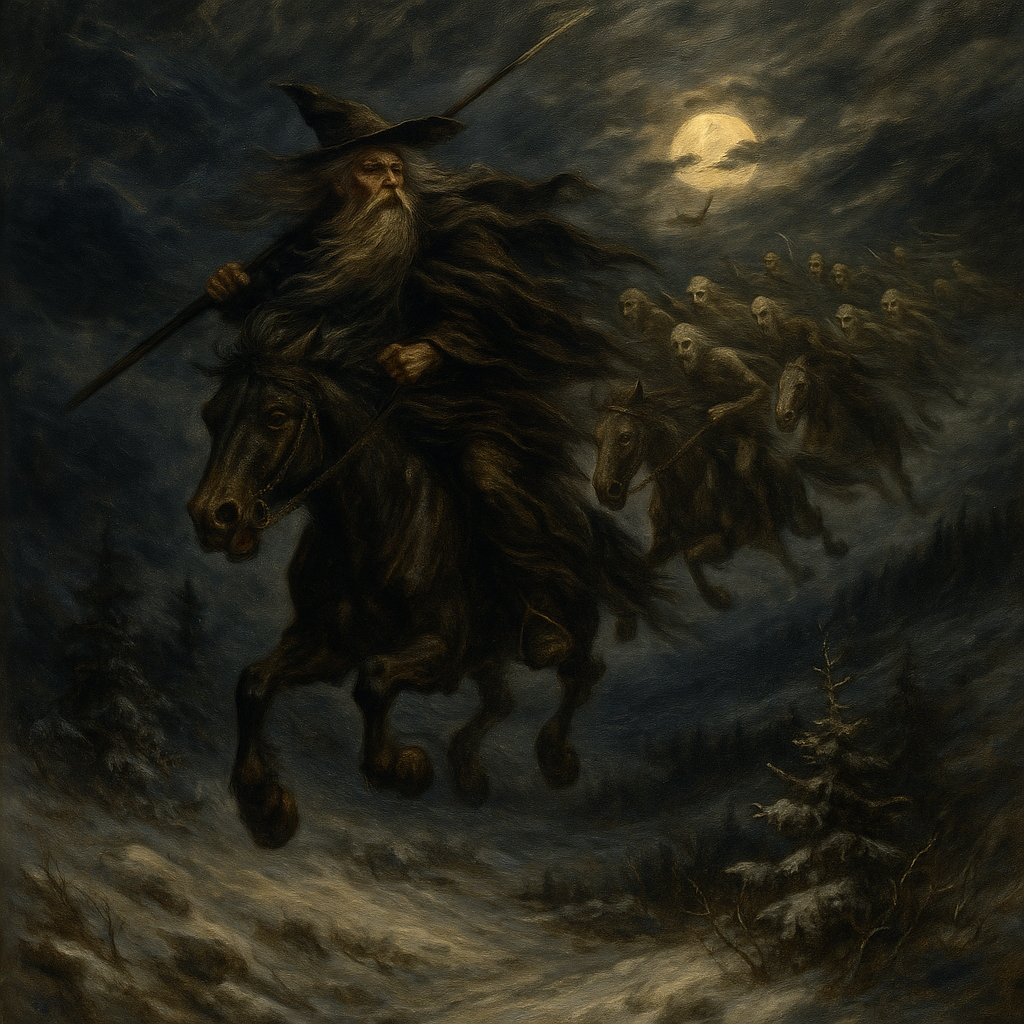
Summary:
Date: December 23rd
Focus: Honouring the wandering dead, the restless spirits, and the god who leads them - Odin (Jólfaðr, “Yule father”)
Offerings: Bread, mead or ale, juniper smoke, oats for horses, a small bowl of water or milk left outside
Themes: Protection, respect for the unseen, guidance through chaos, balance between order and wildness
Practices: Protective rituals, offerings to the Hunt, candle lighting for travellers and lost souls, stillness and watchfulness
Spirit of the Night: Electric, wind torn, mysterious - the world between worlds is open and in motion
What it is:
The fourth night of Jól is one of awe and caution - the night when the Wild Hunt rides.
Across the Germanic and Norse world, stories tell of a roaring storm of riders sweeping through the winter sky: dead warriors, restless souls, and otherworldly beings led by a fearsome god or ancestral figure.
In the North, that leader was often Odin, called Jólfaðr (“Yule Father”) and Valföðr (“Father of the Slain”). In other places, it was Frau Holda, Perchta, or even the spirit of the land itself.
The Hunt rode not only as a terror but as a cosmic procession, marking the turning of the year - when the forces of fate and death moved freely through the dark.
In the sagas and later folklore, this night embodies the tension between life and death, order and storm.
The dead are not evil, but they are powerful and untamed. The wind outside your door might be Odin’s host passing by, or the breath of ancestors who cannot yet rest.
For the old North, this was not simply a ghost story. It was the recognition that nature, spirit, and death all move together - and that their passage must be honoured with respect.
When it is:
The Wild Hunt’s night is held on December 23rd, just before the midwinter feasting begins in earnest. The solstice has passed, but the year’s cycle is still turning.
Old weather lore often spoke of this night as a time of fierce winds and deep silence between storms - a moment when the boundaries of the world were most fragile. It is a night to stay close to hearth and kin, to honour the unseen, and to keep one’s courage steady as the old year’s spirits move on.
Focus of the Night:
The focus is twofold - protection and reverence. It is a night to remember that not all spirits are peaceful. Some wander because they must. Some are driven by duty, others by restlessness or fate. To recognise the Hunt is to show respect for the mystery of death and the wild power that even gods cannot fully tame. The Norse understood that life depends on balance - between home and wilderness, stillness and motion, life and death. The Wild Hunt was that balance in motion.
This night also honours Odin in his darkest, oldest form - as the god of death, wisdom, and change, riding the boundary between worlds.
How to Observe It:
1. Prepare the Home:
Before nightfall, close shutters, light candles, and ensure warmth within. This simple act symbolises the protection of the hearth - the light of order holding back the storm of chaos.
You may say:
“The wind rides, but our fire stands.
Peace to the passing host.
Light for the living, rest for the dead.”
2. Leave Offerings for the Hunt:
Outside, set a small plate of bread, a cup of ale or mead, and perhaps oats or grain - a gesture of hospitality to the passing riders and their steeds.
Tradition holds that no one should look directly at the Hunt or call to it, but one may acknowledge it quietly:
“Ride well, Wild Ones. Take no harm, bring no harm.”
3. Burn Juniper, Mugwort, or Pine:
The smoke purifies the air and symbolically guards against the wild energies of the night. It is both ward and gift - a way of honouring the spirits while setting a safe boundary.
4. Light a Candle for the Lost:
Place a candle or lantern in a window for those who wander. It is said that travellers, spirits and even the Hunt itself may see it and pass in peace.
Some Heathens light thirteen small candles for each direction of the winds or for each departed kin.
5. Stillness and Listening:
Spend part of the night in silence.
Listen to the wind.
If dogs bark or doors creak, remember how our ancestors once heard those sounds as signs of the Hunt’s passing.
It is a time to remember that not all movement in the dark is malevolent - some is simply ancient, carrying the echoes of all that has been.
Symbolism and Meaning:
This night is the pivot of power within Jól - where the unseen world moves closest to the living.
The Wild Hunt represents the raw forces of fate and transformation. It is both a storm and a procession, both danger and renewal.
The dead who ride are not at rest, yet their passage clears the air between years - sweeping away what must be let go before the turning of the sun.
To honour the Hunt is to acknowledge that wildness exists in all things, even within ourselves.
We light the fire not to banish the dark, but to stand beside it in reverence.
Modern Adaptations:
Modern Heathens often observe this night as a time of protection and cleansing.
Light candles or lanterns and say a short blessing for safe passage of the spirits.
Burn incense or herbs to symbolically cleanse your home.
Take time for shadow work - reflection on grief, fear, or the parts of yourself that stir in the dark.
Journal or meditate on what must be released before the new year fully arrives.
If you live near woods, hills, or open land, step outside briefly. Feel the wind, acknowledge the unseen, and then return indoors - closing the door softly behind you, as your ancestors once did.
In Essence:
Night 4 is not meant to frighten but to awaken awe.
The old year’s spirits are moving on; the Wild Hunt rides, reminding us that death and life are woven together in the same great pattern.
To those who keep Jól with reverence, this night is sacred - a time to honour the storm, remember the restless, and keep one’s own hearth bright amid the winds of fate.
Night 5 - Hearth and Hospitality Night
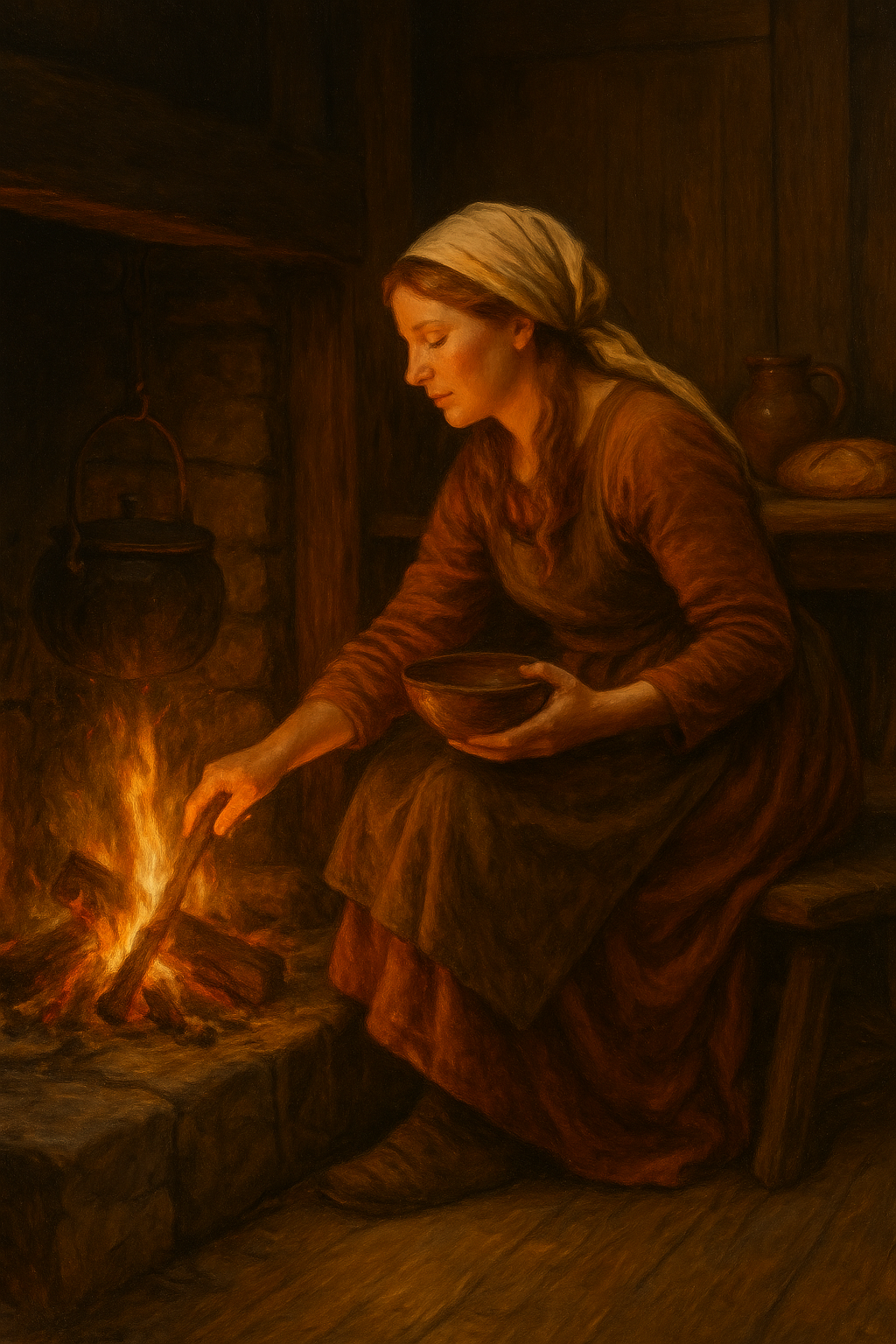
Summary:
Date: December 24th
Focus: The Hearth, Home Spirits, and the Bonds of Hospitality
Offerings: Bread, milk, mead, butter, porridge, evergreen boughs, candlelight
Themes: Peace, generosity, domestic blessing, community, warmth in darkness
Practices: Sharing food, honouring the household spirits (Húsvættir), lighting the hearth, gift-giving, renewing family bonds
Spirit of the Night: Warm, protective, welcoming – the sacred heart of the home
What It Is:
Night Five of Jól turns the focus inward - from the wild and restless winds of the Hunt to the steady glow of the hearthfire. This is Hearth and Hospitality Night, a time to celebrate the warmth of home, kinship, and peace after the shadowed nights of the Hunt.
Where the first nights of Jól honoured ancestors and unseen powers, this night honours the living bonds that hold the household and community together. In Norse thought, the home was not just a dwelling - it was a living spirit in itself. Every house had its Húsvættir, guardian wights who watched over the family, livestock, and land. The hearth was their heart, the place where offerings were made and blessings renewed.
Hospitality, too, was a sacred duty. In the sagas, it was said that a guest might be a god in disguise, and refusing food or shelter was a deep dishonour. This night carries that same spirit - to welcome, to share, and to bless. It is a night when the warmth of generosity keeps away both the cold and the ill luck of isolation.
When It Is:
Hearth and Hospitality Night is celebrated on December 24th, when the long dark of winter is at its stillest, and people across the North once gathered around fires and feasts. For many modern Heathens, this night overlaps with Christmas Eve, which absorbed much of its spirit of generosity, warmth, and sacred domesticity. In older times, this night would have been marked by renewing peace and sharing food - both to strengthen family bonds and to honour the household spirits that ensured the home’s survival through winter.
Focus of the Night:
This night is about peace, home, and giving. Where the previous nights dealt with ancestors, the unseen, and the storm, this night turns to what anchors life - the living bonds of kinship and the fire that sustains it.
It is a night to give thanks for protection, to strengthen the ties of friendship, and to remember that the hearth is a sacred meeting point between mortal life and divine blessing.
How to Observe It:
You can celebrate this night with quiet reverence or joyful company. What matters most is sincerity, warmth, and generosity.
1. Bless the Hearth or Center Flame:
If you have a fireplace or central candle, light it as the sun sets. This flame represents the living heart of your home - the warmth that guards against winter’s cold. Speak aloud words of blessing, such as:
> “Fire of life, keep this house in warmth and peace. Let no ill cross this threshold.”
If you use candles, let one burn in each main room through the evening.
2. Offer to the House Spirits (Húsvættir):
Place a small dish of milk, butter, or porridge on the hearth or outside near your doorway. This honours the spirits that guard the home and land.
Say something like:
> “For those who guard this place unseen, take what is freely given and keep this home in peace.”
3. Share Food and Drink:
This night is ideal for a feast or small family meal. Bake bread, pour ale or mead, and offer the first portion to the household wights and the ancestors.
Eat with gratitude and share stories of the year past. Hospitality strengthens luck (hamingja) and invites good fortune.
4. Acts of Kindness and Gift-Giving:
Give something freely - whether a small handmade gift, a letter of thanks, or a charitable act.
Generosity during Jól was believed to multiply blessings in the coming year.
5. Cleansing and Peace-Making:
If tensions linger among family or friends, this is the night to resolve them. The peace of the hearth must be kept unbroken.
In the sagas, such peace during Yule was sacred law - Friðr Jól, the Peace of Yule.
6. Quiet Reflection or Song:
End the evening with calm. Sing, read, or sit by the fire.
Let the stillness remind you that the simplest acts (warmth, food, light, and kindness) are the deepest forms of magic.
Symbolism and Meaning:
Hearth and Hospitality Night represents the heart of Yule’s meaning: the victory of warmth, life, and community over the long winter dark. It reminds us that survival and joy alike are shared - no one endures alone. In old belief, to feed others and honour the house wights was to align with the natural order of luck and protection. The hearthfire is the oldest altar. Around it, people learned to speak blessings, make oaths, and give thanks. By honouring the hearth, you keep alive the sacred center of the world within your own walls.
Modern Adaptations:
You can observe this night in many simple, meaningful ways:
Cook a family meal with traditional foods - bread, butter, mead, or porridge.
Pour a libation outside or in a hearth bowl.
Place greenery on the mantle or windowsills for protection.
Write a list of people and things you are grateful for this year.
Invite someone who might otherwise be alone to share in your evening.
Spirit of the Night:
This is a night of peace, generosity, and warmth - a pause in the cold season to remember what truly matters.
As the snow gathers outside and the light glows from the windows, the hearth becomes more than a fire:
it is the living soul of the home, a symbol of frith, love, and endurance through the dark.
Night 6 - The High Feast of Jól
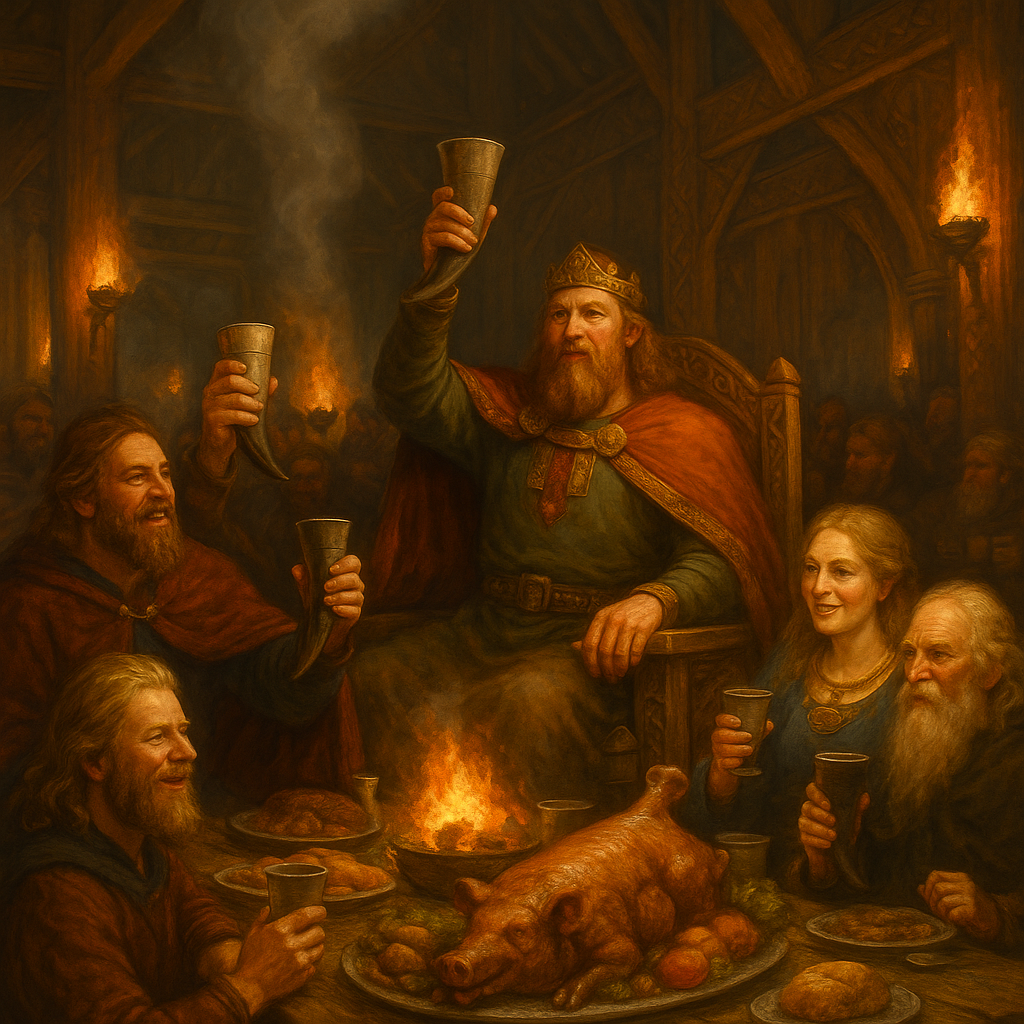
Summary:
Date: December 25th
Focus: Celebration, renewal of life and luck, honouring the gods and the return of the Sun
Offerings: Ale, mead, roasted meats, bread, evergreen branches, candles, sun symbols, toasts to gods and kin
Themes: Joy, rebirth, community, gratitude, divine blessing, renewal of hamingja (luck)
Practices: Feasting, toasting, oaths, songs, storytelling, offering food and drink to the gods and ancestors
Spirit of the Night: Joyous, sacred, renewing – the heart of Yule
What It Is:
Night Six marks the High Feast of Jól - the central celebration around which all the other nights turn. In the old North, this was not simply a meal, but a sacred festival uniting gods, ancestors, and people in a shared act of renewal. The feast was known as “Jólablót”, a sacrificial and celebratory rite where offerings were made to the gods and spirits to ensure good fortune and fertility for the year ahead. It was both solemn and joyful - a reaffirmation of life in the heart of winter. While the earlier nights of Jól are inward-looking, honouring the unseen and ancestral, the High Feast opens outward into light, laughter, and community.
This was the night of toasts (bragarfull), oaths, song, and storytelling - where bonds of kinship and faith were strengthened before the gods. The High Feast was also a sun festival. Though the solstice had just passed, the people marked this time as the beginning of the Sun’s return - a promise that light would grow again, that life would continue.
When It Is:
The High Feast of Jól is celebrated on December 25th, following the night of Hearth and Hospitality.
Historically, Yule was a movable feast tied to the lunar calendar and the solstice, but in later Christianised calendars, the celebration settled into the same timing as Christmas. For the old Norse and other Germanic peoples, this night was the pivotal midpoint of Jól - when feasting began in earnest, lasting for several days.
Focus of the Night:
This night is about joy and renewal - the moment when darkness begins to turn toward light. It’s a time to celebrate all that endures: life, friendship, love, and the eternal cycle of death and rebirth. Where the earlier nights honoured the Mothers, the ancestors, and the unseen powers, this night honours the living world and the divine forces that sustain it - Odin, Thor, Freyr, and the gods of harvest, luck, and victory. It is also the night to strengthen oaths and renew one’s hamingja (personal and family luck) through toasting, generosity, and truth-speaking.
How to Observe It:
The High Feast can be observed as a joyous banquet, a sacred rite, or both. What matters is gratitude, community, and sincerity.
1. Prepare the Feast:
Cook a hearty meal - something that feels abundant, shared, and warm. In old times, roasted meats, bread, ale, and mead were central.
Decorate with evergreens, candles, or sun symbols to invite light and fertility into the home.
2. Offer to the Gods and Ancestors:
Before eating, dedicate a portion of the meal or drink to the gods, ancestors, and land spirits. Pour out mead or ale onto the ground, the hearth, or a bowl set aside for offerings.
Say something like:
> “For the gods who guard us, for the ancestors who guide us, for the spirits who dwell beside us — hail, and welcome.”
3. Toasts (Bragarfull):
Raise a horn or cup and toast to the gods, your kin, and your own deeds. Traditional order:
First toast to Odin or the Allfather, for wisdom and victory.
Second to Njord or Freyr, for prosperity and peace.
Third to the ancestors and departed kin, for memory and blessing.
Then invite all present to speak toasts of their own - for gratitude, goals, and oaths.
4. Oaths and Promises:
In old Yule tradition, oaths made during the High Feast were binding.
You might set personal goals, speak a vow aloud, or declare a change you will bring into the new year.
To speak an oath over the horn or fire connects it to divine witness.
5. Songs and Storytelling:
Share tales of gods, ancestors, and heroes. Sing, laugh, and tell the old stories - for memory and joy are sacred acts.
In Norse thought, to speak and remember was to give life anew to the deeds of the past.
6. Giving and Sharing:
Exchange gifts if you wish, especially handmade or heartfelt ones.
Generosity was considered a holy virtue, increasing one’s hamingja and the good fortune of all.
Symbolism and Meaning:
The High Feast of Jól embodies renewal through joy.
It celebrates the survival of the community through darkness, the endurance of spirit, and the promise of returning light.
It is also a symbolic reenactment of cosmic order restored - the rebirth of the Sun after its stillness, the reaffirmation of divine and human bonds through offering and oath. Every act of giving, toasting, and storytelling on this night was more than social - it was sacred.
In the laughter of friends, the warmth of food, and the truth of words spoken, the Norse saw the pattern of the world itself renewed.
Modern Adaptations:
Today, you can observe this night in many ways:
Host a feast with family or friends and include a moment of offering.
Light candles or a Yule log and toast to what you are thankful for.
Speak your goals for the year ahead - not as resolutions, but as oaths to yourself and the gods.
Honour joy as a sacred act - sing, share, and celebrate life’s endurance.
Spirit of the Night:
The High Feast is the living heart of Jól. It is the warmth of the hearth made grand, the quiet honour of ancestors turned to laughter and song. On this night, the gods are near, the dead are honoured, and the living are renewed. It is a moment to feel the pulse of the old North - fierce joy in the midst of winter’s dark, the faith that life and light will always return.
Night 7 - The Night of Peace (Friðr Jól)
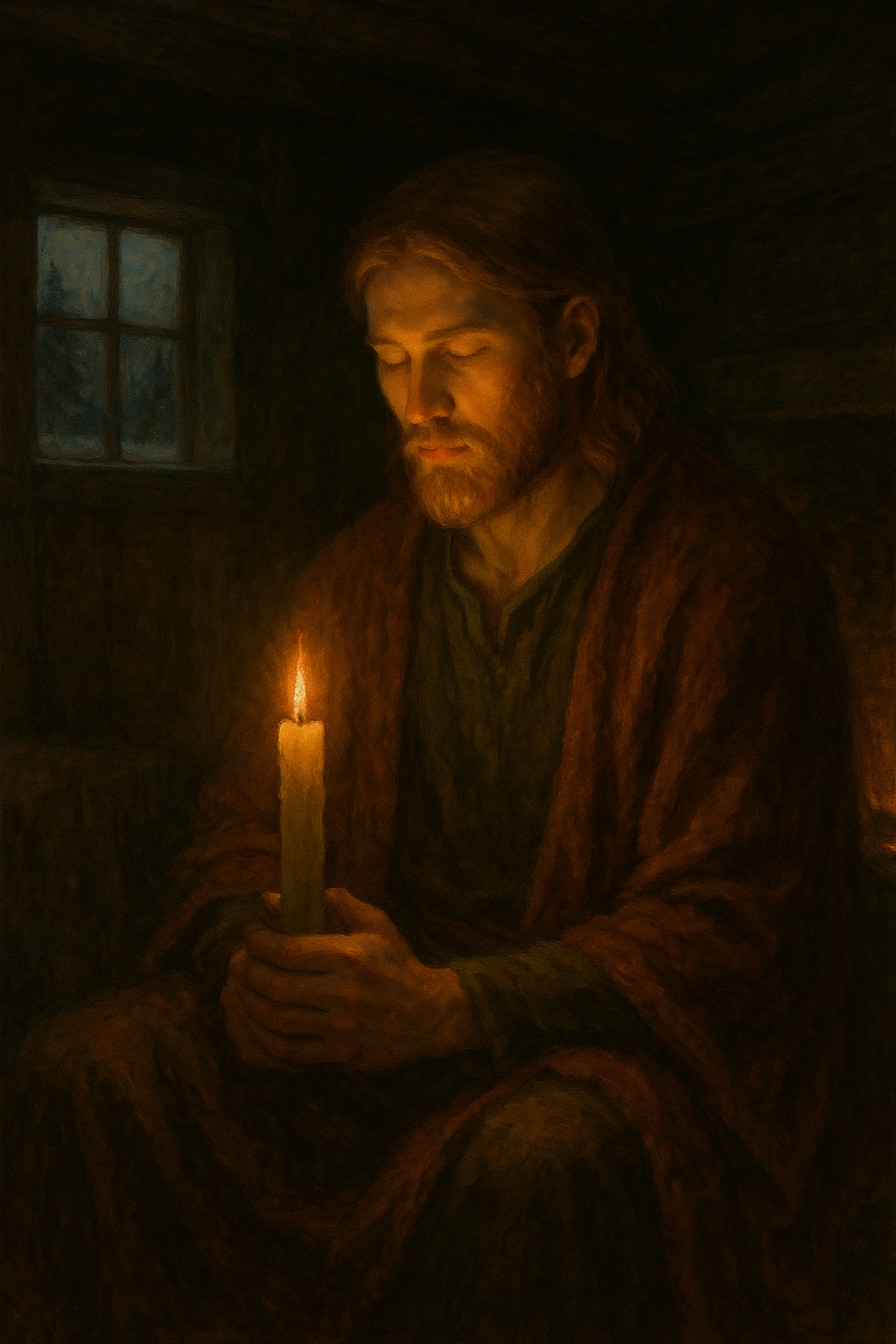
Summary:
Date: December 26th
Focus: The Peace of Yule - sacred stillness, rest, and the renewal of harmony
Offerings: Bread, milk, ale, incense, evergreens, silence, and peace itself
Themes: Frith (sacred peace), balance, rest, honour, renewal of luck and bonds
Practices: Quiet reflection, making peace with others, avoiding quarrels, tending the hearth, simple offerings
Spirit of the Night: Gentle, restorative, sacred stillness - peace under the returning sun
What It Is:
Night Seven, known as Friðr Jól, is the Night of Peace, when all fighting, labour, and loud celebration ceased.
After the High Feast’s joy and communal vitality, the Norse turned inward again - to reflect, rest, and ensure that no discord broke the harmony of the holy tide. The concept of frith (Old Norse friðr) was more than mere absence of conflict. It was sacred peace - the kind that preserves luck, honours the gods, and keeps the household in harmony.
During Yule, this peace was absolute. Even kings and warriors observed it. Breaking the Peace of Yule was one of the most serious offences in law and custom. In the sagas, a man who drew his sword or committed violence during Yule brought down not only shame but a curse of ill-fate. This night, then, was one of moral and spiritual cleansing, ensuring that the blessings gained during the feast would remain untarnished.
It was also believed that the world itself was quieter - that the gods rested, the dead slept, and the air between realms stilled. The Night of Peace was a breath between cycles - the pause between celebration and the turning toward renewal.
When It Is:
Friðr Jól is observed on December 26th, following directly after the High Feast of Jól. It marks the midpoint of the Twelve Nights - a sacred day of stillness before the next phase of the festival begins. Traditionally, this was a day when even the most industrious farm work paused. Fires were kept burning, animals were fed well, and people spent the day in warmth, rest, and peace. No quarrels, loud noises, or sharp tools were used unnecessarily - a sign of respect to the gods and the spirits of the home.
Focus of the Night:
This night’s focus is peace and harmony - both within the home and the soul.
The High Feast called forth joy and outward energy; Friðr Jól draws it inward again. It is a night to protect the calm centre of Jól - to ensure that what was gained in celebration is not lost to restlessness, anger, or carelessness.
It’s also a time to reconcile differences, renew friendships, and make peace with anyone with whom tension or distance has grown.
How to Observe It:
This night is gentle and inward, best spent at home or in quiet company.
Its customs blend stillness, gratitude, and purification.
1. Keep Silence and Soft Light:
As the sun sets, lower your lamps or candles and let the home fall into calm.
Avoid loud talk, music, or heavy labour. Let the peace of winter fill the rooms.
2. Make Peace Within and Without:
If there are lingering arguments or hurt feelings, this is the night to mend them.
Speak with honesty and gentleness. To make peace on this night is to honour the gods and strengthen the bonds of frith that keep luck strong.
3. Offerings of Peace:
Prepare a simple offering (bread, milk, or mead) and set it outside or by the hearth with words such as:
> “Peace to the gods, peace to the wights, peace to this home and all who dwell here.”
4. Rest and Renewal:
Allow yourself to rest deeply. Eat simple foods, sit near the fire, and let your body recover from the celebrations.
In Norse thought, rest itself was sacred - the stillness that keeps strength alive.
5. Reflection and Quiet Prayer:
Spend time in meditation or quiet thought.
You may contemplate the year that has passed, the peace you wish to preserve, and the blessings yet to come.
Write down what you are thankful for and what you release into the fire or the dark.
6. Bless the Home Again:
Walk through each room with a candle or burning herbs (juniper, spruce, or mugwort).
Whisper words of peace, renewal, and gratitude.
This reaffirms the calm that will guard the home through the rest of winter.
Symbolism and Meaning:
The Night of Peace represents the heartbeat of Yule - a moment where everything pauses so that the world can breathe again. It teaches that joy must be balanced by calm, that light needs darkness to grow. Spiritually, Friðr Jól echoes the Norse understanding that peace was a sacred force, not a passive state. It was an active harmony maintained through choice, self-control, and honour. Just as the gods rest after their great workings, so too must the people rest after their offerings and celebration.
This night also renews the sacred trust between the living and the divine - ensuring that no ill word or deed disturbs the fragile turning of the year.
Modern Adaptations:
In modern practice, Friðr Jól is a perfect night to step away from noise and obligations.
Turn off devices and let the night grow still.
Light a single candle or oil lamp and sit in quiet reflection.
Write or speak words of gratitude and release.
If possible, share a peaceful meal with family, letting conversation stay light and kind.
Give thanks for the roof above, the warmth of the fire, and the unseen powers that guard your home.
Spirit of the Night:
This is the still heart of Yule - the night when all things rest and the peace of the gods falls softly over the land.
No quarrels, no noise, no striving - only warmth, calm, and breath. In the hush of Friðr Jól, one can almost feel the turning of the world the great wheel pausing between darkness and dawn.
To honour that stillness is to align yourself with the deep rhythm of life itself.
Night 8 - Freyr’s Blessing Night
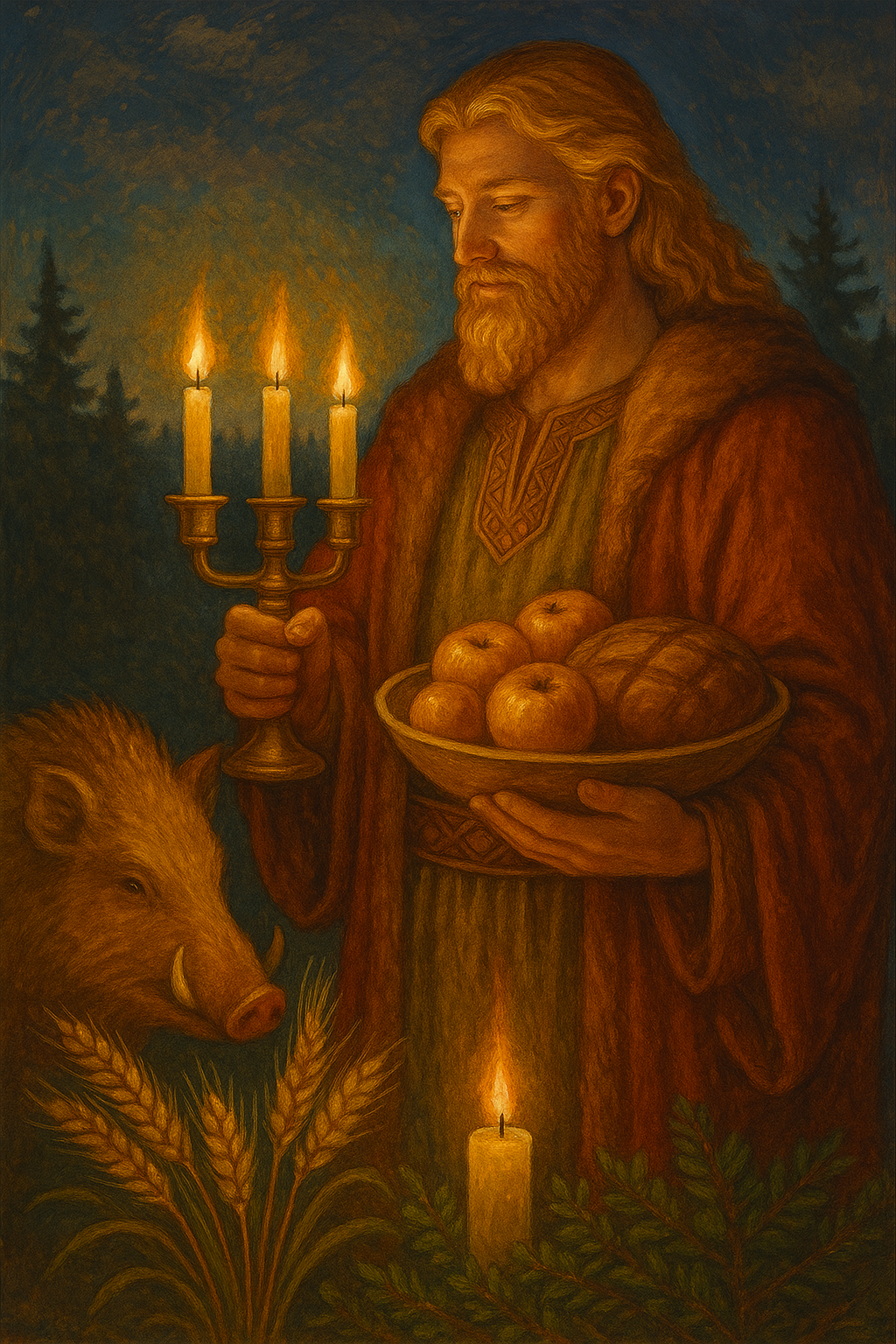
Summary:
Date: December 26th
Focus: The Peace of Yule - sacred stillness, rest, and the renewal of harmony
Offerings: Bread, milk, ale, incense, evergreens, silence, and peace itself
Themes: Frith (sacred peace), balance, rest, honour, renewal of luck and bonds
Practices: Quiet reflection, making peace with others, avoiding quarrels, tending the hearth, simple offerings
Spirit of the Night: Gentle, restorative, sacred stillness - peace under the returning sun
What It Is:
Night Seven, known as Friðr Jól, is the Night of Peace, when all fighting, labour, and loud celebration ceased.
After the High Feast’s joy and communal vitality, the Norse turned inward again - to reflect, rest, and ensure that no discord broke the harmony of the holy tide. The concept of frith (Old Norse friðr) was more than mere absence of conflict. It was sacred peace - the kind that preserves luck, honours the gods, and keeps the household in harmony.
During Yule, this peace was absolute. Even kings and warriors observed it. Breaking the Peace of Yule was one of the most serious offences in law and custom. In the sagas, a man who drew his sword or committed violence during Yule brought down not only shame but a curse of ill-fate. This night, then, was one of moral and spiritual cleansing, ensuring that the blessings gained during the feast would remain untarnished.
It was also believed that the world itself was quieter - that the gods rested, the dead slept, and the air between realms stilled. The Night of Peace was a breath between cycles - the pause between celebration and the turning toward renewal.
When It Is:
Friðr Jól is observed on December 26th, following directly after the High Feast of Jól. It marks the midpoint of the Twelve Nights - a sacred day of stillness before the next phase of the festival begins. Traditionally, this was a day when even the most industrious farm work paused. Fires were kept burning, animals were fed well, and people spent the day in warmth, rest, and peace. No quarrels, loud noises, or sharp tools were used unnecessarily - a sign of respect to the gods and the spirits of the home.
Focus of the Night:
This night’s focus is peace and harmony - both within the home and the soul.
The High Feast called forth joy and outward energy; Friðr Jól draws it inward again. It is a night to protect the calm centre of Jól - to ensure that what was gained in celebration is not lost to restlessness, anger, or carelessness.
It’s also a time to reconcile differences, renew friendships, and make peace with anyone with whom tension or distance has grown.
How to Observe It
This night is gentle and inward, best spent at home or in quiet company.
Its customs blend stillness, gratitude, and purification.
1. Keep Silence and Soft Light:
As the sun sets, lower your lamps or candles and let the home fall into calm.
Avoid loud talk, music, or heavy labour. Let the peace of winter fill the rooms.
2. Make Peace Within and Without:
If there are lingering arguments or hurt feelings, this is the night to mend them.
Speak with honesty and gentleness. To make peace on this night is to honour the gods and strengthen the bonds of frith that keep luck strong.
3. Offerings of Peace:
Prepare a simple offering (bread, milk, or mead) and set it outside or by the hearth with words such as:
> “Peace to the gods, peace to the wights, peace to this home and all who dwell here.”
4. Rest and Renewal:
Allow yourself to rest deeply. Eat simple foods, sit near the fire, and let your body recover from the celebrations.
In Norse thought, rest itself was sacred - the stillness that keeps strength alive.
5. Reflection and Quiet Prayer:
Spend time in meditation or quiet thought.
You may contemplate the year that has passed, the peace you wish to preserve, and the blessings yet to come.
Write down what you are thankful for and what you release into the fire or the dark.
6. Bless the Home Again:
Walk through each room with a candle or burning herbs (juniper, spruce, or mugwort).
Whisper words of peace, renewal, and gratitude.
This reaffirms the calm that will guard the home through the rest of winter.
Symbolism and Meaning:
The Night of Peace represents the heartbeat of Yule - a moment where everything pauses so that the world can breathe again. It teaches that joy must be balanced by calm, that light needs darkness to grow. Spiritually, Friðr Jól echoes the Norse understanding that peace was a sacred force, not a passive state. It was an active harmony maintained through choice, self-control, and honour. Just as the gods rest after their great workings, so too must the people rest after their offerings and celebration.
This night also renews the sacred trust between the living and the divine - ensuring that no ill word or deed disturbs the fragile turning of the year.
Modern Adaptations:
In modern practice, Friðr Jól is a perfect night to step away from noise and obligations.
Turn off devices and let the night grow still.
Light a single candle or oil lamp and sit in quiet reflection.
Write or speak words of gratitude and release.
If possible, share a peaceful meal with family, letting conversation stay light and kind.
Give thanks for the roof above, the warmth of the fire, and the unseen powers that guard your home.
Spirit of the Night:
This is the still heart of Yule - the night when all things rest and the peace of the gods falls softly over the land.
No quarrels, no noise, no striving - only warmth, calm, and breath. In the hush of Friðr Jól, one can almost feel the turning of the world the great wheel pausing between darkness and dawn.
To honour that stillness is to align yourself with the deep rhythm of life itself.
Night 9 - Thor’s Protection Night (Þórr’s Vigil)
Summary:
Date: December 30th
Focus: Protection, strength, warding, safeguarding the home and family
Offerings: Bread, butter, ale, roasted meat, firelight, hammers, iron, oak
Themes: Courage, guardianship, resilience, hearth-strength, banishing harmful forces
Practices: Home warding, blessing doorways, lighting hearth-fires, reciting protective verses, strengthening family bonds
Spirit of the Night: Powerful, steady, grounding - the shield of the gods encircling the home in winter’s deep
What It Is:
Night Nine is dedicated to Thor, the thunderer, the protector of gods, humans, and all the worlds.
Where the previous night invited prosperity and gentle renewal, Þórr’s Vigil turns attention to safety, protection, and the strength needed to carry blessings into the year ahead.
Thor’s role in Norse belief was not only that of a warrior but also a guardian of the household. His hammer, Mjölnir, sanctified spaces, banished harmful forces, and upheld good order. Farmers, travelers, families, and entire communities looked to Thor to repel what threatened them - storms, ill luck, spirits, or human malice.
This night marks a point in Yule when winter is darkest and the veil between worlds is still thin. As the Wild Hunt continues its roam and the restless dead move in the cold, Thor’s presence is invoked to hold the line, to keep harm outside the threshold, and to strengthen the spirit of the home.
Þórr’s Vigil is a night of calling on strength, both divine and personal.
When It Is:
Thor’s Protection Night is observed on December 30th, following Freyr's Blessing Night.
With prosperity and peace invited into the home, it is now time to protect what has been gained.
Historically and spiritually, the turn of the year was a time full of uncertainty:
storms raged
darkness lingered
malevolent spirits roamed
luck could shift unexpectedly
Thus, many Heathens today (in keeping with old customs of warding and blessing) dedicate this night to fortifying the home and upholding the sacred boundaries of Yule.
Focus of the Night:
The focus of the night is protection in every sense:
guarding the physical home
securing the family’s luck
strengthening the spiritual boundaries
driving away ill-will or harmful influences
renewing courage, resolve, and resilience
Thor is not only the wielder of lightning; he is the defender of sacred order.
His vigil teaches that blessings must be protected to thrive.
Tonight is about standing firm, gathering strength, and ensuring that the rest of Yule unfolds under safe and blessed skies.
How to Observe It:
Þórr’s Vigil is active, grounded, and full of symbolic strength.
Here are ways to honor Thor in the same spirit as your structure:
1. Light a Strong Fire or Candle
Fire is Thor’s ally - symbol of strength and the destruction of harmful forces.
If you have a hearth, let it burn bright tonight.
Otherwise, place:
a stout candle
a lantern
or several lights
in the center of your home or altar.
2. Bless the Doorways and Thresholds
Walk to each doorway, window, or threshold with:
a candle
a hammer symbol
or a sprig of protective herbs (juniper, rowan, oak)
Mark or gesture a hammer-sign and speak words such as:
> “Thor, protector of home and kin,
Stand guard at this door.
Let no harm pass this threshold.”
This mirrors the ancient use of the hammer-sign to sanctify spaces.
3. Offerings of Strength
Place an offering to Thor, such as:
dark bread
roasted meat or fat
ale or strong drink
iron nails or hammer charms
oak branches
stones from the land
Thor blesses offerings made with honesty and effort.
4. Speak Words of Strength and Courage
Thor honours bravery expressed plainly.
This is an ideal night to affirm personal strengt
promise to protect those you love
Trfet intentions for courage in the year ahead
release fear or doubt
Speak aloud or in silence - ì it is the will that matters.
5. Warding the Home
Using a candle or herbs, walk slowly through each room.
Say:
“Let Thor’s strength guard this place.
Let harm be driven out.
Let peace and luck remain.”
Visualize the walls glowing with protective firelight.
6. Share a Meal of Strength
Eat foods associated with hearty winter survival:
meat
bread
root vegetables
warm broth
Share the meal with family or close friends.
Laughter, storytelling, and togetherness are themselves wards against darkness.
Symbolism and Meaning:
Þórr’s Vigil is the iron-banded heart of Yule - the night when the household affirms its strength and the gods’ protection.
Thor’s symbolism here is powerful:
He holds the line between chaos and order.
His hammer hallowing a space reflects the sanctification of life itself.
His presence keeps blessings safe and guards luck against harm.
Spiritually, this night teaches that prosperity without protection is fragile, and that peace must be actively kept, not passively awaited.
This night creates the shield through which the final nights of Yule may pass unharmed.
Modern Adaptations:
Modern Heathens celebrate Thor’s Night by:
placing hammers above doors
lighting candles or lanterns in windows
giving offerings of ale
creating protective charms
performing simple house blessings
wearing Mjölnir pendants
spending time with loved ones in warmth and safety
Turn off harsh noise and let the home feel emboldened, guarded, and grounded.
Let Thor’s storms surround the house, but not enter it.
Spirit of the Night:
Thor’s Night is strong and steady - like the quiet before a storm, or the last blow of a hammer that seals a structure tight.
There is warmth in the home, strength in the heart, and vigilance in the air.
This is the night when the protector of gods and humans stands beside the threshold, watching through the winter dark, ensuring that the blessings of Yule remain safe.
Night 10 - Freyja’s Night of Magic & Renewal
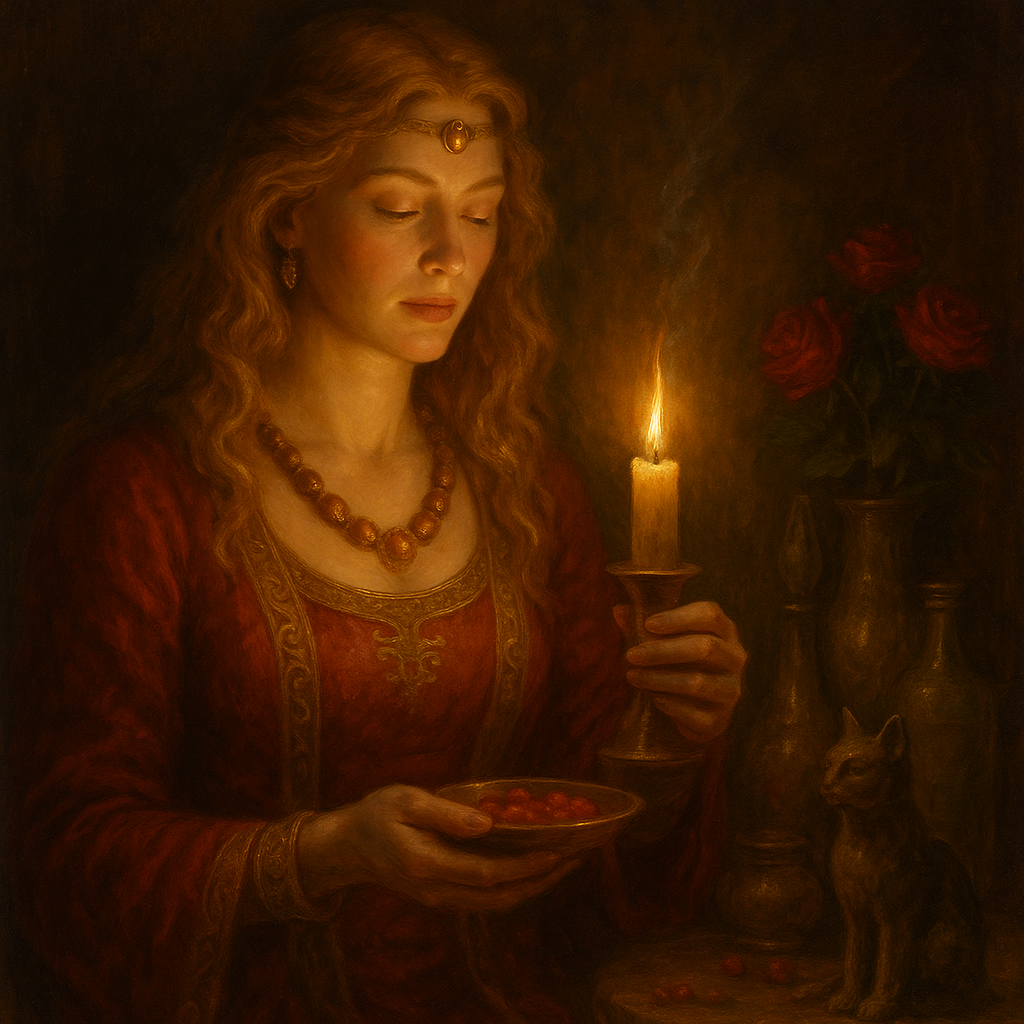
Summary:
Date: December 31st
Focus: Magic, renewal, personal power, beauty, love, transformation
Offerings: Honey, mead, amber, roses or fragrant herbs, cream, gold-colored items, incense
Themes: Seiðr (sacred magic), rebirth, cleansing, passion, intuition, new beginnings
Practices: Divination, spellwork, cleansing rituals, self-renewal, honoring personal strength, lighting fragrant herbs
Spirit of the Night: Enchanting, luminous, transformative — the stirring of inner power as the old year dies and the new one is born
What It Is:
Night Ten is devoted to Freyja, the radiant Vanir goddess of love, beauty, magic, wealth, passion, and sovereignty.
If Thor’s Night was the shield around the home, Freyja’s Night is the flame within the soul - rekindling desire, clarity, and inner strength as the year turns.
Freyja is the mistress of seiðr, the deep Norse magic of shaping fate and sensing the unseen. She embodies transformation - the power to shed what no longer serves and to rise renewed. She is also the chooser of the slain, the rider of the falcon cloak, the weeper of golden tears, and the bringer of passion and fierce independence.
This night honours:
magic
intuition
cleansing
rebirth
personal sovereignty
the courage to transform
As the old year ends and a new one begins, Freyja’s influence guides the spirit through the liminal space between what has been and what may yet become.
When It Is:
Freyja’s Night is observed on December 31st, the threshold between years.
It is the most liminal of the Twelve Nights - a place of endings and beginnings, where magic is strongest and fate is softest.
Traditionally, this night would have been one for:
divination
seeking omens
contacting the unseen
purification
preparing the spirit for the renewal to come
Modern Heathens feel this in the atmosphere: the quiet before midnight, the sense of possibility, the weight of change in the air.
Freyja moves easily through such thresholds, and it is on this night that she offers her gifts most freely.
Focus of the Night:
Tonight’s focus is renewal and personal power.
Freyja teaches that rebirth is not passive - it is chosen.
This night encourages:
releasing old burdens
reclaiming confidence
renewing beauty and self worth
lighting the fire of magic within
stepping boldly into the future
aligning with desire and passion
This is the night to trust your intuition, to listen to your instincts, and to claim your sovereignty.
It is also a night of glamour and beauty, not vanity but holy adornment - presenting yourself as sacred and powerful in your own right.
How to Observe It:
Freyja’s Night is mystical, fragrant, luminous, and deeply personal.
Here are ways to honour the goddess in the same structure you’ve been using:
1. Set the Space with Fragrant Light
Burn incense, herbs, or fragrant resins such as:
rose
amber
lavender
mugwort
juniper
Dim the lights and let the room feel enchanted.
Soft golden or pink candlelight suits Freyja well.
2. Offerings of Beauty and Magic
Give offerings that resonate with Freyja’s nature:
honey or cream
mead or sweet wine
roses or rose water
amber beads
gold-colored jewelry or coins
apples, berries, or fragrant teas
Place them gently with a sense of reverence and adornment.
3. Perform Divination or Seiðr-Inspired Work
Tonight is ideal for:
runes
scrying
dreamwork
chanting
journeying or guided meditation
Ask for clarity on:
the year to come
transformation
your path
your heart’s desire
Let intuition speak without judgment.
4. Renewal Ritual
Take time to cleanse yourself spiritually:
a hot bath with herbs
washing hands with salt water
brushing hair slowly and intentionally
changing into fresh clothing
As you cleanse, whisper:
“What is old falls away. What is new rises within.”
5. Write What You Release - Burn or Bury It
Write down:
fears
past wounds
bad habits
lingering grief
Burn the paper safely or bury it in the earth.
This symbolizes releasing the old year into Freyja’s transformative fire.
6. Celebrate Yourself
Freyja teaches self-love, not arrogance.
Adorn yourself:
jewelry
perfume or oils
clean garments
braided hair
or natural makeup
This is a ritual act - a declaration of your worth.
7. Set Intentions for the New Year
Write or speak aloud:
what you want to grow
what you want to become
what magic you want to weave
what joy you want to claim
Hold the paper under a candle or place it on your altar.
Symbolism and Meaning:
Freyja’s Night is the rebirth of the self.
She represents the moment when:
magic returns
hope rekindles
the heart strengthens
the soul reclaims its fire
Her night is the breathtaking still point between years, when the old self fades and the new self steps forward.
This night embodies:
desire
beauty
fierce self-worth
magic
rebirth
transformation
Freyja is the perfect guide for such a moment - wise, wild, and free.
Modern Adaptations:
Modern practitioners often:
dress in golds or soft pinks
cleanse rooms with incense
engage in magical practice
host quiet celebrations
wear amber or cat charms
light many candles
meditate on renewal
release the old year consciously
This night is also wonderful for:
journaling
vision boards
quiet celebration with friends
sharing sweet foods and drinks
wearing something beautiful that makes you feel alive
Tonight is meant to be sweet, magical, and deeply empowering.
Spirit of the Night:
Freyja’s Night glows like a warm ember in the darkness - soft yet powerful, calm yet electric with possibility.
It is the night when magic hums in the air and the soul is ready to transform.
This is the night of:
renewal
beauty
courage
desire
magic
rebirth
In the sacred quiet before the new year dawns, Freyja whispers:
“Rise renewed.
Claim your power.
Become what you are meant to be.”
Night 11 - Night of the Álfar & Landvættir
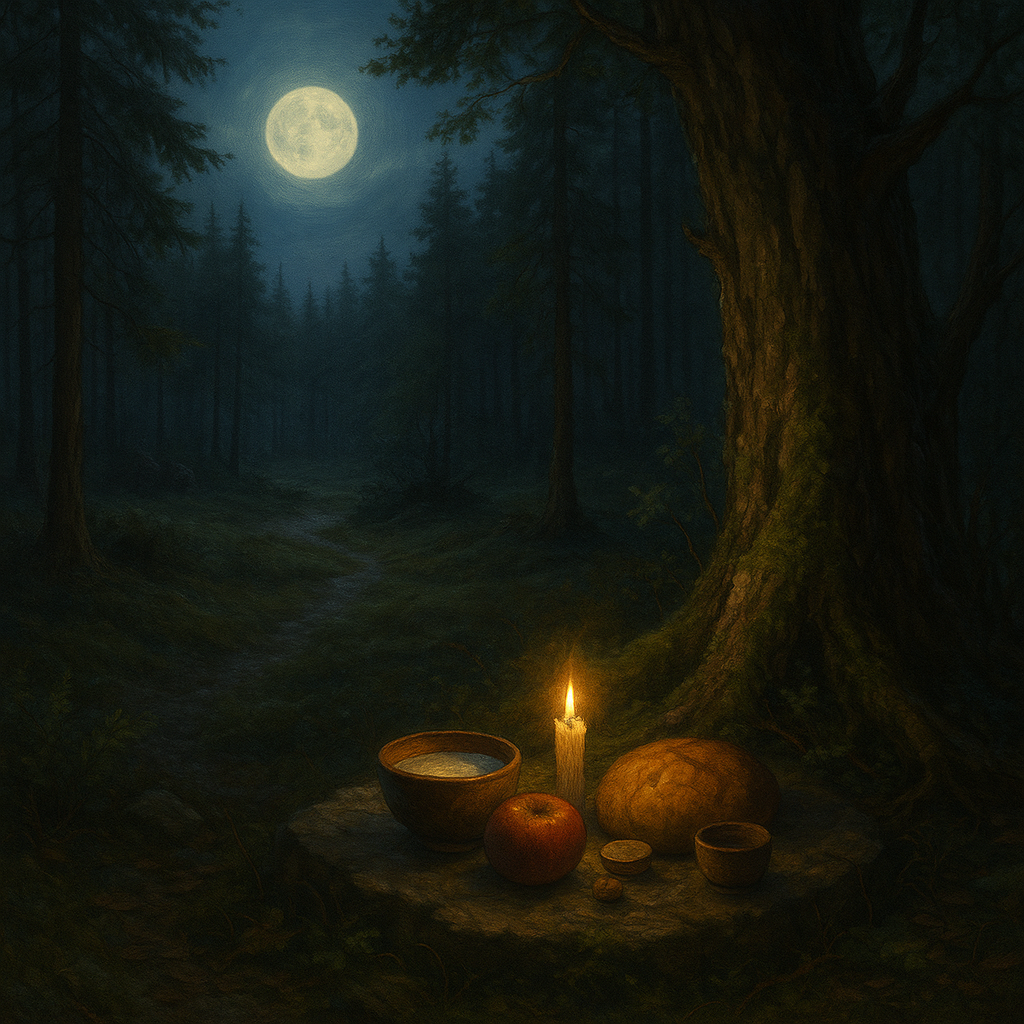
Summary:
Date: January 1st
Focus: Honoring the hidden folk - the Álfar (elves/ancestral spirits) and Landvættir (land spirits)
Offerings: Milk, bread, butter, apples, honey, nuts, mead, fresh water, evergreens
Themes: Reciprocity, respect, connection to land and ancestors, household luck, harmony with nature
Practices: Outdoor offerings, tending sacred spaces, quiet walks, lighting candles at thresholds, renewing bonds with the local spirits
Spirit of the Night: Quiet, reverent, natural - a soft communion with the unseen powers that dwell in land, home, and lineage
What It Is:
Night Eleven is devoted to the Álfar and Landvættir, two of the most important but often subtle powers in Norse belief.
This night honours the spirits of the land, the spirits of place, and the ancestral powers sometimes understood as elves or shining ones.
In Old Norse tradition:
Álfar were often linked to ancestors, male ancestral spirits, or radiant powers dwelling near burial mounds.
Landvættir were guardians of the land and locality - protectors of farms, forests, mountains, fields, and coastlines.
Together, they form the living spiritual landscape of the Norse cosmos.
They influence:
household luck
harvests
health
protection
prosperity
This is one of the most quiet and reverent nights of Yule - a gentle extension of peace, gratitude, and respectful relationship with the spirit-world.
When It Is:
The Night of the Álfar & Landvættir is observed on January 1st, the dawn of the new year.
This timing reflects an ancient idea:
before stepping fully into the year ahead, one must honour the beings whose land we walk upon and whose company we share.
In the sagas and folklore, offerings to elves and land spirits were especially powerful:
at year’s turning
at winter nights
at important thresholds
Modern Heathens continue this by dedicating the eleventh night to renewing bonds with these unseen neighbors.
Focus of the Night:
Tonight’s focus is connection:
connection to nature
connection to the land you live on
connection to ancestors of blood and land
connection to the spiritual ecology surrounding the home
This night emphasizes:
respect
reciprocity
acknowledgment
gratitude
quiet offerings
As Yule nears its close, this night ensures that the blessings of the season are welcomed and upheld by the local spirits, whose goodwill was essential to survival in the old world.
How to Observe It:
Night Eleven is soft, reflective, and deeply connected to the natural world.
Here are the traditional style practices written in the same structure as the other nights:
1. Prepare Simple, Honest Offerings
The Álfar and Landvættir value humble gifts:
milk
butter
bread
apples
nuts
honey
mead
fresh water
a bit of evergreen
Place them outside, at a tree, stone, or boundary of your property.
A small plate or bowl works fine.
2. Step Outside into the Night
Take a quiet walk around:
your garden
a nearby tree
a stone or earth mound
the edges of your yard
a safe patch of wilderness
Move slowly and respectfully.
Feel the land beneath your feet and the cold breath of winter.
3. Speak Words of Gratitude
The Álfar and Landvættir respond to sincerity.
You might speak aloud or in your heart:
“Spirits of this land, guardians seen and unseen, I thank you for your presence and protection. May we walk this place in harmony.”
4. Light a Candle at a Threshold
Place a single candle:
on a windowsill
beside a door
or near the offerings
This symbolizes welcoming peace and harmony between your household and the spirits of the land.
5. Tend a Sacred Spot
If you have:
a small outdoor shrine
a tree you use for offerings
a stone that feels significant
or a quiet place in nature
clean it gently:
brush off snow
Remove debris
straighten stones or objects
This small act of care is a gift in itself.
6. Connect with Ancestral Memory
The Álfar are often interpreted as ancestral spirits.
Spend a few moments remembering:
your lineage
your departed loved ones
the ancestors whose blood or spirit flows in you
the memory of those buried in the land where you live
Light a candle or hold something meaningful as you reflect.
Symbolism and Meaning:
This night represents the living bond between humans and the world around them.
Its symbolism includes:
the land as sacred
spirits as partners, not possessions
ancestors as guides
nature as a living community
In honouring these beings, you acknowledge that luck, prosperity, safety, and spiritual harmony are never achieved alone - they are woven together through relationships with the unseen.
This night teaches humility and reciprocity.
Just as the land sustains us, we too must sustain our relationship with it.
Modern Adaptations:
Modern Heathens celebrate this night by:
leaving offerings outside
walking quietly in nature
lighting candles at thresholds
setting aside a “spirit plate” of food from dinner
journaling about ancestors
Decorating a small shrine with evergreens
listening to wind, water, or forest sounds
Some leave:
cat treats for Freyja’s folk (Álfar)
pieces of bread for birds as symbolic offerings
or water for winter animals
The essence is respect and gentle presence.
Spirit of the Night:
The Spirit of the Night of the Álfar & Landvættir is hushed and reverent - the whisper of winter trees, the soft glow of a candle at the window, the quiet gratitude of the heart.
It is a night of:
subtle magic
deep connection
reverence
gratitude
harmony
In the stillness of this night, you may feel the presence of the unseen - not frightening, but familiar, as if the land itself breathes with you.
Night 12 - Oath Night / Twelfth Night (Jólalok)
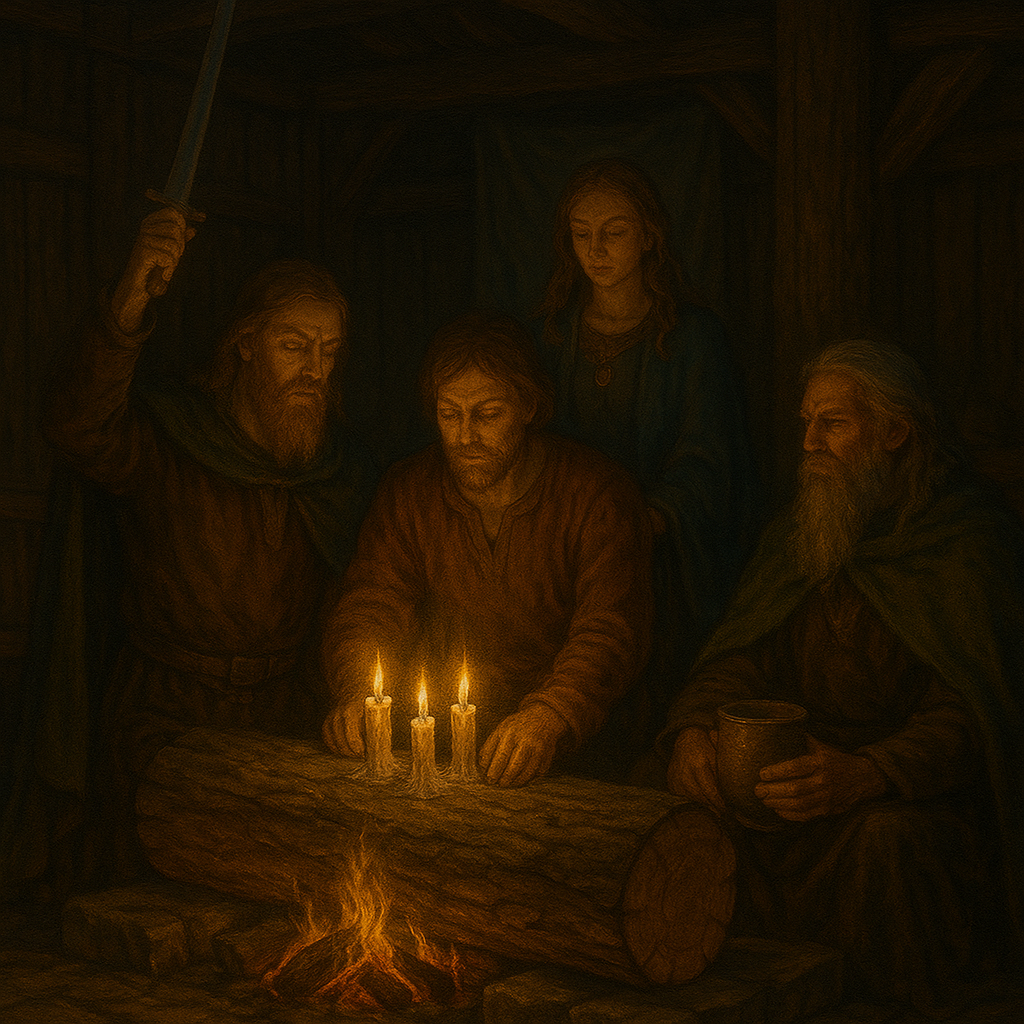
Summary:
Date: January 2nd
Focus: Renewal of oaths, vows, and honour for the year ahead
Offerings: Ale, mead, bread, salt, firelight, tokens of commitment
Themes: Truth, honour, personal integrity, courage, destiny
Practices: Symbel feast or ritual toasting, oath-making, reflection on past deeds, setting intentions for the new year
Spirit of the Night: Solemn, courageous, fiery – the forging of will and word into action
What It Is:
Night Eight of Jól, known as Oath Night or Symbel Night, is one of the most sacred and serious moments of the Twelve Nights. In the old world, an oath was not mere promise - it was a binding act of will, tying the speaker’s wyrd (fate) to their word. Oath-breaking was one of the greatest dishonours imaginable, capable of destroying a person’s reputation and their family’s luck (hamingja).
The Norse, Anglo-Saxons, and other Germanic peoples observed symbel - a ritual drinking feast described in Beowulf and other sources - in which toasts were made to gods, ancestors, and great deeds.
Within that circle, warriors, leaders, and kin made oaths for the year ahead: to complete a task, uphold peace, avenge wrongs, or better their craft. Words spoken in the presence of gods, spirits, and one’s kin carried deep spiritual and social power.
Thus, Oath Night marks the turning of will into fate - when the words you speak become threads woven into your own orlog (deep pattern of destiny).
When It Is:
Oath Night is celebrated on December 27th, following the stillness of the Night of Peace. It traditionally marks the renewal of honour and purpose after the calm midpoint of Jól. The festival’s focus now turns from rest toward the coming year - what must be done, and who one chooses to become. In older calendars, the symbel was often held near midwinter or early in the new year.
Modern Heathens observe it on this night to symbolise the forging of light from darkness, when vows and intent set the course of the seasons ahead.
Focus of the Night:
The focus is honour and will - aligning the self with truth and purpose. An oath was not only a personal vow but also a spiritual act, made before gods and ancestors as witnesses. It affirmed who you were, what you stood for, and what you intended to bring forth in the year ahead.
Oath Night is not about ambition alone - it’s about balance: not overreaching your fate, but speaking from the deepest truth of your own path. To swear falsely was dangerous; to swear wisely was powerful.
How to Observe It
1. Prepare the Sacred Space:
Light candles or a fire, gather mead or ale, and cleanse the space.
If you have a horn or cup, fill it - this will be your horn of oath and memory.
Invite the presence of the gods, ancestors, or land spirits as witnesses.
2. Begin the Symbel (Toasting Rite):
The symbel is traditionally held in three rounds:
The first round to the gods and goddesses - Odin for wisdom, Frigg for foresight, Thor for strength, Freyja and Freyr for prosperity and love.
The second to the ancestors and heroes - those whose courage guides you.
The third for oaths, boasts, and toasts of personal intention.
Each person speaks in turn, raising the horn and drinking after their words.
3. Make Your Oath or Intention:
Speak clearly and sincerely.
An oath need not be grand; it must be true.
It can be as simple as:
> “This year I will live with courage and speak my truth,”
or as specific as:
“I will complete this work, honour this bond, or heal this wound.”
Avoid rash or boastful promises. The old wisdom says: “Better no oath than a broken one.”
4. Seal the Oath:
Pour a libation (a small drink offering) to the earth or fire as you speak:
> “Let my words be heard by gods and ancestors alike; let my deeds make them true.”
5. Feast and Fellowship:
After the formal round, share food, warmth, and good company.
This reinforces community, friendship, and mutual respect - all vital parts of honouring one’s word.
6. Record or Remember:
Write your oath down, or keep a token to remind you of it.
In the old world, physical objects (rings, knives, runes, stones) were often touched while swearing to bind the promise into the world.
Symbolism and Meaning
Oath Night is a forging of fate.
The Norse saw word and will as creative forces - spá (prophecy), seiðr (magic), and mæla (speech) all share the same sacred root of speaking reality into being.
To give your word is to set something in motion - a ripple in the web of wyrd. In this way, Oath Night bridges the spiritual and the practical. It asks: Who are you becoming? What story will you weave next?
The mead or ale represents memory, and the shared feast binds the community’s luck together.
Through spoken word and shared drink, the old year is sealed, and the new one begins under vows of purpose and truth.
Modern Adaptations
Hold a small gathering (even virtually) with friends or kindred. Share three toasts as described above.
If alone, perform the rite in solitude with candlelight. Speak aloud to your ancestors or the gods.
Write your vow in runes, burn it in the fire, or place it on your altar as a living promise.
Reflect on last year’s words - what you fulfilled, what you learned, and what remains to be done.
The point is sincerity, not grandeur. One honest oath, however small, carries more weight than a dozen spoken lightly.
Spirit of the Night
Oath Night is the hammer strike of the soul - the moment where will meets destiny. It is the act of speaking your truth into the world with courage and integrity. The fire burns low, the mead flows golden, and your words take form in the weave of fate.
The gods are near on this night - listening not for perfection, but for honesty. The ancestors lean close, nodding in approval when they hear a promise made with clear heart and steady voice. In the hush that follows your oath, you may feel it - that quiet pulse of energy, the subtle shift that says: It has been spoken. It is now part of the world.