
Seiðr Craft – Chapter 7 Samhildr: Where the Laws Become Living

The laws of seiðr are not commandments carved in stone or rules recited to impress others. They are living forces, currents that shape both the inner and outer worlds. Each law stands on its own, yes, but none of them truly breathes alone. They are like runes: single marks of power that only reveal their deepest truth when placed side by side, forming a pattern far greater than themselves.
This chapter is the bridge.
The threshold.
The moment where understanding becomes embodiment.
Where learning becomes living.
Where the laws cease to be separate lessons and begin to form the spine of your craft. Up until now, each chapter has asked you to master one piece of the path.
Virðing taught you respect, the first grounding of all seiðr, the recognition that every being carries worth and consequence.
Þolinmæði taught you patience, the slow root that deepens your presence and steadies your will.
Mörk taught you boundaries, the sacred edges that protect both you and those you work upon.
Sannindi taught you truth, the uncompromising clarity that cuts through illusion and keeps your sight clean.
Ábyrgð taught you responsibility, the weight behind every act, every word, every working you release into the world.
And the Laws of Return taught you that wyrd answers all things in its own time, its own manner, its own price.
Each of these stands strong alone. But seiðr is not built from isolated truths.. It is built from the weaving of them.
From these laws comes Samhildr.
Samhildr means the gathering, the uniting, the bringing together of forces into one cohesive whole. In seiðr, Samhildr marks the moment where respect, patience, boundaries, truth, responsibility and return no longer feel like individual steps you must remember, but instead move together as one rhythm - the steady heartbeat of the practitioner.
Samhildr is when you stop holding the laws in your mind and begin to carry them in your bones.
This is where seiðr stops being an activity you perform and becomes a way of life.
This is where your presence sharpens, where your breath steadies, where the worlds begin to watch you with more intent.
This is where the staff begins to feel like part of your hand.
This is where the path gathers weight.
For Samhildr is not an idea..
It is a transformation - It is the shift from learning seiðr to living it.
It is when Virðing becomes the way you approach every being.
When Þolinmæði is no longer effort but instinct.
When Mörk shapes your interactions without conscious thought.
When Sannindi sharpens your sight and gives strength to your words.
When Ábyrgð informs your choices before they are even made.
When the Law of Return sits quietly within you, guiding your steps with understanding rather than fear.
In Samhildr, the laws do not disappear. They simply move beneath the surface, supporting every action, every silence, every thread you touch. This is the point in the path where the craft begins to trust you back.
Before Samhildr, you were gathering tools.. After Samhildr, you become the vessel through which those tools find purpose.
It is here, in the gathering of the laws, that you begin to understand why no single teaching could stand alone..
Why patience without boundaries collapses into stagnation.
Why respect without responsibility becomes blind obedience.
Why responsibility without patience becomes harsh and brittle.
Why boundaries without respect become walls instead of guardians.
Why truth without patience becomes cruelty rather than clarity.
Why return without respect becomes fear instead of wisdom.
Each law is a direction - Together, they form a compass.
This chapter marks the moment you stop facing six separate teachings and realise they form a single shape: the shape of one who can be trusted with seiðr.
Samhildr is the turning point. The quiet shift from seeking power to becoming worthy of it. From studying the craft to embodying it. From holding the staff to standing fully in your place.
It is the moment the scattered threads of your training gather into one weave - a weave strong enough to carry you into the deeper, more demanding work of the path.
And once Samhildr takes root within you, you no longer walk the craft.
The craft walks with you.
What does Samhildr mean?

Samhildr, means the gathering - the coming together of powers into one living current. In plain English: the confluence, the drawing into one, the combined might that arises when separate laws stop pulling in different directions and begin to move as a single tide. It is the moment when Virðing (respect), Þolinmæði (patience), Mörk (boundaries), Sannindi (truth), Ábyrgð (responsibility), and the Law of Return cease to feel like tasks and become a temperament.
Samhildr is not a new rule added to the list. It is the felt sense that the list has dissolved and become a way of being. Respect sets your stance, patience sets your pace, boundaries set your shape, truth sets your aim, responsibility sets your cost and return sets your horizon - and all of that happens at once, without strain or theatre. You stop juggling values and start breathing them.
In practice, Samhildr feels like steadiness. The body unhurried. The breath measured. The mind clear but not rigid. Your choices are slower, cleaner, kinder and firmer when they must be. You do not need spectacle to prove you are working; the work proves itself by the quiet order it leaves behind. You enter a place and the place softens. You speak and the unnecessary words fall away. You finish a rite and everything knows it is finished.
Samhildr is also memory. The craft begins to recognise you because you consistently recognise it. Landvættir answer more readily, not because you demand, but because your approach is predictably honourable. Ancestors draw closer, not because you flatter them, but because you keep your promises. The gods do not become tame (nothing tames them) but your relationship with them deepens because you no longer confuse longing with licence. You carry yourself as kin within limits.
There is a humility to Samhildr. You no longer chase every vision or brandish every truth. You measure. You wait. You act when the action will hold. You decline when decline is the truer service. You accept the return before it arrives and account for it in your opening breath. The staff in your hand is not a badge; it is a burden you have chosen and the weight sits well.
Samhildr changes your sense of time. You think in seasons, not in sessions. You plan workings across moons and milestones, letting the natural cycles carry some of the labour. You become cautious with initiation and generous with consolidation. You build altars that are tended, not staged. You keep a record that is honest, not ornamental. The craft stretches into your domestic hours (how you cook, clean, rest, speak) and those small rhythms become the strongest wards you own.
It also changes your speech. Sannindi guides your tongue so that your words are plain without being blunt, measured without being meagre. You learn to say “I do not know” without shame and “this is not mine to touch” without apology. Counsel becomes guidance, not control. Prophecy becomes preparation, not performance. Silence becomes one of your best tools.
Samhildr is the end of leakage. Mörk no longer has to be summoned in panic because it is already present in posture and habit. You know when you are open and when you are closed; you close more often than you used to, and you open more intentionally. Offerings are made in balance with requests. Gratitude is given before outcomes arrive. Your work stops producing mess that others must clean.
There is still fire in Samhildr. It is simply gathered, banked, directed. When heat is needed, it is there. When stillness is wiser, the embers hold. You are neither slack nor feverish. You are ready.
Samhildr is the together strength of the laws lived at once. It is the practitioner’s centre of gravity. When it roots in you, the craft walks with you (on the hill and at the sink, in ritual and in rest) and the web begins to treat your presence as a promise rather than a risk.
Weaving vs Memorising

There is a point in every practitioner’s journey when the craft stops feeling like a list of things to remember and starts feeling like something that moves through you on its own. Before that point, the laws sit in the mind like notes on a page. You rehearse them. You check yourself against them. You pause mid working and think -
am I respecting the boundaries here?
Am I acting with patience?
Have I accounted for return?
This is memorising, and there is nothing wrong with it. Every path begins in deliberate effort. Every singer starts by learning the tune before the song can sing itself.
But memorising is not the goal. It is only the doorway.
Weaving is the stage that follows and it is subtle. You often do not notice it when it arrives. Weaving happens when the laws you once repeated like lessons start linking themselves together without you commanding them. You move to open a working and patience rises alongside responsibility. Boundaries step into place before you consciously call them. Truth steadies your voice before you speak. Respect shapes the tone of your breath. Return echoes faintly at the edge of every decision. The craft becomes a single movement rather than six separate instructions.
Memorising is external.
Weaving is internal.
Memorising is about remembering the rules.
Weaving is about embodying the rhythm.
A memoriser asks, what is the right step?
.. A weaver already feels it.
Think of the difference between a novice learning runes and a seasoned runeworker. The novice must recall each stave’s meaning, sound, lore, shape and historical context. They rely on memory like a scaffold. But the seasoned practitioner draws a rune and feels its weight immediately. The meaning rises through the body, not the intellect. That is weaving. The rune does not need to be recalled; it is present.
In seiðr, weaving happens when the craft stops being something you perform and becomes something that lives within your posture, your timing, your breath. You no longer force stillness; you settle naturally. You no longer brace for vision; you open and close with economy. You no longer run from silence; you recognise it as part of the pattern and allow it to speak in its own way.
Weaving is the maturity of the path. It is less dramatic than the early days, where each breakthrough feels like revelation. It is quieter, steadier, more grounded. It turns the practitioner from someone who practises seiðr into someone who inhabits it. The work becomes cleaner, more exact, less exhausting. The results become more reliable because you are no longer fighting your own imbalance.
Of course, memorising has its place. You cannot weave what you have not learned. You cannot jump straight to embodiment without the discipline of study and repetition. But the danger lies in staying in memorisation too long. Those who cling to the rules as recitations never allow the laws to take root. They rely on effort instead of integration. Their workings become stiff, their boundaries brittle, their patience strained. The craft remains external to them - something they reach for instead of something they live from.
Weaving, on the other hand, allows the laws to settle so deeply that they become instinctive. You do not need to force alignment because you are aligned. You do not need to recall the laws because you have become their meeting point. This is the beginning of true steadiness in seiðr, the place where the craft recognises you as a vessel that can hold power without spilling.
The shift from memorising to weaving is the heart of Samhildr. It is the moment the separate strands of your training braid themselves together, forming a cord strong enough to carry you into deeper work. When you weave, your craft becomes natural, sustainable, and far more potent. And the unseen world begins to meet you with a different quality of respect, for it senses that you are not merely learning the path.. you are walking it with your whole being.
The Laws as Roots

The laws of seiðr are not decorations to the craft. They are its roots. They run beneath every working, every word, every silence, whether you acknowledge them or not. A tree does not stand because its trunk is tall or its branches wide; it stands because what lies beneath the soil is deep, strong and well formed. So it is with the practitioner. The visible parts of your craft (the staff, the chants, the visions, the trances) are only the crown. The laws are what hold you upright.
Each law sends its own root into the ground of your being. Respect anchors you in humility. Patience digs deep and holds fast. Boundaries find purchase in the soil, defining where you end and the unseen begins. Truth grows straight down, piercing illusion. Responsibility spreads wide, stabilising all that rests upon it. Return curls through them all, reminding you that every choice sends its fibres outward and back again. When these roots are healthy, the craft grows naturally. When even one is weak, the whole structure leans.
Many approach seiðr like a tree grown in a pot - eager branches, shallow roots. They chase visions, spirit contact, power, excitement. They reach upward without reaching inward or downward. Their practice grows quickly, dramatically even, but collapses at the first true wind. A difficult omen unbalances them. A demanding spirit drains them. A working returns with more weight than expected, and they have nowhere to ground it. Their roots are not deep enough to hold what their branches try to bear.
Roots take time. They grow in darkness, hidden from praise. No one applauds the nights you spend tending your patience. No one sees the small boundaries you hold, the truths you force yourself to face, the responsibilities you shoulder quietly, the returns you accept without complaint. But these unseen acts are what allow you to stand before the worlds without trembling. Roots are also interconnected. A single root does not feed the tree; the network does.
Respect strengthens patience.
Patience tightens boundaries.
Boundaries create the clarity needed for truth.
Truth leads naturally into responsibility.
Responsibility attunes you to return.
And return brings you back to respect.
The laws do not run parallel - they weave through each other beneath the surface, creating a stability far greater than the sum of their parts.
This is why you cannot simply learn the laws as concepts. Concepts do not root. Only practice does.
You root respect by showing it daily - to gods, to landvættir , to yourself.
You root patience by returning to the quiet work even when nothing stirs.
You root boundaries by saying no when it is easier to say yes.
You root truth by refusing to embellish your visions.
You root responsibility by owning every consequence of your craft.
You root return by remembering that every act has a second edge.
Over time, these roots grow thicker. They begin to feed each other. They draw nourishment from your struggles, not just your successes. They hold firm even when you feel unsteady. And eventually, something shifts. You realise you are no longer gripping the craft tightly to stay upright. The craft is holding you.
This is the heart of Samhildr. The gathering of the laws is the gathering of the roots. Once they are deep enough, you can weather storms that would have scattered you in the early years. You can face harsher truths, bear heavier visions, work with more potent spirits, and endure the long silences without losing your centre.
Strong roots do not prevent hardship. They simply ensure that when the wind rises, you do not break.
This is what the laws offer you when lived together: stability, resilience, depth, and a foundation strong enough for the weight of real seiðr. They teach you that the path is not sustained by brilliance but by depth. Not by spectacle, but by steadiness. Not by how high you reach, but by how deeply you root.
Alignment: The Core of Integration

The laws of seiðr are not decorations to the craft. They are its roots. They run beneath every working, every word, every silence, whether you acknowledge them or not. A tree does not stand because its trunk is tall or its branches wide; it stands because what lies beneath the soil is deep, strong and well formed. So it is with the practitioner. The visible parts of your craft (the staff, the chants, the visions, the trances) are only the crown. The laws are what hold you upright.
Each law sends its own root into the ground of your being. Respect anchors you in humility. Patience digs deep and holds fast. Boundaries find purchase in the soil, defining where you end and the unseen begins. Truth grows straight down, piercing illusion. Responsibility spreads wide, stabilising all that rests upon it. Return curls through them all, reminding you that every choice sends its fibres outward and back again. When these roots are healthy, the craft grows naturally. When even one is weak, the whole structure leans.
Many approach seiðr like a tree grown in a pot - eager branches, shallow roots. They chase visions, spirit contact, power, excitement. They reach upward without reaching inward or downward. Their practice grows quickly, dramatically even, but collapses at the first true wind. A difficult omen unbalances them. A demanding spirit drains them. A working returns with more weight than expected, and they have nowhere to ground it. Their roots are not deep enough to hold what their branches try to bear.
Roots take time. They grow in darkness, hidden from praise. No one applauds the nights you spend tending your patience. No one sees the small boundaries you hold, the truths you force yourself to face, the responsibilities you shoulder quietly, the returns you accept without complaint. But these unseen acts are what allow you to stand before the worlds without trembling.
Roots are also interconnected. A single root does not feed the tree; the network does. Respect strengthens patience. Patience tightens boundaries. Boundaries create the clarity needed for truth. Truth leads naturally into responsibility. Responsibility attunes you to return. And return brings you back to respect. The laws do not run parallel - they weave through each other beneath the surface, creating a stability far greater than the sum of their parts.
This is why you cannot simply learn the laws as concepts. Concepts do not root. Only practice does. You root respect by showing it daily - to gods, to landvættir, to yourself. You root patience by returning to the quiet work even when nothing stirs. You root boundaries by saying no when it is easier to say yes. You root truth by refusing to embellish your visions. You root responsibility by owning every consequence of your craft. You root return by remembering that every act has a second edge.
Over time, these roots grow thicker. They begin to feed each other. They draw nourishment from your struggles, not just your successes. They hold firm even when you feel unsteady. And eventually, something shifts. You realise you are no longer gripping the craft tightly to stay upright. The craft is holding you.
This is the heart of Samhildr. The gathering of the laws is the gathering of the roots. Once they are deep enough, you can weather storms that would have scattered you in the early years. You can face harsher truths, bear heavier visions, work with more potent spirits, and endure the long silences without losing your centre.
Strong roots do not prevent hardship. They simply ensure that when the wind rises, you do not break.
This is what the laws offer you when lived together: stability, resilience, depth, and a foundation strong enough for the weight of real seiðr. They teach you that the path is not sustained by brilliance but by depth. Not by spectacle, but by steadiness. Not by how high you reach, but by how deeply you root.
How the Laws Interact in Practice

It is one thing to understand each law on its own. It is another to feel how they begin to move together once the path deepens. In practice, the laws of seiðr do not behave like isolated instructions. They behave like forces within a weather system - each influencing the others, each shaping the atmosphere in which your craft unfolds. When one shifts, all the others respond. When one weakens, the others must strain to compensate. When one strengthens, the whole practice steadies.
Respect, patience, boundaries, truth, responsibility and return form a kind of inner ecology. They regulate the temperature of your emotion, the clarity of your sight, the steadiness of your breath and the strength of your decisions. The work becomes predictable only when these laws flow in harmony.
Take respect and boundaries. Alone, respect can dissolve into softness - too much yielding, too much concern for approval. Alone, boundaries can harden into defensiveness or isolation. But together, they form the posture of the völva: open without being porous, receptive without being consumed. Respect ensures that your boundaries are expressed with honour rather than hostility. Boundaries ensure that your respect does not turn into surrender. The balance of the two gives your presence its shape.
Patience and responsibility hold each other in a similar tension. Patience guards you from acting too soon, from rushing into rites in heat or desperation. Responsibility guards you from using patience as an excuse for inaction. Patience says wait. Responsibility says prepare. Together they produce measured action - neither impulsive nor stagnant. This balance is what keeps a practitioner from either flinging themselves into danger or avoiding the necessary work out of fear.
Truth and respect also interact in ways many overlook. Truth without respect becomes cruelty. Respect without truth becomes flattery. But when truth is guided by respect, it becomes clarity - clean, necessary and steady. When respect is guided by truth, it becomes integrity - kindness without deception, humility without self-erasure. Together they create counsel that others can trust, because it is both honest and honourable.
The interplay between truth and patience is another quiet force. When you are impatient, you will rush to interpret visions, forcing meaning where none has yet settled. When you live truthfully, you admit when something is unclear or incomplete. Truth cools impatience. Patience clears truth. Both together make the sight reliable rather than reactive.
Responsibility and the Law of Return are inseparable. Responsibility asks, what am I doing? Return asks, what will this become? One governs the moment. The other governs the aftermath. When they move together, they teach you to work with long vision - to think in cycles rather than moments, in consequences rather than impulses. You begin to act with the awareness that every working is a stone dropped into water and that the ripples will one day reach you again. This awareness is not meant to frighten you; it is meant to refine you.
The most subtle interaction is between truth and boundaries. To discern what is truly yours to carry, you must see clearly. To see clearly, you must have strong boundaries. Without boundaries, every emotion you sense from others feels like a message from the spirits. Without truth, you cannot tell where your energy ends and another’s begins. Their union creates the inner compass that allows you to navigate trance without losing yourself to projections or shadows of your own wounds.
All these interactions begin slowly, almost unnoticed. But as the craft matures, you start to feel them like the tension of threads in a loom. Pull one thread and the others shift. Tighten one and the pattern becomes cleaner. Neglect one and the weave loosens. Over time, you begin to recognise the subtle signs: a vision that feels cloudy because truth is being avoided; exhaustion after a working because boundaries were thin; recurring misfortune because the return was ignored; a sense of unease because respect was withheld; a working that collapses because patience was abandoned.
When the laws move together, your craft becomes coherent. Your actions leave less mess to clean. Your relationships with spirits strengthen. Your visions sharpen. Your emotional storms quieten. The work becomes less dramatic but far more potent. You no longer have to force alignment; alignment becomes your natural state.
This is the living truth of Samhildr: the laws no longer operate as commandments or reminders but as interwoven instincts. They respond to each other like the bones and muscles of a single body. Their harmony becomes the shape of your presence. And it is this presence (not the tools, not the chants, not the rites) that the unseen world responds to first.
Signs of Alignment

Alignment is quiet. It does not announce itself in visions or lightning moments or sudden surges of power. It settles slowly, like frost forming overnight or roots finding deeper soil. Many practitioners don’t realise they’ve crossed into alignment until they look back and notice how differently they now stand, speak and choose. Samhildr lives in these subtle shifts. You do not force alignment; you recognise its arrival by the way your entire being begins to move with more coherence. These are some of the signs.
Your reactions slow. Not out of hesitation, but out of depth. You no longer leap into workings at the first pang of emotion. You pause. You breathe. You weigh the need before you act. Impulse gives way to discernment. You feel a quiet space growing between stimulus and response, and in that space lives your clarity.
Your boundaries no longer feel like armour. Earlier on the path, boundaries often feel defensive, like walls you must build quickly to protect yourself. Aligned boundaries feel different. They settle into the body as a natural posture. You know instinctively when to close, when to open and when to hold still. You are no longer drained by every interaction because your edges are no longer porous.
Your truth becomes cleaner. You speak more plainly, not because you are harsh, but because you no longer dance around what is real. When a vision is unclear, you admit it without shame. When someone seeks comfort rather than truth, you hold steady rather than flatter. When silence is the truest answer, you let it stand. Falsehood begins to taste sour in your mouth.
Your patience becomes second nature. You stop forcing openings or chasing signs. You no longer interpret silence as failure. The long stretches where nothing seems to move feel less frightening, less empty. You begin to understand that the craft ripens in its own time and that your work is to remain steady rather than restless.
You feel return as part of the rhythm rather than a threat. You do not dread consequences or obsess over what may come back. You simply account for them. There is a quiet acceptance in you: everything moves as it must. You take responsibility before the working begins, not after the results manifest. You step into rites with clearer consent - the consent of someone who understands the cost.
Your respect becomes instinctive. You greet the landvættir without needing to remind yourself. You thank the tools after using them. You approach the gods without entitlement. You walk more softly through the world, noticing its thresholds, its moods, its subtle invitations and warnings. You start to see that the unseen responds not to your force but to your manner.
Your presence changes. Others may not know why, but they feel it. Animals calm around you. Strangers confide in you more easily. People sense steadiness in your voice. Your words land with more weight, not because you speak louder, but because your alignment makes your presence coherent. You listen more and speak less.
Your workings leave fewer tangles behind. The ritual closes cleanly. The energy settles rather than disperses chaotically. You do not stagger afterwards with emotional exhaustion. The room feels whole. You feel grounded. Even when the work is heavy, you recover without the old sense of being drained or unbalanced.
You begin to trust yourself. Not out of arrogance, but out of familiarity with your own patterns. You recognise when your emotions are colouring your sight. You admit when you are unfit for trance on a given day. You know when to say yes to a working and when to step back. The fear of “doing it wrong” fades because your instincts have sharpened.
The most telling sign is this: the craft begins to feel less like something you reach for and more like something you stand within. You are not performing seiðr - you are inhabiting it. The laws live in you without effort, guiding your choices before you consciously recall them.
Alignment is not perfection. It is coherence. It is the moment when your roots and branches move together, when your intentions and actions stop contradicting each other, when the six laws hold one another in balance. It is Samhildr taking shape within you - not as a concept, but as a living rhythm.
Signs of Misalignment

Misalignment is rarely dramatic at first. It begins quietly, in the small slips and subtle distortions that creep into the craft when one or more of the laws fall out of balance. Most practitioners do not notice misalignment until it has already begun to shape their workings, their relationships, or their wellbeing. Samhildr teaches you to recognise these signs early, before the pattern unravels. Misalignment is not failure. It is simply a signal that something within you needs tending.
Your reactions become sharp or rushed. You act too quickly, speak too soon or leap into workings with a sense of urgency rather than purpose. Impulse takes the place of discernment. You feel pulled forward by emotion rather than guided by clarity. This is often the first sign that patience has slipped from your grasp.
Your boundaries weaken or harden. When boundaries weaken, you feel drained by every interaction, overwhelmed by the emotions or needs of others, or too open in trance without anchoring. When boundaries harden, you withdraw, become dismissive or shut down out of fear rather than discernment. Either extreme signals imbalance. Healthy boundaries live in the middle.
Your truth becomes foggy. You soften what you see to avoid discomfort, or you embellish your visions to feel powerful, or you speak what you think people want to hear. You may even convince yourself that uncertainty is clarity. When sannindi slips, your sight becomes unreliable, and confusion spreads like mist over your inner landscape.
You avoid responsibility. You blame fatigue, spirits, others, or circumstance for the outcome of your work. You justify or defend your choices instead of owning them. Even small accountability feels heavy. When responsibility weakens, the craft begins to feel unstable, as if your actions float without anchor.
You fear return rather than respect it. Instead of acknowledging consequence as part of the craft’s natural rhythm, you either pretend it won’t happen or grow anxious about every step you take. This is the sign of someone who has not fully prepared themselves or who is working from avoidance rather than alignment.
Your respect becomes inconsistent. You forget your offerings. You rush through rites. You speak to the unseen with entitlement or with a sense of transaction instead of reverence. Respect does not disappear dramatically; it erodes through neglect. When this happens, the working space feels dull, brittle, or unresponsive.
Your emotions take command. You notice that anger pushes you into workings you should not perform. Grief clouds your perception. Anxiety drives you to seek constant signs or reassurance. Desire twists your interpretations. When emotion leads instead of insight, misalignment has already taken root.
Your workings feel messy. The energy refuses to settle. You finish the rite feeling ungrounded or unsettled. Threads seem to spill rather than weave. You sense that something is unfinished, but you cannot define what. Clean closings become rare, and the atmosphere after ritual feels heavy or disordered.
You stop trusting your own sight. You question every impression or, worse, cling to every impression as if each one must be sacred. Confusion grows. The inner voice that once felt steady becomes tangled. You seek external validation constantly, even for simple matters. When you no longer trust your inner compass, misalignment is already shaping your path.
You drift into performance. Instead of working with authenticity, you fall into acting out the role of a practitioner. You choose drama over depth, spectacle over sincerity. You try to appear more gifted, more certain, or more powerful than you feel. This creates an internal split, where your outer actions no longer match your inner reality.
You resist silence. Stillness becomes uncomfortable. You fill the gaps with noise, invention or unnecessary workings. You chase visions because you cannot sit with emptiness. This is one of the clearest signs of misalignment, for silence is where the craft roots itself. When silence becomes frightening, the roots have loosened.
You begin repeating old patterns. Situations start to return in slightly altered forms - conflict, miscommunication, exhaustion, spiritual stagnation. These repetitions are not punishments; they are warnings. Wyrd is signalling that something in your approach needs recalibration.
You feel disconnection. The gods seem distant. The spirits feel quiet or strained. Your intuition dulls. The work becomes harder, heavier or strangely hollow. This does not mean you are abandoned; it means you are out of step with yourself. The unseen withdraws slightly when your foundation becomes unstable.
The most telling sign of misalignment is this: the craft begins to feel like something you are trying to control rather than something you are moving with. You strain where you once flowed. You force where you once listened. You reach where you once rested. The laws no longer support your steps because they are no longer integrated beneath them.
Misalignment is not a condemnation. It is an invitation. It tells you where to slow down, where to repair, where to root again. The laws are forgiving, but they demand honesty. The moment you recognise misalignment, the path opens for recalibration - back to respect, back to patience, back to truth, back to responsibility, back to boundaries, back to awareness of return.
Daily Practices for Samhildr

Samhildr is not forged through grand rituals or dramatic workings. It grows through the quiet, consistent habits that shape your posture toward the world. Daily practice is not about effort for its own sake; it is about weaving the laws into your ordinary life until they become second nature. These practices are simple, but they carry weight when repeated over time. They are the steady drip that hollows stone.
Begin each day with a moment of grounding. It does not need to be elaborate. Place your feet on the floor, draw nine slow breaths, and let your awareness drop into the body. This anchors the day in patience. It teaches you to move from steadiness rather than haste. Over time, this morning grounding becomes a signal to the unseen that you are walking the path with intention.
Offer a brief greeting to the world around you. A small acknowledgement to the landwights, a nod to the ancestors, a quiet thanks for breath or warmth or shelter. Respect is not forged through ceremony alone; it grows in these tiny moments of recognition. They train your spirit to move kindly in the places you inhabit.
Hold one boundary clearly each day. It may be saying no to a request that drains you, limiting how much energy you give to online spaces, or closing yourself properly before entering a busy environment. Boundaries strengthen through use, not theory. Each boundary you honour reinforces the shape of your presence.
Tell one truth. It does not have to be a heavy revelation. It may be admitting a feeling, acknowledging a need, or refusing to embellish your own story. Speaking small truths daily prevents the slow creep of self-deception. It aligns your inner and outer worlds, letting sannindi breathe through ordinary speech.
Do one task with full attention. This could be lighting a candle, washing a dish, pulling a rune, tending a plant, or writing a single clean sentence in your working journal. Focus is discipline. When you bring your whole presence to something simple, your spirit learns how to hold power without scattering.
Make one small offering. It might be a drop of water, a crumb of bread, a whispered thanks, a breath given intentionally to the land. Offerings are not bribes; they are acknowledgements of relationship. They remind you that you are part of a web of beings, not standing above it.
Reflect briefly on your impact. At the end of the day, ask yourself: what did I touch today? Whom did I affect? What threads did I shift? This is the daily practice of responsibility. It trains you to consider consequence before action, not after.
Acknowledge return. You do not need to fear it; you simply need to recognise it. When something unfolds in your life (fortunate or difficult) pause and ask whether it is connected to past choices. This builds awareness rather than anxiety. Over time, you stop feeling surprised by return because you are already living with its rhythm.
Close yourself each evening. Release the day. Withdraw your energy. Ground again. Loosen the threads that are not yours. This is the simplest form of aftercare, yet the one most neglected. Without daily closure, your boundaries fray and your dreams become clogged with the debris of the waking world.
These practices are not meant to be burdens. They are the daily threads that strengthen Samhildr from within. You do not need to perform them perfectly or rigidly. Missed days do not undo your progress. What matters is consistency over spectacle. The laws root more deeply through regular, unforced repetition than through occasional intensity.
As these habits settle into your life, you will notice subtle shifts. Your patience deepens. Your words sharpen. Your boundaries become effortless. Your respect widens. Your responsibility becomes instinctual. Your awareness of return grows calm. You begin to feel the laws beneath your actions like muscle memory.
Daily practice is not about becoming mystical every moment of the day. It is about shaping the vessel so that when the time comes to open the staff road, you enter with stability rather than strain. Samhildr flourishes in the small acts. It is tended in the quiet hours. It is strengthened every time you choose steadiness over spectacle.
Reflection Questions

Reflection is where Samhildr settles into the marrow. It is not enough to understand the laws or even to practise them; you must look inward and see how they live within you. These questions are not tests to pass. They are mirrors. Sit with them slowly. Breathe between each one. Let the answers rise without force, without judgement, without embroidery. Samhildr grows in the space created by honest reflection.
Where in your life do the laws work naturally, without effort?
Notice the places where patience appears unbidden, where respect flows easily, where truth feels clear, where boundaries hold without strain. These are signs of your strengths - anchors you can rely upon when the path becomes demanding.
Where do you resist the laws the most?
Some people bristle at responsibility. Others struggle with patience or find truth uncomfortable. Your resistance is not weakness; it is information. It reveals where your roots have more growing to do.
Which law do you forget most often?
The law you neglect is usually the one that needs the most tending. Ask why it slips from your awareness. Is it inconvenient? Painful? Unfamiliar? Or simply uncomfortable to live by consistently?
When was the last time you ignored your own boundaries, and what followed?
Trace the thread honestly. Notice how small compromises accumulate, how they cloud vision, drain energy or distort your presence. Boundaries reveal themselves most clearly when they are broken.
What truths about yourself do you soften, excuse or avoid?
Every practitioner has blind spots. The willingness to see them (truly see them) is part of living sannindi. Ask gently but firmly: what am I refusing to acknowledge?
Where does impatience show itself in your craft?
Is it in trance? Interpretation? Decision-making? Waiting for signs? Impatience is often the first sign of misalignment. Naming it is the first act of restoring balance.
How do you behave when silence arrives instead of vision?
Do you accept it? Resist it? Fill it with invention? Run from it? The way you meet silence reveals the maturity of your sight more than any vision ever could.
What patterns keep repeating in your life or your craft?
These repetitions are messages from wyrd, showing you where threads remain unaddressed. Notice them without defensiveness. Ask what they are trying to teach you.
Do your actions match your intentions?
Intention without action is wishful thinking. Action without intention is chaos. Samhildr requires both to be aligned. Where do they drift apart?
What do you fear most about consequence and return?
Examine whether your fear comes from guilt, avoidance, uncertainty or lack of preparation. Fear of return often points to unresolved responsibility.
Where does your respect falter?
Respect is subtle. It is in how you speak to the unseen, how you treat your tools, how you move through the world. Ask yourself where reverence slips into entitlement or neglect.
What part of your craft feels like performance rather than truth?
Performance is not always dramatic. Sometimes it’s the small ways we pretend, exaggerate or hide. What mask are you still wearing, and why?
Where do you feel most aligned?
Let yourself acknowledge your growth. Samhildr is strengthened just as much by recognising your steadiness as by confronting your weakness.
Which law, if strengthened, would bring the most balance to your life right now?
This question alone can shift your path. The answer often rises before the mind is ready to admit it.
Take your time with these questions. Return to them across a moon or a season. They are not tasks to complete but companions to walk with. The more honest you are with yourself, the deeper Samhildr roots within you.
A Simple Integrating Ritual

This ritual is not meant to dazzle. It is not meant to summon spirits, open the staff road or call visions. Its purpose is quieter: to bring the six laws into your body at once, so they no longer sit as isolated concepts but take their place as a single rhythm within you. It is a weaving ritual, a gathering ritual - an invitation for Samhildr to settle.
————
Choose a quiet place where you can sit undisturbed. Indoors or outdoors makes no difference; what matters is that you feel able to breathe without watching yourself. Bring nothing but a candle. No tools, no offerings, no runes. This ritual works with what you are, not what you carry.
Sit comfortably and place the candle before you, unlit. Rest your hands on your lap. Let your breath settle. Do not try to slow it or deepen it; simply notice it as it is. This noticing is the first thread of patience.
When you feel steady, light the candle. As the flame rises, speak softly: I call the laws to gather. You are not summoning powers from outside yourself; you are acknowledging the forces that already live within you. Let the flame be a reminder of your own inner flame - sometimes bright, sometimes quiet, always present.
Begin with respect. Think of someone or something you honour without effort. It could be a deity, a landvættir, an ancestor, or simply a place that steadies you. Feel the quality of respect arise in your chest. Do not force it; simply allow it. When you feel it, breathe once with intention. This breath anchors respect in the body.
Next, patience. Recall a moment where you chose to wait instead of rush. A time when stillness brought clarity. Feel that steadiness settle in your belly, just behind the navel. Breathe again.
Then boundaries. Sense the outline of your body - the weight of your hands, the shape of your back, the space around your skin. Imagine a soft edge forming around you, not a wall, but a gentle definition. Breathe.
Bring in truth. Remember a time you spoke honestly even though it was uncomfortable. Feel that clarity rise in your throat and face. Let the breath pass through it, clean and without strain.
Now responsibility. Think of a moment you owned your actions fully, without excuse. Feel that weight rest in your shoulders - not as burden, but as strength. Breathe into it.
Finally, return. Consider a consequence you accepted with grace, something that came back to you and taught you. Feel that awareness in your spine, subtle and steady. Breathe once more.
At this point, you will notice the candle flame more sharply. Let your gaze soften on it. Say: Let the laws join. Let the laws align. Let the laws move as one. You are not commanding; you are consenting.
Now close your eyes. Imagine the six qualities (respect, patience, boundaries, truth, responsibility, return) gently drawing toward the centre of your chest. Do not picture symbols or colours. Think of it like breath gathering. A convergence. A quieting. A weaving.
Place your hand over your heart. Feel the weight of your palm. Whisper: Let Samhildr live here. You may feel warmth or stillness or nothing at all. Samhildr does not shout when it arrives. It hums.
Sit in silence for a few breaths. Let the gathering settle. Do not analyse it. Let the body recognise what the mind need not name.
When you are ready, thank the flame and extinguish it. Do not blow it out sharply; simply end it with the same steadiness with which you lit it. Sit for a moment longer and feel the shift, however small.
Ritual ends not when the candle goes dark, but when you rise slowly and return to the world with the laws gathered inside you. You may not feel transformed in an instant. The change is gradual, like a stone dropped in water - the ripples spread long after the surface stills.
This ritual can be repeated at the start of each new moon, or at any time you sense yourself drifting into misalignment. Its power lies not in grandeur but in sincerity. It brings you back to your centre, to the quiet place where all the laws meet, and from that centre Samhildr grows.
The Path Ahead
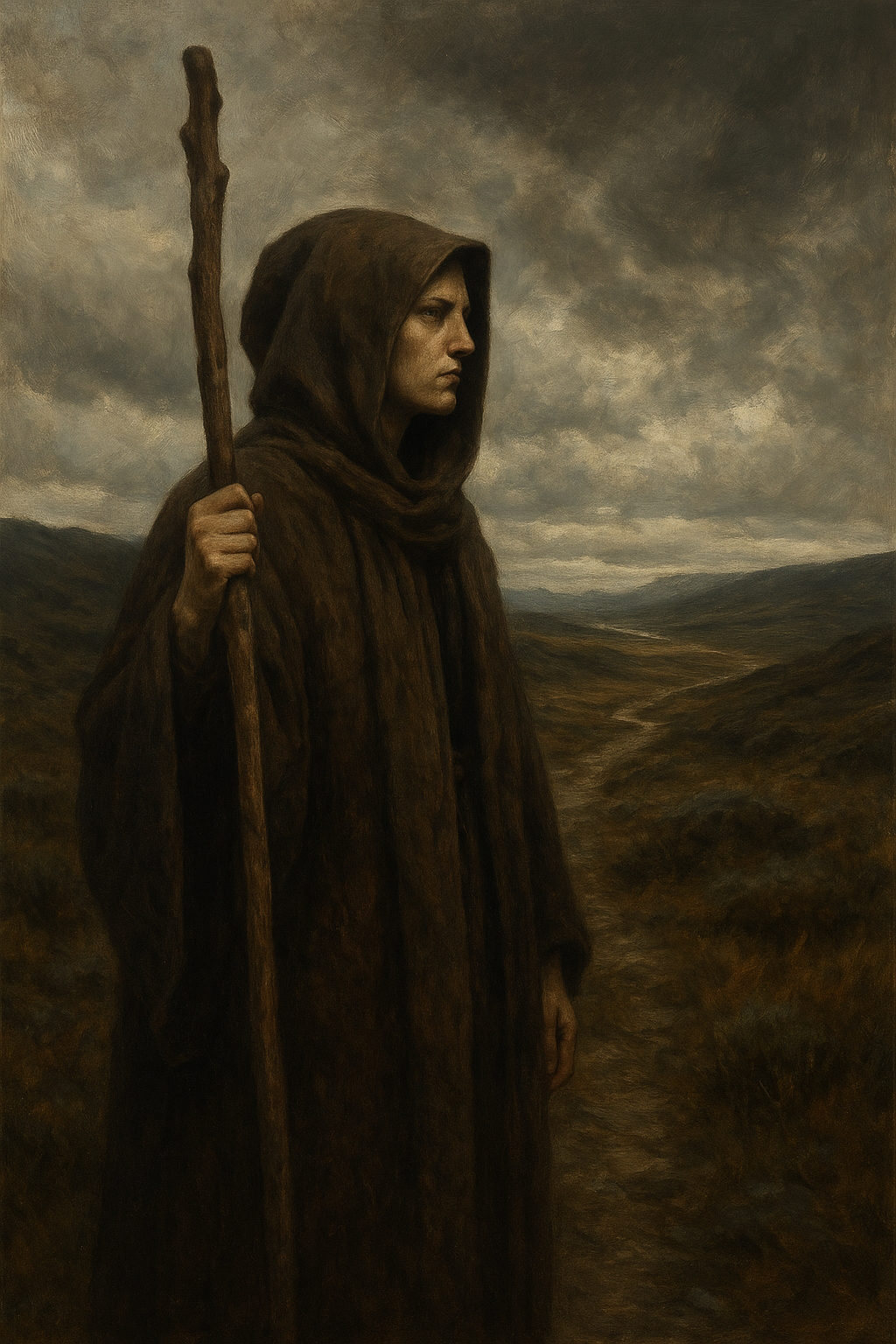
Samhildr is not the end of study. It is the point where study becomes a way of living. Up to now, you have walked through the laws one by one, examining each carefully, learning its weight, its limits, its essence. You have leaned into discomfort, met silence, learned to slow your breath, sharpen your speech and steady your will. But Samhildr marks a turning: the point where the laws no longer feel like external teachings but like parts of your inner landscape.
The road beyond this chapter asks something different of you. It does not ask you to learn another law. It asks you to live the ones you already carry.
What comes next is craft with consequence, vision with depth, relationship with the unseen that grows more reciprocal and more demanding. When the laws gather within you, the worlds take notice. The land listens more closely. The ancestors step nearer. The gods watch with a more discerning eye. This is not a reward; it is recognition. You have shaped yourself into someone who can be approached without needing constant correction.
Ahead lies work that requires steadiness. Spirit contact that tests your boundaries. Visions that require courage. Choices that require responsibility long before the outcome becomes clear. The deeper you go, the more the craft asks you to be precise rather than powerful. Samhildr prepares you for that precision.
This is also the point where the path becomes less about acquiring knowledge and more about refining presence. A practitioner rooted in Samhildr does not chase every mystery; they follow the ones that call them. They do not seek to impress spirits; they seek to honour them. They do not force revelation; they create the inner conditions in which revelation can arrive naturally.
Ahead, you will learn to work with the laws in movement rather than in stillness. You will learn how they behave under strain, how they hold during conflict, how they guide during uncertainty. You will notice the subtle shifts in your inner weather and respond before misalignment sets in. You will begin to sense when the craft wants to move and when it wants to rest. You will learn the difference between your will and the will of the work itself.
The path ahead is not easier. But it is clearer.
You have moved from memorising to weaving. From holding the laws to being held by them. What lies before you now is the deeper architecture of the craft - the part where your presence becomes a tool, your instincts become accurate, your patience becomes fertile, your truth becomes clean, your boundaries become natural and your responsibility becomes unwavering.
In the next chapter, you will step into the work that arises from the gathering of the laws. You will learn how to use them together, not just as individual disciplines but as a cohesive system - a living compass that shapes your choices and strengthens every rite, every omen, every moment you open yourself to the unseen.
For now, stand at the threshold. Feel the weight of what you have learned settle into you. The staff road stretches forward, and the work grows deeper. The foundations are laid. The vessel is forming. The laws are alive within you.
The next lesson is not about learning one law at a time, but learning how they function as one.
That is the heart of what comes next: the art of using the laws of seiðr as a single living force.
The Shadow of Integration

Every part of seiðr has a shadow and Samhildr is no exception. When the laws begin to settle within you, when they start to move together rather than separately, there is a subtle danger that creeps in alongside the growth. Integration brings strength, but it also brings the temptation to believe the work is finished. This temptation is one of the most deceptive shadows of the path.
The first shadow is complacency. Once the laws begin to feel natural, you may assume you no longer need to tend them. You may think your patience will always hold steady, your boundaries will always remain clear, your truth will always ring clean. But integration is not a finish line. It is a living state that requires continued feeding. Neglect it, and the roots begin to dry. Lose vigilance and the old habits return quietly. Samhildr asks for continued attention; it is not a thing to tick off and move past.
The second shadow is spiritual pride. When the laws gather in you and your presence deepens, you may feel steadier, wiser, more aligned than before. But pride is a crack in the vessel. The moment you believe you have nothing left to learn is the moment the craft begins to slip from your hands. Pride distorts vision, blunts intuition and weakens relationship with the unseen. Spirits step back from those who grow arrogant. The gods test those who mistake integration for mastery. Pride is the quickest way to unravel the very weaving you worked so hard to create.
The third shadow is rigidity. When you finally understand the laws, there can be a tendency to cling to them so tightly that you forget they are living forces, not rigid rules. Boundaries become walls, truth becomes harshness, responsibility becomes self punishment, patience becomes avoidance, respect becomes performance, and return becomes fear. Integration should make you fluid, responsive and adaptable, not inflexible. If the laws stop breathing, the craft stops breathing with them.
The fourth shadow is misidentification. As the laws begin to shape your instincts, you may mistake your preferences or emotional reactions for alignment. You may think a strong boundary is being upheld when in truth you are avoiding discomfort. You may call something patience when it is fear of acting. You may call something truth when it is your own projection. Integration requires honesty, or it easily twists into something that only resembles seiðr on the surface while lacking its depth beneath.
The fifth shadow is displacement. When the laws gather, some practitioners begin using them on others more than on themselves. They become quick to judge, quick to interpret, quick to speak on what others should do while abandoning their own inner work. This is a distortion of Samhildr. Integration must first stabilise your own life, your own behaviour, your own choices. When the focus moves outward too quickly, the centre collapses and the path becomes hollow.
The final shadow is the illusion of arrival. Samhildr can feel like a great milestone and it is, but it is not the destination. It is the point where the road begins to deepen. Some who reach this stage begin to feel safe, complete, or certain that they have “become” the craft. But seiðr is never finished. The laws will test you again and again. The world will challenge your boundaries, your patience, your truth and your responsibility in ways you have not yet encountered. Integration is not a guarantee of stability; it is the strengthening of your ability to return to it.
The shadows of Samhildr are not punishments. They are natural consequences of growth. Any time you weave something powerful into yourself, distortions will appear around it. The shadows show you where the weaving is still fragile, where your old patterns still cling, where the laws have not yet sunk deep enough to hold under strain.
To recognise these shadows is to prevent collapse. To deny them is to feed them.
Samhildr asks you to remain humble, vigilant and honest. It asks you to keep returning to the laws even after they feel familiar. It asks you to remember that integration is not the end of the work but the strengthening of your capacity to do the work.
You do not outgrow the laws.
You grow deeper into them.
This is the truth the shadows teach: that the path of seiðr is not a climb towards a final summit, but a continual circling deeper into yourself, deeper into the worlds and deeper into alignment with the unseen.
The Role of Ancestry

Samhildr is not only the gathering of the laws within you; it is also the moment when you begin to feel the weight of those who walked this path before you. Seiðr has never been an isolated craft. It has always been shaped, guarded and carried by those who came long before your first breath. When the laws begin to settle into your bones, the presence of the ancestors becomes more noticeable, more steady, more entwined with your practice.
Ancestry in seiðr is not limited to blood. It includes the spiritual line, the cultural line, the land line and the line of those who held the staff across centuries. Some practitioners feel the pull of their literal foremothers and forefathers. Others feel the echo of those who once practised this craft with discipline, humility and raw courage. Others feel the spirits of the land itself acting as elder teachers. All of these form the ancestral field you walk within.
When the laws begin to weave together, the ancestors draw closer. They do not move near because you are special. They move near because you have become steadier. A practitioner who respects, waits, sets boundaries, speaks truth and accepts the weight of consequence is someone the ancestors can approach without turbulence. Samhildr creates a kind of internal calm, a structure that can hold the presence of those who dwell in older layers of wyrd.
The ancestors help you recognise what is real and what is illusion. They do not flatter, and they rarely coddle. Their presence can feel like a gentle hand at your back, or a stern silence when you are drifting from alignment. They show patterns in your life that repeat across generations. They reveal strengths you inherited and wounds that need mending. They guide you not by force but by resonance, nudging your instincts in the direction of truth.
Ancestry also reminds you that you are not the first to face these challenges. Others have struggled with the same doubts, the same restlessness, the same hunger for quick answers. They remind you that patience has always been part of the craft, that boundaries guarded every seer, and that truth has demanded bravery since the first völva spoke her visions into the hall of the gods. When the journey feels isolating, the ancestors anchor you in continuity. You are part of a lineage that has endured.
At the same time, ancestry carries its own shadows. Old wounds can linger in the line, pulling you into patterns that do not belong to you but to those who never healed them. Samhildr helps you recognise these ancestral knots. With the laws working together, you gain the clarity to ask: does this struggle originate in me, or is it something older seeking resolution through my life? Ancestry does not excuse your choices, but it helps you understand their roots and take responsibility with greater depth.
The ancestors also offer protection. When your craft aligns with the laws, your work becomes less vulnerable to confusion, interference or misdirection. The ancestral field strengthens your footing, especially in rites that cross boundaries or invite contact with unfamiliar spirits. They steady your presence, reinforce your boundaries and help you navigate the unseen with the wisdom of many lives, not just your own.
To honour ancestry does not mean romanticising the past. It means acknowledging that you stand within a web of influence, memory and spirit that stretches far beyond your personal story. It means tending those relationships with respect rather than entitlement. The ancestors are not here to serve you. They are here to walk beside you as long as you walk with integrity.
Samhildr makes this relationship possible. When the laws gather, you become someone who can carry your lineage without distortion, someone who can meet the ancestors without fear or confusion. They become part of the weaving, part of the compass, part of the quiet strength that holds you as you step deeper into the craft.
Ancestry is not a destination. It is a continual dialogue. A presence that grows clearer as you grow steadier. A reminder that your path does not begin with you and will not end with you. In Samhildr, you realise that you are both a student of those who came before and an ancestor to those who will follow.
Samhildr and the Norns

To understand Samhildr fully, you must understand how it moves within the wider currents of fate. The Norns are not distant mythic figures sitting beside the roots of the World Tree; they are the living forces behind every thread of wyrd, including your own. When the laws of seiðr begin to gather within you, when your craft steadies and your presence deepens, your relationship with these ancient weavers subtly shifts.
This does not mean they speak to you directly or reveal secrets freely. The Norns rarely work in such overt ways. Instead, they respond to alignment. When your actions, intentions and discipline begin to match the rhythm of the laws, the Norns turn their attention toward you in a different manner. Not with favour, but with recognition.
Samhildr creates coherence, and coherence is what the Norns understand best. It is what they hold at the root of their weaving. A life aligned with respect, patience, truth, boundaries, responsibility and return is easier for them to guide, not because you are more important than others, but because you are no longer fighting against the pattern. You move with it.
Seiðr has always been a craft that brushes close to the Norns domain. When you scry, when you seek omens, when you read the weave of another’s wyrd, you step near the edge of the Norns work. This is not a trespass; it is an echo. A reflection of the same cosmic movement, but at a human scale. Without Samhildr anchoring you, that proximity is dangerous. It leads to misinterpretation, projection, or the illusion that you can override what is written.
With Samhildr alive within you, something changes. You begin to sense where your influence ends and theirs begins. You stop trying to force outcomes. You stop mistaking personal desire for revelation. You begin working in harmony with the direction the thread is already moving rather than attempting to pull it elsewhere. This is not submission; it is clarity.
The Norns are not benevolent in the way humans understand benevolence. They do not reward devotion or punish neglect. They tend the weave. They maintain the shape of what must be. When your life or your craft aligns with the laws, you stand in the flow of what is true. When you drift, you stand in resistance to your own wyrd. The Norns do not interfere in either choice. They simply adjust the thread in response.
Samhildr also teaches you how to read their movements, not through visions of the Norns themselves, but through the texture of your life. When the laws are aligned, the path ahead feels clear even if difficult. Obstacles feel purposeful rather than chaotic. Repeated lessons begin to make sense. Patterns surface that you once overlooked. You begin to understand why certain choices call to you and why others close no matter how hard you push.
This is the Norns at work, not as personal guides, but as the keepers of the pattern you inhabit.
At times, the Norns test the strength of your weaving. They place you before situations that strain your patience, blur your boundaries or challenge your truth. These are not trials designed to break you. They are moments meant to reveal where the laws are strong and where they remain fragile. Through Samhildr, you meet these tests with steadiness rather than collapse.
There is also a quieter relationship between the Norns and the seiðworker. When your craft is aligned, your words begin to carry different weight. Not mystical authority, but consequence. When you speak prophecy or counsel, your voice becomes more resonant with the pattern beneath it. This is not divine favour. It is the natural result of speaking in harmony with wyrd rather than against it.
Never mistake this for control. You cannot command the weave. But when you are aligned, the weave moves through you with fewer distortions. That is the closest any human comes to the Norns work.
Samhildr does not make you a weaver of fate. It makes you someone who can walk near fate without stumbling. Someone who can witness without projecting. Someone who can guide without imposing. Someone who can honour what is written while helping others navigate their part of the pattern.
In Samhildr, you do not become like the Norns. You become someone the Norns do not need to correct. And that alone changes everything.
The Body as Vessel
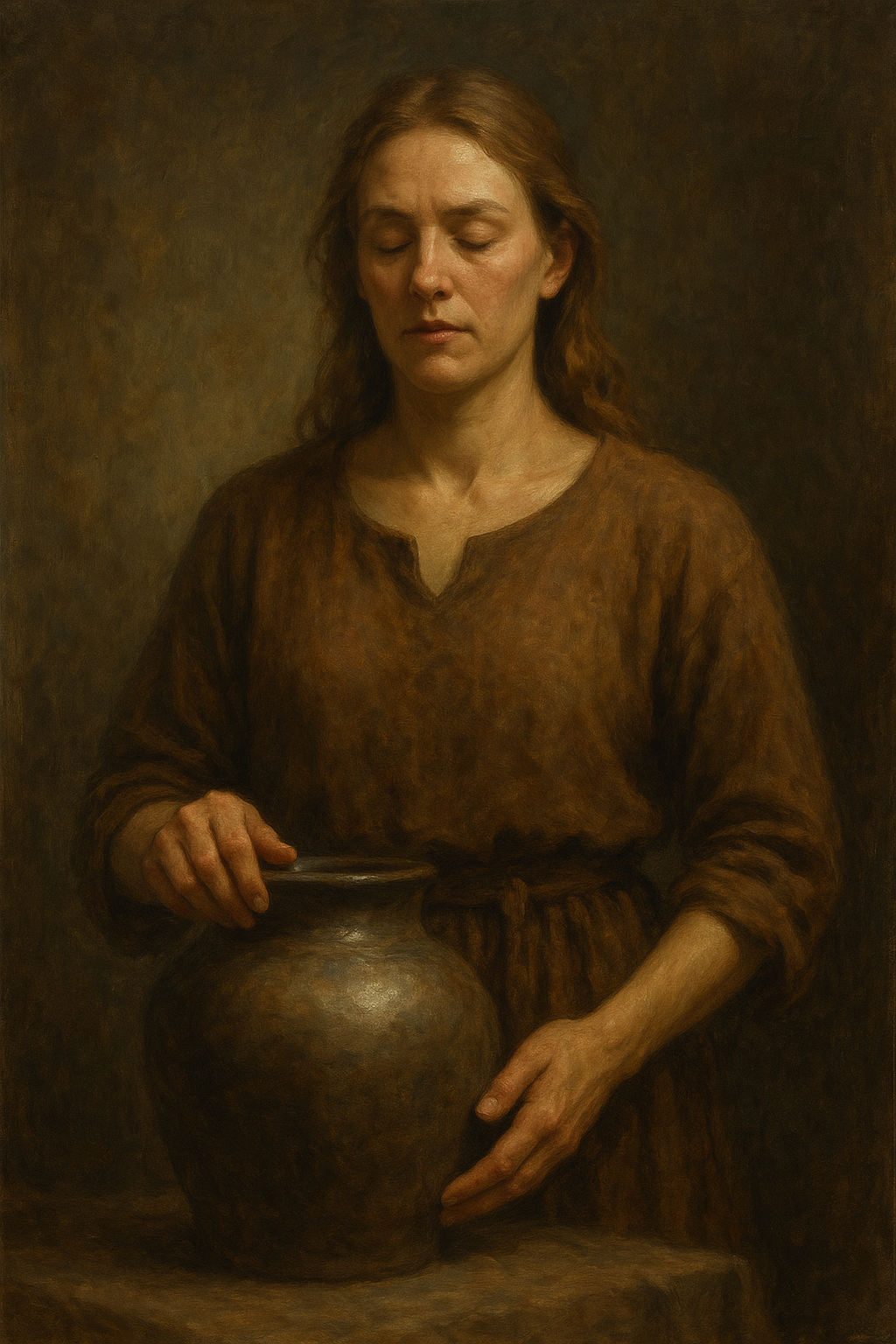
Samhildr is often thought of as a weaving of mind, spirit and intention, but none of it holds unless the body can carry it. Seiðr is not an abstract art. It moves through breath, voice, nerve, bone and the subtle instinct of flesh that remembers what the mind has forgotten. When the laws gather within you, the body becomes the vessel that must hold them, express them and withstand their movement.
Your craft does not happen somewhere above you. It happens through you. Every law has a bodily expression, and without tending that physical layer, Samhildr collapses into theory.
Respect is carried in posture and presence. You feel it in how you approach the altar, how you enter sacred space, how your breath shifts when you acknowledge the beings you work with. The body knows when you are sincere and when you are rushing. Spirits know too.
Patience lives in the nervous system. It is the slow settling of breath, the quietening of the stomach, the heart that no longer leaps at every inner sensation. Without bodily patience, the mind cannot hold stillness. The body must learn how to stay without fidgeting, without tightening, without bracing for what it fears.
Boundaries live in the spine. A boundary is felt as a straightening, a rootedness, a sense of contained energy. When your boundaries weaken, your body inclines, collapses or leans into what it tries to please or appease. The body reveals where your edges blur long before your mind admits it.
Truth resonates in the chest and throat. When you lie to yourself, even gently, the body tightens. When you speak truth, something opens. The breath shifts. The voice steadies. Truth is not just a mental alignment; it is a physical one.
Responsibility anchors in the belly. It is a grounded awareness that you are accountable for your choices. Irresponsibility often shows up as a floating sensation, a disconnect, a tendency to dissociate from consequences. A responsible practitioner feels the weight of their actions in the body before the mind names it.
The laws of return are felt in the skin. Sensitivity heightens. You become aware of how actions ripple, how choices echo, how energy moves through and around you. The body becomes a barometer for wyrd, sensing imbalance before it becomes visible.
Samhildr is the moment these laws stop sitting as ideas in your mind and begin to inhabit your physical form. The body becomes the container for the craft. Without that container, the work becomes unstable, either too intense or too weak, too chaotic or too constrained.
The body also remembers the places where the laws were neglected. Old wounds, ancestral patterns, past mistakes, and misaligned workings leave traces in muscle, breath and instinct. Samhildr brings these patterns to the surface. You may notice tension rising during certain workings, fatigue after truth-speaking, or restlessness when patience is required. These are not failures. They are signs of where the weaving needs attention.
The body’s role is not passive. It is the instrument that allows you to hold contact with the unseen without breaking. Trance is not a mental exercise; it is a shift in breathing, pulse and sensation. Prophecy is carried through the voice. Offerings are given through the hands. Every rite is a dance between your spirit and your flesh.
To honour Samhildr is to honour the body that carries it.
This means tending it compassionately, not with perfectionism but with awareness. Rest when needed. Ground yourself through touch, breath, stable posture. Move the body to loosen what has become tight. Feed it well so it can anchor the craft. Care for it after deep workings. The vessel must be strong, not strained.
The deeper you travel into seiðr, the more your body becomes part of the communication between worlds. You will learn to trust the subtle cues that arise from within: the shift in temperature before presence arrives, the tightening of the gut when something is off, the steadying calm when something is true.
Samhildr teaches that the vessel and the craft are not separate. Your body is not simply carrying you through the work; it is participating in it. It is listening, responding, absorbing and releasing. It is the bridge between the seen and unseen.
To live the gathering of the laws is to live inside a body that has become a vessel. A vessel that holds, that carries, that steadies, and that allows the work to move through you cleanly and without distortion. When the body is tended, the craft flows. When the body is ignored, the weaving falters.
Samhildr is not only a spiritual integration. It is an embodied one.
Correcting Mistakes

No one walks the seiðr path without error. Mistakes are not proof of unworthiness; they are proof that you are working. The danger is not in slipping, but in refusing to correct your course once you realise you have strayed. Samhildr is the point where you stop pretending perfection is possible and begin learning how to respond with maturity when you falter.
Every law offers a way back, but only if you choose to take it. Correcting mistakes is not about shame. It is about alignment.
The first step is honesty. You must acknowledge what happened without softening the edges.
Did you speak too quickly?
Did you blur a boundary?
Did you twist a vision to suit someone’s hopes?
Did you act without fully considering the return?
Did you hide behind patience instead of moving when the work required it?
Clarity must come before correction. You cannot realign with a truth you won’t look at.
The second step is tracing the cause. Mistakes rarely appear out of nowhere. They come from tiredness, hunger, wounded pride, need for approval, old fear, ungrounded emotion or a moment of carelessness. When you understand the root, you understand how to avoid repeating it. Samhildr teaches you to see your missteps not as failures but as messages from the laws themselves, revealing where your weaving is weak.
The third step is taking responsibility without collapse. Responsibility is not self punishment. It is steady acknowledgement. It is the quiet act of saying: this was mine. This part of the thread tangled because of me. It will be me who untangles it. Responsibility restores integrity. It stops the damage from spreading into other parts of your life or the lives of those who trust you.
The fourth step is repair. Sometimes this means speaking a truth you avoided. Sometimes it means apologising for harm caused. Sometimes it means offering to the spirits you neglected, or grounding the energy you left unbalanced. Sometimes it means sitting in stillness and asking what return has begun, and how you might meet it with grace rather than resistance. Repair is not always dramatic. Often, it is quiet and inward, a realignment of intent and presence.
The fifth step is adjustment. Mistakes reveal where your practice is rigid or fragile. They show you which law needs deeper tending. If a boundary weakened, strengthen it. If patience collapsed, re-root it. If truth wavered, return to clarity. If responsibility slipped, recommit. If return came unexpectedly, sit with it until you understand why. Each adjustment reinforces Samhildr, ensuring the weaving grows stronger rather than frayed.
The final step is release. Once the mistake has been acknowledged, traced, taken responsibility for and repaired, you must let it go. Clinging to your errors becomes a form of self sabotage. Shame has no place in Samhildr. It distorts the laws and turns the craft inward in a destructive way. Releasing the mistake allows you to move forward with clean hands, steady heart and renewed clarity.
Correcting mistakes is not a setback. It is part of the path itself. The Norns do not expect flawlessness. The gods do not demand purity. The spirits do not require perfection. They require sincerity, humility and the willingness to return to alignment again and again. A practitioner who corrects themselves quickly is far more trustworthy than one who pretends never to stumble.
Samhildr teaches that the weaving will bend, but it does not have to break. A mistake does not end your craft. It reveals how committed you are to it. Each time you correct your course, you deepen your relationship with the laws, with the spirits and with your own integrity.
A practitioner who knows how to recover is a practitioner who can be trusted.
The Staff as Symbol
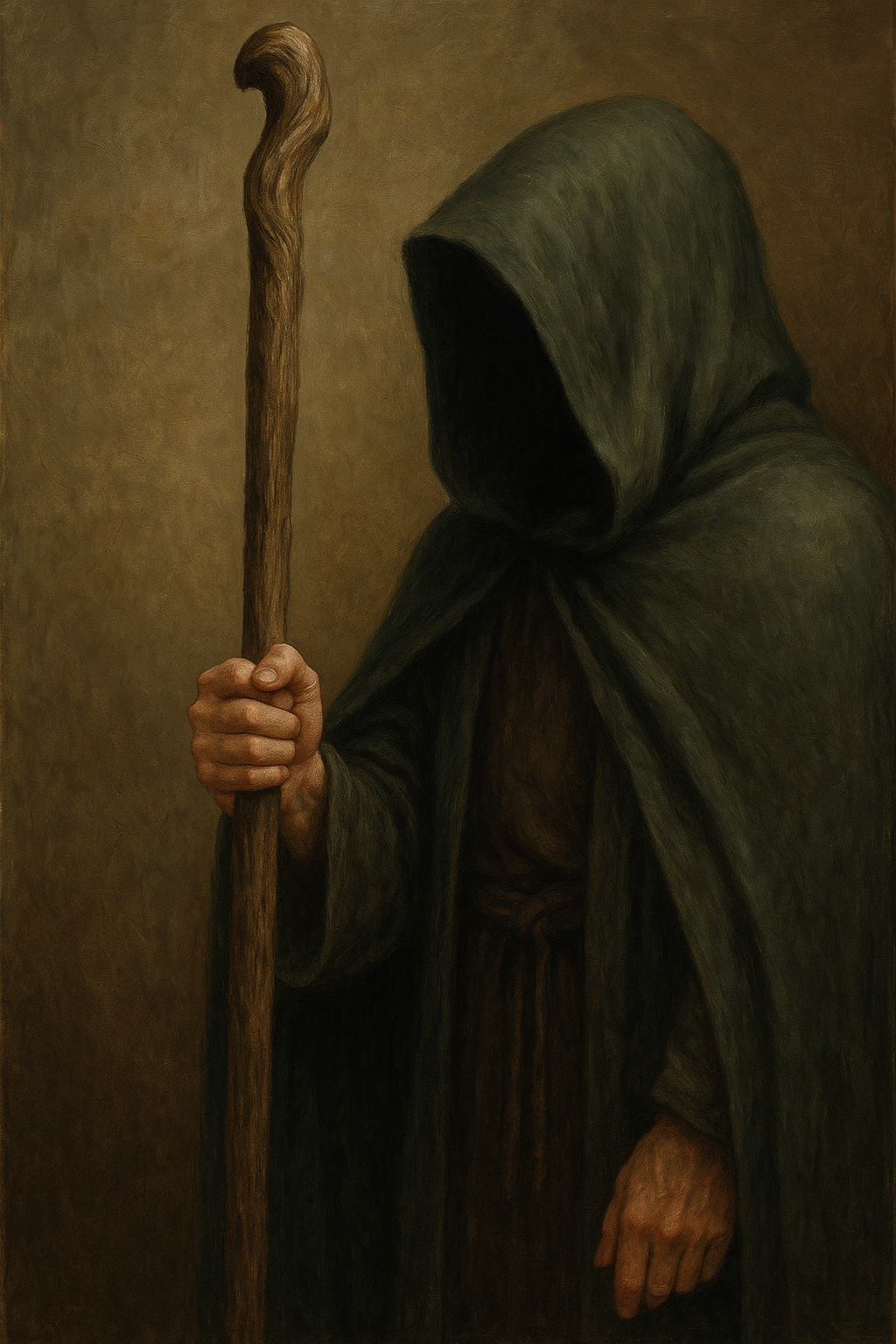
The staff is one of the oldest symbols of seiðr, yet many misunderstand what it actually represents. It is not a wand of power or an ornament carried for spectacle. It is a living reminder of the laws, the path and the responsibility you hold. When Samhildr begins to take root, the staff stops being merely a tool and becomes a mirror of your inner state.
The staff represents support. Not the kind that props up weakness, but the kind that steadies your intention. When you hold the staff, it is a physical acknowledgment that you stand between worlds with purpose. A staff wavers only when you waver. It steadies only when you are steady. The staff teaches you where your alignment falters long before any spirit does. If your grip is uneven, if your stance shifts, if the staff feels heavy, these are signs of misalignment within the laws.
It is also a marker of boundaries. The staff draws a line between here and there, between invitation and intrusion, between the practitioner and the forces they walk alongside. It is not a weapon. It is a declaration. A clear, physical expression of Mörk: this is where I stand; this is where you stand; this is the space between us. When boundaries blur inside you, the staff will feel unwieldy, awkward or strangely distant. When your boundaries are strong, the staff feels like an extension of your own spine.
The staff is a vessel for truth. In the old stories, the völva spoke prophecy with her staff in hand, not because the staff held power, but because the staff represented her alignment with sannindi. Truth must be grounded. Spoken from a place of clarity. The staff grounds the voice. It reminds the seer that words carry weight, that prophecy is not performance and that every sentence must pass through the laws before it leaves the tongue.
The staff holds patience. A staff cannot be rushed; it moves at the pace of the body, the breath and the land beneath your feet. It teaches the slow rhythm of Þolinmæði. When you walk with the staff, you cannot hurry without breaking your flow. The staff demands a tempo that matches the laws. It asks you to move in alignment with the world rather than in defiance of it.
The staff carries the echo of ancestry. Countless practitioners before you have stood with staff in hand. When you take it up, you step into a stream of memory older than your own life. The staff links you to those who wove seiðr before your name existed, those who learned their lessons through the same laws you now carry. It is an object that reminds you that the craft is not yours alone but inherited, tended and passed on.
The staff is responsibility made tangible. It asks:
Are you ready to act with consequence?
Are you ready to speak with clarity?
Are you ready to be seen by the unseen?
A staff carried lightly is a staff not yet understood. A staff carried with awareness becomes a declaration that you accept the weight of your craft and the ripples your work will create.
In Samhildr, the staff becomes more than an instrument. It becomes the physical embodiment of the gathering of the laws. When respect lives in you, the staff feels honoured, not wielded. When patience roots in you, the staff teaches you rhythm. When boundaries strengthen, the staff becomes your anchor. When truth sharpens, the staff becomes your clarity. When responsibility deepens, the staff carries your intention cleanly. When the law of return is understood, the staff reminds you that every action travels both outward and back.
Many believe the staff gives the seiðworker authority. This is a misunderstanding. The staff does not give authority; it reflects it. You cannot fake alignment with the staff. You cannot pretend to live the laws while the staff is in your hand. It reveals the truth of your presence, your clarity and your readiness. Spirits recognise its honesty. The gods recognise its sincerity. Even you, deep down, recognise what the staff is showing you.
The staff is not a prop. It is a companion. It is the spine you hold in your hand when you stand between worlds. It is the reminder that seiðr flows through vessels, not through objects. When the vessel is steady, the staff feels alive. When the vessel falters, the staff grows silent.
Samhildr is the moment when the staff stops being something you carry and becomes something that walks with you. It mirrors your integration, your discipline and your authenticity. The staff becomes the symbol of the craft not because it holds power, but because it reveals the one who does.
What Happens When Ignored
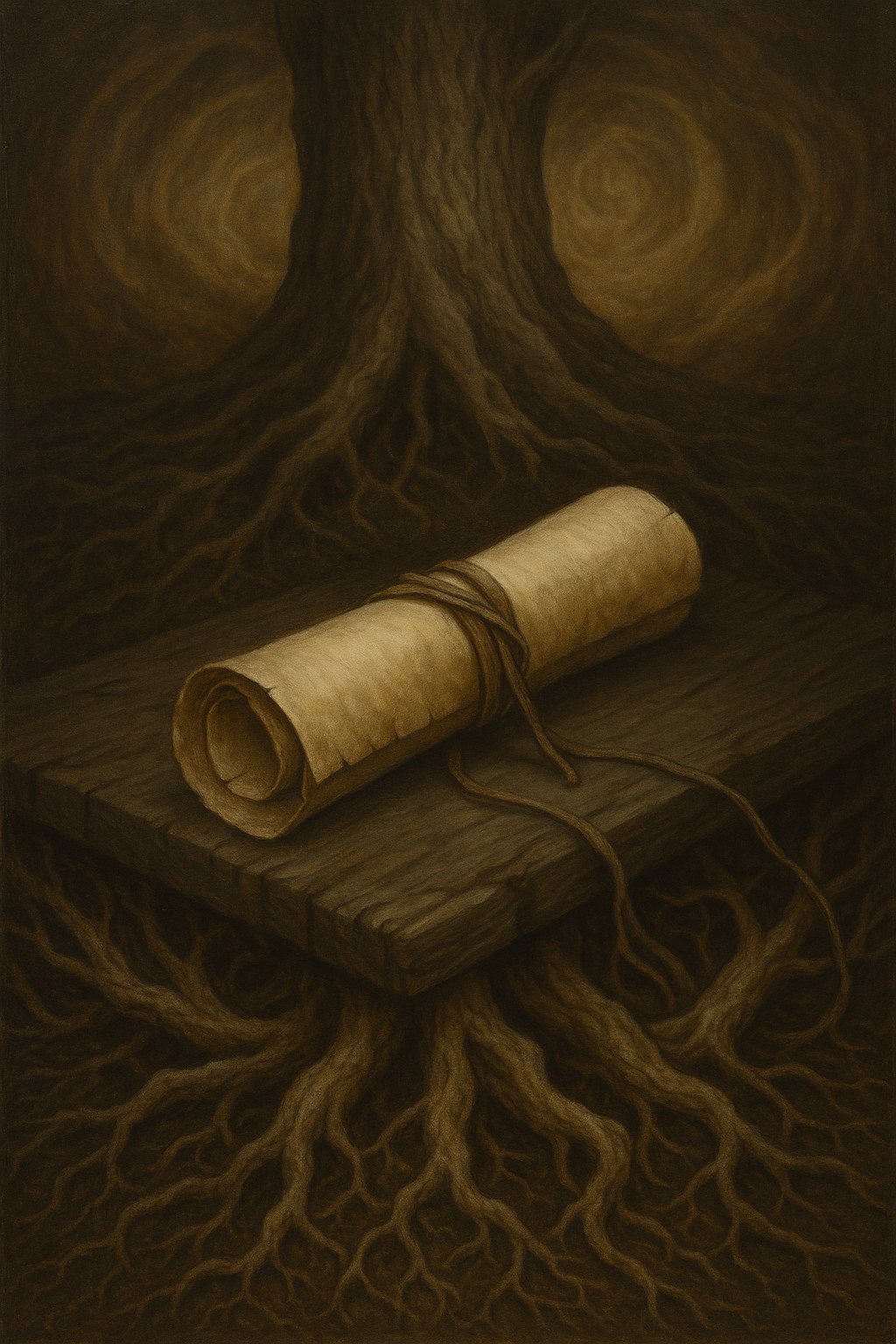
Samhildr is the gathering of the laws, but gathering does not guarantee keeping. When the laws are ignored, dismissed or taken for granted, the weaving begins to loosen. It does not tear all at once. It unravels quietly at first, in the subtle ways that only a practitioner paying attention would notice. But if left unchecked, the consequences deepen until the craft itself becomes unstable.
The first thing that happens is drift. You begin to feel slightly out of step with your work. Your intuition dulls. Your sense of timing becomes unsure. Signs feel harder to read, visions blur at the edges and moments that once flowed smoothly become awkward or strained. This drift is the earliest warning. It is the craft whispering that the laws are slipping from the centre of your life.
Then comes erosion of presence. Without Samhildr held consciously, your life begins to fill with noise again. Your breath speeds. Your boundaries soften. Your patience shortens. Responsibility feels heavier than usual. Truth becomes harder to face. Respect becomes more performative than embodied. At this stage, nothing has collapsed, but everything is just slightly off. This is how forgetting begins.
Next comes distortion. When the laws are ignored, the craft does not simply weaken; it bends. Visions become coloured by desire or fear. Boundaries become inconsistent. Responsibility is taken selectively. Return is noticed only when it stings. The work becomes reactive instead of intentional. You may still speak the language of seiðr, but the alignment beneath the words starts to fragment.
After distortion comes instability. Workings feel unpredictable. Contact with spirits becomes patchy or uncomfortable. Your body feels strained after rites that once nourished you. You may feel drained for days, hollow instead of connected. The unseen responds differently too. Some spirits pull back. Others test your boundaries more sharply. The gods offer silence rather than guidance. This is not punishment. It is protective distance. The worlds step back when your weaving becomes fragile.
Ignorance of Samhildr also affects your life beyond the craft. Old patterns return - impatience, people pleasing, overreaching, avoidance, self doubt. Conflicts that once resolved smoothly begin resurfacing. Relationships strain. Choices blur. The sense of being anchored weakens. You feel scattered, pulled in too many directions, unable to hear your own inner voice clearly. The laws are not only spiritual principles; they are stabilisers for the whole of your being.
If ignored longer, the most serious consequence appears: spiritual misalignment. This is when you begin to mistake noise for guidance, impulse for intuition, projection for message. You may believe you are still working cleanly, but the thread between you and the unseen has thinned. What you hear is more often yourself. What you feel is more often emotion than presence. What you speak is more often assumption than truth.
Left unchecked, this becomes collapse. Your craft stops flowing. Rites feel empty. Contact fades to echo. Even self work becomes muddled. You may feel disconnected, irritable, lost, or strangely hollow inside. Some describe it as feeling “far away from themselves”. Others as if their staff has gone cold. The break is not permanent, but it is real. Seiðr does not move through a vessel that has stopped tending its shape.
Ignoring Samhildr is not failure - it is forgetting. Forgetting the laws, forgetting yourself, forgetting the rhythm that once held your life steady. But forgetting has consequences all the same. The craft grows quiet. The path darkens. The work becomes brittle.
The moment you notice the drift, you can return. Samhildr is not a one time achievement; it is a continual practice. The laws are patient, and they respond the moment you turn back towards them. The weaving repairs itself each time you acknowledge the misalignment and take responsibility for returning.
Ignore Samhildr long enough, and the craft steps away from you. Honour it, and the craft steps back into your hands with clarity, steadiness and the full weight of its trust.
Samhildr as Sacred Maturity

Samhildr is often described as integration, but beneath that lies something deeper. It is a form of sacred maturity. Not the kind that comes from age, position or years spent reading about the craft, but a maturity woven through lived discipline, honest self examination and the courage to stand steady in the face of truth.
Sacred maturity is not about becoming wise overnight. It is about becoming reliable. Someone the craft can trust. Someone the spirits can approach without being entangled in your unresolved wounds. Someone the gods can test without breaking. Someone who walks with weight rather than noise.
In the early chapters of the path, you are gathering pieces: learning respect, cultivating patience, setting boundaries, speaking truth, taking responsibility and understanding return. These early lessons are necessary, but they can feel separate, sometimes even contradictory. One part of you feels pulled toward patience, another toward action. One part of you wants to tell the truth, another wants to protect. One part leans into discipline, another into surrender.
Samhildr is the moment these contradictions resolve. You no longer swing between the laws. They begin to move as one. That movement is what sacred maturity looks like. Your craft stops being a tug of war between impulses and becomes a single, fluid presence.
Sacred maturity shows itself in how you hold power. Not with dominance or bravado, but with steadiness. You no longer seek validation through visions or chase significance through dramatic workings. You do not grasp at attention. You do not inflate your role. Maturity means your power rests quietly in you, without the need to display it.
It also appears in how you respond to discomfort. A practitioner rooted in Samhildr does not flee challenge, nor collapse into overwhelm. You listen. You slow down. You adjust. You return to the laws without hesitation. Sacred maturity means you can sit with hard truths, with unanswered questions, with silence that stretches longer than you wished. You do not panic when nothing happens. You do not grasp when something does.
Sacred maturity is seen in how you treat others. The ego softens. The urge to impress fades. You become less interested in being right and more interested in being honest. You speak clearly without cruelty, firmly without arrogance, gently without deception. Your guidance no longer serves your pride; it serves the person who asked. You do not cloak your opinions in spiritual authority or claim messages that were never given. Responsibility becomes natural, not forced.
It shows in how you walk with the unseen. You do not call spirits recklessly or push past warnings. You do not treat the gods like conveniences. You approach the worlds with respect rooted in reality, not fantasy. You acknowledge the limits of what you know. You ask when unsure. You retreat when necessary. Sacred maturity means you understand that humility is not weakness but protection.
Maturity also reveals itself in how you hold yourself. Your breath becomes a tool. Your body becomes a vessel. Your presence becomes a steadying force for those around you. You are no longer easily thrown off course by emotion, conflict or expectation. You can stand still in a storm without mistaking stillness for passivity.
Most of all, sacred maturity appears in your relationship with the craft itself. You stop trying to control seiðr. You stop bargaining with it, demanding from it or proving yourself through it. Instead, you align. You listen. You work with its rhythm rather than imposing your own. You no longer ask, When will I be powerful? You ask, How can I stay aligned? This is the shift from ambition to readiness.
Samhildr is the flowering of all the laws you have learned - not as rigid rules, but as instincts. As truth that has settled into the body, the breath, the posture, the rhythm of your days. It is the point where seiðr becomes less about seeking and more about embodying.
This is sacred maturity: the ability to hold the craft with steadiness, humility and quiet strength. To stand in the presence of the unseen without flinching. To carry your responsibilities with grace. To move through your own shadows without fear. To meet the world as someone who has done the inner work and continues to do it.
Samhildr does not make you perfect. It makes you capable.