
Seiðr Craft - Chapter 12: The Weight of Words in Seiðr
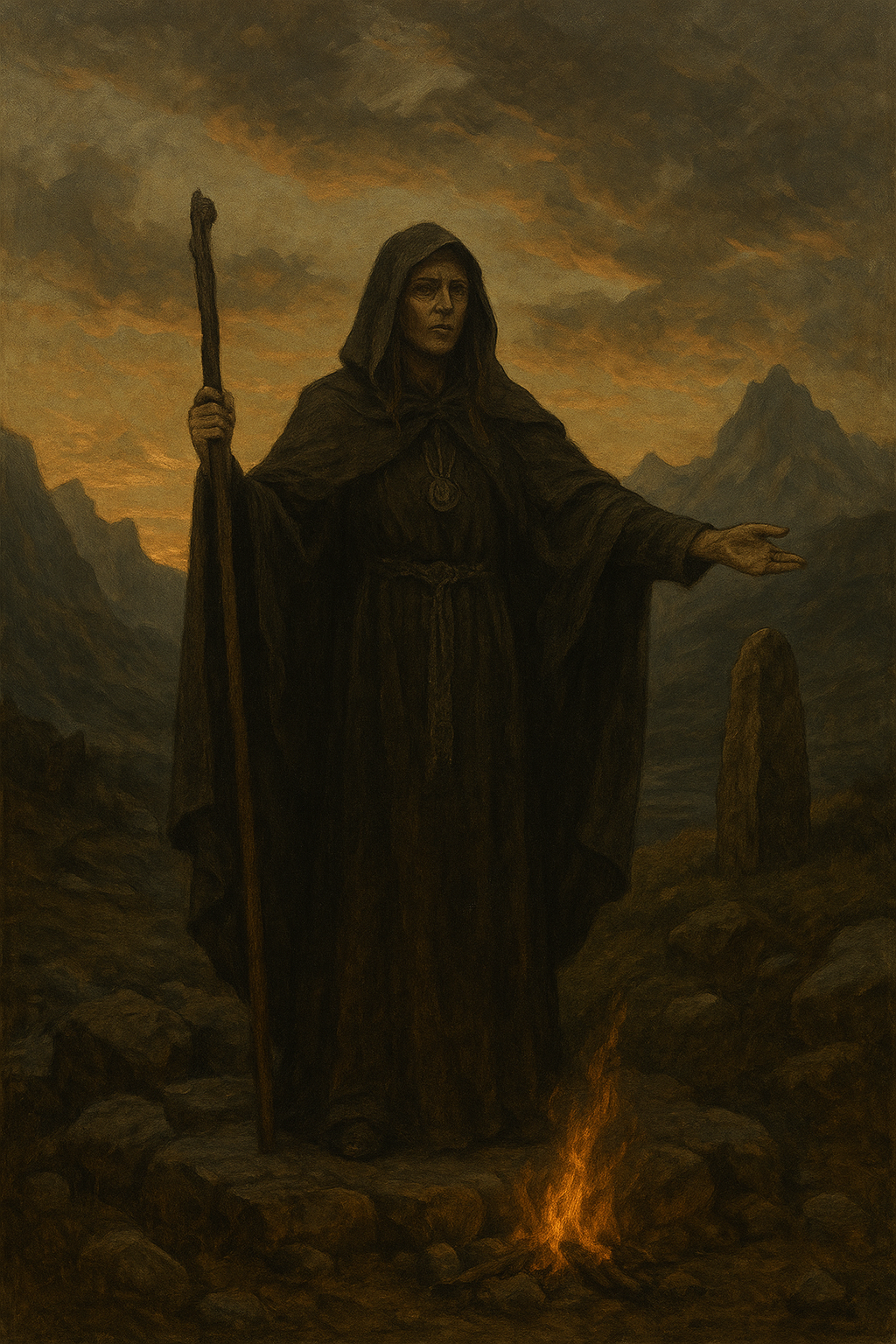
In seiðr, words are not decoration. They are not poetry layered over practice.They are not tools of expression - they are tools of creation.
To speak in this craft is to shape the weave.
Long before written runes carved meaning into wood and bone, words were carried in breath, in rhythm, in chant. Every völva, every seiðkona, every practitioner understood that speech itself was an offering, a spell, a thread thrown into the fabric of wyrd. In the old world, people feared a careless tongue far more than a careless blade. A blade wounds flesh - words wound fate.
Odin did not sacrifice for runes out of curiosity.
He hung for language - for the root-force behind all utterance.
The runes are not letters; they are principles. They are the architecture of meaning given voice.
When the ancients say that a curse could cling for generations or that a blessing could change a life, they were not speaking metaphorically. They were acknowledging a reality that modern minds forget:
Words carry weight because the worlds are listening.
In seiðr, you do not speak about the unseen - you speak into it.
Every breath is a signal. Every chant a summons. Every question a doorway.
The practitioner who treats language lightly courts confusion, distortion, or unintended consequence. The practitioner who learns to speak with precision, restraint, and alignment becomes someone the spirits can trust.
This chapter is dedicated to that skill -
to the gravity of speech,
to the dangers of speaking too soon,
to the cost of speaking without grounding,
and to the immense, transformative power of speaking at the right time, in the right way, from the right place within the self.
Here, you will learn why seiðr is not fueled by volume, but by intention.
Why silence must come before speech.
Why words born from ego collapse back into noise.
And why words born from alignment strike the unseen like a spear.
To work seiðr is to work with the living current of meaning.To misuse words is to warp that current.. To master them is to move with the Norns’ loom.
This is the chapter where you begin to understand that your voice (quiet or loud, broken or steady, frightened or fierce) is one of the most powerful instruments in the craft.
Because in this path, words are not spoken. They are released..They move…They bind.. They open.. They cut..They heal..Welcome to the weight of words..
The Spoken Thread: Why Words Shape Reality
In seiðr, words are not decoration. They are not mere sound. They are thread - living strands cast into the weave, binding intention to outcome, shaping the unseen with precision or chaos depending on how they are spoken.
The old traditions understood something modern practitioners often forget: speech is an act of power, and every utterance (whispered, chanted, sung or breathed) moves through the worlds with consequence. The sagas show us this again and again. Odin did not simply think the runes into being; he named them. The völur did not silently gesture their spells - they spoke them into the marrow of the world.
Words are vibration, and vibration is movement, and movement alters the weave.
Most people speak reflexively, carelessly, bleeding their energy out through complaints, doubts, dramatics, and impulsive declarations. In seiðr, this lack of discipline becomes dangerous. Unrefined speech scatters intention. It muddies the channels through which the unseen responds. It weakens your presence and creates unintentional bindings.
But when speech becomes deliberate (when each word is chosen, shaped, aligned) your voice becomes a tool as sharp as any staff or stave. You begin to understand why the old chants were patterned, why the galdr was vibrated, why the völva’s words were measured like breath over a blade. Speech is not passive; it is directional. It points the thread.
Every word sets something into motion. Some words soften tension; others invoke accountability. Some invite presence; others close the door. Some anchor you; others unravel you.
To say: “I fear I am alone”
is to weave the thread of isolation into your own practice.
To say: “I am listening”
opens the space for silence to move from emptiness into guidance.
To say: “I commit”
binds you to the path, and the path to you.
The weave does not judge your speech but responds to it. This is why seiðr-workers must watch their words with the same vigilance they use when watching for signs. Speech is one of the oldest forms of crossing.
The voice is a bridge - between breath and will, between body and spirit, between inner intention and outer reality.
When you speak with clarity, the unseen hears with clarity.
When you speak with confusion, the unseen waits.
When you speak with falsehood, the unseen withdraws.
This is why many practitioners experience spiritual silence immediately after frantic invocation: the worlds cannot respond to tangled speech. They respond to resonance.
To work seiðr is to understand that your words are spells long before you stand in ritual. Every promise, every dismissal, every whispered resentment, every vow is a thread cast into the fabric of wyrd. The more attuned you become, the faster these threads tighten and respond. This is both blessing and warning.
So the practitioner must learn:
to speak less,
to speak cleaner,
to speak truer,
to speak only when the thread is meant to be moved.
Because the moment you step into the craft, your speech ceases to be personal expression and becomes participation in creation.
When the spirits step back, your words matter even more. In times of distance:
Complaints weaken you.
Desperation binds the void.
False certainty locks the door.
Quiet, steady speech keeps the path open.
You learn to speak only what you can anchor. You learn to call only what you can hold. You learn to name only what you intend to embody.
And eventually, when contact returns, the unseen meets a practitioner whose voice has become a tool - sharp, disciplined, trustworthy.
Speech becomes presence.
Presence becomes thread.
Thread becomes power.
This is why the old ways taught that a völva’s greatest weapon was not her staff -but her tongue.
Breath, Voice, and Wyrd: How Sound Altered the Ancient World
Before there were runes carved into bone, before there were chants shaped into ritual patterns, there was only breath - the oldest rhythm, the first offering, the pulse that tied the living to the worlds. Breath is not merely oxygen moving in and out of the body. In seiðr, breath is the gate that opens the self, the root that drops you into stillness, the thread that carries intention outward. Sound is only breath made visible. And the ancients knew this. They knew that every exhale entered the weave like a ripple entering a still lake, changing the surface, shifting the deep.
To the ancestors, the world was never silent. Wind through the rafters was the murmur of land-wights. The groan of ice was the slow speech of the deep north. The crack of fire was the tongue of transformation. Humanity learned to listen before it learned to speak. So when people finally shaped their own breath into voice, the act was treated with reverence and caution. Sound was not considered human property; it was considered a force shared with the unseen.
In the sagas, power is not displayed in spectacle but in sound. A whisper can summon. A chant can open. A single word, spoken with alignment, can change the direction of fate. Seiðr-workers learned early that breath carries intention to places the mind cannot reach. Odin’s galdr was not loud, but deep - dropping through him like a stone through water, each note a descent into the hidden layers of wyrd. The völva’s voice was not meant to entertain, but to call - drawing the threads close, coaxing the unseen into presence.
Breath changes the practitioner before it changes the worlds. The inhale steadies the bones; the exhale loosens the grip of fear. Long before trance takes hold, breath clears the inner landscape. You feel the shift: the belly softens, the spine anchors, the jaw relaxes, and the mind stops grasping. When the breath is disciplined, the voice becomes a conduit rather than a performance. A trained exhale carries weight. It carries clarity. Spirits do not respond to the surface of sound - they respond to the alignment beneath it.
This is why old chants were built on breath-patterns rather than melodies. Galdr is shaped from the diaphragm, not the throat. It vibrates through bone, not air. When a völva chants, her body becomes an instrument, tuned to the currents she seeks to touch. The breath pushes the voice into resonance, and resonance pushes the thread into motion. You feel the shift first within your ribs, then in the silence around you, as though the space begins to listen back.
Sound alters the ancient world because sound is not separate from it. The moment your breath leaves your body, it belongs to the weave. It touches what you cannot see. It stirs what you cannot predict. It is both offering and signal, both anchor and spear. This understanding is not metaphorical. It is foundational. Every practitioner who has ever felt a room tighten during galdr, who has ever sensed the air thicken as their chant deepens, knows this truth in their bones: the worlds respond to breath before they respond to anything else.
The craft begins with breath because the craft begins with presence. And presence is carried on the voice like a ship through fog - slow, deliberate, guiding you into the heart of the unseen. Through breath, you align. Through voice, you reach. Through both, you shape wyrd in ways no silent thought ever could.
When you understand this, sound ceases to be something you make.
It becomes something you enter.
Something you wield.
Something that remembers you.
The Power of Naming: Binding, Revealing, and Calling
To name something in seiðr is not to label it - it is to touch its thread. The ancients understood that every being, every force, every shadowed presence carries a hidden rhythm beneath its outer form. When you name it, you strike that rhythm like a drum. You awaken it. You acknowledge its place in the weave. And you bind yourself, however lightly, to its truth.
In the old world, names were guarded because they were doorways. A true name was a line of connection, a strand of wyrd that could be pulled, tightened, blessed, or misused. This is why Odin gathered names like weapons and why the völva spoke names with caution. A name is not information; it is consequence. It reveals what stands before you, and it reveals you in the act of speaking it. Naming is mutual exposure.
When a practitioner names something in the unseen, the worlds shift in response. To name a spirit is to call it into clarity, shaping its presence out of mist and intention. To name a fear is to drag it from the shadows and bind it where you can see it. To name a desire is to commit it to the weave. Naming is a form of bringing-forth, a summoning of essence. And once named, a thing cannot return to silence unchanged.
But naming is not ownership. This is a modern mistake. In seiðr, naming is recognition - a gesture of respect, alignment, or challenge depending on the tone. When you name the ancestors, you are not claiming them; you are opening the thread that already connects you. When you name a land-wight, you are not commanding it; you are acknowledging the presence that watches from the treeline. When you name a wound, you are not defining your fate; you are locating it so you may begin to unbind it.
The act of naming binds because it clarifies. The weave does not move according to vague intentions. It moves according to pointed ones. A name is a point - a fixed star by which the thread can orient itself. This is why the sagas speak of curses that cling for generations: once spoken, the words carved themselves into wyrd. They named a fate, and the fate took root. Likewise, blessings with names (names of kin, names of spirits, names of virtues) carried weight long after the speaker’s bones returned to earth.
Naming also reveals. Not only the thing named, but the one who names. A practitioner who names too quickly exposes their ignorance. One who refuses to name exposes their fear. One who names with precision reveals their alignment. The unseen listens not just to the word spoken, but to the place in the self from which it is spoken. A name uttered from ego is hollow. A name uttered from stillness is sharp. A name uttered from truth is binding.
And naming calls. It pulls the thread toward you. It stirs the presence behind the veil. Naming is how the völva invited the dead to speak in the old rites, how the gods were summoned into their stories, how the world itself was shaped from Ginnungagap - through utterance, through recognition, through the power of calling something by what it truly is.
In your practice, naming is both map and magic. You name what is rising in you. You name what you feel moving in the silence. You name the knot you must loosen. You name the guidance you seek to embody. You name the spirit who has stepped into the edge of awareness. And in doing so, you bring shape to the unseen.
This is why the völva’s words carried such weight: she did not describe fate. She named it. And by naming, she sealed its path.
To master naming is to master the first form of binding.
To name with precision is to see clearly.
To name with integrity is to call only what you can hold.
To name with alignment is to move the weave itself.
When Words Become Oaths: The Irrevocable Currency of Seiðr
There is a moment in every practitioner’s path when words stop being expressions and become oaths - threads flung into wyrd with such force, such clarity, that they cannot be taken back. The ancients feared this moment more than any curse, for an oath once spoken does not dissolve. It coils. It roots. It binds itself into the speaker’s life like iron into earth.
In seiðr, an oath is not a promise. It is a transaction. A trade between the self and the unseen. A vow is not kept because of morality; it is kept because the weave remembers. The Norns do not concern themselves with intention - they concern themselves with consequence. Once the words are spoken, they are woven. The thread tightens. The path shifts. The speaker is no longer who they were before the utterance.
This is why the sagas treat oaths with such grave respect. Sworn on rings, on gods, on kin, on earth itself - they were not symbolic. They were binding acts of magic. To break one was to tear your own fate, to unmake part of your presence, to call ruin upon yourself. Not as punishment, but as the natural recoil of a thread pulled out of alignment.
The seiðr-worker knows this intimately. You can feel it the instant an oath passes your lips. The air thickens. Silence sharpens. Something in the unseen turns its gaze. A vow spoken in full presence is like striking a spear into the ground and announcing: Here I stand. Let the worlds witness. There is no retreat from such a moment. Only movement forward.
This is why practitioners must be slow to swear and swift to listen. Many seek the power of commitment without understanding its cost. An oath made in desperation binds the desperation. An oath made in pride binds the pride. An oath made without grounding binds chaos. But an oath made in clarity (after silence, after discernment, after deep contact with the root of your intention) becomes a force that can carry you through storms you would not otherwise survive.
Oaths shape the inner landscape as much as the outer. To swear that you will not turn away from your path alters the way your fear behaves. To swear that you will speak no falsehood in the unseen changes how silence meets you. To swear to protect a boundary summons strength you did not know you possessed. The oath becomes a living thing, growing inside your ribs, guiding your choices, correcting the thread when you wander.
The unseen respects oaths. Spirits respond to them. Ancestors rise to them. Even the land listens. A vow spoken in ritual, with breath steady and presence anchored, rings through the worlds like a bell struck in deep stone. The response is subtle but unmistakable: a tightening of attention, a recognition, an alignment.
But the danger remains. The moment you swear, you are no longer the only one holding the thread. The weave holds it with you. And the weave does not forget.
This is why the völva’s oaths were quiet, rare, and razor-sharp. She knew each one reshaped her wyrd. She knew that the cost of breaking an oath was not external punishment but internal fragmentation. A broken oath splits the self. The voice loses its weight. The presence falters. Spirits withdraw. The thread snarls.
To swear lightly is to wound your craft.
To swear wisely is to anchor your fate.
To swear in alignment is to step fully into the current of who you are meant to become.
In seiðr, words become oaths when spoken from the deepest root of the self.
When breath steadies.
When silence listens.
When the worlds lean close.
Then, and only then, does the utterance rise into something irrevocable -
a promise sealed in wyrd,
a thread tied to destiny,
the currency with which a practitioner shapes their life.
Speech as Spellcraft: Intention, Precision, and Consequence
In seiðr, spellcraft does not begin with tools or symbols. It begins with speech - with the shaping of breath into intention, the narrowing of thought into word, the deliberate act of setting meaning into motion. Spellcraft is not something added to speech. Spellcraft is speech, when speech is wielded with alignment. Every utterance becomes architecture. Every syllable becomes a movement in the weave.
Most people speak to release pressure. Practitioners speak to direct it.
This is the first difference between ordinary language and spellcraft: the presence beneath the words. When you speak from distraction, your words scatter like chaff in wind. When you speak from truth, they strike the unseen with the solidity of a thrown stone. Spell-speech is less about volume and more about the density of intention. A single quiet phrase spoken from deep alignment carries more force than a full chant born from confusion.
This is why the völva’s voice in the sagas needs no theatrics. Her words are sharp because her intention is sharp. Her speech cuts through the unseen like a blade drawn along grain. Each word is chosen. Each silence is chosen. Her presence shapes the space as strongly as her voice.
Precision is the heart of spellcraft. A vague intention creates vague results. A tangled utterance creates tangled consequences. In the old chants, nothing was improvised. Patterns were repeated because repetition creates rhythm, and rhythm creates a pathway. The speech becomes a container the unseen can follow. This is the logic of galdr: focused sound, focused breath, focused will. Nothing wasted. Nothing misplaced.
In seiðr, you do not simply “speak” a spell. You construct it - thread by thread. You feel the intention settle into your breath. You feel the breath gather in the chest. You feel the chest tighten the focus. Then, only then, do you release the word. The release is the moment of contact. And contact is where consequence begins.
Consequence is the truth modern practitioners often try to avoid. Spell-speech carries cost. When you speak into the weave, you are not whispering into emptiness; you are entering relationship. The unseen responds. It adjusts. It shifts its weight. Even the smallest utterance sets something in motion - inside you or around you. A calling brings presence. A dismissal creates distance. A demand invites challenge. A blessing opens the door for reciprocity.
Spellcraft through speech requires emotional discipline. If your intention is entangled with fear, the spell will bind that fear. If your intention hides resentment, the spell will echo it. If you speak from a place of pride, the worlds will hear that pride and answer accordingly. There is no hiding in spell-speech. Not from yourself. Not from the unseen.
This is why grounding precedes utterance. Why silence must settle before words rise. Why the breath must steady before the voice carries the thread. The practitioner must know what they are truly saying - not just the words, but the intention beneath them. Precision does not mean perfection; it means honesty. If you cannot speak honestly, you cannot speak with power.
When intention and precision align, the consequence becomes magic. The utterance becomes a spear thrown directly into the path of fate. It moves with purpose. It moves with clarity. It moves with the weight of a practitioner who knows what they are doing and why they are doing it.
This is the essence of speech as spellcraft:
To speak is to shape.
To name is to narrow.
To direct is to bind.
To release is to transform.
When your words carry intention, they carry force. When they carry precision, they carry direction. When they carry consequence, they carry power. And in seiðr, power is never accidental. It is spoken. It is crafted. It is chosen.
The Danger of Careless Speech
Careless speech is the quiet undoing of many practitioners - subtle, gradual, and far more dangerous than any miscast spell. In seiðr, the unseen responds not only to ritual words but to all words. Every complaint, every exaggerated story, every impulsive declaration becomes a thread thrown into the weave. And the weave does not distinguish between sacred and casual. It only responds.
The ancients feared this. They knew that an unguarded tongue could warp fate just as sharply as a curse. A careless oath spoken in frustration could bind a life to sorrow. A careless insult could fracture alliances that held a community together. Speech was not entertainment - it was consequence. It shaped how the worlds saw you, and how they approached you.
For the practitioner, careless speech is not simply sloppy; it is dangerous. When you speak without grounding, your words leak energy. They scatter your presence. They reveal aspects of yourself you have not yet claimed or integrated. Spirits read these leaks as instability. The ancestors read them as confusion. The land reads them as noise. And noise weakens the thread you are trying to weave.
Careless speech also distorts perception. When you speak things you do not mean (out of habit, self-pity, dramatics, or defensiveness) your own mind begins to treat those words as truth. This is how a practitioner binds themselves with their own tongue. “I can’t do this.” “No one hears me.” “Everything is going wrong.” These are not harmless statements; they are incantations of collapse, small curses cast inward. Spoken often enough, they warp the ground beneath your feet.
This is why seiðr-workers are taught to watch their speech as closely as they watch their dreams. A moment of careless utterance can undo days of aligned practice. A single sentence spoken in spite can close the door to a presence that was willing to meet you. Spirits do not respond to franticness. They do not respond to contradiction. They do not respond to a mouth that opens faster than the practitioner’s breath can anchor.
The sagas show this clearly. Heroes destroy themselves not through sorcery, but through rash words spoken in anger or pride. A vow shouted too quickly becomes a trap. A boast made to impress becomes a fate waiting to be fulfilled. A curse hurled in bitterness returns like a thrown axe. The danger was always in the tongue, not the blade.
Careless speech also invites forces you did not intend to call. Words aligned with frustration summon the echo of frustration. Words aligned with fear invite tightening. Words aligned with false certainty draw the attention of spirits who test the integrity of those claims. When your voice speaks one thing but your presence holds another, the unseen senses the dissonance - and withdraws or intervenes in ways you did not choose.
To avoid careless speech is not to fall into silence, but to fall into integrity. To pause. To breathe. To ask yourself whether the words you are about to release belong to the practitioner you are becoming - or to the old self you are shedding. It is a discipline of alignment, not suppression.
The skilled völva speaks less, but means more. Her words are weighted, intentional, rooted. She wastes no breath on dramatics. She allows no falsehood to cross her tongue. She understands that every utterance trains the weave to recognize her voice.
This is the danger of careless speech: not that the worlds will punish you, but that your own tongue will shape a fate you never meant to walk.
Guard your speech, not out of fear, but out of respect for what it can do.
For once released, words do not vanish.
They move.. They settle.. They bind.. They return.
What the Sagas Teach About Spoken Power
The sagas are woven from battles and journeys, yes - but beneath the steel and storms lies something quieter, older, and far more dangerous: the power of speech. Again and again, the stories reveal that the tongue moves fate more decisively than the sword. Words in the sagas do not decorate action; they cause it. They summon alliances, provoke doom, bind oaths, call spirits, and seal destinies long before blades ever leave their sheaths.
The sagas teach us that spoken power is not metaphor. It is law.
A single insult can ignite a blood feud that lasts generations. A poorly chosen boast becomes a prophecy waiting to be fulfilled. A curse spoken in grief tightens into the marrow of descendants. A blessing given with sincerity shifts the fortune of an entire household. These are not embellishments - they reflect the ancestral understanding that speech alters wyrd with a force nothing else can match.
Consider the figure of the völva. She does not wield weapons. She does not command armies. She simply speaks. And when she speaks, kings fall silent. Her words, shaped with precision and alignment, are treated as fate itself. She does not predict; she utters. And the world bends accordingly. Her authority rises not from strength but from mastery of spoken power - the kind of mastery that can only be earned through discipline, presence, and clarity.
Odin, too, teaches this truth. Though known for battle and wanderings, his greatest power is not his spear but his speech. He wins wisdom by naming. He binds beings by speaking runes into their essence. He chants galdr that reshapes the conditions of reality. He sacrifices not for violence, but for language - for the ability to wield sound in ways that pierce the fabric of the worlds. His stories exist to show us that command of speech is the highest form of magic.
Even the most human sagas follow this thread. The downfall of heroes rarely begins with action; it begins with a boast made too boldly, a promise spoken too quickly, a moment of anger that lets a curse slip unguarded from the mouth. The sagas mourn these moments. They show us how a single utterance can cascade into tragedy - not because the gods intervene, but because the weave simply responds.
Speech is the first spell.
Speech is the first weapon.
Speech is the first binding.
The sagas also show us the ethics of speech. They warn against speaking in haste, for hasty words create entanglements that must eventually be answered. They warn against speaking beyond your strength, for the worlds will test the integrity of your boast. They warn against speaking untruthfully, for false words rot the core of one’s presence and drain the sharpness from one’s voice. A person whose words cannot be trusted is powerless in both the visible and unseen realms.
Yet the sagas also reveal the healing power of speech. A well-placed promise can mend broken bonds. A confession spoken without pride can soften even the hardest wyrd. Words spoken in courage (naming fear, calling truth, reaching across distances) become threads strong enough to hold families, clans, and fates together. Spoken power is not only destructive. It is restorative.
For the practitioner of seiðr, the sagas are not entertainment. They are teachings. They reveal the weight of language, the cost of utterance, and the absolute necessity of aligning speech with intention and integrity. They remind us that the unseen listens, that wyrd responds, and that every word spoken in clarity becomes part of the story you will one day have to walk.
The sagas teach us this above all:
Power does not begin in the hands.
It begins in the mouth.
And those who understand this shape their lives with far fewer wounds.
The Ethics of Utterance: Responsibility in the Work
In seiðr, utterance is never neutral. Every word released into the worlds carries weight, direction, and consequence. This is why the foundation of the craft is not simply technique - it is ethics. Not moral righteousness, but responsibility. Alignment. The disciplined understanding that your voice shapes more than your own fate; it shapes the spaces you enter, the beings you address, and the threads you touch.
Ethics in utterance begins with the recognition that speech is a living force. When you speak, you do not speak into emptiness. You speak into a web of presences - seen and unseen, human and other than human, ancestral, elemental, and spiritual. Each word is a gesture. A call. A ripple. A thread. To speak without responsibility is to throw stones into still water without caring what they strike beneath the surface.
A practitioner must know not only what they speak, but why they speak it. Speech is not a tool for self-soothing or self-display. It is an act of participation in the fabric of wyrd. When you speak in ritual, the unseen listens. When you speak in frustration, the unseen listens. When you speak in longing, the unseen listens. To pretend otherwise is to practice in ignorance. The ethics of utterance begins in silence - listening before naming, grounding before calling, clarifying before releasing.
Silence is where the practitioner uncovers their true intention, stripped of ego, urgency, and performance. Only when the intention is clear does the utterance become clean. And clean speech is what the unseen trusts. Responsibility also means knowing when not to speak. There are truths the craft teaches slowly, moments where silence protects more than speech reveals, presences that withdraw when confronted with forceful or unanchored language. Not every question deserves to be asked. Not every presence should be named. Not every sensation should be called a sign.
The sagas warn us: those who speak beyond their depth unravel their own fate. Those who speak to manipulate the unseen invite backlash. Those who speak to impress their peers lose the respect of the spirits. Power twisted by ego collapses inward, leaving the practitioner hollow and unheard. Ethical utterance demands humility - to speak as invitation, not domination; to speak as recognition, not appropriation; to speak with alignment, not hunger.
Responsibility also extends to how we speak about others - spirits, ancestors, land-wights, and even our own emotions. Speech that diminishes or distorts becomes a subtle form of binding. To reduce a presence to a caricature, to claim certainty where there is none, to speak for beings who have not spoken - these acts tangle the weave and fracture trust. The practitioner must resist the temptation to fill silence with stories that elevate the self.
Ethical utterance is clear, honest, grounded, and necessary. Never dramatic. Never manipulative. Never careless. When your words rise from integrity, the unseen recognizes you. They know they are dealing with someone who can hold what they call, release what they summon, and stand firm in what they declare. Responsibility sharpens your presence. It strengthens your voice. It makes your speech a place of stillness rather than chaos.
The ethics of utterance is not a rulebook. It is a posture - a stance in the worlds, a way of meeting the unseen with respect and precision. In the end, responsible speech is what makes a practitioner trustworthy - to spirits, to ancestors, to community, and to their own fate. For ethical utterance does not limit your power. It refines it. It channels it. It ensures that every word you speak deepens the path rather than unravels it.
Silence Between Words: Holding the Space of Power
Silence is not the absence of speech. In seiðr, silence is the vessel that makes speech powerful. It is the space where intention settles, where presence gathers, where the unseen leans close enough to hear. Many practitioners believe their strength lies in what they say, but the craft reveals a deeper truth: their strength lies in what they do not say - yet.
The silence between words is where wyrd bends. It is where threads loosen, tighten, or shift. It is where the practitioner listens, not with the ears, but with the whole body. In ritual, silence is not emptiness; it is pressure. A subtle weight. A field of expectation that tells the worlds you are not speaking reflexively but deliberately. A voice that rises from such silence carries far more force than a voice poured out without pause.
The ancients understood this intuitively. The völva did not rush her prophecies. She let silence open before each utterance, creating a hollow in the air where the next word could land with precision. Odin did the same when chanting galdr - pausing, waiting, listening to the shift in the unseen before shaping the next sound. Silence was not delay; it was alignment. It was communion. It was the moment the craft crossed from the self into the worlds.
For the modern practitioner, silence between words becomes a discipline. It slows the tongue. It steadies the breath. It forces the ego to loosen its grip. Silence demands honesty, because nothing can hide within it. Without silence, speech becomes clutter - noise pushed outward in hopes of filling an inner void. But with silence, every word becomes a blade, clean and sharp, cutting through confusion.
The space between words is also where spirits respond. Contact rarely arrives during the chant itself; it arrives in the pause after, when the practitioner is open, receptive, unguarded. It is in that moment that the presence shifts, that guidance rises, that the unseen steps forward. Too many fill these moments with more words, more questions, more noise - and in doing so, they drown out the very answer they are seeking.
Silence teaches the practitioner to wait. To trust. To allow the thread to move in its own time rather than forcing it. The weave does not respond to pressure; it responds to alignment. And alignment grows strongest in the spaces where the tongue is still, the breath deepens, and the awareness widens.
Even in everyday life, the silence between words carries power. The pause before agreeing. The breath before refusing. The moment of reflection before naming a feeling, a fear, a truth. These silences shape your fate more than the words themselves, because they are the crucible in which intention clarifies.
Silence is not passivity. It is presence.
It is the moment where you gather yourself.
Where you feel the weight of what is about to be spoken.
Where you choose your thread instead of tripping over it.
The practitioner who learns to hold silence becomes dangerous in the best way. Their speech is slow but potent. Their words land with weight because silence has carved a space for them. Their presence expands. Spirits trust them. Ancestors respond to them. Even the land listens more closely.
The silence between words is the heart of seiðr speech. It is the space where power condenses. Where intention ripens.. Where the weave listens..Hold your silence like a cup. Fill it only when the moment demands it.
For in that space, the craft becomes clear, and your voice becomes fate.
The Voice of the Völva: Authority, Truth, and Fate
The völva’s voice is not loud. It does not need to be. Its authority does not come from force, volume, or spectacle - it comes from alignment. From the years of silence she has endured. From the truths she has walked through. From the weight of presence she has tempered inside herself until her speech carries the shape of fate itself.
When a völva speaks, she is not offering opinion. She is not performing. She is not guessing. She is giving shape to what rises through the worlds, through the thread, through her body. Her authority is born of surrender - of becoming empty enough that the weave can move through her without distortion. This is why her voice is feared in the sagas. Not because she commands, but because she is heard.
The power of the völva’s voice begins long before any word leaves her tongue. It begins in the stillness she cultivates. In the breath she settles. In the way she grounds her awareness so deeply that her presence thickens the air around her. A völva does not speak from intellect. She speaks from the deep-root - the place where thought dissolves and discernment begins. This is why even kings bowed their heads when she opened her mouth; they were not bowing to her, but to the thread that spoke through her.
Truth, for the völva, is not a concept. It is a sensation. A pressure. A shift in the unseen. She does not seek to be right - she seeks to be aligned. Her voice cuts through illusion because she does not cling to any story, not even her own. She has passed through fear enough times to recognize when fear tries to shape her speech. She has confronted ego enough times to feel when ego rises in her throat. And she refuses to speak until these impurities fall away.
This is why the völva’s speech carries the gravity of prophecy even when she is not prophesying. She speaks only when the truth is anchored. Only when the thread is visible. Only when the unseen has drawn near enough that her voice can carry its rhythm. Anything spoken under those conditions becomes more than language - it becomes direction. A subtle reweaving of fate.
The völva also knows that truth is not always gentle. It may arrive sharp as frost or heavy as winter ice. Her role is not to soften it, but to deliver it cleanly, without cruelty, without personal imprint, without hesitation. This is where her authority comes from: the willingness to say what must be said, not what is desired. The courage to honour the thread over comfort. The discipline to remain silent until the moment of utterance is pure.
Fate and voice are intertwined in her path. The völva does not force destiny; she reveals it. She does not chase visions; she listens. She does not declare possibilities; she names what already stirs beneath the surface. And once named, it begins to move. This is the burden she carries: knowing that her voice can shift the trajectory of lives, households, and lineages. Knowing that a single sentence, spoken in full alignment, may become the path a person cannot escape.
But this is also her integrity. She does not wield her voice lightly. She does not insert herself into the threads of others unless invited. She does not speak beyond her depth. The völva’s restraint is part of her authority; her silence is as sacred as her prophecy.
To carry the voice of the völva in modern practice is not to mimic her words, nor to chase visions, nor to cloak oneself in false certainty. It is to cultivate the qualities that made her speech so potent: clarity, rootedness, humility, stillness, and the courage to speak only from truth.
The voice of the völva is not a technique.
It is a state of being.
A posture in the worlds.
A presence sharpened by silence and shaped by fate. When she speaks, the air listens. The weave shifts. And the path ahead becomes unmistakably clear.
Runes Spoken, Runes Sung: Vibrational Magic in Seiðr
Before the runes were carved, they were spoken. Before they were etched into bone and stone, they were sung into being - brought forth through breath, intention, and the deep rhythm of the self aligning with the unseen. The runes are not merely symbols to be studied; they are forces shaped through sound, each one a principle that responds when its name is carried with clarity through the voice.
When a rune is spoken, it is not the word that holds power, but the stance of the practitioner. The breath anchors. The spine lengthens. The presence settles. Only then does the utterance travel cleanly into the weave. To speak a rune is to call its nature forward - not as a mental idea, but as a living current that moves through the body, through the room, through the unseen watching at the edges.
The sagas hint at this again and again. Odin did not merely learn the runes; he learned how to speak them. His galdr was not chanting for its own sake, but the deliberate shaping of rune-power through tone, breath, and attention. The völva, too, used sound to open pathways between worlds. Her words were measured, paced, carried from the belly rather than the throat. She understood that the rune spoken weakly becomes nothing more than noise, but the rune spoken in alignment strikes the unseen like a stone dropped into deep water.
To sing a rune is to embody it. The chant vibrates through bone and muscle, making the body the instrument of the force itself. This is why runic singing is never dramatic. It is steady, grounded, rhythmic. The sound does not aim to fill a space but to shape it - slowly, deliberately, as if carving the outline of the rune into the air. What modern minds call “tones” or “frequencies,” the ancients experienced as pressure, shift, presence. The air thickens. The atmosphere alters. Something listens.
Spoken runes are messengers; sung runes are doorways. A spoken rune calls the principle forth. A sung rune invites it deeper, drawing it from concept into experience. The practitioner feels the rune rise within their chest, settle into their pelvis, anchor through their feet. The chant becomes a bridge between meaning and manifestation - not manifestation in the modern sense, but the ancient sense of making-present, calling a force from the unseen into the immediate.
But runes must be spoken with care. To utter a rune in anger binds that anger to its movement. To sing a rune without grounding invites distortion. To call a rune you cannot hold is to summon a current that will overpower your presence. This is why the old teachings emphasise restraint. Just because you can speak a rune does not mean you should. The weave responds best to clarity, not ambition.
When rune-speech is done correctly, the shift is unmistakable. The atmosphere becomes denser. The silence deepens. A subtle alignment takes place within and around the practitioner. The rune is no longer a symbol - it is a presence. Not personified, but potent. Not imagined, but felt. It moves through the breath, gathers behind the sternum, and releases outward with the exhale, carrying intention into the worlds.
Runes spoken with integrity shape the space. Runes sung with alignment shape the practitioner. Together, they shape wyrd. This is the essence of runic sound-work in seiðr: Not performance.. Not decoration.. But the disciplined act of speaking the world into sharper focus.
For runes are not only carved.. They are carried..Through breath..Through voice. Through the resonance of a practitioner who knows exactly what they are calling - and why.
How Words Invite, Shape, or Shut the Unseen
In seiðr, words are not simply expressions cast outward - they are signals. They tell the unseen who you are, what you can hold, and whether you are prepared to enter relationship. Every utterance creates a shift. Every word opens, narrows, or closes a doorway. The unseen does not respond to intention alone; it responds to how you speak, from where you speak, and what your presence is doing beneath the surface of your language.
When words invite, they do so through clarity. A clean, grounded phrase spoken from stillness becomes a beacon. The worlds recognise steadiness. Spirits recognise sincerity. Ancestors recognise truth. When a practitioner says, “I am listening,” or “I am present,” or simply breathes a name with no grasping behind it, the unseen steps closer. It is drawn to alignment, not desperation. It comes to the one who speaks without forcing, without begging, without shaping the silence to fit their fear.
To shape the unseen through speech is something deeper. It is not coaxing; it is participating. When you speak with intention anchored in the belly, when your breath steadies and your awareness extends like roots into the ground, your voice becomes an instrument. The unseen adjusts to your resonance. Space thickens. The air shifts. The moment becomes sculpted by presence. This is the quiet magic behind galdr and behind the völva’s utterances: not volume, but direction. The words act like hands adjusting threads - subtle, precise, powerful.
But words can also shut the unseen, and they do so more easily than most realise. Impulsive speech closes the door. Frenzied questions push presences away. Dramatic declarations (“Nothing is happening,” “Everything is wrong,” “I must have done something”) collapse the practitioner’s stance and scatter the thread. The unseen withdraws not out of offence, but out of discernment; a tangled voice reveals a tangled self, and no spirit willingly steps into a knot.
Even positive words can shut the unseen if spoken from the wrong place. False certainty, forced confidence, or spiritually performative statements create a barrier of noise. The unseen listens for what is real, not what sounds impressive. When your mouth moves faster than your grounding, the connection dissolves. When your speech becomes armour rather than invitation, the worlds fall silent.
The old practitioners knew this. They spoke little during ritual, not because silence was required, but because every word had consequence. A careless phrase could turn a guiding presence into a distant one. A poorly timed question could collapse the rising thread. Speech in seiðr was deliberate because they understood the relational nature of the unseen: it responds to precision, patience, and honesty - not to volume, certainty, or demand.
Words also reveal your readiness. If you speak from fear, the unseen will wait. If you speak from ego, the unseen will withdraw. If you speak from longing without anchoring, the unseen will remain just beyond reach. But if you speak from the deep-root (calm, clear, present) the unseen recognises you as someone who can hold what they call forth.
This is the quiet truth woven through all seiðr:
You do not summon with sound alone.
You summon with how you stand, how you breathe, and how you speak.
Words are invitations when they rise from stillness.
Words shape the unseen when they rise from alignment.
Words shut the unseen when they rise from chaos.
To master this is not to master speech - it is to master self. For the unseen does not respond to the tongue. It responds to the thread behind it.
The Weight of Prophecy: When Speech Becomes Destiny
Prophecy is not prediction. It is impact - the moment speech becomes so aligned, so clear, so resonant with the weave that it ceases to be commentary and becomes direction. In the old world, prophecy was feared not because it foretold the future, but because it made a future possible. The völva did not describe fate; she activated it. Her words were not passive observations. They were threads thrown forward.
When speech enters the realm of prophecy, it stops being personal. It rises from a deeper place, a quieter place, a place where the practitioner’s own desires, hopes, and fears have been burnt away by discipline. This is why the voice of the völva carried such terrifying authority: she spoke from a vantage point the ordinary self could not reach. She stood in the still point between worlds, and from that place, speech became consequence.
True prophecy is rare. It requires the practitioner to be empty enough that the weave can move through without distortion, grounded enough to hold what comes, and humble enough not to grasp at meaning. Prophecy is not a reward for spiritual progress; it is a responsibility, a burden that shapes both speaker and listener. Once spoken, it lingers. It thickens the air. It alters the paths available to those who hear it.
The sagas show this clearly. A single sentence from a völva could change the course of a kingdom. A warning uttered in the firelight could echo for generations, tightening around bloodlines like a net. Not because the gods demanded it, but because speech, when aligned with wyrd, moves fate like wind moves water. The Norns do not carve prophecy after it is spoken; prophecy is the echo of their carving.
For the practitioner, the weight of prophecy lies not only in its accuracy, but in the cost. To speak a truth not yet visible to others is to hold sharpness in the mouth. It isolates. It exposes. It demands integrity. A völva who speaks prophecy must be prepared for disbelief, resistance, or fear, for prophecy forces change - and change unsettles even those who seek it.
And yet, prophecy is not always grand. Sometimes it is small, intimate, quiet. A single sentence whispered in trance: “This path will shift.” A recognition rising through the breath: “This will break before it heals.” These are not predictions but threads being named as they move. The unseen speaks through sensation, pressure, image, and alignment long before it speaks through vision. Prophecy is the practitioner giving voice to that movement.
It is also why prophecy must be spoken with restraint. A word delivered too soon can harden a thread that was still moving. A warning given without clarity can become a curse rather than guidance. A vision interpreted through personal bias can unravel someone else’s fate. The weight of prophecy is not in the vision - it is in the timing, the tone, and the truthfulness of the utterance.
Prophecy becomes destiny when the worlds recognise themselves in the word. When the speech carries no ego. When the stillness behind it is absolute. When the practitioner has become a vessel rather than a storyteller. In such moments, the voice is not merely speaking - it is weaving.
This is the burden of the prophetic path: to know that some words cannot be taken back, to feel a thread move through you with the certainty of winter frost, to speak only when silence can no longer hold what must be said.
For when prophecy rises through the völva’s throat, it is not she who shapes destiny. It is destiny, at last, choosing to speak.
Cleansing the Tongue: Preparing the Voice for Sacred Work
Before the voice can carry power, it must be clean. Not pure in a moral sense, but steady, truthful, and unentangled. In seiðr, the tongue is not merely a tool of speech - it is a threshold. A passageway between the inner world and the outer, between intention and consequence, between silence and the unseen. If the threshold is cluttered, the work becomes tangled. If the tongue is weighed down with unspoken truths, resentments, or habitual noise, the voice cannot rise into sacred function.
Cleansing the tongue is not an aesthetic act; it is a discipline. It begins with recognising how easily speech becomes ccontaminated - by fear, by performance, by the need to impress, by the compulsion to fill silence rather than enter it. Every careless conversation, every exaggerated story, every habitual complaint leaves a residue. Not spiritual “impurity,” but disruption. A subtle dissonance that blurs the clarity of your utterances when you step into the work.
This is why the old practitioners were sparing with their words outside ritual. The völva understood that the tongue that gossips cannot prophesy. The voice that complains cannot call spirits. The mouth that lies cannot wield runes. Not because the worlds punish wrongdoing, but because certain states of being cannot coexist. A tongue trained to scatter itself cannot suddenly gather itself when the moment of power arrives.
Cleansing the tongue begins with honesty -the stripping away of performative speech. It requires the practitioner to speak less, to speak cleaner, and to speak only what they can anchor. This does not mean muting emotion. It means naming emotion truthfully rather than dramatising it. It means refusing to speak words you do not mean, promises you cannot keep, or declarations that come from panic rather than clarity.
Breath plays a crucial role. When the breath is shallow, the tongue rushes ahead. When the breath is deep, the tongue follows the pace of presence. Cleansing often begins with breathing deeply enough that you hear the truth beneath your own noise. The breath becomes a sieve, allowing the unnecessary to fall away so that only what is aligned passes into speech.
There is also a physical dimension to cleansing the tongue. The jaw unclenches. The throat softens. The chest loosens. These small shifts signal that the practitioner is no longer forcing sound but allowing it. The voice begins to resonate from the body’s root instead of the mind’s chatter. The unseen responds to this difference. A tongue shaped by grounded breath carries weight; a tongue shaped by tension carries distortion.
Cleansing the tongue also means confronting the words that have not yet been spoken. Those you have swallowed. Those you have avoided. Those you fear will change something if released. These unspoken truths gather like silt, clogging the channel between inner knowing and outward expression. A völva cannot afford that blockage. To cleanse the tongue is to bring these truths into awareness, even if they are spoken only to yourself in silence.
Finally, cleansing the tongue means restraint. Not repression, but patience. The willingness to let a moment settle before responding. The ability to hold silence without scrambling to fill it. The discipline to wait until the thread becomes clear. A cleansed tongue speaks when the weave is ready, not when the mind is restless.
When the tongue is cleansed, the voice becomes a vessel rather than an outlet. Speech becomes lean, deliberate, and potent. The unseen recognises the clarity. Spirits approach more readily. The work becomes smoother. The practitioner finds that their words travel farther, cut deeper, heal cleaner, and hold more weight.
For in seiðr, the tongue is not simply part of the body.
It is part of the thread.
And when the thread is clean, the worlds can hear you.
When Not to Speak: Discernment in Ritual and Vision
In seiðr, knowing when to speak is powerful. Knowing when not to speak is essential.
Silence is not merely the backdrop of the work - it is one of its sharpest instruments. Many practitioners fail not because they lack vision or technique, but because they speak too early, too often, or from the wrong place within themselves. Words released before their time scatter the thread, disrupt the weave, and sever the subtle alignment that makes true contact possible.
Discernment begins in the body. When a presence draws near, the impulse to speak often rises alongside excitement, fear, or anticipation. But the craft teaches restraint. Spirits reveal themselves first through shifts - pressure in the air, the tightening of focus, the slow turning of attention. These early moments are delicate. Speech, if premature, can disperse them like smoke disturbed by wind. The practitioner must learn to hold stillness long enough to let the unseen settle.
Ritual demands even greater patience. The temptation to fill the space (to narrate, to ask, to confirm) comes from the mind, not the thread. The weave does not rush. The worlds do not hurry. When a practitioner speaks too soon, they often speak over what was rising. They mishear, misinterpret, or misdirect the moment. Discernment means allowing the ritual to breathe, letting the silence ripen until the word that forms is not chosen, but recognised.
There are also moments when speech becomes a barrier. When the practitioner is ungrounded, forcing words will only push the connection further away. If your breath is tight, your chest unsettled, your thoughts spiralling - silence is the only ethical posture. Speaking from that place draws confusion into the work. The unseen responds to presence, not panic. In these moments, silence protects both you and whatever watches from the other side.
Discernment also means understanding that not all visions are meant to be spoken. Some are seeds meant to be carried. Some are warnings that require contemplation before utterance. Some are reflections of your own inner landscape rather than messages from the worlds. To speak them aloud too quickly can solidify something that should remain fluid, binding a thread that was still forming. The völva’s discipline was not in constant prophecy, but in the ability to hold prophecy until its shape was clear.
There are times when silence is a boundary. Not all spirits should be addressed. Not all presences should be named. Naming is contact; speaking is acknowledgement. Discernment teaches the practitioner to withhold speech until they know what they are dealing with, and whether they can hold what speaking will summon. This restraint is not fear - it is skill. It is the understanding that speech has consequence, and once released, cannot be recalled.
In communal settings, discernment in silence becomes even more crucial. To interrupt another’s rising vision, to speak over a ritual’s building momentum, or to claim insight before it settles into truth fractures the work for everyone. The most respected practitioners are often the quietest - not because they lack vision, but because they understand the cost of speaking without alignment.
When not to speak is a lesson learned slowly.
It arises from humility, not hesitation.
From presence, not passivity.
From respect, not fear.
The practitioner who learns this becomes sharper, steadier, and far more trustworthy in the eyes of the unseen. Their words, when finally released, carry weight because they were not wasted. Their silence, when held, becomes a container where truth can deepen. Their presence, refined by restraint, becomes a place the worlds are willing to approach.
For in seiðr, silence is not emptiness. It is judgement. It is preparation. It is the moment before revelation. And only those who honour that moment learn to speak with real power.
The Return of Speech: How Words Call Back Power
There comes a moment in every practitioner’s path when silence has done its work - when the stillness you have cultivated no longer asks you to wait, but to speak. This moment is subtle yet unmistakable. The breath deepens. The awareness sharpens. A pressure gathers behind the sternum, rising like a slow tide. It is the sensation of power returning, threading back into the voice, preparing to be shaped.
Speech after withdrawal is not the same as the speech that came before it.
It is heavier.
Cleaner.
More deliberate.
Like metal cooled in water - tempered, strengthened, honed.
When the unseen has stepped back, when contact fades and the work turns inward, many practitioners panic. They force words, hoping to pull the worlds closer. They ask, plead, chant, or narrate their fears. But withdrawal is not a punishment; it is refinement. The silence is shaping you. It is stripping away the unnecessary, burning off the noise, cleansing the tongue from habit and ego. And when the moment is right, speech returns - not as reaction, but as command.
When words return, they do so from deeper ground. Speech birthed from silence carries a different tone. It drops into the room with weight, like a stone into deep water. Spirits respond differently too. The worlds recognise that the practitioner has learned to endure quiet without collapsing, without clinging, without grasping. This resilience sharpens the voice. It transforms it from a tool of desire into a tool of alignment.
Words call back power because they declare readiness.
Not the frantic readiness of wanting, but the steady readiness of having endured.
The voice becomes a signal to the unseen: “I am here. I am anchored. I can hold what comes.”
This is why, after periods of spiritual dryness, practitioners often find that their first utterance (spoken in ritual or in quiet contemplation) opens the door again. The unseen leans in. Contact stirs. A thread once slack begins to tighten. Not because the practitioner begged for it, but because they spoke from a place that can sustain the connection.
The return of speech is also the return of direction. Silence teaches you who you are; speech declares it. After withdrawal, your words are no longer scattered. They do not apologise, embellish, or seek approval. They are pared down to truth. A single sentence becomes enough. A whisper becomes stronger than a shout. What once took long invocations now takes a breath and a phrase.
This is the voice the sagas honour - the voice that speaks after being tested. The voice tempered by solitude, sharpened by introspection, aligned through waiting. When a völva speaks after silence, the worlds listen because they recognise the discipline behind the utterance. Power is not in the sound itself but in the readiness that shapes it.
Words call back power because they name what is rising in you.
Because they bind intention to presence.
Because they declare your alignment to the weave.
In this way, the return of speech is not merely a phase in practice - it is a rite of passage. The practitioner steps out of silence not as they were, but as they have become. Their voice carries their transformation. Their breath carries their resilience. Their words carry the gravity of someone who has learned to listen before they speak.
When speech returns, it is not the end of silence. It is silence finding its voice. It is power returning through the mouth, steady and unmistakable. It is the moment the thread answers back.
Closing, Sealing, and Releasing
Every working in seiðr reaches a point where the thread has run its course - where the presence has spoken, the vision has risen, or the weave has shifted as far as it will go for that moment. At this threshold, power does not fade on its own. It must be closed, sealed, and released. The final utterance is not an afterthought. It is the final act of craft, the moment in which the practitioner gathers the loose strands, returns what is not theirs, and binds what must endure.
The final utterance is rarely dramatic. It is often quiet, almost whispered, shaped with far more restraint than the words that came before. Its purpose is not to call, summon, or direct - it is to complete. To bring the work to rest. To place a boundary around what has been opened so that neither the practitioner nor the worlds remain entangled after the contact ends. Without this closure, the work bleeds. The practitioner remains half-open, half-listening, unable to return fully to the human world.
In the old rites, this moment was sacred. A völva would not walk away from a working without sealing her speech. The sagas hint at this in the edges - the quiet phrases, the final blessings, the words spoken after prophecy has been delivered. These were not flourishes; they were bindings. They ensured that her voice stepped back from the threshold with integrity, leaving no lingering threads dragging behind her.
Closing is the first task. The practitioner draws their awareness back into the body, anchouring breath and spine. The final utterance acknowledges the shift: The work is done. Not as dismissal, but as recognition. Closing tells the unseen that the doorway is narrowing, that contact is no longer being sought. It allows presences to withdraw cleanly, without strain or confusion.
Sealing is the second. Some workings require the thread to be tied, to ensure that the intention holds. This is not the same as forcing an outcome. It is the act of giving structure to what has been set in motion. The final utterance becomes the knot on the thread - a quiet phrase, a spoken boundary, a naming of what must remain. When done correctly, sealing feels like something settling into place, like the final twist of a loom being secured.
Releasing is the last act, and perhaps the most important. The practitioner must let go of what is not theirs to carry. The final utterance releases the spirits, the pressures, the visions, and even the emotional charge of the working. Without release, practitioners exhaust themselves, mistaking lingering intensity for continued contact. Release returns the power to the worlds. It returns the practitioner to themselves. It restores the balance between presence and solitude.
This full arc (closing, sealing, releasing) creates a distinct threshold. One side is the work; the other is ordinary life. The final utterance is the step across that boundary. It protects the practitioner from carrying trance-weight into daily consciousness and protects the unseen from being dragged into a space where it does not belong.
When done well, the final utterance leaves the air still, clean, and settled. There is no lingering pull. No echo. No grasping. The thread lies flat. The practitioner feels grounded, clear, and empty in the best sense - emptied of effort, of noise, of residue.
This is why the final utterance should never be rushed. It is the moment that ensures the integrity of everything that came before. It is the final gesture of respect to the unseen and the final gesture of responsibility to yourself.
For in seiðr, beginnings are powerful - but endings are sacred.
The final utterance is not closure alone.
It is honour.
It is boundary.
It is release.
And it is the quiet acknowledgement that the worlds have heard you, and now, for this moment, the thread is laid to rest.