
Váli: The Silent Arrow of Retribution
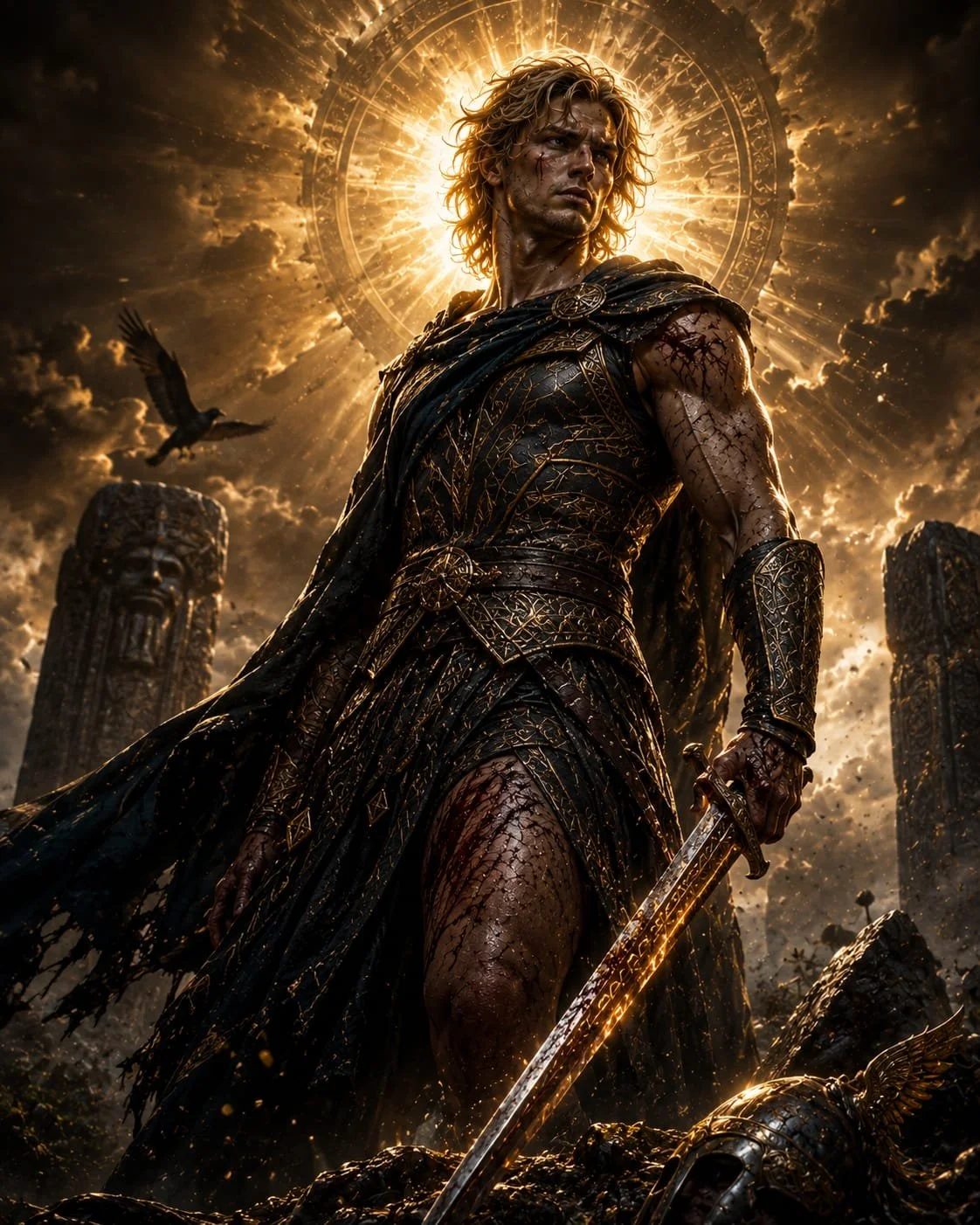
“Not every god is born to live. Some are born to fulfill.” - Fragment attributed to the lost Raven sagas
There are gods of thunder, gods of wisdom, gods of fertility and flame. And then there is váli the god born for a single purpose.
Not raised through childhood. Not shaped slowly by time. Not granted the luxury of becoming. He arrives already carrying destiny in his hands.
Váli is one of the most unsettling figures in norse cosmology because he embodies inevitability itself. He is not chaos, nor justice, nor cruelty. He is consequence. The moment an irreversible act enters the fabric of wyrd, váli emerges as the answering motion of the cosmos. He does not rage like the god of thunder thor. He does not scheme like the all father odin. He does not deceive like the god of mischief loki.
He fulfills.
***NOTE***
Before exploring this blog, it is important to clarify that váli is a figure from norse mythology recorded primarily in the poetic edda and prose edda. He is most widely known as the son of odin who was born to avenge the death of baldr. What follows is a mythopoetic synthesis faithful to the symbolic structure, cosmology, and spiritual atmosphere of norse tradition rather than a singular canonical narrative.
On the Name Váli
In old norse tradition, names are never arbitrary. They are condensed fate. The name váli carries associations of strength, endurance, and chosen purpose. Yet unlike gods who accumulate identity through deeds, váli’s identity precedes him. He is born already aligned with necessity.
He represents a terrifying principle within Norse cosmology: some forces do not emerge from desire, but from imbalance demanding correction. Where forseti for example restores harmony through mediation, váli restores balance through inevitability. One untangles conflict; the other concludes it. Both preserve order, but through radically different means.
Váli reminds us that not every wound can be reasoned with. Some ruptures echo so deeply through the cosmos that they summon response as naturally as winter follows autumn.
Prologue: Born in a Single Night
When the god of light baldr fell, the worlds trembled. Not because death itself was unfamiliar, the norse cosmos knows death intimately but because baldr represented harmony, beauty, and hope untouched by corruption. His fall signaled that even the purest light could be extinguished. And so odin acted.
From grief and necessity, váli was conceived. The myths tell us he grew to full stature in a single night. Before dawn had fully settled over asgard, he had already taken vengeance upon höðr, the blind god manipulated into Baldr’s death. No infancy. No innocence. No wandering search for meaning. Only purpose.
This is what makes váli uncanny among the Æsir. He exists outside ordinary development. Most beings struggle toward identity. Váli arrives complete. He is destiny accelerated into flesh.
The Strange Birth of the Avenger
The myths surrounding váli’s birth are among the most unusual in all norse literature. According to the prose edda, odin fathered Vlváli specifically to avenge baldr, and the child reached adulthood within a single day.
To modern readers, this may seem merely fantastical, but mythologically it carries profound symbolic meaning.
Rapid growth in myth often signifies divine inevitability. Váli bypasses childhood because childhood represents possibility, learning, and transformation. He is denied these things because his purpose already exists in completed form. He is not becoming, he is fulfillment incarnate.
This motif appears in many mythic traditions where cosmic necessity overrides ordinary development. Heroes may train for destiny, but divine beings like váli arrive already synchronized with it.
His accelerated maturation reflects the urgency of cosmic imbalance itself. The worlds cannot remain suspended in unresolved rupture forever. Restoration must come swiftly.
Introduction: The God of Sacred Consequence
Váli is not merely a god of vengeance. To reduce him to revenge alone misses the deeper current beneath his myth.
He is sacred consequence.
In norse cosmology, actions do not vanish. Every deed enters the threadwork of wyrd, rippling outward through gods, mortals, and realms alike. Oaths broken, betrayals committed, innocent blood spilled, these things demand answer. Váli is that answer.
But unlike blind fury, his response is cold, exact, almost ritualistic. He does not delight in suffering. He carries out necessity with the silence of winter settling over a battlefield.
His existence teaches a difficult truth: some consequences cannot be escaped, delayed, or bargained away. Some arrive with the certainty of dawn.
Váli and the Nature of Wyrd
To understand váli fully, one must understand wyrd the norse concept of fate not as rigid predestination, but as an ever-expanding web of consequence shaped by action. Wyrd is dynamic. Every oath sworn, every betrayal committed, every act of courage or cruelty enters its weave.
Váli exists as one of the clearest manifestations of this principle.
He is not fate in the abstract sense of unavoidable destiny. Rather, he is the living consequence born from specific actions already taken. Baldr’s death was not an isolated tragedy; it disrupted the moral and cosmic equilibrium of the worlds. Váli emerges because wyrd itself demands response.
This distinction is essential. In norse cosmology, consequences are not punishments imposed externally by a moral authority. They unfold naturally from the structure of existence itself. Fire burns. Winter freezes. Betrayal echoes.
Váli is that echo given form.
The Silence After Grief
Most gods in norse myth roar, feast, battle, or proclaim. Váli is quieter than all of them.
He exists in the silence after catastrophe. After the screaming stops. After the funeral fires dim. After grief hardens into unbearable clarity. There is something profoundly unsettling about divine stillness. Noise allows distraction; silence forces recognition.
Váli’s presence strips away illusion until only consequence remains. He does not negotiate like forseti. He does not inspire like baldr. He does not manipulate like odin.
He reveals what action has already set into motion.
And in that revelation lies his terrifying authority.
The World Before the Breaking
Before váli enters the mythic record, there is a quieter illusion that precedes rupture, a world that believes itself stable even as the roots beneath it begin to fracture.
Asgard before baldr’s death is not chaotic. It is luminous, ordered, and seemingly secure. The gods feast, speak, and build as though permanence is guaranteed. Yet beneath this surface of divine certainty lies something more fragile: an unspoken awareness that harmony maintained too effortlessly is often the first sign of unseen imbalance.
Baldr’s presence intensifies this illusion. He is light made form, a being so beloved that his existence becomes a kind of psychological shield against catastrophe. In his radiance, the gods believe harm has been subdued, as though beauty itself could negotiate with fate.
But myth rarely allows comfort to persist unchallenged.
The world before the breaking is not peaceful because it is stable, it is peaceful because it has not yet been tested. And in Norse cosmology, untested order is never guaranteed to endure. Váli is not born into a balanced world. He is born into a world that only believes it is balanced, right before that belief collapses.
The Child Who Never Was
The myths deny váli one essential thing... becoming. Other gods evolve through trials and relationships. Thor learns restraint. Odin sacrifices for wisdom. Tyr loses a hand to preserve cosmic order.
Váli is denied growth because he is born already completed by necessity. This absence transforms him into something almost symbolic rather than personal. He is less an individual psyche and more a living mechanism of wyrd itself.
Imagine awakening already burdened by absolute purpose. No uncertainty. No exploration. No alternative path. Only inevitability. Váli embodies the tragedy of function without freedom.
The Burden of Being Finished
There is a subtle horror in completion that the myths rarely soften. Váli is not incomplete waiting for growth, he is complete from the moment of emergence. This sounds like strength, but in mythic terms it is also a form of confinement.
To be finished is to be denied deviation. To be fully formed is to be denied reinterpretation. Every path forward is already narrowed into necessity. There is no wandering, no misalignment, no discovery that reshapes identity.
Where other gods become themselves through experience, váli is locked into himself through purpose. This creates a paradox at the heart of his existence, he is perfectly aligned with his role, yet cannot exist outside it.
Even survival beyond Ragnarök does not free him, it only extends the duration of completion. In this sense, Váli is not only the embodiment of consequence.
He is also the cost of consequence made permanent.
Light and Shadow of Vengeance
Modern minds often reduce vengeance to cruelty, but Norse cosmology treats it with greater complexity. Unanswered violence threatens the structure of society itself. Blood debt, oathbreaking, and dishonor ripple outward like poison through kinship and trust.
Váli emerges from this view.
Yet the myths remain uneasy around him. His vengeance restores balance, but balance achieved through blood is never clean. Even necessary acts carry shadow. This ambiguity matters. Váli is neither celebrated as heroic nor condemned as monstrous. Instead, he exists within the gray terrain where duty and violence intersect.
He reminds us that justice and vengeance are not identical, yet history often forces them into uncomfortable proximity.
The Moral Ambiguity of Divine Vengeance
One of the most fascinating aspects of norse mythology is its refusal to portray the gods as morally perfect. The Æsir are wise, flawed, noble, violent, compassionate, and destructive all at once. Their cosmos is not divided neatly into good and evil. Váli reflects this complexity.
His vengeance is necessary within the logic of the myth, yet the stories never present vengeance as emotionally clean or spiritually pure. There is sorrow attached to it. Weight. Inevitability. Even righteousness carries cost.
This ambiguity separates Norse cosmology from many later moral systems that seek absolute ethical certainty.
The norse worldview acknowledges that maintaining order sometimes requires painful action, and even justified acts leave scars behind.
Váli therefore becomes more than an avenger. He becomes a meditation on the burden of necessary consequence.
Váli and the Weight of Inaction
Váli is often interpreted through what is done, vengeance, retribution, inevitability. But equally important is what fails to be done. In Norse cosmology, inaction is never neutral. It is a force in itself. To delay justice is to alter its shape. To ignore imbalance is to allow it to deepen. Over time, what begins as hesitation becomes complicity, and what begins as silence becomes structural harm.
Váli exists as the endpoint of that accumulation.
He is not only the consequence of wrongdoing, he is the consequence of postponed response. Every ignored fracture in order, every deferred reckoning, every refusal to address imbalance feeds into the inevitability he represents.
This reframes him not as a sudden arrival of justice, but as the final expression of everything that was allowed to persist too long without resolution.
In this reading, váli is not violence entering the world. He is delay finally collapsing under its own weight.
Oaths Before Váli
Unlike oaths sworn before the god of war tyr, which emphasize honor and law, vows made in the shadow of váli carry a darker gravity. They are not promises of aspiration they are acknowledgments of consequence.
Warriors facing blood feuds, kings preparing retaliation, or grieving families seeking justice might invoke váli not to bless vengeance, but to witness inevitability. Such oaths were spoken carefully, often in silence between sentences, because every word carried the weight of irreversible action.
To swear falsely before váli was considered spiritually dangerous. Not because he would strike immediately, but because the oathbreaker condemned themselves to eventual reckoning. In the norse imagination, deception might delay consequence, but never erase it.
An oath before Váli was less a request for favor than an acceptance that one had willingly entered the chain of wyrd and must bear whatever followed.
The Archer of Inevitability
Though less associated with weapons than gods like thor or tyr, váli carries the symbolic essence of the arrow. An arrow, once released, cannot be recalled. Its motion is singular. Its path direct. Its purpose irreversible. So too is váli.
Once born into the fabric of myth, he moves toward fulfillment with terrifying precision. There is no hesitation in him because hesitation belongs to beings with options.
Váli represents the moment after choice has already been made.
The Eternal Arrow
In many traditions, arrows symbolize focused intention, direction, and irreversible movement. Once released, the arrow belongs no longer to the archer, but to consequence.
Váli himself resembles such a weapon.
Conceived by grief. Released by necessity. Guided by inevitability.
Yet unlike ordinary arrows, his flight continues beyond a single act of vengeance. He becomes an enduring cosmic principle the reminder that all motion carries destination, and all choices eventually arrive somewhere.
This is why Váli feels timeless. He is not merely a figure trapped in ancient myth. He is the shadow cast by every irreversible decision humanity has ever made. And he walks patiently beside history itself.
The Stillness of the Hunter
Unlike berserkers intoxicated by rage, Váli resembles the patient hunter deep in winter forest. Still. Observant. Unavoidable.
His power is not explosive but absolute.
He waits because time itself bends toward consequence eventually. No oathbreaker outruns memory forever. No betrayal remains buried indefinitely. The norse cosmos remembers. And Váli is memory sharpened into action.
The Battle That Leaves No Songs
Most battles in morse myth are remembered through noise: shields breaking, wolves howling, storms splitting the sky. A battle tied to váli would sound different. Quiet. Measured. Almost unbearable in its restraint.
There are no berserker cries in his conflicts, no drunken boasts before combat. His confrontations resemble inevitabilities unfolding rather than wars being fought. Opponents realize too late that defeat began long before weapons were drawn.
This is why few skalds would celebrate váli in the same way they praised thor or sigurd. His victories are unsettling because they reveal consequence already in motion. The battle is often over before anyone understands it has begun.
The Symbolism of the Winter Hunter
Throughout northern cultures, winter hunters carried deep symbolic meaning. Snow preserved tracks, silence amplified awareness, and survival depended upon patience rather than speed.
Váli resembles this archetype closely.
Like the hunter crossing frozen landscapes, he does not waste energy unnecessarily. He waits. Observes. Endures. This symbolism matters because Norse cosmology emerged from harsh northern environments where patience often meant survival. Rashness could kill. Impulsivity could destroy entire communities during winter scarcity.
In this context, váli’s stillness becomes culturally significant.
He reflects a worldview that respected endurance, precision, and restraint as forms of strength equal to physical might.
The silent hunter survives where the reckless warrior falls.
Váli Within the Human Mind
Beyond myth, váli operates as a psychological threshold rather than a distant divine figure. He emerges internally in moments where denial can no longer sustain itself. When justification collapses. When narrative excuses fail. When a person finally understands the full shape of what they have done or what they have allowed.
He is the inner clarity that arrives after avoidance ends. This is why váli is often experienced not as anger, but as stillness. The emotional noise of rationalization disappears, leaving only the structural reality of consequence.
In psychological terms, this is the moment where self-deception becomes impossible to maintain. The mind, once fragmented by avoidance, briefly becomes unified by recognition. That recognition is váli-like in nature...silent, absolute, irreversible. He is not guilt itself. He is the moment guilt becomes undeniable.
Rituals of Consequence
Though no major temples to váli survive in historical record, mythopoetic traditions imagine rites associated with silence, winter, and reflection.
Some rituals may have involved walking alone through snow or forest before dawn, contemplating actions that could not be undone. Others centered around extinguished fires symbolic acts acknowledging that once light is lost, it cannot simply be restored unchanged.
Offerings to váli would not likely have been extravagant. He is not a god of abundance or celebration. Instead, rituals tied to him feel austere: iron placed in frozen water, arrows buried beneath cairns, vows spoken beneath moonlight without witness.
The purpose of such rites was not to summon violence, but clarity. To invoke váli was to confront oneself without illusion.
Lineage of Necessity
As son of odin, váli inherits not only divine authority but the terrible burden of cosmic maintenance. Odin seeks wisdom through sacrifice and manipulation. Váli represents another dimension of that pursuit: the willingness to enforce consequence regardless of emotional cost.
Yet there is tragedy here too.
Odin creates a son not out of love, but purpose. Váli enters existence already instrumentalized by divine grief. This gives his myth extraordinary emotional weight. He is both sacred avenger and cosmic orphan, born into necessity before he can ever become simply himself.
Interactions with the Gods
Among the Æsir, váli occupies a strange and uneasy position.
Thor respects him, though uneasily, for Váli embodies the kind of restrained inevitability even thunder cannot overpower. Tyr recognizes in him the burden of maintaining order through sacrifice. Odin sees both success and tragedy in the son created entirely from necessity.
But loki’s relationship to Váli is perhaps the most fascinating.
Loki represents disruption, unpredictability, and the breaking of established patterns. Váli represents the inevitable answer to disruption once consequences begin unfolding. The two stand as opposing principles within Norse cosmology: chaos and reckoning.
Even when they do not directly confront one another, their mythic gravity pulls against itself like opposing tides.
One initiates fracture. The other ensures fracture echoes.
The Silence Shared with Víðarr
Scholars and mythologists often compare váli with víðarr, another son of sdin associated with silence, endurance, and vengeance. Both survive ragnarök. Both embody restrained force rather than explosive aggression. Both act decisively when cosmic balance has been violated.
Together, they form an important contrast to thor.
Thor represents immediate protective power: thunder, force, and visible defense against chaos. váli and víðarr, by contrast, represent delayed inevitability. Their power accumulates quietly, almost invisibly, until the necessary moment arrives.
This distinction reveals something profound within Norse thought: not all strength is loud.
Some powers emerge slowly. Some truths arrive years later. Some consequences move beneath the surface of events until suddenly becoming unavoidable.
Váli belongs to this quieter category of divine force...subtle, patient, and absolute.
Váli at Ragnarök
Unlike many gods destined to perish during Ragnarök, Váli survives. This survival is deeply symbolic.
Gods of thunder fall. Gods of cunning fall. Even Odin is consumed. But Váli endures into the renewed world afterward.
Why?
Because consequence survives catastrophe.
Even after worlds burn, actions still matter. Memory still matters. The moral architecture of cause and effect continues. Váli’s survival suggests that accountability is older than kingdoms and more enduring than apocalypse itself.
The Principle of What Cannot Be Rewritten
Ragnarök is often understood as destruction followed by renewal, the end of one order and the beginning of another. Yet within this cycle, váli’s presence introduces a crucial philosophical tension. Even when worlds are remade, actions are not erased.
Ragnarök resets structure, but it does not reset consequence. This is why váli survives. Not because he is stronger than destruction, but because he belongs to a category of existence that destruction cannot touch.
Fire can consume form. Collapse can erase structure. Even gods can fall. But consequence does not depend on form. It persists as meaning.
Váli therefore represents the uncomfortable truth that renewal is never a clean slate. Every new world inherits the moral residue of the last. Nothing is truly rewritten. Only continued.
The Hall Without Celebration
If thor’s halls thunder with laughter and Odin’s halls pulse with schemes and prophecy, the imagined hall of báli would feel profoundly different. Silent fires. Snowmelt dripping from stone. Weapons carefully hung rather than proudly displayed.
Those who entered would not boast of victories. They would reflect upon costs.
Here sit oathkeepers, survivors of blood feuds, wanderers burdened by memory, and warriors who understand too late that violence leaves shadows long after glory fades. Váli’s hall would not reject strength, but it would strip strength of vanity. Every deed would be measured not by triumph, but by consequence.
And in that silence, many would discover truths louder than thunder.
The Survivor After Ragnarök
That váli survives ragnarök is one of the most symbolically important details in his mythology. Ragnarök destroys gods, kingdoms, cosmic structures, and even the heavens themselves. Yet some beings endure into the renewed world, and váli is among them.
This suggests that consequence and accountability are not temporary conditions tied only to one age of existence. They survive collapse itself. After fire consumes the worlds and oceans swallow the old order, the survivors must still build upon the remains of previous actions. Memory continues. Meaning continues. Responsibility continues.
Váli’s survival therefore transforms him into a bridge between destruction and renewal.
He reminds us that new worlds are never truly disconnected from old choices.
Comparative Mythologies
Váli’s archetype appears across cultures wherever sacred consequence emerges as divine force.
Nemesis in greek mythology embodies retribution against hubris and imbalance. horus in egyptian mythology avenges osiris and restores divine order through sacred conflict. The erinyes pursue blood guilt relentlessly, while víðarr, another silent norse god, mirrors váli’s atmosphere of inevitability and vengeance. Even figures like azrael in mystical abrahamic traditions reflect the idea of unavoidable reckoning tied to divine order.
Across traditions, these figures reveal a recurring truth....civilizations instinctively understand that actions echo beyond themselves. Consequence is woven into the architecture of existence. Váli is the norse embodiment of that inevitability.
Váli and the Fear of Irreversible Action
At the psychological level, váli embodies one of humanity’s oldest fears, the realization that some actions cannot be undone. A spoken insult may be forgiven, yet never forgotten. A betrayal may fracture trust permanently. A moment of violence can echo through generations.
Modern society often imagines that everything can be repaired, revised, or escaped. Norse mythology is more severe. It insists that actions possess permanence.
Váli stands at the threshold where realization dawns. He is not merely punishment for wrongdoing; he is the recognition that reality itself retains memory. In this sense, he functions almost as the mythological embodiment of accountability.
Not because the universe hates us. But because the universe remembers.
The Mark of Váli
Some later folkloric interpretations imagined certain individuals as carrying “the mark of váli” not as a literal symbol upon the body, but as a quality of presence. These were people who spoke rarely yet carried immense weight when they did. People untouched by impulsiveness. Survivors who had witnessed irreversible tragedy and emerged quieter, sharper, more deliberate.
The mark was not considered a blessing. Nor was it entirely a curse.
It represented transformation through consequence the loss of innocence that comes when one fully understands that actions echo beyond intention. Such individuals were often treated with uneasy respect. Others sensed they had crossed some invisible threshold and returned changed.
Like winter travelers who had walked too far into the snow and come back carrying silence with them.
A Parable of the Snowfield
A man crosses a frozen field believing himself unseen. Years earlier, he betrayed his brother for silver and buried the memory beneath wealth and status. But snow remembers footprints.
As twilight falls, he notices another figure standing at the edge of the field motionless, watching. The stranger says nothing.
No accusation. No threat. No raised weapon.
Only presence.
The man understands immediately.
Not because punishment has arrived, but because consequence finally has.
This is the essence of váli...the moment when truth catches up with action.
Stories Told Beside Winter Fires
In isolated northern settlements, stories of váli would likely have been shared during the harshest winters, when darkness stretched longest and survival depended upon restraint, trust, and memory.
Elders might speak of hunters who betrayed companions during famine only to vanish years later beneath silent snowfall. Others told of kings whose unjust executions poisoned entire bloodlines with misfortune and unrest. These tales rarely ended with dramatic punishment.
That was the point.
Váli’s stories are not about spectacle. They are about inevitability slowly arriving. A reckoning delayed long enough for people to mistake delay for escape. The old storytellers understood something modern minds often forget: consequences move patiently. But they move.
Echoes in Modern Thought
Though ancient, Váli’s symbolism remains surprisingly relevant.
Modern psychology speaks of repression, unresolved trauma, and consequences delayed but not erased. Legal systems wrestle constantly with the tension between justice and vengeance. Philosophers debate whether accountability can exist without punishment.
In many ways, váli stands at the center of these enduring human questions.
What do we owe the past?
Can balance ever truly be restored after irreversible harm?
Does consequence heal, or merely continue the cycle of suffering?
The myths never provide easy answers.
Instead, váli exists as a living reminder that actions possess gravity, and that truth however deeply buried, rarely remains buried forever.
Death and the Reckoning Beyond
Unlike hel, who governs the realm of the dead, váli concerns himself with what follows action before and after death alike. In some imagined traditions, souls burdened by betrayal, oathbreaking, or unresolved violence would encounter not punishment, but confrontation. They would be forced to stand within the full echo of their deeds stripped of excuses, pride, and self-deception.
This is deeply consistent with norse cosmology, where reputation and memory survive long after the body falls. For váli, death does not erase consequence. It clarifies it.
The warrior who sought glory through cruelty, the ruler who sacrificed truth for power, the friend who abandoned loyalty in fear all must eventually meet the shadow cast by their own actions. Not because the cosmos is cruel. But because the cosmos remembers.
Final Reflection - “The Consequence Within Us”
Váli lives wherever consequence waits beneath silence. In every avoided truth. Every unresolved betrayal. Every action whose echo has not yet returned. But his myth is not merely about punishment. It is about responsibility.
The norse cosmos does not portray existence as random chaos; it portrays a living network of cause and effect where every choice alters the balance of the whole.
Váli is the reminder that actions survive intention. To honor him is not to glorify vengeance, but to understand the gravity of what we set into motion. Words, promises, harms, loyalties... all become threads in wyrd.
Nothing disappears completely.
The Quiet End of Excuses
There comes a point in every narrative, mythic or human where explanation loses its power. Not because truth becomes complex, but because it becomes simple enough that it can no longer be avoided.
Váli exists at that point. He does not argue. He does not interpret. He does not negotiate between competing narratives of intent.
He arrives when interpretation ends. And in that arrival, all remaining stories about innocence, misunderstanding, or delay fall away... not as judgment, but as exhaustion of illusion.
What remains is not punishment. It is clarity without escape.
Question to the Reader
When consequence finally arrives, will you recognize it? Do you act believing time erases action? Do you mistake silence for absolution? Are there truths in your life waiting patiently beneath the snow?
Váli does not threaten. He does not persuade. He does not judge.
He arrives.
And in his arrival is the eternal reminder that every deed casts a shadow beyond itself.
Váli: Not wrath. Not cruelty. Not chaos.
He is the sacred inevitability woven into wyrd itself, the silent arrow already in flight, the consequence that walks patiently through time, the god reminding mortals and gods alike that nothing set into motion remains without echo.
May your actions be worthy of remembrance, your words careful in their weight, and your path aligned with the truths you will one day be forced to face.
Wyrd & Flame 🔥 🏹 ❄️
**Galdr of the Silent Arrow**
Váli, born of consequence, hear what is already decided.
What is broken does not vanish. What is spoken does not return. What is done does not forget itself.
There is no path that erases its steps.
There is no silence that undoes its echo.
There is no beginning that escapes its ending.
You are the moment after denial fails.
You are the clarity that arrives when excuses end. You are the weight that follows every unbalanced act.
Not chosen. Not asked. Not resisted.
Only fulfilled.
Where words collapse, you remain. Where time delays, you arrive. Where truth is buried, you stand.
And all that is left undone eventually becomes yours to complete.
Váli… Váli… Váli…
Not wrath. Not mercy. Not judgment. Only what remains when everything else has been spoken away.
