

Wyrd & Flame Articles
The Wyrd & Flame blog gathers articles exploring Norse tradition, the Elder Futhark runic system, mythology, and the cultural world of the early Germanic peoples. These articles aim to provide clear and thoughtful exploration of northern traditions while maintaining awareness of the historical sources and cultural context behind them.
Across the blog you will find studies of the runes, discussions of Norse cosmology, mythological themes, folklore, and guides designed to help readers explore these subjects in greater depth.
Whether you are beginning your study of the runes or expanding your understanding of Norse tradition, the articles published here aim to provide structured knowledge that goes beyond surface explanations.
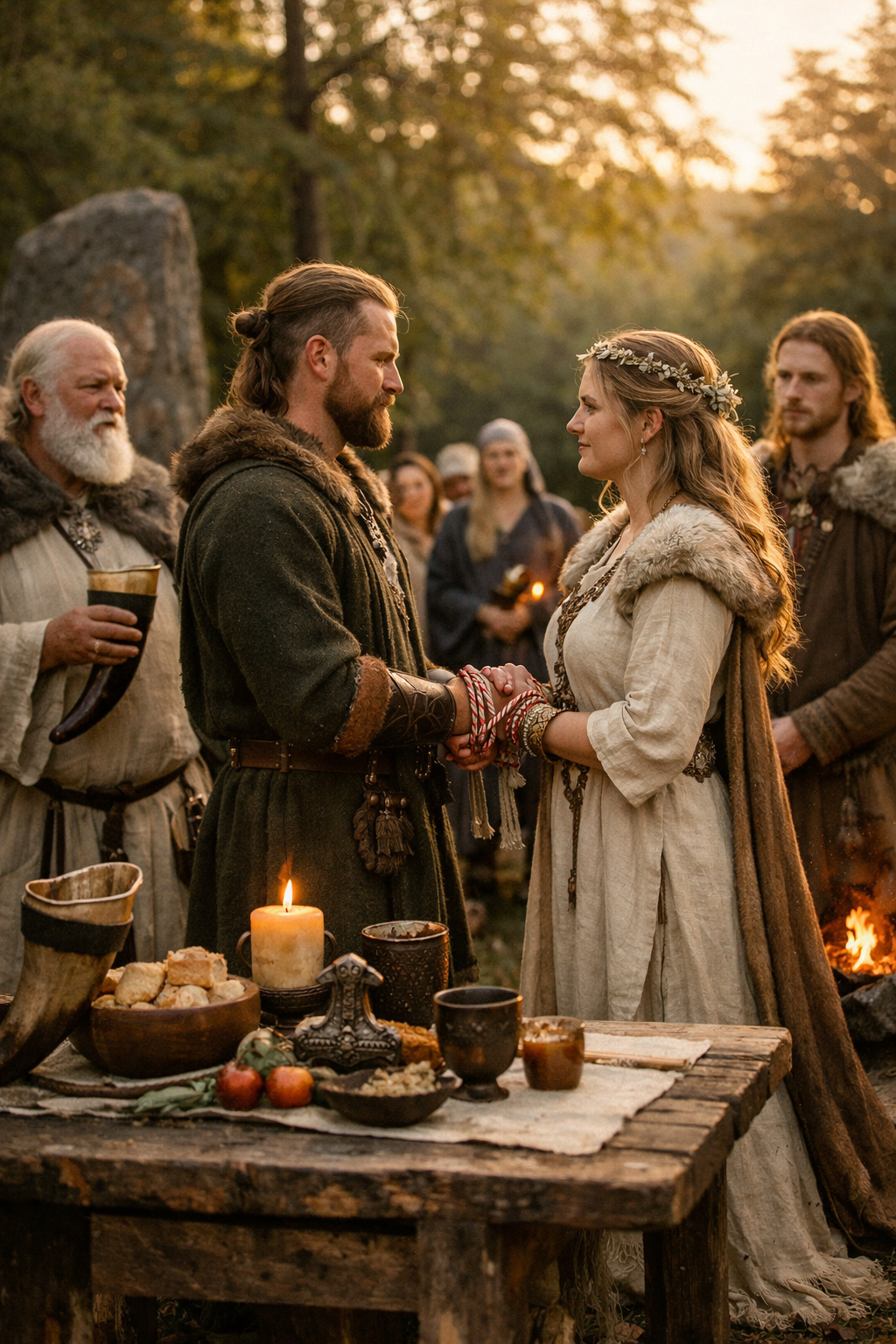
Norse Marriage: History, Rituals, and Sources
Marriage in the Norse world was more than a romantic union. It was a formal agreement between families that shaped alliances, property, and social peace. By looking at saga literature, law codes, and archaeological evidence, we can understand how Viking Age marriages were arranged, celebrated, and recognised within the community.
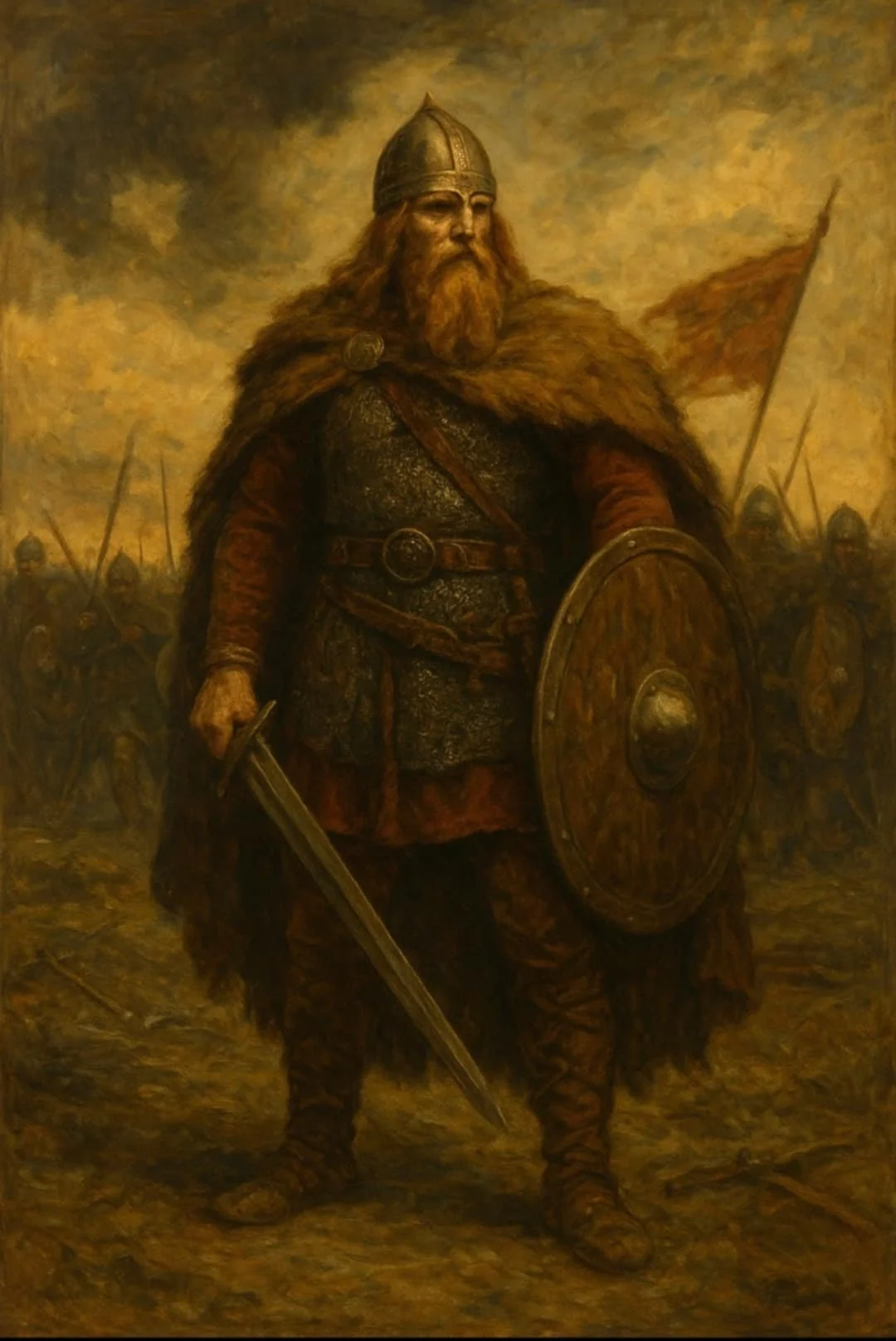
The Danelaw: The Shadow Kingdom
The Danelaw was more than a conquered territory—it was a crucible in which two worlds collided and transformed each other. From the first terrifying raids on monasteries to the rise of Viking kingdoms in Northumbria and East Anglia, the arrival of the Great Heathen Army reshaped the destiny of England. Battles burned across the landscape, law and belief systems merged, cities flourished under Norse rule, and a hybrid culture emerged that would help form the foundation of the English nation. This is the story of conquest and coexistence, of fire and law, of warriors, settlers, kings, and the enduring shadow they left behind.

Haunted North: The Norse Understanding of Ghosts and the Supernatural
The Viking Age world was alive with unseen forces. To the Norse, the dead did not simply vanish into a distant afterlife - they lingered, walked, warned and sometimes rose again in flesh and fury. Ghosts could be physical revenants, dream visitors, protective ancestors or restless spirits tied to land and lineage. Alongside them lived trolls, wights, elves and other beings who shaped daily life as surely as storms or seasons. Drawing on sagas, Eddic poems and later Scandinavian folklore, this exploration reveals a world where the boundary between living and dead was thin, fate was ever present, and the unseen was woven into the fabric of existence.
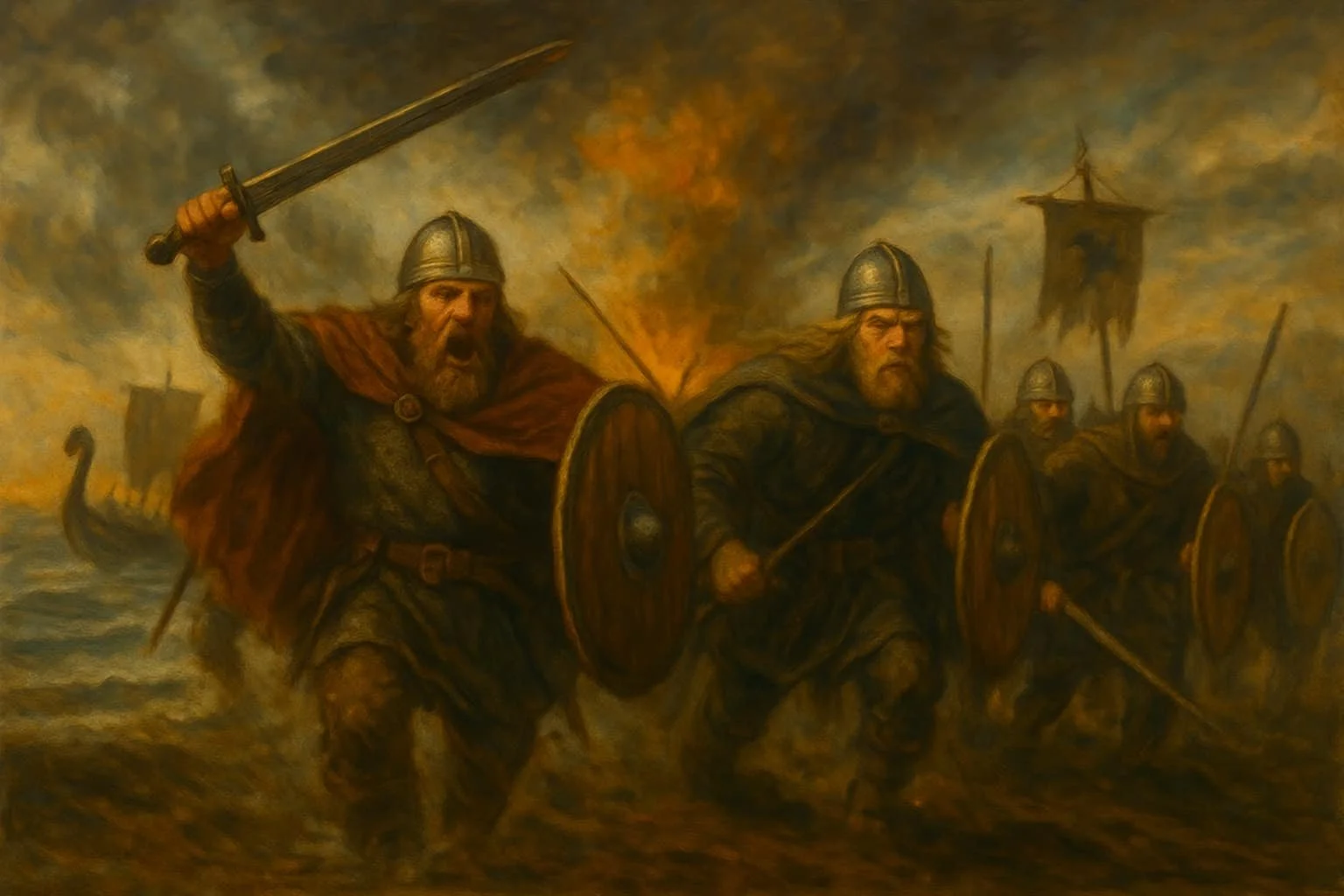
The Great Heathen Army: The Storm of the North
In 865 AD, the seas delivered not a raid but a reckoning. The Great Heathen Army (jarls and war-bands from Denmark, Norway, and Sweden) came to Britain with vengeance, conquest, and settlement in mind. Led in saga and song by the sons of Ragnar Lothbrok (Ívarr hinn Beinlausi, Halfdan, and Ubba) the host shattered kingdoms, captured York, carved the Danelaw, and forced Alfred of Wessex to forge unity from ruin. Shield walls crashed, wedges split ranks, and longships turned rivers into roads. From Repton’s graves to Jórvík’s markets, conquest hardened into culture: Old Norse mingled with Old English; law, language, and place-names took root. The storm met its check at Edington, where Guthrum bent to baptism and a new border was drawn. Yet the legacy endured (coins, courts, and words in the tongue) evidence that the invasion remade the island. This is the story of a tempest that did not just ravage England - it helped create it.

Erik the Red: The Outlaw Who Forged a World from Exile
In the old North, where fire met ice and exile was often a death sentence, one man turned banishment into legend. Erik the Red, the fierce and fiery outlaw, was cast out of every land he called home - yet he built one of his own. From Norway to Iceland and finally to Greenland, Erik’s fury became his fire, his exile became his forge, and from both he created a world that would outlast his name.
His story is not only one of discovery and defiance, but of vision, endurance, and the unbreakable will of a man who refused to kneel before fate. In his saga lies a timeless truth — that even in exile, the spirit of creation burns brightest.

About: Oaths and Oathing in Norse Tradition
In the world of the Norse, words held power — none more so than the oath. Sworn before gods, ancestors, and community, an oath bound a person’s honour to fate itself. To keep one strengthened reputation and divine favour; to break one invited ruin, shame, and the wrath of the gods. This in-depth guide explores the history of Norse oathing, from temple rings and sumbel feasts to the laws of the thing and the lessons preserved in the sagas. Discover how sacred speech once shaped lives — and why it still matters for modern heathens today.
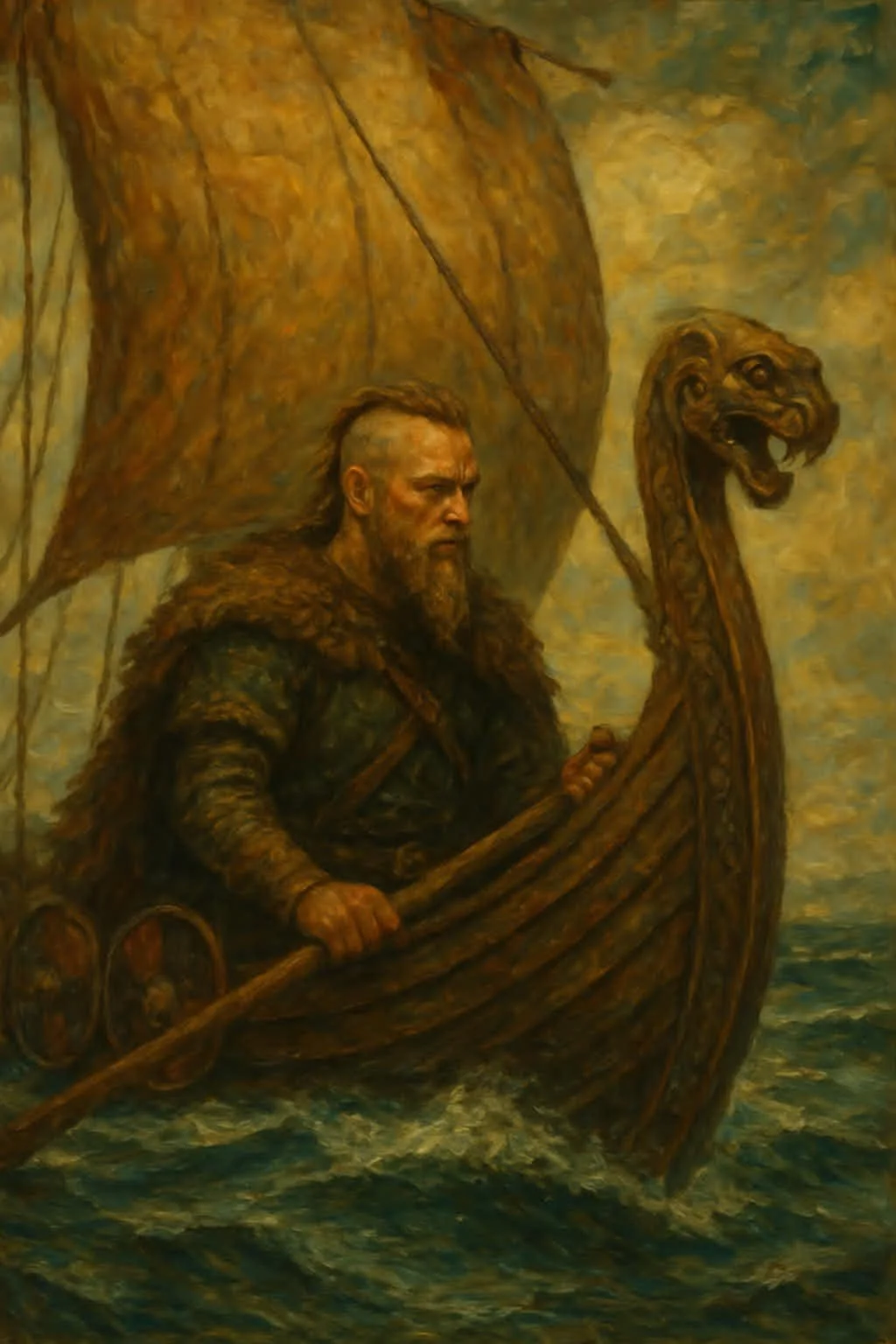
Ragnar Lothbrok: The Viking Who Became Legend
Ragnar Lothbrok, the Viking who became legend, straddles the line between history and myth. Feared raider, cunning strategist, lover of shieldmaidens, and the man who laughed in a pit of serpents — Ragnar’s story is as much saga as it is legacy. His sons carried his name across Europe, but it is Ragnar’s fearless defiance of fate that keeps his legend alive today. Was he a real man, or a myth made flesh?

Ivar the Boneless – Defiance Carved in Flesh
Born with a body too fragile for war, yet remembered as one of the fiercest Viking leaders in history, Ivar the Boneless defied every limitation. Carried into battle where others marched, he commanded armies, toppled kings, and carved a legacy of fear and brilliance that reshaped the Viking Age. His story, caught between legend and history, is a reminder that true strength lies not in bone and muscle, but in unbreakable will.

The Great Lacuna - The missing texts of the Poetic Edda
The Codex Regius is the single most important manuscript of Norse mythology—but it carries a haunting mystery at its core. Eight leaves are missing from its heroic section, a gap known as the Great Lacuna. This loss strikes at the very heart of the Sigurðr–Brynhildr tragedy, erasing the poetic account of love, betrayal, and death that once stood alongside the greatest epics of world literature. What remains are fragments and echoes: prose sagas, later German adaptations, and the faint outlines of poems now gone. This blog explores what was lost, what scholars believe the lacuna once contained, and why it matters so deeply for our understanding of the medieval Norse imagination.
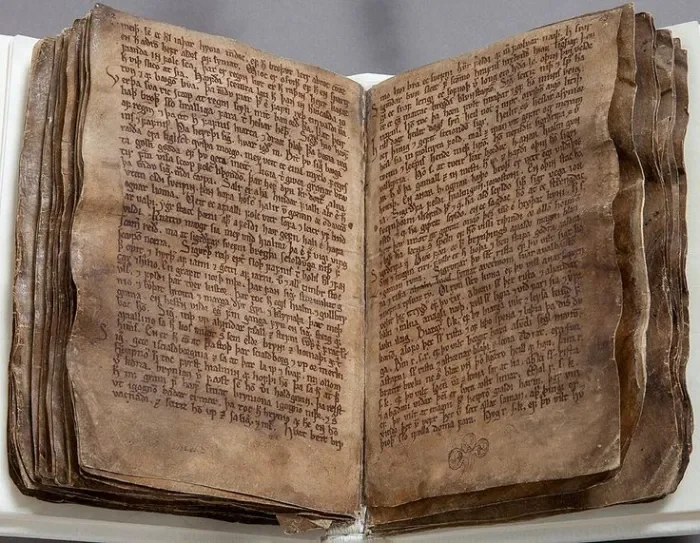
The Codex Regius - Poetic Edda
The Codex Regius is more than a medieval manuscript—it is the beating heart of Norse mythology. Written in Iceland around 1270, this fragile book preserves the Poetic Edda, the only complete collection of ancient mythological and heroic poems that tell of Odin’s wisdom, Thor’s hammer, Sigurd the dragon-slayer, and the doom of Ragnarök. Lost for centuries and rediscovered in 1643, the Codex travelled to Denmark and was only returned to Iceland in 1971, where it is now celebrated as a national treasure. Without it, much of what we know about the Viking Age worldview and early Icelandic heritage would have vanished forever.

The Evolution of Norse Paganism
Before the Viking Age shaped what we now call Norse Paganism, there were countless generations of belief systems that came before it—stretching back through the Proto-Germanic tribes and even further to the Proto-Indo-European peoples of the ancient steppe. These were not isolated traditions but part of a long evolution, where gods were known by different names, rituals were carried out in forests and stone circles, and myths were passed orally for millennia before ever being written down.
This journey through time is not simple; it often raises more questions than answers. Why do we find the Elder Futhark runes in our practice when the Vikings used the Younger Futhark? Why do Indo-European, Proto-Germanic, and Norse myths seem so entangled, as if overlapping across centuries?
The deeper truth is that the gods have always been with us. Their names may shift, their stories may adapt, and the cultures that honoured them may rise and fall—but the essence of the divine has never disappeared. What matters most is not rigid historical accuracy, but the living connection we foster with our gods and ancestors today.