
Goði & Gyðja - Norse Priests, Leaders and Keepers of the Old Ways
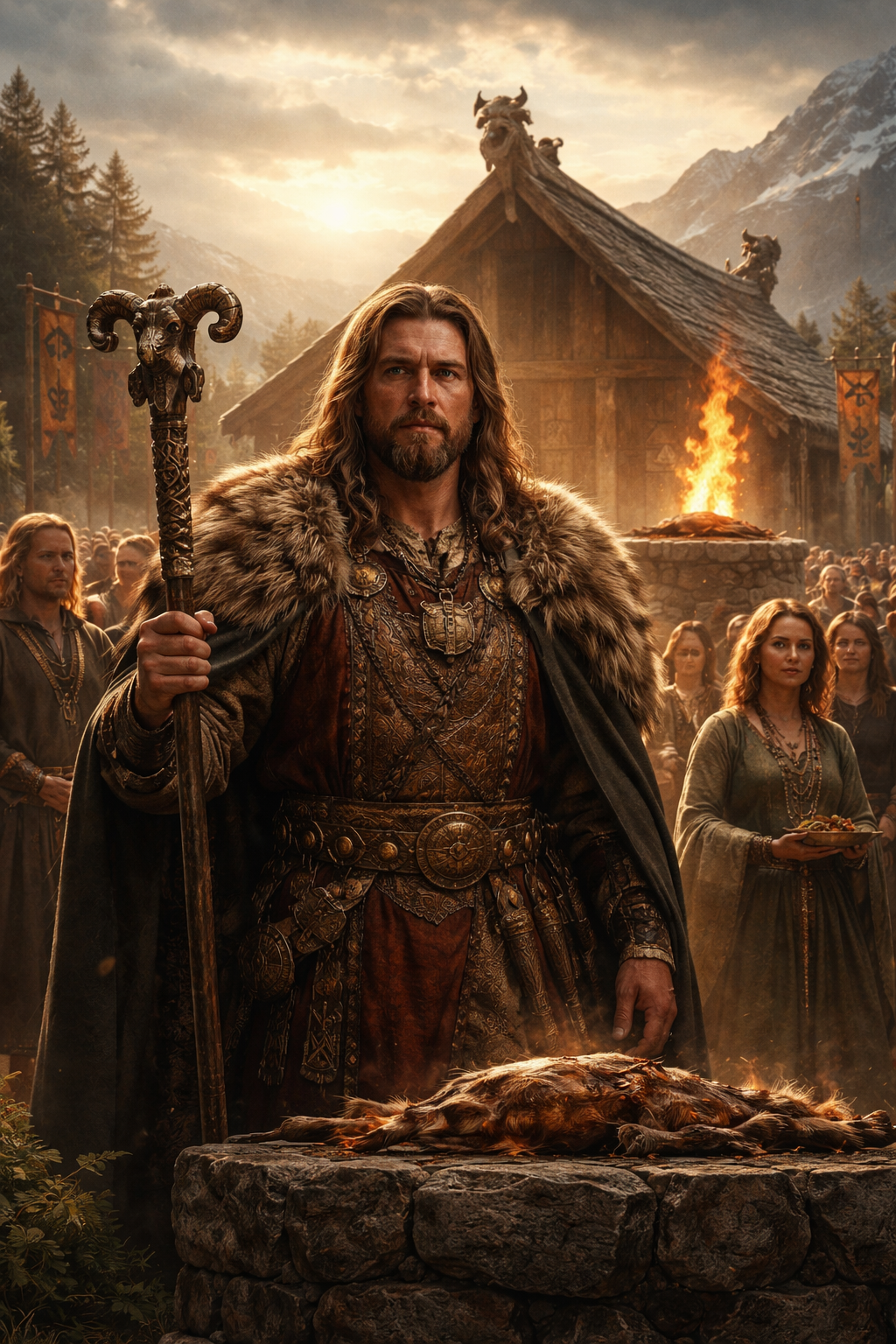
When people think of Norse religion, they often picture thunderous gods, sacred groves, rune-carved stones and firelit feasts. Yet behind those scenes stood real people who guided the spiritual and social life of their communities. These were the goðar (singular goði, feminine gyðja) - figures who acted not only as priests, but also as leaders, mediators and keepers of tradition. They were not cloistered clergy or distant holy men. They lived among their people, owned farms, settled disputes, traded, led rituals and held influence through respect rather than divine appointment.
In the ‘Viking Age’, religion was not separate from daily life. Worship happened alongside farming, lawmaking and feasting. A goði was the person who wove those threads together. They might lead a blót at midwinter, then settle a land argument the next week and stand at the Alþingi that summer to speak on behalf of their people. Their power was measured in followers, alliances and reputation, not in sacred rank alone. They were spiritual guides, but also political figures - something closer to a chieftain priest than the priests we imagine today.
What makes the goði especially fascinating is how different their role was from organised religion as we think of it now. There was no central church, no written doctrine, no single authority. Each community had its own customs, its own local sacred places, its own way of honouring the gods. The goði stood at the heart of that world, a bridge between people and the divine, but also between law and land. Their authority was earned, maintained through generosity, leadership and social ties. People could even shift their allegiance to another goði if they felt one served them better. Spiritual leadership was something lived, not simply claimed.
Much of what we know about them survives through Icelandic sources - the Íslendingabók, Landnámabók, the sagas and occasional hints within the Eddas. These texts show goðar negotiating peace, calling assemblies, performing sacrifices and acting as pivotal figures in community life. While the Eddas focus more on gods than clergy, the sagas place the goði firmly within the day to day workings of society. They appear in stories not as distant holy men, but as neighbours, rivals, hosts and decision makers. Human beings with responsibilities both practical and sacred.
The story of the goði is therefore not only about religion, but about how the Norse organised power, faith and community before Christianity reshaped the North. It is a story of decentralised authority, of farms serving as temples, of politics and piety walking hand in hand. It is a glimpse into a world where spirituality was embedded in life itself - in winter feasts, legal debates, land claims and harvest blessings.
In this blog, we will explore who the goðar were, how they lived, the history behind the title, how they appear in surviving texts and how their role changed through Christianisation and into modern heathen practice. We will look at the feminine gyðja, the politics of the goðorð system, and what it meant to lead people in faith and law. By the end, we will see that the goði was not a relic of old myth, but a complex and deeply human figure whose influence shaped the North for centuries.
Etymology and Meaning of the Word
The word goði carries an ancient weight, simple in form but rich in history. In Old Norse, goði is related to goð meaning god, and from the same linguistic root we find words referring to divinity, sacred power and reverence. A goði, then, was not just a leader, but one whose authority was tied directly to the gods themselves. Their role was woven into belief and tradition, not separate from it. They were people who stood at the boundary between community and the divine.
The feminine form gyðja reveals even more. It shares roots with Old English gyden, meaning goddess, which later became giddy in English, originally describing the feeling of being touched by the divine. Language shifts across centuries, but through these changes we glimpse how closely spiritual authority and godly presence were once linked. To name someone a gyðja was to acknowledge her as a sacred woman, a vessel of honour, intuition and ceremony.
The word goðorð (the office or chieftainship held by a goði) is formed from goð and orð, meaning word or authority. Within the term sits the idea of speaking for the gods, or more practically, acting as a representative of sacred and legal power. A goðorð was not a physical territory but a web of alliances, followers and obligations. It could be bought, inherited or gifted, and people could shift allegiance to another goði if they wished. Even in language, we see that leadership was based on voice, reputation and trust rather than land ownership alone.
Unlike modern religious titles, goði does not imply a priest who withdraws from society to serve the divine. Instead, it points to someone who lived within daily life, mediating between law, land and sacred tradition. They did not belong to a church, but to a community. Their power was social as much as spiritual. The etymology shows us that this was a role tied to the gods, but rooted firmly in people.
It is also telling that the word survived for centuries beyond pre-Christian religion. In Iceland, even after conversion, goði continued as a secular title for some time, showing how deeply embedded it was in social structure. Language remembers what culture values, and the survival of the word reflects how central the goði once was.
To understand the term is to understand the role. A goði was a speaker of the sacred, a custodian of tradition, and a leader whose authority came through both faith and responsibility. The word holds all of that within it, quiet but enduring, like an echo from a time when gods were close and community was everything.
The Historical Role of a Goði in Norse Society
In the Viking Age, the role of the goði cannot be separated from everyday life. There was no clear divide between religious, legal, and social authority. A goði stood at the centre of all three. Rather than serving as a priest in the modern sense, the goði functioned as a chieftain with sacred responsibility, guiding both the spiritual and practical affairs of their people.
Goðar were typically wealthy landowners whose authority rested on networks of loyalty. Farmers, craftsmen and families aligned themselves with a particular goði, becoming his or her thingmen. In return for support, protection and representation, these followers offered allegiance and assistance. This relationship was not based on blood alone. People could choose which goði to follow, and they could leave if they felt poorly served. Leadership was therefore maintained through generosity, fairness and reputation rather than divine right.
Religiously, the goði was responsible for organising and leading blót, the communal sacrifices that marked seasonal change, prosperity, and crisis. These rituals were often held at a hof or at the goði’s own farm, reinforcing the idea that sacred space was woven into daily life. The goði ensured that the gods were honoured correctly, that offerings were shared, and that feasting followed in proper order. Religion was communal, public and grounded in place.
Legally, the goði acted as a representative at local assemblies and at the Alþingi, the Icelandic national assembly. There, they spoke on behalf of their followers, negotiated settlements, supported legal claims and helped maintain social order. The law was sacred in Norse culture, not because it came from a god, but because it preserved balance. A goði was expected to understand the law deeply and use it wisely. Poor judgement could lead to feuds or loss of support.
Socially, the goði was a mediator. They arranged marriages, settled disputes, hosted feasts and maintained alliances. Hospitality was a key measure of status. A successful goði was expected to feed many mouths, open their hall generously and ensure that guests left with stories worth retelling. Through these acts, loyalty was built and power sustained.
What makes the goði especially notable is that this authority was earned and maintained, not imposed. There was no central religious institution enforcing doctrine. Each community functioned through mutual obligation. The goði was powerful only as long as people believed in their leadership. This created a fluid system where influence shifted naturally, reflecting success or failure.
The historical goði was therefore not merely a religious figure, nor simply a political leader. They were both at once, embodying a world where belief, law and survival were inseparable. To understand Norse society, one must understand the goði - not as a priest apart from life, but as a living thread binding gods, land and people together.
Goðar in the Sagas, Eddas, and Historical Texts
Our understanding of the goði comes not from religious manuals or theological writings, but from stories, laws and historical records that reflect everyday life in the Norse world. The surviving sources do not describe the role in abstract terms. Instead, they show goðar acting, negotiating, hosting, sacrificing and judging. Through these glimpses, a clear picture emerges of who they were and how they functioned within society.
The Íslendingasögur (Sagas of Icelanders) provide the richest material. In these narratives, goðar appear frequently as central figures in disputes, alliances and community affairs. They are shown organising feasts, leading sacrifices, settling conflicts and representing people in legal matters. In Njáls saga, Eyrbyggja saga, Laxdæla saga and Egil’s saga, goðar are not distant holy figures but active participants in the drama of human life. They make mistakes, form rivalries, seek vengeance or reconciliation, and sometimes fall from power. Their authority is practical and social rather than mystical.
Eyrbyggja saga is particularly valuable, as it gives detailed insight into religious life before Christianisation. It describes hof buildings, ritual feasts and the responsibilities of a goði in maintaining sacred space. In this saga, religious leadership is inseparable from land ownership and local influence. The goði is responsible for both honouring the gods and maintaining order among people.
The Landnámabók (Book of Settlements) offers a more historical perspective. It records the early settlement of Iceland and names many goðar among the first settlers. These individuals are often described in terms of lineage, land claims and leadership rather than religious doctrine. This reinforces the idea that being a goði was as much about social authority as spiritual duty. The text shows how goðorð were established, inherited and transferred, shaping Iceland’s unique political structure.
The Íslendingabók (Book of Icelanders) gives further context, particularly regarding law and governance. It explains how Iceland was organised into goðorð and how goðar functioned within the legal system. Although written after Christianisation, it preserves crucial information about how authority operated before conversion.
In contrast, the Poetic Edda and Prose Edda say very little about goðar directly. This is not because the role was unimportant, but because the Eddas focus on the gods themselves rather than human religious offices. However, ritual practices described in the Eddas, such as blót, sacred feasts, oaths and consecration of spaces, align closely with what we see goðar performing in the sagas. The absence of formal priesthood in these texts supports the understanding that Norse religion was decentralised and community based.
Law codes also provide valuable evidence. Regulations concerning ritual behaviour, sacred spaces and public conduct imply the presence of figures responsible for overseeing religious observance. The requirement to remove dragon headed prows before approaching land, for example, reflects a system in which religious etiquette mattered and was enforced socially, often through local authority figures like goðar.
The Goðorð System - Power, Politics, and Leadership
One of the most distinctive features of pre Christian Icelandic society was the goðorð system, a structure unlike the kingdoms and church hierarchies found elsewhere in medieval Europe. At its centre stood the goði, whose power was not based on territory or divine appointment, but on relationships, reputation and mutual obligation. Understanding this system is key to understanding how the Norse organised both governance and religion.
A goðorð was the office or authority held by a goði. It did not correspond to a fixed geographical region in the way a modern county or parish might. Instead, it consisted of a network of people who chose to align themselves with a particular goði. These followers, known as thingmen, were free to change their allegiance if they felt another goði better served their interests. This fluidity meant that authority had to be actively maintained through fairness, generosity and competence.
The goði represented their thingmen at local assemblies and at the Alþingi, Iceland’s national assembly. There, goðar debated law, negotiated settlements, supported legal claims and helped shape policy. Because there was no king in Iceland during the Commonwealth period, the goðar collectively formed the backbone of governance. Power was shared, negotiated and constantly balanced, rather than imposed from above.
Goðorð could be inherited, gifted or even sold, which further highlights how authority functioned as a social contract rather than a sacred office alone. While religious responsibility was tied to the role, it was inseparable from political influence. A successful goði was one who could maintain alliances, prevent feuds, and ensure stability for their followers. Failure to do so often resulted in loss of support and eventual decline.
This system also placed limits on abuse of power. Since followers could leave, a goði who ruled harshly or failed to protect their people risked losing authority. Feasting, gift giving and hospitality were not mere displays of wealth but essential tools of leadership. A goði was expected to give as much as they took, reinforcing bonds of loyalty through shared prosperity.
The goðorð system reveals a society that valued consensus over command. Law was spoken aloud, remembered collectively and upheld through participation rather than enforcement. Religious leadership was similarly communal. Rituals were performed for the benefit of the community, not to elevate the goði above it. Authority flowed from service as much as status.
Ritual Duties and Religious Responsibilities
While the goði held legal and political authority, their religious responsibilities remained central to their role. In a world without temples as separate institutions or a professional priesthood, ritual life was woven directly into community and household. The goði was the person responsible for ensuring that the gods were honoured correctly and at the proper times, maintaining balance between people, land and the divine.
The most important ritual duty of a goði was overseeing blót, the communal sacrifices that marked seasonal cycles, major events and times of crisis. These gatherings were not private acts of devotion but public ceremonies involving the whole community. Animals were sacrificed, food and drink were shared, and the favour of the gods was sought for fertility, protection and prosperity. The goði presided over these rites, ensuring that offerings were made properly and that the feast followed accepted custom. Their role was not to intercede spiritually on behalf of others, but to lead the ritual framework within which the community participated.
Blót were often held at hof buildings or at the goði’s own farm, reinforcing the close link between land ownership, hospitality and sacred authority. Sacred spaces were not set apart from daily life. A hall where people ate, slept and argued could also be a ritual site where gods were honoured and oaths sworn. The goði was responsible for maintaining these spaces and ensuring they were treated with respect.
Oath taking was another key responsibility. Oaths carried immense weight in Norse society, binding individuals through honour and reputation. Goðar often oversaw oath swearing during legal proceedings or agreements, sometimes invoking the gods as witnesses. Breaking such oaths was not only a social crime but a spiritual one, risking divine displeasure as well as communal distrust.
The goði also played a role in consecration and blessing. Land might be hallowed before settlement, feasts blessed before eating, or gatherings formally opened through ritual words and gestures. These acts were not elaborate ceremonies but meaningful acknowledgements of sacred presence in everyday life. Religion functioned through repetition and shared understanding rather than strict formula.
Importantly, the goði was not believed to possess supernatural powers by virtue of their office. They were not magicians or prophets. Their authority came from knowledge of custom, correct practice and tradition. Ritual success depended on collective participation and respect for the gods, not on the personal holiness of the goði. This reinforces the idea that Norse religion was communal rather than hierarchical.
Through these duties, the goði ensured continuity. Ritual connected past and present, ancestors and descendants, gods and people. By maintaining tradition, they helped anchor society in a world where survival depended on cooperation and shared belief. Religious leadership was not about control, but about keeping the rhythm of life in balance.
Gyðja - The Role of Women in Norse Priesthood
While much of the surviving material focuses on male goðar, women also held recognised religious authority in the Norse world. The feminine form of the title, gyðja, points clearly to women acting in priestly roles, though their presence is often less visible in the sources. This imbalance reflects the nature of medieval writing rather than the reality of early Norse religious life, where women were deeply involved in ritual, ceremony and sacred tradition.
A gyðja was a woman connected to the gods through responsibility rather than subordination. Like a goði, she could oversee rituals, maintain sacred spaces and play a central role in communal religious life. Some gyðjur appear to have been attached to specific families or estates, particularly where religious authority was inherited. In these cases, priestly duties could pass through both male and female lines, depending on circumstance, lineage and local custom.
The sagas provide indirect but important evidence of women’s ritual authority. In Eyrbyggja saga, women are shown participating prominently in cultic life and sacred feasts. Other saga material describes women responsible for household rituals, blessing food, overseeing seasonal observances and maintaining sacred objects. In a religion where the home and the hall were often the centre of ritual life, this placed women in positions of genuine religious influence.
It is also important to distinguish the gyðja from the völva, though the two roles could overlap. A völva was a seeress and practitioner of seiðr, specialising in prophecy and magic. A gyðja, by contrast, was more closely aligned with communal ritual, tradition and the maintenance of practice. While a völva might travel between communities offering insight, a gyðja was usually rooted in a particular place, much like a goði.
The presence of gyðjur challenges the idea that Norse religious authority was exclusively male. Women in Norse society held significant social power, particularly within households, inheritance and kinship networks. Religious leadership reflected this reality. Spiritual authority was not limited by gender, but shaped by status, knowledge and trust.
After Christianisation, female religious authority declined sharply, as church structures excluded women from priestly roles. This has influenced how earlier traditions were recorded and remembered. Even so, the linguistic survival of the word gyðja stands as strong evidence that women once held recognised positions as religious leaders within Norse paganism.
Christianisation and the Changing Fate of the Goðar
The conversion of Iceland to Christianity around the year 1000 CE marked a profound shift in religious life, but it did not happen through sudden violence or mass destruction of old traditions. Instead, it was a negotiated transition, shaped largely by the same goðar who had once upheld pagan practice. This moment reveals just how deeply embedded the goðar were in both religious and political structures.
At the Alþingi, the decision to adopt Christianity was made as a matter of law rather than conquest. According to Íslendingabók, the law speaker Þorgeirr Ljósvetningagoði played a key role, spending a day and night under a cloak before announcing that Iceland would convert as a unified people. This act itself reflects the authority of the goði. He was not only a religious figure, but a legal one, trusted to decide matters that would shape the future of the land.
Following conversion, the role of the goði began to change rather than vanish. Many retained their political power and social influence, while their religious responsibilities were gradually absorbed into the emerging Christian structure. In some cases, goðar became church patrons or local overseers of new Christian institutions. Old hof sites were sometimes converted into churches, preserving sacred continuity while shifting theological focus.
The title goði continued to be used in a secular sense for some time, referring to chieftainship rather than priesthood. This transition highlights how the role had never been purely religious to begin with. Because the goði’s authority was rooted in land ownership, alliances and legal power, conversion did not immediately strip them of influence. Instead, religious leadership moved toward the church, while political leadership remained local and aristocratic.
Not all goðar embraced Christianity willingly. Some resisted, while others converted pragmatically, recognising the growing influence of Christian kings in Norway and the political advantages of alignment. Old practices persisted quietly alongside new beliefs. For a time, pagan rituals were tolerated in private and many people likely honoured both gods and Christ during the transitional period.
The decline of the goði as a religious figure was gradual. Over generations, Christian priests replaced them in ritual leadership and the old gods were pushed to the margins of recorded history. Yet traces of the old system remained in law, language and folklore. The memory of the goði survived not as a priest of a lost religion, but as a symbol of local authority and communal leadership.
Modern Revival of Goði and Gyðja in Heathenry Today
In the modern revival of Norse paganism and Heathenry, the titles goði and gyðja have been reclaimed, though their meaning and function differ from their historical origins. Today, these roles are not tied to land ownership, political authority or legal power, but to community leadership, ritual responsibility and ethical guidance. The revival is conscious and reflective, shaped by both historical study and modern needs.
In contemporary Heathen communities, a goði or gyðja typically serves as a ritual leader and organiser. They may lead blót, seasonal celebrations, rites of passage and communal gatherings. Unlike their ‘Viking Age’ counterparts, they do not wield authority through followers or wealth. Instead, leadership is usually voluntary and based on trust, experience and service. Communities often choose or recognise their ritual leaders rather than inheriting them through lineage.
Modern practitioners are generally careful to distinguish between historical accuracy and modern adaptation. While inspiration is drawn from saga material, archaeology and scholarship, most acknowledge that the exact structures of the past cannot be recreated. The modern goði or gyðja is therefore best understood as a facilitator rather than a ruler - someone who holds space for ritual, teaches tradition and helps maintain communal cohesion.
Clans and Heathen kindreds often define the role clearly to avoid misuse of authority. Ethical leadership, consent, transparency and accountability are emphasised. This reflects an awareness that historical power structures existed within a very different social context and that modern spiritual leadership must operate responsibly in today’s world.
Importantly, modern goðar and gyðjur do not claim to speak for the gods in an absolute sense. They guide ritual practice, but individual relationships with the divine remain personal. This echoes historical Norse belief, where religion was participatory rather than dogmatic.
The revival of these titles reflects a desire to reconnect with ancestral ways of organising spirituality - grounded in community, land and shared tradition rather than institutional hierarchy. While the modern role is different from its historical predecessor, the core values remain recognisable: service, responsibility, hospitality and respect for the sacred.
eadership, Faith and Legacy
The goði was never simply a priest, nor merely a chieftain. They were a product of a world where faith, law, land and community were inseparable. Through ritual, mediation and leadership, the goðar helped hold society together, guiding people through seasons of feast and famine, peace and conflict. Their authority was not enforced by doctrine or divine command, but earned through trust, generosity and responsibility.
What survives in the sagas and historical texts is not a rigid religious office, but a flexible role shaped by circumstance. Goðar adapted to the needs of their communities, balancing sacred duty with political reality. They led sacrifices, spoke law, hosted feasts and negotiated alliances. Their power rested not in isolation from the people, but in relationship with them. When those relationships failed, so did their authority.
The transition to Christianity did not erase the importance of the goði overnight. Instead, it transformed the role, stripping away ritual responsibility while preserving social influence. This shift reveals how deeply embedded the goðar were in Icelandic society. Even as religious structures changed, the need for local leadership, mediation and continuity remained.
In the modern world, the revival of the titles goði and gyðja speaks to a desire for grounded, community based spirituality. While contemporary practice differs greatly from the ‘Viking Age’, the underlying values remain recognisable. Service, hospitality, ethical leadership and respect for tradition still define what it means to guide others in matters of faith.
The legacy of the goði is therefore not confined to the past. It lives on in the idea that leadership should be accountable, that spirituality belongs in daily life, and that sacred responsibility is carried by people who stand within their communities, not above them.