
Norse Jól (Yule) for Kids: Simple, Family-Friendly Ways to Teach the Old Traditions
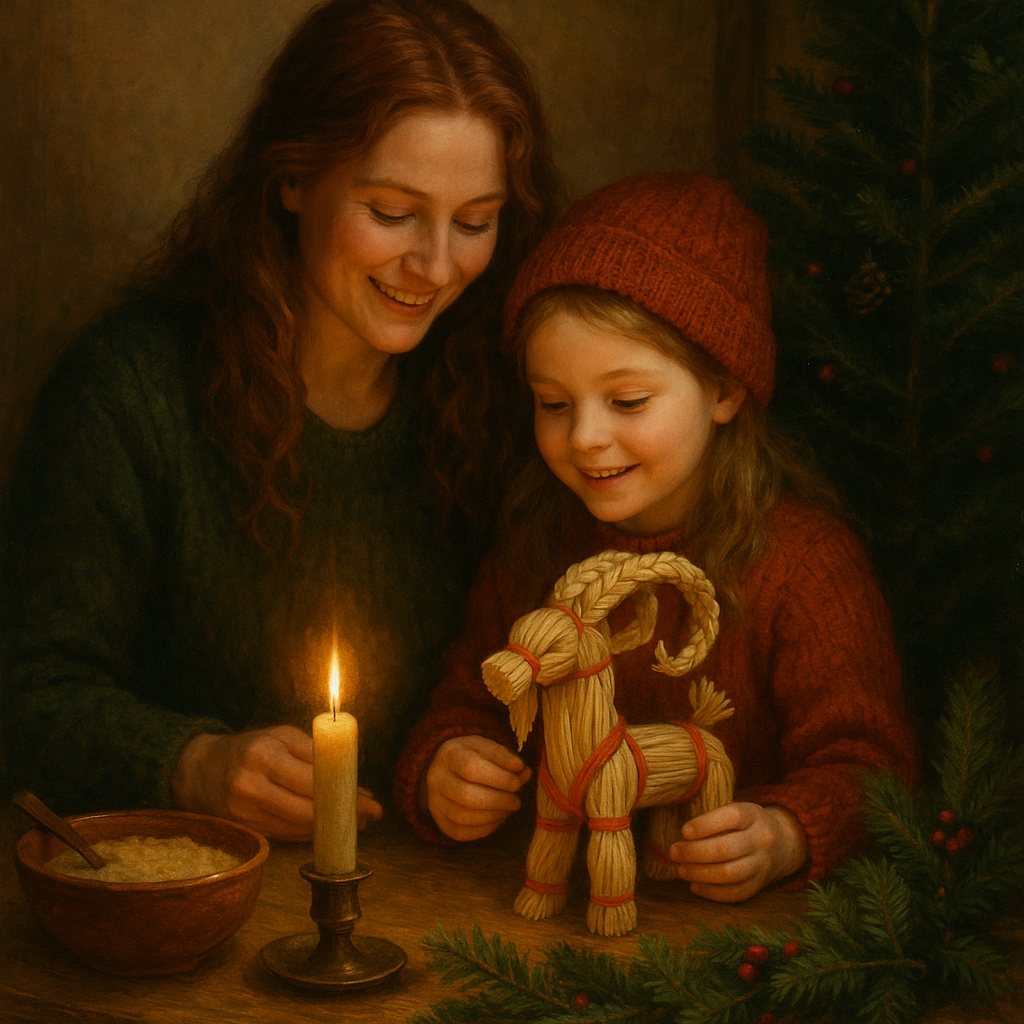
Before we begin, I want to make something very clear: nothing in this guide is historically exact. These activities are not ancient Norse rituals, and I am not claiming that people in the Norse Age did these things with their children. What I am sharing here is simply my own approach as a Norse Pagan and a parent - ideas that help children understand the spirit of Jól in a way that feels natural, gentle, and age-appropriate in a modern home.
I firmly believe that there is great value in teaching children both the historical Norse Jól and the modern Yule we celebrate today. Many families blend old and new traditions, and for children, this is often the most comfortable way to learn. Kids live in a world shaped by Christmas imagery (Santa, decorated trees, school plays, presents on the 25th) and it’s important that they don’t feel left out or confused when surrounded by their peers.
Because of this, I recommend that families with young children celebrate modern Yule alongside the rest of society, while also keeping a separate space for Jól, the older Norse celebration. Yule keeps things familiar and fun for little ones. Jól gives them a deeper connection to Norse Paganism, its stories, its symbols, and its values.
If, when they grow up, they choose to embrace Norse Paganism fully, they will already understand the roots of Jól - and can choose for themselves how they wish to honour it. My aim here is simply to help parents introduce those roots in a way that fits easily into normal family life.
So this guide offers child-friendly activities inspired by Norse culture, folklore, and seasonal symbolism - not reconstructions of ancient rites. They are simple, meaningful, and designed to help children feel included, confident, and connected both to their heritage and to the winter season around them.
What follows is a set of playful, hands-on ideas that blend learning, creativity, and the warmth of the season - a way of keeping Jól alive for the next generation while still honouring the world they’re growing up in.
How to help children understand the differences between Jól and christmas
Teaching children about Jól alongside Christmas can feel difficult at first, especially when the world around them is filled with Christmas lights, Santa decorations, nativity plays and school events. Most children simply see “the winter holidays” as one big season of fun, gifts and magic. This is completely natural. Children learn through stories, repetition and what they see around them every day.
For this reason, the best way to explain the difference between Jól and Christmas is to keep it simple, positive and age-appropriate. Instead of setting one against the other, it helps to show how each tradition has its own story, its own symbols, and its own meaning. Children respond well to the idea that different people celebrate in different ways, and that none of those ways are wrong.
A helpful approach is to begin with what they already know. Most children know that Christmas is connected to Christianity, to the birth of Jesus, and to modern traditions like Santa, presents, and decorated trees. You can explain that Christmas is a celebration many people take part in today, and that it is the holiday they see around them in school, on TV, and in shops during December. This helps them feel grounded and secure in what they already understand.
Then, when you introduce Jól, you can explain that it is something much older. You might say: “Long before Christmas existed, people in the North celebrated the turning of winter and the returning of the sun. They told stories, lit fires, and honoured their gods in their own way. That celebration was called Jól.” Framing Jól as the old winter celebration helps children see it as something special, meaningful and historical, rather than something competing with Christmas.
To avoid confusion, it is often best to keep the two celebrations separate in practice. Children find it easier when Christmas remains the familiar holiday (the one their friends also celebrate) while Jól has its own moments, stories and traditions. This might mean decorating the tree and exchanging gifts on Christmas with the wider family, while keeping Jól for storytelling, crafts, candles, nature walks and simple rituals at home. This allows children to enjoy both without feeling torn between them.
It is also important to reassure children that they are not “missing out” by celebrating Jól. Many parents worry about this, but children are incredibly adaptable when they feel included. If they get to take part in Christmas at school and with extended family, and then have Jól at home as something extra and exciting, they often view it as a “bonus celebration” rather than an alternative. This avoids the feeling of being different or excluded - a common concern for parents raising children in minority religions.
As they grow older, children naturally ask deeper questions. This is when you can gently explain that Christmas has Christian roots, and that Jól comes from old Norse beliefs. You can tell them that some families follow one, some follow the other, and some follow both. The key is to let them know that it is okay for people to have different ways of celebrating the winter season, and that everyone’s traditions deserve respect.
The goal is not to force a religious identity on children, but to provide them with understanding. When parents introduce both celebrations openly and calmly, children learn to respect their own heritage while appreciating the traditions of others. Later in life, if they choose to follow Norse Paganism, they will already understand the historical roots of Jól and can celebrate it fully. If they choose something else, they will still have fond memories of warm winter nights, stories by the hearth, and seasonal traditions that brought the family together.
Helping children understand the differences between Jól and Christmas is ultimately about balance: embracing the world they live in, honouring your own path, and giving them the freedom to explore both with joy. In this way, they grow up seeing Jól not as something strange or separate, but as a natural part of their own story.
What Jól Meant to the Norse (Kid-Friendly Explanation)
When we talk about Jól with children, it helps to explain it in a way that is gentle, simple, and based on what we do know from history. The Norse didn’t celebrate Christmas, and their winter traditions looked very different from the modern world. But the heart of Jól (light, warmth, family, hope, and honour) is something children instantly understand.
Jól was the great winter feast of the old Norse world. It wasn’t fixed to a date like 25 December. Instead, it followed the moon and usually happened in early January, when the nights were longest and coldest. Back then, winter was harsh. There were no electric lights, no radiators, and no shops to buy food whenever you liked. Families had to rely on what they had grown, gathered, and prepared during the year.
This is why Jól was so important. It was a time when everyone came together to share food, warmth, and stories. Children can easily relate to this idea: being together, keeping warm, and enjoying special meals when it’s dark and cold outside.
During Jól, the Norse lit fires, feasted, and told stories about gods, heroes, spirits, and ancestors. Storytelling was the main entertainment of the season. Children would sit close to the hearth and listen to tales of Thor’s adventures, Odin’s travels, and Freyr’s gentle power. These stories helped people feel braver, wiser, and more connected to their world.
Jól was also a time of honour and gratitude. The Norse believed that the world was full of spirits and powers that helped the land grow, protected the home, and guided fate. So during midwinter they gave thanks - through feasting, offerings, and good behaviour. Children often helped by bringing food to the table, decorating the hall, or joining in simple rituals of hospitality.
Another key idea children can understand is that Jól marked a turning point. The Norse watched the sun carefully, and they knew that after the darkest time of year, the light began to return. Even though the nights were still long, they could see the days growing a little brighter. Jól celebrated this hope - the promise that spring would eventually come back.
So when explaining Jól to children, you can use these simple truths:
Jól was about keeping warm together in winter.
It was about sharing food when times were tough.
It was about honouring the gods, spirits, and ancestors.
It was about telling stories that kept courage alive.
It was about celebrating the return of the sun.
It was about being kind, peaceful, and helpful so the household stayed safe and lucky.
These ideas make Jól very real and understandable for kids. They can picture a long winter night, a glowing fire, a cosy hall, and everyone gathered around with food and stories. They can imagine people hoping for the sun’s return, and celebrating the moment when the world begins to brighten again.
By explaining Jól in this way (as a meaningful, hopeful winter celebration) children can learn what it meant to Norse families without needing complex mythology or adult-level history. It gives them a solid foundation to appreciate both the old traditions and the modern ones you choose to practise today.
Why Modern Yule Works Well for Children
While historical Jól has its own beauty and depth, modern Yule traditions often work far better for children - especially children growing up in a world shaped by Christmas imagery, school activities, and the general atmosphere of the season. Many parents who follow Norse Paganism choose to weave modern Yule into their wintertime celebrations because it gives children something familiar, joyful, and socially shared, without losing the heart of the older traditions.
Modern Yule mirrors the rhythm that most children see around them. Their schools do winter plays, towns put up lights, neighbours decorate trees, and their friends talk excitedly about presents, Santa, and holiday fun. Completely removing a child from this environment can make them feel isolated or “different,” even if the intention is positive. Yule gives families a way to participate in the season without needing to follow Christian beliefs, allowing children to join in the magic, warmth, and excitement that their peers enjoy.
It also provides a simple, child-friendly framework. Modern Yule traditions (lights, baking, tree decorating, cosy evenings, gifts, crafts) line up beautifully with what children naturally enjoy. These activities are creative, sensory, and joyful, which makes them perfect stepping stones for teaching deeper ideas gently. Instead of trying to explain complex Norse cosmology, you can teach children values such as generosity, warmth, kindness, honour, and gratitude through everyday Yule traditions they already recognise.
Modern Yule also helps create balance. Children can enjoy fun, festive traditions without the historical weight of ancient rituals they may not yet understand. This approach avoids overwhelming them or turning spirituality into something too serious too early. It keeps wintertime lively and magical while saving the more cultural, historical, or spiritual elements of Jól for a calmer, separate time.
Another benefit is flexibility. Yule can be adapted to any family, any home, and any personal practice. It doesn’t demand strict dates, complicated rites, or historical accuracy. Instead, it focuses on seasonal themes that are easy for kids to grasp: light returning after darkness, warmth in winter, giving and receiving, celebrating life at the coldest time of year. This makes it easy to build happy, meaningful memories without pressure.
Most importantly, modern Yule gives children a sense of belonging. They can enjoy winter celebrations alongside their friends without feeling out of place, while still growing up with Norse practices in the background. When they get older, they can choose whether Norse Paganism is right for them. By keeping Yule fun and familiar, and Jól honest and cultural, you give them both roots and freedom.
In this way, modern Yule doesn’t replace historical Jól. It supports it. It holds space for children to enjoy the season in a way that feels safe, joyful, and connected, while you gently teach them the old stories and values in age-appropriate ways. It allows families to honour their path without making children feel separate from the world around them - the best of both traditions, working together.
How to Celebrate Both: Jól and Modern Yule Together
Blending modern Yule with historical Jól is not only possible - it can create a beautiful, rich winter season for children. Many Norse Pagan parents choose to celebrate both because each tradition offers something valuable. Yule brings familiarity, fun, and social connection, while Jól offers cultural depth, heritage, and a chance to teach children about the old northern ways in a gentle, meaningful manner. When these two winter celebrations sit side by side, children can enjoy the magic of the season without feeling confused or left out, while still being rooted in your family’s spiritual path.
The key is to treat Yule and Jól as two parts of the same winter journey, but not as the same holiday. Yule can follow the modern calendar, giving children the excitement and structure they recognise from friends and school: lights, crafts, a decorated tree, cosy evenings, gift-giving, baking, and the warmth of home. It keeps them included in the broader cultural atmosphere that surrounds them through December. Instead of standing apart from the world, they can participate with confidence - knowing that their family also holds something special and unique.
Jól, on the other hand, can be celebrated separately, following its own rhythm. Because historical Jól was tied to the moon rather than fixed dates, it naturally feels different. When practised alongside Yule, it becomes a quieter, more meaningful set of days - something the family shares privately, without the pressure or busyness of December. Children can learn that Jól is not about presents or decorations but about storytelling, honour, kindness, and understanding how people in the North once faced winter.
Celebrating both can be very simple. You might enjoy modern Yule traditions throughout December and early winter, filling your home with lights and crafts. Then, when the full moon after the solstice arrives, you can gently shift into Jól. This could include a small family meal, storytelling by candlelight, lighting a single flame for the returning sun, or doing child-friendly versions of ancient practices such as leaving a treat for the house spirit or making a straw goat. This separation helps children understand the difference: Yule is the festive winter season everyone knows, while Jól is your family’s cultural and spiritual tradition, carried with care.
Pairing these two celebrations also helps reduce pressure. Children can enjoy the excitement and social aspect of Yule without the responsibility of deeply understanding historical rituals at a young age. Meanwhile, Jól gives parents a chance to share heritage in a peaceful, age-appropriate way. It becomes a time for learning, bonding, and reflection rather than entertainment or comparison with others.
As children grow older, they naturally begin to understand the distinction. They see that Yule is fun and familiar, while Jól carries the values, stories, and spirit of Norse Paganism. This allows them to eventually choose their own path without feeling forced into anything too early. If they decide as adults that Norse Paganism is part of who they are, they will already have a foundation built from childhood - not of rituals they did not understand, but of warmth, stories, and meaningful traditions shared with their family.
By celebrating both, you create a winter season that honours your faith, respects your children’s needs, and allows them to feel connected - to their peers, their community, and their heritage. Yule brings the fun; Jól brings the meaning. Together, they give your child a winter filled with excitement, understanding, and love.
Jól for Kids: Simple, Authentic, Gentle Activities
Teaching children about Jól does not need to be complicated or heavy. In fact, the original celebrations were rooted in simple winter customs that children naturally understand: stories, warmth, craft, food, and the wonder of the returning sun. The activities below are designed to be easy, low-pressure, and historically inspired, without trying to recreate ancient rituals in a strict or overwhelming way. They help children feel connected to the old northern spirit of Jól while keeping everything safe, gentle, and age-appropriate.
These activities are also flexible. You can include one, a few, or all of them. You can do them during modern Yule, during historical Jól, or spread them across the winter season. What matters is that children enjoy the experience and begin to recognise the themes of Norse winter life: courage, kindness, light, warmth, and family.
Here are the core activities, explained in a child-friendly way:
1. Hearth Storytelling -
Storytelling was the heart of Jól in the Norse world. Children sat by the fire and listened to tales that made them feel safe, brave, and connected. You can do the same by dimming the lights, lighting a candle (safely), and telling simple stories such as:
Thor travelling with his goats
Freyr and his golden bristled boar
Odin wandering through winter in disguise
Little tales of trolls, elves (álfar), or winter spirits
For children, these stories become memories they carry for life - warm, cosy moments that teach courage, kindness, and imagination. Storytelling also gently introduces them to Norse mythology without overwhelming detail.
2. Make Straw Goats (Jólgeitr) -
The Yule Goat is one of the oldest Scandinavian folklore winter symbols and is linked with Thor. Traditionally it was made of straw and kept in the home for protection and luck. Children can easily make their own using:
straw or hay
twigs
pipe cleaners
rolled paper
wool or string
It doesn’t have to be perfect - the fun is in the making. These little straw goats help children learn that Jól was full of symbols connected to strength, protection, and winter survival.
3. Bake Yule Shapes -
Baking was part of every winter household in the Norse world. You can turn this into a fun learning moment by letting children shape dough into:
suns (for the returning light)
goats (for Thor)
boars (for Freyr)
simple circles or spirals
This activity blends creativity with tradition. As children shape the dough, you can explain what the symbols meant to ancient families and how they brought hope during the darkest part of the year.
4. Leave a Treat for the House Spirit -
In Norse culture, every home had a húsvættir - a house spirit that protected the household. Leaving a small dish of:
porridge
butter
bread
is a very gentle way to teach children about respect, gratitude, and hospitality.
You can say something simple like, “We leave this as a thank you for the spirit that keeps our home safe.” It’s a lovely way to help children learn that kindness and giving back are important parts of Jól.
5. Evergreen Gathering and Decorating -
Evergreens were seen as symbols of life and hope during the dead of winter. Taking children outside to gather:
pine
fir
juniper
connects them to nature in the same way northern families once were.
Let them help place the evergreens around your home. You can explain that people long ago used evergreens to remind themselves that spring would return, even when everything else seemed cold and asleep.
6. Light a Candle for the Returning Sun -
One of the simplest and most meaningful activities: on the morning after the longest night, light a small candle or lantern. Tell children, “This is to welcome back the sun.” You can explain that the Norse watched the light return with such hope, and the candle is a sign of brighter days ahead.
This is a gentle, age-appropriate way to teach the symbolism of midwinter without turning it into ritual.
7. Play Winter Games Indoors -
Norse children played games all winter long, especially when the weather was too harsh to go outside. Try:
riddles
memory games
simple dice games
tale-telling challenges
a very basic tafl-style board game
These games mirror how families in the North entertained themselves with laughter and imagination when daylight was short.
8. Make Simple Yule Charms -
Charms can be made from sticks, clay, paper, or salt dough. Children can create:
little animal figures
sun wheels
spirals
rune-shaped sticks (used as decorative shapes, not magical tools)
This encourages creativity and connects children to the shapes and symbols found in old carvings and artefacts.
9. A Walk to “Greet the Light” -
Take a short winter walk in the morning during the Jól season and invite children to notice:
the sunrise
long winter shadows
bright stars fading
This helps them understand how important light was in the old northern world. It’s calming, grounding, and helps children connect Jól with nature.
10. Yule Goat Gift Night -
At the end of the Jól period, you can have a small “Yule Goat gift night.” The Yule Goat is an older tradition than Santa, and in Scandinavia it once brought gifts or asked for treats. You can adapt this for children by:
giving a small handmade gift
drawing or colouring goats
leaving a treat for the Yule Goat
It creates a fun, magical finish to Jól without copying Christmas or adding confusion.
---
These activities keep Jól simple, gentle, and joyful for children. They do not require complex rituals or heavy explanations - just stories, crafts, lights, and kindness. Through these small traditions, children learn about the old Norse world in ways they can understand, building memories that feel warm, safe, and meaningful. They grow up with both modern Yule fun and the deeper cultural roots of Jól, giving them the freedom and understanding to choose their own path as they grow older.
Age-Appropriate Tips for Different Ages
Every child engages with Jól and Yule differently depending on their age, attention span, and emotional development. What works beautifully for a teenager will be far too complex for a toddler, and what sparks wonder in a six-year-old might feel childish to an eleven-year-old. These tips help you shape your Jól season so that children of all ages feel included, safe, and connected - without pressure, confusion, or expectations beyond what they’re ready for.
The goal is not to make children “practise Norse Paganism.” The goal is to give them gentle experiences, stories, symbols, and values that introduce the spirit of Jól in a way they can naturally absorb. As they grow older, they will understand more. For now, each age simply needs kindness, warmth, and a little winter magic.
---
Toddlers (1 - 3 years) -
This age group learns through touch, sound, and simple repetition. They don’t need explanations - only experiences.
What works best:
Sensory activities like touching evergreens or playing with soft straw
Short, simple stories with big actions (e.g., “Thor and his goats go jump-jump-jump!”)
Watching a candle being lit from a safe distance
Helping pat dough or shape simple circles
Short winter walks to “see the morning light”
Cuddling up for gentle storytelling
What to avoid:
Anything involving fear, spirits, or complex mythology
Runes or magical symbolism (they won’t understand it yet)
Overly long rituals or detailed explanations
Focus on warmth, safety, and shared moments - this lays a quiet foundation without overwhelming them.
---
Young Children (4 - 7 years) -
This age is ideal for introducing playful elements of Jól. Children are imaginative, curious, and love stories.
What works best:
Simple myths: Thor, Freyr, Odin’s winter wanderings
Making straw goats with help
Yule-shaped baking (goats, suns, spirals)
Leaving porridge for the house spirit (explained kindly as “a little helper of the home”)
Drawing animals or simple symbols
Playing riddles, memory games, or story-improv
A short “welcome the sun” candle moment
They understand the difference between pretend and real, so it’s easier to say things like:
“This is something the Norse people used to do.”
“This is how we celebrate Jól in our family.”
What to avoid:
Heavy historical detail
Complex spiritual concepts
Scary stories involving giants or darker myths
Keep this age filled with fun, creativity, and gentle introduction.
---
Older Children (8 - 11 years) -
Now children start asking real questions and can understand cultural context. This is the perfect age for teaching the difference between modern Yule and historical Jól.
What works best:
Simple historical explanations about Norse life
Longer stories or small saga summaries
Crafting sun wheels, charms, or wooden shapes
Winter walks with light symbolism explained
Talking about values: bravery, kindness, honour, generosity
Tafl-like board games or themed challenges
Helping prepare a Jól meal or decorate with evergreens
They can also begin to understand:
why Jól followed the moon
why some families choose both Jól and Yule
how their ancestors viewed winter
What to avoid:
Pressuring them to “believe” in anything
Deep magical or spiritual practices
Heavy talk about fate, death, or Ragnarök unless they ask
This age is about curiosity, not commitment.
---
Pre-teens and Teens (12+ years) -
Older children can handle deeper conversations about culture, history, and belief systems. They may want to explore their own thoughts or ask philosophical questions.
What works best:
Discussing myths in more detail
Reading episodes from the sagas together
Learning basic historical context about the Norse world
Crafting more advanced items (woodwork, proper straw goats, carved charms)
Participating in a simple Jól Eve reflection or intention-setting
Helping lead storytelling or games for younger siblings
Conversations about identity, choice, and respect for different faiths
They can begin to understand:
the difference between belief and practice
how modern Paganism relates (and doesn’t relate) to historical practices
why your family celebrates Jól separately from Yule
What to avoid:
Forcing spiritual identity
Expecting them to take on adult rituals
Assuming they will follow Norse Paganism when grown
Teens should be encouraged to form their own relationship with the tradition - whether that becomes spiritual, cultural, or simply seasonal.
---
Every age engages with Jól differently, and that’s exactly how it should be. Children don’t need strict rituals or complicated mythology. They need warmth, joy, stories, and space to grow. By adapting Jól to their age and understanding, you give them a beautiful foundation - one that stays rooted in love, culture, and meaningful winter traditions, without pressure or expectation.
This gentle, age-appropriate approach ensures that when they are older, if Norse Paganism calls to them, they will return to it with familiarity and fondness rather than confusion or overwhelm.
Keeping It Safe, Simple, and Non-Dogmatic
When introducing children to Jól, it’s important to keep everything safe, gentle, and free from any pressure to “believe” or “practise” in a specific way. Children learn best through warmth, stories, creativity, and shared experiences - not through formal rituals or strict expectations. The Norse themselves lived a practical, flexible faith, and it makes sense to pass that spirit on to children in the same way: through kindness, curiosity, and a sense of connection.
Keeping Jól non-dogmatic means that nothing is framed as something a child must believe in. Instead, everything is offered as stories from the past, cultural traditions, and ways families once made winter meaningful. This gives children space to enjoy the season without feeling confused or pressured. You can say things like:
“This is something people used to do,” or
“This is one way some families celebrate today.”
This approach teaches respect for the tradition without turning it into something heavy or demanding.
Safety is just as important. Jól historically included fire, sharp tools, deep winter, and sacrifice - none of which are suitable for children. Modern kid-friendly Jól should avoid anything dangerous or frightening. Candles should always be supervised, runes should be used symbolically rather than magically, and any mention of spirits or gods should be gentle, reassuring, and age-appropriate. Jól should feel peaceful and warm, not overwhelming.
It’s also helpful to keep explanations simple. Children don’t need complicated mythology or exact historical reconstructions. They don’t need blót rituals, complex symbolism, or spiritual expectations. Instead, they need stories told at their level, crafts they can make with their own hands, and clear messages about kindness, courage, generosity, and hope. These values are the core of the season, and they stay with children far longer than any ritual detail.
Another important part of keeping things non-dogmatic is allowing space for children’s questions - and their lack of questions. Some will be fascinated by the stories; others will simply enjoy the crafts or baking. Some might want to know every detail about gods and spirits, while others might be more interested in decorating the house or playing winter games. All of these responses are completely valid. Following the child’s lead ensures Jól remains joyful rather than forced.
Finally, it’s important to remember that children grow into their own beliefs. Celebrating Jól with them now doesn’t mean shaping their spiritual identity. Instead, it offers them cultural knowledge, meaningful family traditions, and positive experiences. When they are older, they can decide for themselves whether Norse Paganism speaks to them. Your job now is simply to create a safe, welcoming environment where Jól becomes part of the winter season in a way that feels natural, comforting, and fun.
By keeping Jól safe, simple, and non-dogmatic, you create a winter celebration that children can genuinely enjoy - one rooted in history, carried with warmth, and given without pressure. This approach honours the spirit of the old traditions while protecting the freedom and wellbeing of the child, which is exactly how it should be.
Building Warm, Meaningful Jól Memories
The heart of Jól is not found in perfect rituals, historical precision, or elaborate celebrations. It lives in the small moments families create together - the warmth of a story told by candlelight, the smell of dough in the kitchen, the sound of laughter during winter games, and the gentle sense of belonging that grows when a child feels included in something special. These moments are what children remember long into adulthood, and they form the true legacy of Jól in a modern home.
Building meaningful Jól memories doesn’t require grand gestures. What matters most is consistency, kindness, and the feeling that this time of year holds something a little different - something quieter and more thoughtful than the busy excitement of modern Yule. Let your home slow down. Let the lights dim a little. Let the stories flow. Children feel the shift instantly, and it becomes something they look forward to year after year.
You might find that the simplest traditions become the most beloved. A child may remember gathering evergreens more vividly than anything else, or helping to shape dough into a boar or a sun, or leaving out porridge for the house spirit with a sense of wonder. These gentle acts create a bridge between the world they live in now and the world their ancestors once knew. They don’t need to understand all the history behind it - just that it feels warm, safe, and full of meaning.
One of the strongest gifts you can give a child is a sense of rhythm and belonging. Jól, kept simple, offers both. When you greet the returning light together, or take a quiet morning walk, or tell a winter tale that’s been told for hundreds of years, you’re giving your child more than a seasonal activity - you’re giving them a story to carry through life, one that roots them in heritage and connects them to something bigger.
These moments also give you, as a parent, a chance to slow down and be present. Jól becomes a break from the noise of December, a pause where you focus on connection instead of consumption. It’s a time for gentle reflection: what do we value? What do we want to carry forward? What memories do we want to shape?
Over time, these little traditions weave themselves into your family’s story. Your child might grow up remembering that every winter, you lit a candle for the sun, made a small straw goat together, or walked outside to breathe the cold air and see the morning sky change. They may not remember every detail of the myths, but they will remember how Jól made them feel - calm, connected, loved.
And if, when they are older, they choose to explore Norse Paganism on their own, these memories will be waiting for them like stepping stones. If they choose a different path, the memories still hold value: they carry the warmth of family, the beauty of tradition, and the comfort of winter rituals that helped shape their childhood.
In the end, building meaningful Jól memories is not about creating perfect pagans - it’s about creating moments of joy, peace, and connection. It’s about giving children a season that is gentle, honest, and full of wonder. It’s about teaching them that even in the darkest part of the year, there is always light to be found, stories to be shared, and warmth to be created together.
That is the true magic of Jól, and it’s something any family can pass on.