
Hjalti the Twice-Hanged: The Man Who Would Not Die
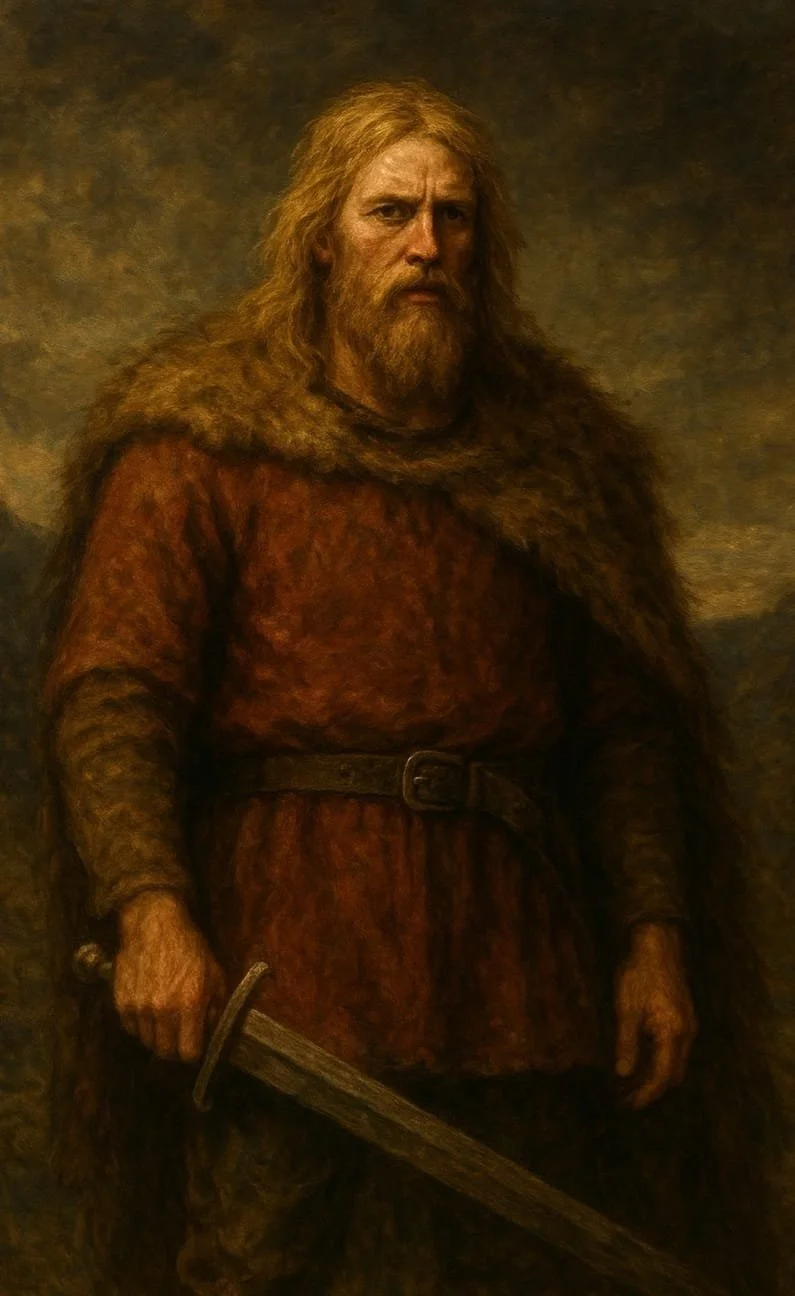
“They sought to break him with rope and gallows. But some men are not shaped by fate - they bend it.”
Was “Hjalti the Two-Hanged” a Real Norse Figure? A Look at the Evidence -
Among modern retellings of Norse lore, one occasionally encounters the dramatic tale of “Hjalti the Two-Hanged” - a warrior said to have survived two hangings through the favor of Odin. The story is atmospheric, memorable, and very much in tune with Viking-age themes of sacrifice and divine intervention. But how much of it is historically grounded? As it turns out, far less than the legend suggests.
*What follows is not a recovered saga, nor a forgotten tale from the Eddas, but a tribute for a dear brother an offering to a figure who stands at the edge of fact and fantasy. Hjalti the Twice-Hanged may not be found in the old texts, yet his story resonates like one that should have been. This is my addition to a modern legend: a weaving of spirit, symbol, and imagination into the tapestry of Norse-inspired myth.*
The Whisper Beneath the Gallows
Every age remembers a handful of men not because they conquered kingdoms, but because they defied something greater than steel, fire, or the greed of kings. Hjalti - later styled the Twice-Hanged - belongs to that narrow brotherhood whose stories linger like smoke, half in the world of men and half in the realm of old gods. A wind stirred across the hills, carrying the faint scent of woodsmoke and distant saltwater. Villagers paused mid-step, whispering the name Hjalti as if saying it aloud might summon him.
His tale is not wholly preserved in the skaldic verses nor fully recorded in the vellums of bishops. Instead it survives in half-remembered songs, in the mutterings of wanderers, and in the soft insistence of fate. To understand him, we begin not with his birth, but with the rope - for it was there that his name first stirred fear and wonder across the Northlands. A raven croaked from a blackened tree, ruffling its feathers against the wind, eyes glinting like shards of onyx as if sensing the story yet to unfold.
Two hangings. Two survivals. And afterward, an absence that became legend. The air felt colder in the valleys after his escape, as if the world itself held its breath.
Birth Under a Waning Moon
Hjalti’s earliest origins are wrapped in more uncertainty than most heroes of the sagas. Some accounts place his birthplace in the borderlands of Skagafjörður, where the glacial rivers carve winding paths through stones older than the gods. Others claim he was born farther east, among the pine-shadowed dales of Gautland. But all sources agree on two points: he was born during a waning moon, and he entered the world in silence, neither crying nor stirring until his mother placed a hand upon his chest. Brynhild felt the slight warmth of his tiny chest beneath her palm, a shiver running through her fingers, and the scent of birch smoke from the hearth mixed with the icy night air.
His father, Hróarr Ketilsson, was a modest chieftain known more for fairness than war. His mother, Brynhild Þórsdóttir, was said to have second sight in her family - not spells or sorcery, but a deep intuition that made people trust her judgment. When she looked upon the newborn Hjalti, she whispered: “He will not die as other men die.” She brushed a strand of hair from his face and felt an unexplainable weight settle in her chest, as though the boy carried a secret the world had yet to understand.
Later generations would return to these words again and again. Sometimes, in quiet halls or near dying fires, they would repeat the phrase aloud, shivering slightly at its uncanny resonance.
The Upbringing of a Quiet Boy
Unlike many heroes whose sagas revel in their youthful feats, Hjalti’s childhood was remembered for its restraint. He grew slowly, thoughtfully, as if measuring the world before stepping fully into it. He watched more than he spoke, listened more than he questioned, and always noticed the smallest shifts in people’s moods. When the wind rattled the hall roof, he would tilt his head, counting the rhythm, noting the moods of those around him.
He spent long hours in the byre speaking to the old thralls, the wanderers, and the seafaring traders who passed through his father’s hall. From them he learned languages, stories of distant isles, the customs of rival clans. A thrall once described a storm on the northern seas, and Hjalti traced the grain of the wooden bench with his fingers, tasting the smoke in the air, imagining himself on a rocking ship.
When he finally took up weapons training at the age of twelve, he absorbed skills as though he had been born remembering them. Watching a duel between two men, he mirrored their movements in the snow outside, breath steaming, snow crunching under his boots, muscles aching, yet learning each motion.
It was said he learned swordsmanship from observing only three duels and mastered riding after a single winter. But he cared little for boasting or competition. The people called him “Mild-Hjalti,” though a few warned that mildness in youth sometimes masked iron in the making. One afternoon, a boy mocked him, calling him “soft.” Hjalti only smiled faintly, hands resting on the hilt of his practice sword, eyes calm but unyielding.
The First Omen in the Snow
One winter night, when Hjalti was no more than fourteen, a storm swept down from the mountains with unnatural swiftness. In its height, Hjalti slipped from the hall to check on the livestock. Snow stung his face and soaked his cloak; the wind howled through the valley like a living thing, tugging at his hair and sleeves.
Hours later, he returned pale, breathless, and carrying a raven with a broken wing. His fingers were numb, blood mixed with snow, and his boots left slushy footprints across the frozen yard.
He claimed to have found it perched upon a cairn of stones that had not been there before the snow began to fall. When asked what drew him there, he answered simply: “A voice called my name.” His voice was low, trembling slightly from cold and fear, and he shivered despite the thick furs wrapped around him.
The raven healed but refused to fly, choosing instead to roost near him. Some whispered that the Allfather keeps such birds. Others shook their heads and said the boy was merely kind-hearted. Yet those who watched closely could not ignore how the raven’s eyes shimmered with a depth uncommon in mere animals. The raven tilted its head, claws digging lightly into the snow, wings twitching as if ready to spring, and Hjalti felt a chill run down his spine, certain it understood more than any living creature around him.
This was the first mark of fate’s interest in him. Hjalti’s breath came in shallow clouds; he pressed a mittened hand to the bird’s feathers, thinking: “So this is the path I must walk."
A Youth Tested by Blood
When Hjalti reached his sixteenth winter, strife broke across the valley. A band of reavers from the western fjords descended upon scattered farms during the night, torching homes and leaving none alive. Hróarr Ketilsson sent riders to gather allies, but before help could arrive, the raiders crept toward the family’s own stead. The smell of smoke and burning timber filled the air, sparks drifting like angry fireflies. Hjalti’s heart hammered as he clutched his sword, knuckles white.
Hjalti stood guard beside his father as the flames approached in the distance. Though young, he took responsibility upon himself, fighting with controlled ferocity. He cut down two of the attackers and shielded his mother when the gate finally splintered. His muscles ached with every swing; the clang of steel on steel rang in his ears, snow and ash sticking to bloodied boots. Each breath burned as he forced himself to focus on the next movement.
When dawn came, the raiders lay dead in the snow, and the people saw in Hjalti something they had not before: the quiet youth possessed a warrior’s core. Not rage, not desperation, but a solemn, unyielding clarity.
Hjalti lowered his sword, trembling slightly, thinking: “This is only the beginning.” The raven, perched silently on the hall roof, blinked once, as if acknowledging the truth.
The Feud That Lit the Northlands
Word of Hjalti’s defense traveled quickly, as did jealousy. Among the rival clan of the Smjörings was a chieftain named Ásgeirr, a man prickly with pride and fearful of rising talents. It was whispered that his son, Bjarke, had been overshadowed by Hjalti during contests of strength and skill, and Bjarke despised him for it. When the news reached the Smjörings, Bjarke’s hand clenched around the hilt of his dagger, nails biting into leather, teeth grinding. He muttered under his breath, the firelight flickering across his scowling face.
In time the feud grew teeth. Cattle were stolen, a trusted thrall vanished, and fields were burned at night. Hjalti sought peace, but Ásgeirr demanded recompense for imagined slights, and Bjarke challenged Hjalti to a duel.
Hjalti’s jaw tightened; he stared at the snow-dusted horizon, thinking: “Blood will flow if I accept. And not just theirs.”
Hjalti refused - not out of cowardice but because he sensed the duel would spiral into bloodshed. His refusal, however, stoked Bjarke’s hatred, and the feud escalated into open hostility. Bjarke slammed his fist on the table, causing mead to slosh, and hissed: “He will answer for this… or die trying.”
The raven flew circles above both men each time they met. Its wings beat against the grey sky, cold wind whipping around Hjalti and Bjarke, carrying a sense of foreboding that set hearts to pounding.
The First Hanging
The feud reached its height when a dispute over land rights turned violent. In the chaos, Ásgeirr fell dead, though whether by Hjalti’s blade or another’s remains disputed. Bjarke’s men captured Hjalti and declared him guilty regardless. Hjalti’s hands were bound tightly with rough rope, biting into his skin. The morning air smelled of smoke and iron. His teeth chattered, not from cold alone, but from the tension gripping him like a vice.
They dragged him to a twisted oak known for gallows-work, its roots blackened by old malice. Beneath the grey morning sky, they placed the rope around his neck and hoisted him. The rope scraped against his neck, fibers fraying against his collar. His boots dangled over the frozen earth, crunching snow beneath him. A crow cawed in the distance, wings flapping in restless rhythm.
Witnesses swore he hung for hours, his body limp, his face colorless. No breath stirred him. Certain he was dead, the warriors left him swaying in the wind. Hjalti’s mind flickered with fleeting thoughts - of snowstorms, of the raven’s gaze, of his mother’s whisper: “He will not die as other men die.” Every nerve burned, a dull ache across his shoulders and chest.
Yet when night fell, a shepherd saw movement beneath the tree. Hjalti, bruised and staggering, tore himself free and collapsed into the grass. He coughed, tasting blood and frost in his mouth, and the ground pressed cold against his back. His fingers scraped at the soil, searching for purchase, for life.
Some said Odin loosened the knots. Others claimed Hjalti died and returned. The truth vanished with the darkness.
Hjalti lay still for a heartbeat, listening to the wind whistle through the gnarled branches above, thinking: “If this is fate, it is cruel indeed.”
The Second Hanging
Bjarke was not satisfied. When he learned Hjalti still lived, he gathered twice as many men and hunted him down. Hjalti crouched behind a snow-laden boulder, breath shallow, ears straining for footsteps crunching in the frost. His heart hammered like a drum.
They caught Hjalti near the river and dragged him once more to the oak. This time they doubled the rope, checked every knot, and waited until his pulse faded. The coarse fibers scraped and burned his skin; the damp cold seeped through his clothes. He tasted iron and frost in his mouth, each shallow breath a labor.
When his body stilled, Bjarke ordered a dagger pressed against Hjalti’s heart. Hjalti’s mind raced. “One heartbeat, one moment… and it could end.” His fingers twitched, almost imperceptibly, testing for weakness in the ropes.
But before the blade fell, a great rumble shook the earth. Some said thunder; others swore it was a beast’s roar. Bjarke’s men fled in panic, abandoning the hanging body. The ground trembled beneath Hjalti, frost cracking underfoot. The wind whipped around the gnarled oak, rattling branches against the sky. Heart hammering, Hjalti’s eyes opened, pupils adjusting to the dim light, sensing the panic around him.
By dawn, the rope lay empty. Only a single black feather remained where Hjalti had been. Hjalti pressed a hand to the snow, tasting salt and frost, shivering. He felt a strange calm settle in his chest, a whisper of destiny threading through the morning chill.
The Wanderer Who Would Not Die
Word of Hjalti’s survival spread across the valleys, and many whispered that he was no longer entirely mortal. His kin urged him to flee, for Bjarke would not rest. So Hjalti left his homeland and wandered across forests, coasts, and mountain passes. Snow crunched underfoot in the high passes, and Hjalti felt the sting of icy wind on his cheeks. He pressed his cloak tighter, every shadow and rustle a potential threat.
He slept in abandoned cairns, shared fires with exiles, sailed with merchant crews, and fought alongside farmers against marauders.
Smoke from the fires stung his eyes; the smell of wet wood and salted meat mixed with the tang of the sea as waves slapped the hull of the merchant ship.
Everywhere he went, stories multiplied: he healed faster, foresaw danger in dreams, and walked away from wounds that would cripple others.When a cut on his forearm refused to throb or swell, he flexed his fingers slowly, feeling the skin knit together, an odd calm settling in his chest.
Some said he was touched by the gods. Others insisted he was cursed. Hjalti himself remained silent on the matter. At night, he would lie beneath the stars, listening to the whisper of trees and the distant howl of wolves, wondering quietly if he belonged to the world of men at all.
Companions of the Road
During his exile, Hjalti slowly gathered a company of wanderers: Sigrun of Haddingja, a sharp-witted shieldmaiden; Eldgrim the Smith, scarred and seeking redemption; Tosti Ravens-Eye, a scout who claimed to hear whispers from the dead; and Vermund the Quiet, a runaway thrall endlessly loyal.
This band became his true family. Together they crossed borderlands, protected forgotten villages, and battled reavers who preyed on the weak. Around the fire one night, Sigrun laughed as she mocked Hjalti’s seriousness, tossing a small log into the flames. Eldgrim spat sparks from the forge he carried, muttering under his breath, while Tosti leaned close, whispering of shadows moving in the forest. Vermund quietly arranged their sleeping mats, eyes flicking to every sound.
And wherever Hjalti wandered, the raven followed - always watching. The bird flapped its wings against a gust of wind, landing on Hjalti’s shoulder. Its cold claws pressed gently, and Hjalti shivered despite the fur-lined cloak.
The Battle of Hrunndal Pass
The sea-raiders sought to seize Hrunndal Pass, controlling its trade route. Hjalti’s small company stood in their way. Outnumbered ten to one, he devised a strategy as elegant as it was ruthless. Hjalti crouched behind a rocky outcrop, breath visible in the cold morning air. His fingers traced the ropes hidden in the snow, checking knots and tension. His jaw tightened as he listened to the distant cries of scouts and the clang of weapons.
He lured the raiders into a narrow ravine where ropes triggered hidden rockfalls. When the raiders charged, the cliffs collapsed upon them. The survivors were swiftly dispatched by Hjalti’s warband. Dust and stone rained down as screams echoed, the ground trembling beneath each impact. Hjalti ducked behind a boulder, feeling vibrations through his boots, and shoved a struggling attacker into the path of falling rocks. Snow and dirt coated his face, clogging his throat, but he pressed on.
This victory reshaped his reputation. The Northlands began to speak of him as a protector - but also as a man whose life carried a weight beyond mortal choosing. Villagers peered from behind trees and crumbling walls, eyes wide. Some muttered prayers; others trembled, unsure if Hjalti was man or something more. He wiped grime from his face, noticing the raven circling overhead, wings catching the sunlight.
The Seeress in the Barrow
One night Hjalti dreamt of the oak where he’d been hanged, burning with blue flames. The raven on its branch spoke in a woman’s voice: “The noose was not death. It was awakening.” Hjalti’s fingers curled into the blankets as the dream’s heat licked his face. His heart pounded; sweat mixed with the chill of night air. He felt the pull of the vision, as if the oak’s roots were reaching into his chest.
Seeking answers, Hjalti traveled to a blind seeress living near an ancient barrow. She recognized him before he spoke. The air inside the barrow was damp, smelling of earth and decayed leaves. Hjalti’s boots left prints in the clay floor. The seeress’s gnarled hands hovered in the air as if sensing him.
“You have walked where few return,” she said softly. “Once is chance. Twice is fate. You carry within you the memory of death - and death remembers you in turn.” Hjalti’s jaw tightened, knuckles whitening as he gripped his cloak. A shiver ran down his spine. “Memory of death… and it watches me?” he thought.
She warned him that Bjarke still hunted him, but darker powers stirred - the gallows-tree itself awakened by the violence done upon it.
Outside, wind rattled the barrow doors. A black feather drifted in through a crack, settling on the floor. Hjalti bent to pick it up, sensing the pulse of fate thrumming beneath his fingers.
Hjalti left her troubled. Every step back to the forest path echoed in his ears. The shadows seemed longer, deeper, and he felt the raven perched nearby, silent but watching.
A Warband Forged in Iron
As years passed, Hjalti’s companions grew into a formidable warband. Farmers sheltered them; jarls hired them; kings whispered interest in their deeds. Hjalti walked among them each morning, feeling the weight of armor and weapons on their backs, the smell of sweat, steel, and woodsmoke mingling. Each man and woman’s eyes held a spark of trust - or fear.
But Hjalti sought neither wealth nor dominion. He fought only when injustice overwhelmed the land. Villagers invoked his name in prayers, asking for the tall stranger who defied death. When a widow bowed before him, hands shaking, Hjalti lowered his eyes, listening to the crackle of the fire and the faint whistle of wind through broken shutters. “This is why I fight,” he thought, jaw tightening.
Yet each victory tightened fate’s net. Bjarke, hardened and cruel, swore a blood oath to end Hjalti once and for all. At night, Hjalti sat alone on a hill overlooking a distant settlement, shadows stretching long in the moonlight. His hand hovered over the hilt of his sword, senses alert to every snap of a twig or rustle of cloak. “He waits. Always,” he thought, teeth gritted.
The Return of Bjarke
Bjarke rose to power, ruling with suspicion and iron. He forged alliances with ruthless jarls and marched with eighty men to hunt Hjalti, whose warband numbered barely a dozen. Hjalti crouched atop a ridge, watching the glint of armor in the valley below. He could smell the smoke from their campfires, hear the rhythmic clang of blacksmiths preparing weapons, and taste the cold iron of tension on his tongue.
Their clash was brutal. Hjalti’s companions fell around him. He ducked under a swinging axe, feeling the wind rush past his cheek. Sparks from clashing blades lit the snow, freezing his blood for a heartbeat. “I cannot fail them,” he thought, teeth gritted.
In the heart of chaos, Hjalti dueled Bjarke. Their swords clashed like thunder. Bjarke shouted: “How many times must you die before you stay dead? Hjalti’s arm burned from the repeated strikes. Snow and mud clung to his boots. He parried, thinking: “I will not give him this victory. Not yet.”
Hjalti answered with steel, shattering Bjarke’s blade and sending him sprawling. But he did not kill him. Hjalti’s chest heaved, arms trembling. He looked at Bjarke, breathing heavily, and sensed fate’s weight pressing upon him - demanding restraint.
And fate keeps its own tallies.
The raven cawed from a branch overhead, wings spread wide, as if marking the balance of what had passed.
The Long Wanderings South
After the battle, Hjalti traveled south to Saxony, the Danube, and the courts of Wendish princes. He fought in frontier skirmishes, met kings who offered him lands, and visited priests who whispered that he was cursed. Hjalti’s boots sank into foreign soils, the air thick with smoke, spices, and the chatter of unfamiliar tongues. His eyes darted constantly, noticing the subtle gestures of nobles and soldiers alike, muscles coiled, ready for attack.
In the forests of the Bohemians, shamans believed he carried a spirit that death could not claim. They offered to free him from it, but he refused. Hjalti’s fingers brushed against the bark of ancient oaks as he walked, feeling the pulse of the forest beneath his hands. The shamans’ chants echoed in the wind, weaving around him like invisible threads. “I cannot abandon this path,” he thought, shoulders tense.
He returned north with more questions than answers. The northern wind bit into his face as he approached familiar mountains. Snow crunched under his boots, and the smell of pine and cold river water reminded him of home, yet something felt irrevocably changed.
The Third Omen: Blood on the Paths
Upon returning to the Northlands, Hjalti found the region troubled. Bjarke, older and more bitter, had spread tales branding him a revenant. Villagers avoided him, fearing misfortune. Hjalti noticed empty doorways and shuttered windows as he passed. The air smelled faintly of smoke and wet earth, but conversations hushed whenever he approached. Each footstep echoed unnaturally on the frost-covered paths.
Worse, murders plagued the borders - men found hanged from trees in mimicry of Hjalti’s legend. Some blamed Bjarke; others whispered of darker forces. The rope fibers scraped eerily against tree bark. Hjalti’s stomach twisted at the sight, cold sweat prickling his skin. He crouched to examine a corpse, noting the unnatural slackness of fingers and the frost-covered wounds.
Wherever Hjalti walked, he felt watched - not by men, but by fate itself. He pressed a hand to his chest, feeling heartbeat pounding like a war drum. The raven circled above, cawing once, wings slicing the cold air, and Hjalti shivered at the sense of unseen eyes tracking his every movement.
The raven never strayed far. Its black eyes gleamed like molten glass as it landed on a frozen branch above him, wings twitching, claws gripping bark. Hjalti paused beneath it, sensing the weight of prophecy pressing down.
The Clash at the Gallows-Oak
Hjalti returned to the oak of his torment. It stood twisted, its roots spread like claws. Beneath it waited Bjarke, gaunt and half-mad, surrounded by fearful warriors. Hjalti’s boots crunched over frost-bitten earth as he approached. The wind whipped at his cloak, carrying the scent of wet wood and iron. His fingers brushed the hilt of his sword, muscles coiled and ready.
Bjarke blamed Hjalti for every misfortune, claiming he had stolen his destiny. Hjalti offered peace one last time. Hjalti’s jaw tightened, eyes narrowing as he watched Bjarke spit onto the ground. “I will not strike unless necessary… but I will survive this,” he thought, feeling tension tighten like a bowstring through his arms.
Bjarke spat at his feet. The battle raged around the oak. Bjarke attacked with a noose in hand. In the struggle, the ancient tree cracked, split, and collapsed. Bjarke was crushed beneath its weight. Dust and splinters filled the air, stinging eyes and throat. Hjalti stumbled back, coughing, snow and bark sticking to his cloak and hair. Heart hammering, he pressed a hand to his chest, listening to the distant echoes of crashing wood and the shrieks of fleeing warriors.
Silence followed. The raven perched upon the fallen trunk. Hjalti’s chest heaved as he lowered himself to one knee, eyes tracking the black bird. Its sharp gaze seemed to pierce the chaos, and Hjalti whispered under his breath, “Fate has marked the end… but I walk on.”
Hjalti’s Final Years
After Bjarke’s death, Hjalti could have risen to kingship. Chieftains offered him lands; warriors offered allegiance. But he felt increasingly estranged from mortal life. Hjalti walked alone through frost-covered fields, the wind tugging at his cloak. His boots left deep impressions in the snow, each step heavy, echoing his sense of detachment. Villagers watched from a distance, whispering and bowing their heads.
He confessed to Sigrun that the hangings had left a hollow space in him, as if he lived slightly beyond the boundaries of breath and warmth. He wandered again - not as a warrior but as a pilgrim in search of meaning. His fingers brushed the smooth stones of a riverside shrine, feeling the cold bite of marble against skin. The raven perched silently nearby, wings folding against the wind. “I walk between worlds now,” he thought, lips barely moving.
He visited temples, shrines, and sacred groves. He sought wisdom from hermits, monks, and seers. None could explain the nature of his survival. In candlelit rooms, he listened to whispered prayers and murmurs, the scent of incense thick in the air. Hjalti’s eyes reflected the flickering flames as he pondered each answer, finding none that satisfied the hollow echo within him.
His companions drifted away. Even the raven appeared less often. Hjalti paused at a cliff edge one evening, the wind tugging at his hair. The sky bled pink and gold across the horizon. He stretched out a hand instinctively toward the bird, but it did not appear, leaving him with only the sound of the waves below.
The Last Disappearance
The final sighting of Hjalti came from fishermen near the ocean cliffs of Hålogaland. They claimed he walked alone toward the sea at dusk, following something unseen. Hjalti’s silhouette was a shadow against the orange sky. His cloak whipped in the wind, boots crunching against gravel and frost. He paused, tilting his head as if listening to a call only he could hear.
Some say he boarded a westbound ship. Others swear his footprints ended abruptly at the cliff’s edge. A few believe the raven led him into the mist. The waves crashed violently below, the wind carrying the tang of salt and sea spray. Fishermen stared in awe, hearts pounding as the figure vanished into the fading light, leaving only a ripple of mystery.
At dawn the fishermen return and find a single rope tied to a dead branch above the cliff - swaying gently in the wind, though there is no wind.
No footprints lead away.
No body lies below.
Only the rope, whispering softly as if remembering the weight of a man who refused to die.
Whether he died quietly in old age or passed beyond the world entirely is unknown. The cliffs stood silent afterward, gulls circling overhead, the ocean murmuring secrets of a man who walked between life and death.
Legacy of the Twice-Hanged
Long after his disappearance, Hjalti’s name endured. Warriors invoked him before battle. Wanderers swore he appeared to guide them in dark forests. Minstrels debated whether he was blessed, cursed, or merely stubborn beyond reason. In villages, children traced his name in the dirt, elders spoke it in hushed tones near the hearth, and travelers carried tales like lanterns through the night.
But the most enduring belief is this: Hjalti walked between life and death, not as a ghost nor a god, but as a man touched by wyrd - the weaving of fate itself. His story lingered in the wind, brushing against the faces of those who dared to listen, a faint echo in the cry of ravens and the crash of distant seas.
Some say he was the luckiest of men. Others claim he was the loneliest. All agree he was unforgettable. A quiet shiver would pass through anyone who spoke his name aloud, as if the memory of the Twice-Hanged pressed lightly against the bones of the living.
And thus his tale lives on, in the quiet places where history meets myth. Beneath the stars, by the frozen rivers, in the hush of sacred groves, whispers of Hjalti’s deeds continued, threading life and death together.
“Not all who survive are meant to rule,” the skalds say. “Some are meant to remind us that fate is not a chain - but a thread.” And in that thread, those who dare to listen might feel Hjalti’s presence - a shadow, a guide, a reminder that life and death are entwined.
Honoring the Legend: Why “Hjalti the Two-Hanged” Still Matters
Even if “Hjalti the Two-Hanged” cannot be traced to any verifiable medieval source, the power of the story remains undeniable. Mythic figures do not need historical documentation to hold meaning. Norse culture itself blended history, legend, and poetry into a single living tradition where truth was measured not only in facts, but in spirit.
To honor Hjalti, whether he once walked the earth or was born through later imagination - is to recognize the values he symbolizes: resilience, defiance against fate, loyalty to the gods, and a refusal to fall even when the world tries to break you. These qualities are deeply rooted in Norse heroic ideals, and stories like this persist precisely because they speak to something timeless in the human experience.
In many ways, the absence of a strict historical record frees Hjalti to become an every-warrior figure, a symbol rather than a biography. He represents the countless unnamed individuals who survived ordeals, defied death, or lived fiercely enough that their stories - real or imagined - echo through time. To honor him is to honor all those who embody that indomitable spirit.
Fictional or not, legends endure because they inspire. Hjalti the Two-Hanged may not be a figure from the sagas, but he has become a figure within modern Norse storytelling. Paying tribute to him keeps alive the tradition of myth-making that the Norse practiced themselves: shaping tales that are not only told, but felt.
Conclusion: A Legend of Today, Not a Figure of the Viking Age
While there were historical Hjaltis, and a legendary berserker Hjalti in the sagas, none of them matches the character known as “Hjalti the Two-Hanged.” With no medieval evidence supporting the tale, the figure appears to be a product of contemporary myth-making rather than Viking-age history.
The story, though fictional, survives because it feels Norse - evoking the raw power, fatalism, and divine mystery that make the old legends so compelling. As with many modern interpretations of Viking lore, it stands as a testament to how Norse myth continues to inspire new stories long after its original sources were written.
A Question for You, Reader
If life granted you a second crossing through death’s shadow - would you return unchanged, or would you seek the path that led you beyond the world of men?
'- Wyrd Walks With Those Who Listen - And Fire With Those Who Dare 🔥 (Wyrd & Flame)
