
The Sónargöltr: The Historical Jól (Yule) Boar of the North
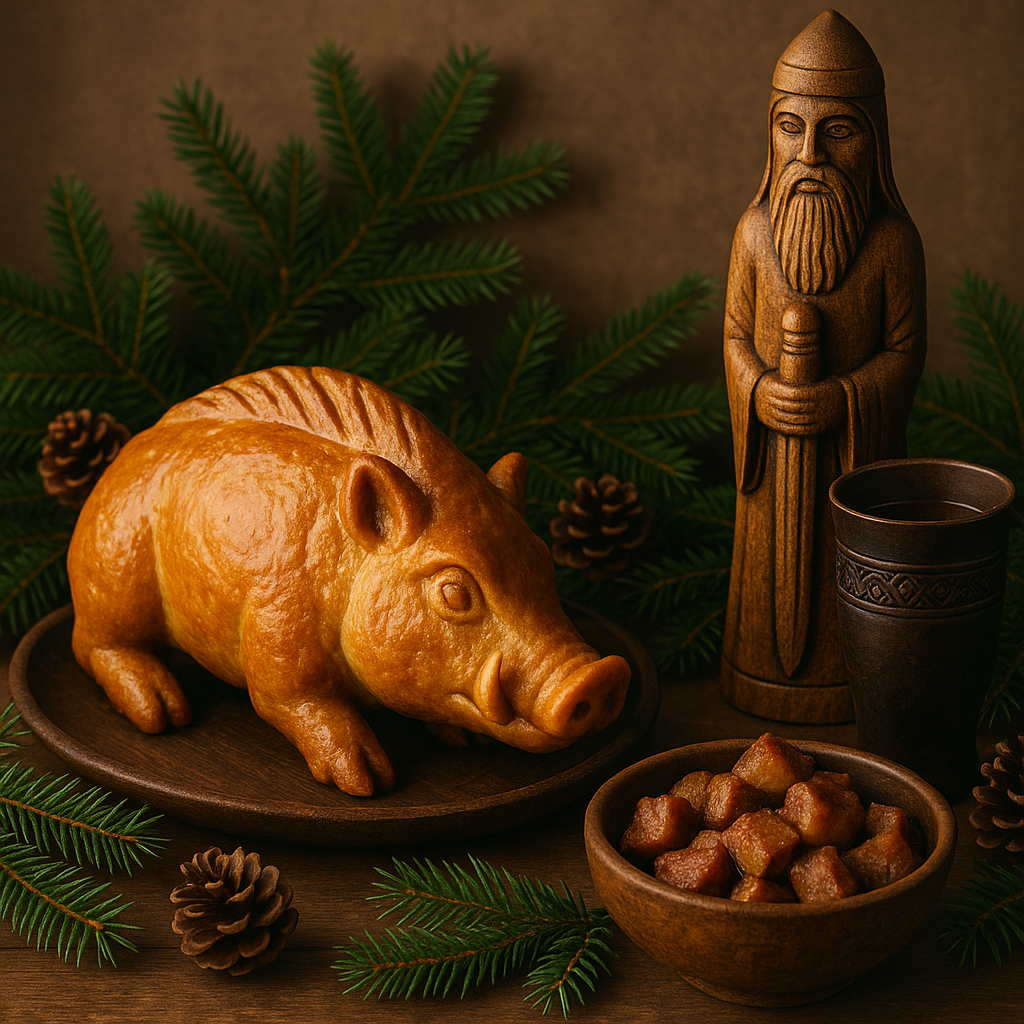
Among the many customs linked with the old Norse celebration of Jól, few are as striking or meaningful as the tradition of the sónargöltr, the sacred Yule boar. While modern depictions of Yule often focus on evergreen wreaths, warm fires, and the idea of twelve festive nights, the historical Norse midwinter feast was something far older, deeper, and far more serious. At its centre stood rituals of sacrifice, oath-swearing, and the renewal of luck and honour for the year ahead. The boar was a significant part of this sacred turning of the year.
The term sónargöltr appears in medieval literature that preserves fragments of pre-Christian Scandinavian belief. Most clearly described in Hervarar saga ok Heiðreks, the boar is presented as a ceremonial animal led into the hall during the Yule feast, where men placed their hands upon its bristled back and swore solemn oaths for the coming year. These oaths were not made lightly. In Norse society, a person’s word was tied to their reputation, their family’s luck, and even their fate. Swearing an oath at Jól, in the presence of the gods and the community, bound the speaker’s future as firmly as any legal or spiritual contract. The boar, sacred to the god Freyr, stood as a living symbol of fertility, abundance, peace, and the returning light of the sun.
Historically, Jól itself was a three-night celebration guided by the lunar calendar. It was held on or near the full moon following the winter solstice, not on fixed dates like the twenty-first or twenty-fifth of December. This makes the sónargöltr ritual part of a much older and very different midwinter observance than the modern festival of Yule familiar today. The original feast was a communal blót, a religious gathering involving offerings, toasts, storytelling, and the strengthening of bonds between the living, the ancestors, and the gods. In this setting, the boar was far more than a seasonal emblem. It represented the exchange between humans and the divine, the cycle of death and renewal, and the promise of future prosperity.
Although the exact details of how widely the ritual was practised remain debated, the sources that mention the sónargöltr show that it held real significance in at least some parts of the Norse world. The scene of the boar being brought into the hall is vivid, and the ritual’s connection to Freyr, whose golden-bristled boar Gullinbursti symbolised sunlight and life, makes its religious meaning unmistakable.
For modern readers and practitioners, the sónargöltr stands at the meeting point of myth, ritual, and cultural memory. It offers a glimpse into how the Norse viewed commitment, community, and the sacred flow of the year. Understanding this tradition means understanding Jól not as a comfortable winter holiday, but as a powerful moment when people gathered to reaffirm their duties, seek blessing, and honour the forces that sustained their world through the darkest part of winter.
In the sections that follow, we will look at what the word sónargöltr means, where it appears in the written sources, how the ritual may have been performed, and what it reveals about Norse belief at midwinter. We will also explore the boar’s connection to Freyr, the role of oaths in Norse culture, and what elements of this ancient rite continue to inspire people today.
What Does “Sónargöltr” Mean?
The word sónargöltr comes from Old Norse and refers to a boar used in a specific midwinter ritual. It is made up of two parts: sónar and göltr. The second part is straightforward, as göltr simply means boar. The first part, sónar, is connected to ideas of atonement, reconciliation, or a sacrificial act intended to restore balance and good fortune. Scholars link it to the Old Norse word són, which appears in other contexts related to offering, purification, or making things right with the gods.
Put together, sónargöltr can be understood as the atonement boar, the sacrificial boar, or the ritual boar of midwinter. The name itself tells us that this animal was not an ordinary feast dish but a sacred part of the Jól celebration. It carried religious weight and was tied to the renewing of luck, honour, and peace within the community at the turning of the year.
The fact that this word appears in the saga material suggests the ritual had a recognised name and meaning, even if the exact practice varied by region. It gives us one of the few direct linguistic clues to how important the boar was in midwinter rites connected with Freyr and the wider cycle of renewal during Jól.
Where the Sónargöltr Appears in the Sources
The sónargöltr is mentioned most clearly in Hervarar saga ok Heiðreks, a medieval Icelandic saga that preserves several older traditions. In this text, the boar appears during a Yule feast where it is led into the hall and used in a ritual of oath-swearing. The saga describes men placing their hands on the boar’s bristles and making promises about deeds they intend to carry out in the coming year. This is the strongest written source we have for the ritual and gives a vivid picture of how the boar was used.
There are no other surviving accounts that describe the practice in the same detail, but the saga reference is supported by the wider religious importance of the boar in Norse tradition, especially its connection to the god Freyr and his golden-bristled boar, Gullinbursti. Snorri Sturluson, in his writings on Freyr in the Prose Edda, makes the link between the god and the boar clear, which strengthens the idea that the animal held a central place in ceremonies involving him.
It is important to note that while the sónargöltr is only directly described in one saga, the ritual fits into the broader pattern of Norse midwinter customs: oath-making, feasting, sacrifice, and the renewal of luck. The absence of multiple detailed accounts does not make the ritual unimportant; it simply reflects how much of pre-Christian practice was lost or only partly recorded by later Christian writers.
In short, Hervarar saga ok Heiðreks gives us the key description of the sónargöltr, while other texts confirm the cultural and religious background that makes the ritual understandable. It is one of the few surviving glimpses into a specific Yule ceremony centred on an animal sacred to a major Norse god.
The Boar at the Jól (Yule) Feast: What the Saga Describes
Hervarar saga ok Heiðreks gives our clearest picture of how the boar was used during the Jól feast. In the saga, the sónargöltr is brought into the hall during the midwinter gathering. It is treated with a sense of ceremony, not simply as an animal for eating, but as a central part of the ritual taking place.
The men at the feast place their hands upon the boar’s bristled back. This physical contact is important, as it marks the moment when each person speaks an oath about something they intend to do in the coming year. These oaths could be promises of bravery, plans for future deeds, or commitments involving duty, honour, or settlement of matters that needed to be resolved. Speaking such vows in front of others made them binding, both socially and spiritually.
After the oaths are made, the implication in the saga is that the boar would later be sacrificed and eaten as part of the feast, just like other animals offered in blót. Although the text does not describe every step in detail, the sequence of events fits well with what we know about Norse sacrificial customs: an animal is dedicated, witnessed by the community, and then shared as part of a sacred meal.
The saga paints a picture of a hall full of people, firelight, winter cold outside, and a strong sense of shared duty and expectation. The boar stands at the centre of this, acting as a witness to the promises made and as a bridge between the people, the gods, and the turning of the year. It gives us a rare and specific insight into how Yule was marked in at least one part of the Norse world, and how an animal sacred to Freyr played a key role in the renewal of honour and future fortune.
Freyr and the Boar
Freyr is one of the most important gods connected with the sónargöltr. In Norse belief, Freyr is linked with fertility, prosperity, peace, good harvests, and the wellbeing of both people and land. Because midwinter was a time when survival and future growth were at the front of everyone’s mind, Freyr naturally became a central figure during Jól.
The boar is one of Freyr’s sacred animals. In the Prose Edda, Snorri Sturluson tells the story of Gullinbursti, Freyr’s golden-bristled boar, made by the dwarves Brokk and Sindri. Gullinbursti is described as swift, bright, and able to run through the sky and across the sea more surely than any horse. Its shining bristles give off light, which makes it a clear symbol of the sun’s return after the darkest days of winter.
Because of this connection, offering a boar to Freyr at Jól carried deep meaning. The boar represented life, strength, and the promise of new growth hidden beneath the snow. It also symbolised the renewal of peace, luck, and right order, all of which were essential for the survival and success of the community. By swearing oaths on the sónargöltr and then giving the animal as a sacrifice, people were placing their promises directly under Freyr’s blessing.
Freyr’s role as a god of sacred kingship also fits with the ritual use of the boar. Oath-swearing, maintaining peace, and ensuring the welfare of the land were central responsibilities for leaders. By involving Freyr in the midwinter rites, people tied their future actions and the fate of their community to a god who governed prosperity and honour.
The link between Freyr and the boar helps explain why this particular animal became the focus of such an important Yule practice. It was not chosen at random. It carried religious significance, mythological symbolism, and practical meaning tied to the cycle of winter and renewal.
Oath-Swearing in Norse Culture
Oath-swearing played a major role in Norse society, both in daily life and in religious settings. An oath was not just a promise; it was a binding act that tied a person’s honour, fate, and social standing to their word. To break an oath was to risk shame, loss of reputation, and even the anger of gods and spirits. For this reason, oaths were taken very seriously and often performed in formal or sacred settings.
We see examples of oath-swearing throughout the sagas and eddic poems. Warriors swore oaths before battle, families used oaths to settle disputes, and leaders made vows when taking on roles or agreements. These oaths were usually spoken before witnesses, which strengthened their power. The presence of others meant the community itself held the speaker accountable.
Many oath rituals involved special objects, such as a sacred ring kept in a temple or the handle of a weapon. These items symbolised the gods or the communal authority that watched over the vow. By touching such an object while speaking an oath, a person showed that they understood the seriousness of what they were promising.
The sónargöltr rite fits naturally within this tradition. Swearing an oath with a hand placed on the boar’s bristles added a physical and symbolic weight to the act. The boar represented Freyr and carried connections to prosperity, peace, and right order. By making vows upon it at midwinter, people tied their future actions to the health and success of the whole community. Their promises were meant to support the coming year, not just their own ambitions.
In Norse belief, words had real power. An oath was a way of shaping one’s wyrd (fate) and stepping into the responsibilities of honourable life. The sónargöltr ceremony is one of the clearest surviving examples of this cultural value, showing how sacred timing, community gathering, and divine presence all came together to make an oath truly binding.
Was the Sónargöltr Sacrificed?
The sources strongly suggest that the sónargöltr was sacrificed as part of the midwinter feast. Although the surviving texts do not describe every step of the ritual in detail, the evidence we have fits well within the wider pattern of Norse blót practices.
In the Hervarar saga ok Heiðreks, the boar is brought into the hall before the Yule feast so that people can place their hands upon its bristles and swear their oaths. The saga then refers to the boar being eaten afterwards. This points to the animal being killed and prepared as part of the main Yule meal, which fits with how other sacrificial animals were used in Norse society.
In general blót rituals, the animal offered to the gods was slaughtered in a sacred way. Its blood (hlaut) was collected and used to bless the hall, idols, and people, while the meat was cooked and shared in a communal feast. This pattern appears again and again in saga descriptions, especially in Eyrbyggja saga, Hákonar saga góða, and other accounts of temple feasts.
Although no text explicitly says “the sónargöltr was sacrificed in this exact way”, the context makes it clear that the boar was part of the blót. A sacred animal brought forward for oaths, linked with Freyr, and then eaten during the Yule feast follows the same structure as other well-documented offerings. The act of eating the animal also symbolised unity between the community and the god being honoured.
Scholars generally agree that the sónargöltr rite combined three elements:
1. A sacred animal linked with Freyr
2. A formal oath-swearing ceremony
3. A sacrifice followed by a shared feast
Together, these form a typical Norse religious practice. The sacrifice was not an afterthought but an essential part of the ritual, completing the exchange between humans and the divine at midwinter.
Later References and Scholarly Debate
The sónargöltr appears only a few times in the surviving medieval texts, which means much of our understanding comes from piecing together limited evidence. Because of this, scholars have debated the exact nature of the ritual, how widespread it was, and what it truly meant within Norse religion.
Most references come from later saga material, especially the Hervarar saga ok Heiðreks, which was written down in the 13th century but preserves older traditions. Some scholars argue that the oath-swearing on the boar may have been a genuine pre-Christian practice kept alive in oral tradition, while others suggest that parts of the story might reflect later storytelling or Christian-era reinterpretation of older customs. Despite this, there is a strong scholarly consensus that the ritual reflects authentic elements of Pagan midwinter practice.
The relationship between the sónargöltr and Freyr has also been discussed. Because Freyr’s golden boar Gullinbursti appears clearly in the Prose Edda, it is widely accepted that a boar offering connected with him makes cultural and religious sense. Some researchers argue that the boar may have been a central symbol in older Swedish and wider Scandinavian fertility rites. Others point out that we cannot be certain how common the practice truly was across the whole Norse world.
Another point of debate concerns the timing. In the sagas, the sónargöltr ritual is firmly linked with Yule, yet historically, different regions celebrated Yule on different lunar dates. This means the exact day of the ritual likely varied from place to place.
There is also discussion about whether the word sónar should be understood strictly as “atonement” or whether it might have had a broader meaning related to offering or ceremonial purification. The original meaning of the word is not completely clear, and this has led to various interpretations in modern scholarship.
Despite these uncertainties, the ritual remains one of the best-attested and most distinctive Yule practices recorded in Old Norse literature. Even though some details are debated, the overall picture is consistent: a sacred boar was brought into the hall, oaths were sworn upon it, and it played a central part in a midwinter rite that connected the community with Freyr and with the turning of the year.
What We Can Say with Confidence
Even though the surviving sources are limited, there are several things we can say with confidence about the sónargöltr and its place in Norse midwinter tradition.
First, a ritual involving a boar at Yule did exist in the pre-Christian North. The saga material, especially Hervarar saga ok Heiðreks, provides a clear description of a boar being brought into the hall for the purpose of oath-swearing. This makes it one of the most securely attested parts of Norse Yule practice.
Second, the boar carried strong symbolic meaning linked to Freyr. The connection between Freyr and the boar is well supported in the Prose Edda, where his shining boar Gullinbursti appears as a powerful mythic symbol. Because Freyr is a god of fertility, peace and prosperity, using a boar in a midwinter rite fits well with his role in renewing the year’s luck.
Third, the sónargöltr was almost certainly a sacrificial animal. The pattern of the ritual described in the saga matches other documented blót practices: an animal is prepared, used in a sacred act, and then eaten during a communal feast. This makes it reasonable to place the sãoargöltr within the normal structure of Norse religious offerings.
Fourth, the ritual involved public oath-swearing. This detail is unusual and makes the sónargöltr rite stand out. Oath-making was deeply important in Norse culture, and the fact that people swore vows on the boar shows that the rite was not only religious but also social and moral. It shaped the coming year’s expectations and bound individuals to the community.
Fifth, the ritual belonged to Yule. Although the precise date varied according to the old lunar calendar, the saga clearly places the ceremony within the Jól feast. This ties the sónargöltr directly to the themes of renewal, peace, and the turning of the year.
Finally, while not every detail can be proven, the core elements of the ritual are widely accepted by scholars as reflecting genuine Pagan practice. The combination of oath-swearing, the role of Freyr, the importance of the boar, and the midwinter setting all fit securely within what we know of Norse religion.
Taken together, these points allow us to build a clear and reliable picture of the sónargöltr as a meaningful, sacred, and socially significant part of the old northern Yule celebrations.
The Legacy of the Sónargöltr Today
Today, the sónargöltr continues to inspire many modern Heathens, Norse pagans and people interested in northern tradition. Even though we no longer practise animal sacrifice, the core ideas behind the ritual still hold meaning. The boar symbolises courage, truth, prosperity and renewal, and these themes remain powerful at Yule.
In many modern groups, the sónargöltr has become a symbolic act rather than a literal one. People often bake a boar-shaped loaf, use a carved wooden boar, or place a small figure on the altar to represent the sacred animal. This allows the spirit of the tradition to continue without the historical form of the sacrifice.
Oath-swearing also survives as a meaningful part of modern Yule celebrations. Some Heathen households and kindreds still hold an oath night, where people make commitments for the coming year. This can be done with a horn, a ring, or a symbolic boar, keeping the link with the old suntargöltr rite while giving it a form suited to today’s world.
Freyr remains an important figure for many practitioners. His associations with peace, fertility and abundance fit naturally with the season’s focus on renewal and the hope of returning light. Offering food, drink or simple words of thanks in his honour is a modern way of acknowledging the god who once stood at the centre of the boar ritual.
The sónargöltr also has a place in wider Scandinavian folklore. The tradition of a Yule boar or Christmas pork dish, common in countries like Sweden and Denmark, may be a distant echo of the older sacrificial feast. While these customs developed in a Christian context, they show how deeply the image of the midwinter boar remained in northern culture.
For many people today, the value of the sónargöltr lies in what it represents. It is a link between past and present, a reminder of how our ancestors marked the turning of the year with intention, courage and gratitude. By adapting the ritual to modern life, we keep the memory of these practices alive and honour the spirit of renewal that lies at the heart of Yule.