
What Is a Blót? Norse Pagan Offerings, Rituals and Meaning
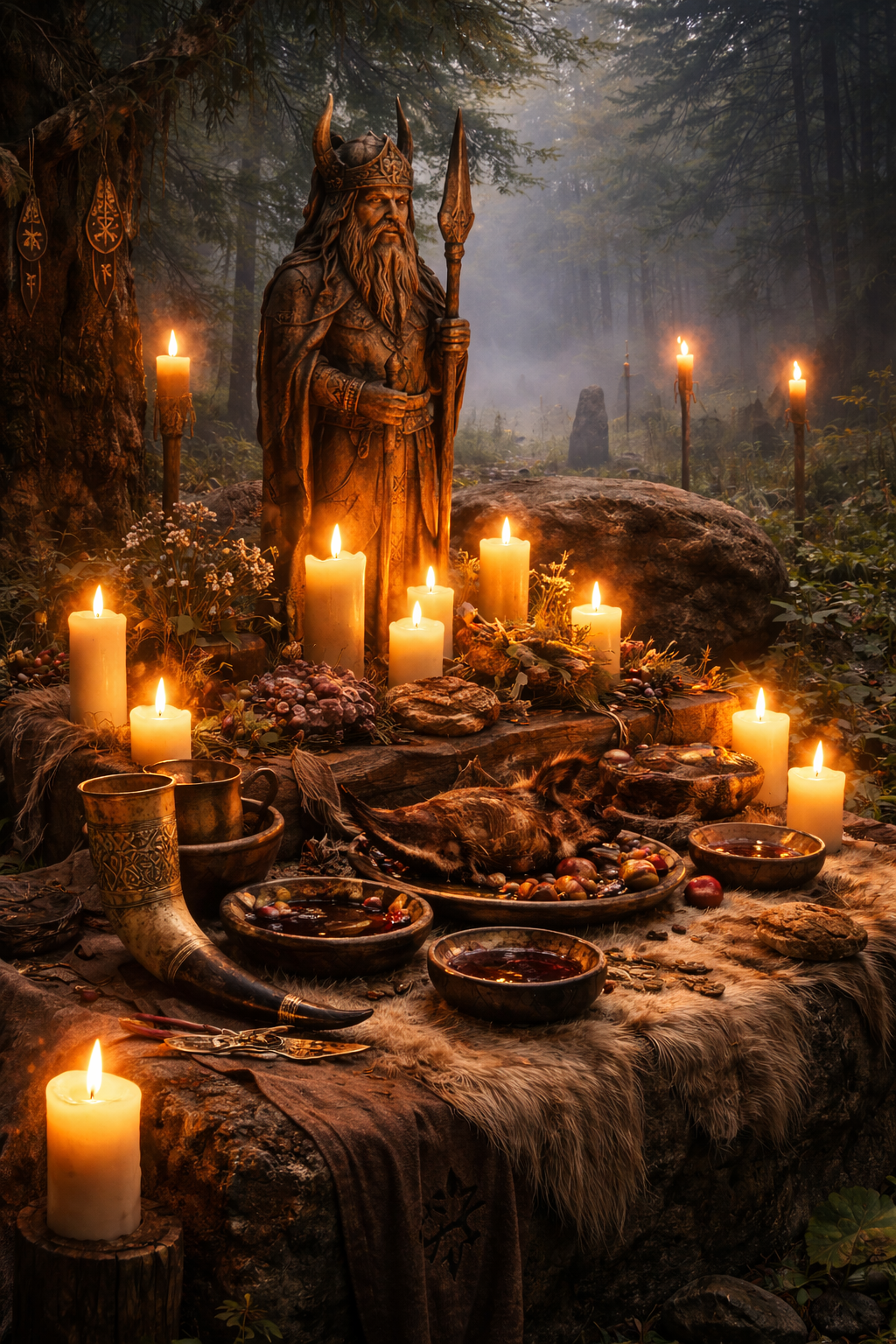
A blót is, at its heart, an act of giving. The Old Norse word blót refers to sacrifice, offering and devotion, but not in the modern sense of worship or submission. It is not about kneeling before the gods or seeking approval. A blót is an act of reciprocity. You give something of value, and in doing so, you strengthen a relationship. That relationship may be with the gods, the ancestors, the land, or the unseen forces that shape wyrd. A blót is not performed to command, bargain or demand. It exists to maintain balance.
Just as important as understanding what a blót is, is understanding what it is not.
A blót is not a spell, a performance or a reenactment. It is not a test of worth, nor a way to force outcomes. The Norse did not believe fate could be fully controlled. Even the gods themselves were bound by wyrd. Because of this, blót was never about domination. It was about right relationship and conscious participation in the world as it is.
In the Norse world, religion was not separate from daily life. Blót marked moments of survival, seasonal change, gratitude, preparation and remembrance. It was how people acknowledged what sustained them and what lay beyond their control. Through blót, people honoured the gods, remembered the dead, respected the land and reaffirmed their place within the wider weave of existence. It was not an escape from reality, but a way of facing it with awareness.
To perform a blót was to accept responsibility. Making an offering meant recognising that nothing is taken without cost and nothing is given without consequence. It was a declaration of awareness rather than entitlement. Because of this, blót was never casual. It was often simple, but it was never careless. What mattered was intention, presence and respect.
In modern practice, the form of blót may look different, but the principle remains unchanged. A blót today is still an act of giving, presence and acknowledgement. It does not require blood, spectacle or permission. It requires sincerity, restraint and understanding. It asks you to know who you are giving to, why you are giving, and what responsibility that act creates.
Before moving forward into the practical aspects of blót, it is important to pause and reflect. Ask yourself who you are seeking relationship with and why.
Consider whether you are approaching this practice in a desire for control or a desire for connection. A blót does not begin with an offering placed on the ground. It begins with awareness in the mind and honesty in the heart.
For the Norse and Germanic peoples, religion wasn’t about weekly worship in a church. It was about living in balance - with the gods, the spirits of the land, and the ancestors. At the heart of this spiritual life was the blót (Old Norse blóta), which means “to worship, sacrifice or honour with offerings.”
A blót was more than a gift. It was an exchange between humans and the unseen powers. People gave offerings to the gods, the land spirits and their ancestors, and in return asked for blessings: health, fertility, good harvests, victory, and protection.
The Meaning of Blót
The word blót comes from Old Germanic roots linked to ideas of strengthening and consecrating. At its core, a blót was understood as an act that reinforced relationship. By giving something of value, you strengthened the bond between yourself and the gods, spirits or ancestors you were honouring.
Unlike later Christian forms of worship that emphasise humility and submission, blót was based on reciprocity. It was a sacred exchange, a respectful balance of giving and receiving. You offered what you could, and in return, you acknowledged the support, protection or favour that flowed back. This was not a bargain or demand, but a mutual recognition of relationship.
In the past, offerings varied depending on time, place and circumstance. They could include the blood of an animal, mead or ale, the best portions of a feast, crafted or valuable objects, or a simple libation poured onto the earth. What mattered was not excess or display, but sincerity and worth. An offering carried meaning because it cost something, whether effort, time or resource.
The guiding principle of blót was simple and enduring: a gift for a gift. Through this exchange, balance was maintained, bonds were renewed, and the relationship between people, the sacred and the land was kept alive.
How Blóts Worked in Norse Times
In the Norse world, blóts could take many forms. Some were large public gatherings that brought whole communities together, while others were small, private rites held within a family or household. What mattered was not size, but intention, participation and respect for the sacred exchange taking place.
Blóts often involved sacrifice, though this did not always mean blood. In large communal blóts, animals such as pigs, goats or horses might be sacrificed. Their blood, known as hlaut, was collected and used to hallow the space. It was sprinkled on altars, sacred objects and sometimes on the people present, marking them as participants in the rite. In smaller or household blóts, offerings were simpler and could include food, drink or valued objects rather than animal sacrifice.
Following the offering came the feast. The meat from a sacrificed animal was cooked and shared among those present. This meal was not ordinary eating. It was a sacred act that bound gods and humans together. The gods received their portion through the offering and the people received theirs through the feast, reinforcing the shared bond created by the blót.
Another important element was the toasts, often known as sumbel. A drinking horn was passed from person to person. The first toast was traditionally made to the gods, the second to the ancestors and the third was personal. This could be a vow, a boast or a spoken hope for the future. Words spoken during sumbel carried weight, as speech itself was believed to shape honour and wyrd.
Blóts were held in many kinds of sacred space. They could take place in temples, great halls, sacred groves, or simply on a family farm. The space itself did not need to be permanently holy. It became sacred through the act of ritual, intention and presence. Wherever respect was shown and the rite properly held, the sacred could enter.
Together, these elements formed the heart of the blót. It was not a performance, but a shared act of relationship, binding people, gods, ancestors and land into a single moment of meaning.
Types of Blót
Blóts were not all the same. Different blóts were held for different purposes, reflecting the needs of the community, the season, and the moment in life. Some were tied to the turning of the year, while others marked important personal or social events.
Álfablót was a private autumn rite dedicated to the álfar, ancestral and land-connected spirits. This blót was typically held within the household and was not open to outsiders. Its focus was protection, continuity and maintaining right relationship with the unseen forces tied to family and land.
Dísablót honoured the dísir, powerful female spirits associated with ancestry, fate and protection. Often observed in winter or early spring, this blót focused on fertility, wellbeing and the safeguarding of family lines through the darker months.
Sigrblót was a spring sacrifice connected to victory and success as the active season began. It is commonly associated with Odin, though its wider meaning included success in travel, work, law and conflict. This blót marked the shift from endurance to action.
Haustblót was a harvest blót held in autumn, giving thanks for the land’s bounty and recognising the work that had sustained the community through the year. It also served as a moment of preparation for the coming winter, acknowledging that abundance was temporary.
Jólablót was the great midwinter blót, centred on survival, continuity and renewal. Held during the heart of winter rather than at the solstice itself, Jólablót honoured the gods, ancestors and forces that carried people through the darkest part of the year.
Alongside seasonal blóts, there were also life blóts. These were held for significant moments such as weddings, births, safe journeys, oaths, or times of need. Life blóts acknowledged change, sought protection and marked transitions, reinforcing the understanding that every stage of life was part of the wider weave of wyrd.
What Else Defines a Blót?
A blót is intentional. It is not something done out of habit or superstition. A blót exists because the person performing it is aware of who they are addressing and why. Without intention, it becomes an empty action rather than a sacred one.
A blót is relational. It exists to maintain and strengthen relationships between humans and the gods, ancestors, land spirits or fate itself. It is not about belief alone, but about ongoing connection.
A blót is reciprocal, but not transactional. While it follows the principle of “a gift for a gift,” it is not a bargain or contract. The act of giving recognises balance, not entitlement.
A blót is grounded in reality. It is not escapism or fantasy. Historically, blóts marked survival, seasonal change, community stability and life events. Even today, a blót remains rooted in the real world and real responsibility.
A blót carries weight. Words spoken, vows made or intentions declared during a blót mattered. A blót was never casual, even when it was simple. Responsibility followed the rite.
A blót is situational. There was no single fixed form. Blóts changed depending on season, place, community and need. This flexibility is part of what defines the practice.
A blót is communal or personal. It could involve many people or only one household. Both were valid and recognised. A blót did not require an audience to be meaningful.
A blót is completed in action. The rite itself was only part of the blót. What followed (how one lived, spoke and acted) was considered part of the offering’s fulfilment.
Preparing for a blót
A blót was never performed in a state of distraction, intoxication or emotional chaos. The Norse understood that clarity of mind and steadiness of intention mattered. To prepare for blót is to take a moment to centre yourself, calm the mind and recognise why you are about to act. This is not about removing emotion, but about understanding it.
Intention is the foundation of readiness. You should be clear on who you are honouring and why. A blót performed without clear intention risks becoming empty action. Intention does not need to be elaborate, but it must be honest.
Whether you are giving thanks, seeking guidance, honouring ancestors or marking a season, you should be able to name the purpose of your blót clearly, even if only to yourself.
Choosing the right time also matters. Historically, blóts were aligned with seasonal change, life events or moments of need. They were not performed randomly. In modern practice, this may mean choosing a time when you will not be rushed or interrupted. A blót should be given space in your day, even if the rite itself is simple. Respect is shown through attention.
The place of blót was equally important. Sacred space in Norse practice was created through intention, not permanent structures. A blót could take place at a hearth, a hall, a grove, a field or a quiet place outdoors. What mattered was that the space felt appropriate, safe and respectful. Preparation includes ensuring that the space is clean, undisturbed and suited to the purpose of the rite.
Preparation also involves understanding responsibility. When you perform a blót, you are entering a relationship. This means being prepared to carry forward what is spoken or offered. Vows, intentions and promises made during blót were taken seriously. Even when no formal vow is made, the act of giving creates obligation. To prepare is to accept that responsibility willingly.
It is also important to approach blót without expectation of control. Preparation includes letting go of the idea that ritual guarantees outcome. The Norse did not perform blót to command fate, but to engage with it wisely. Entering a blót with humility, rather than demand, aligns your actions with tradition and prevents misuse of the practice.
Finally, preparation is about respect for limits. You do not need elaborate tools, dramatic words or perfect knowledge to perform a blót. What is required is presence, honesty and restraint. Knowing when to act and when not to act is part of preparation. If you are unwell, emotionally unstable or acting from desperation rather than clarity, it may be better to wait.
Before moving forward, pause and reflect on your readiness. Preparation for blót is not about ritual tools or memorised words. It is about state of mind, clarity of purpose and respect for consequence. If you are not ready inwardly, no outward action will correct that.
Ask yourself honestly:
• Do I know who I am honouring?
• Do I understand why I am offering?
• Am I prepared to carry responsibility for what is spoken or given?
• Am I approaching this from respect, not desperation or control?
There is no requirement to rush. In Norse practice, waiting until the right moment was a sign of wisdom, not hesitation. Readiness is not about confidence, but about steadiness.
If you find uncertainty, that is not failure. It is part of preparation. Reflection itself is a form of respect.
Once you can answer these questions with clarity, you are ready to move forward.
Blót Alone or in a Group
In the Norse world, a blót was never restricted to one fixed format. It was a living practice shaped by environment, season, social structure and need. A Blót could be performed alone, within a household, or as a wider communal gathering and each form carried its own responsibilities, expectations and weight. Understanding this distinction is essential before learning how a blót is performed.
A blót performed alone was not unusual or inferior. In fact, many of the most common blóts in the Norse world were private or household rites. Ancestor offerings, land based blóts and moments of personal need were often addressed quietly, without witnesses. These blóts reflected the understanding that relationship with the gods, ancestors and land did not require public validation. Sacred exchange could happen in stillness.
When performing a blót alone, the individual carries complete responsibility. There is no shared burden, no one else to steady the rite or absorb error. Every intention, offering and spoken word belongs fully to the practitioner. This requires a high degree of self honesty. A solitary blót cannot rely on atmosphere or group energy. It depends entirely on clarity of purpose and presence of mind. For this reason, a solitary blót often demands greater discipline than communal rites.
Private blóts also highlight an important truth of Norse spirituality: the sacred is not confined to communal spaces. The hearth, the land, and the everyday environment were all valid places of connection. This reinforces that a blót is not about performance, but about relationship.
Group blóts, shifts the focus from individual relationship to shared responsibility. When a blót is performed with others, it becomes a communal act that binds participants together. Historically, these blóts marked seasonal transitions, collective survival, legal cycles and shared identity. They strengthened frith - the peace, trust and mutual obligation that held communities together.
In a group blót, leadership becomes necessary. One person or sometimes a small number of people, holds responsibility for guiding the rite. This role was never about dominance or hierarchy. It was about steadiness, clarity and care. The leader of a blót carried the responsibility of holding focus, ensuring respect and protecting the wellbeing of those present. Poor leadership could damage not only the rite, but the community itself.
Trust was central to this role. A person did not lead because they claimed authority, but because others recognised their ability to carry responsibility. This reflects a broader Norse value: authority was earned through action and reputation, not imposed through title.
Group blót also requires heightened awareness of behaviour. Each participant is accountable not only for themselves, but for how their actions affect the whole. Disruption, mockery, excessive emotion or lack of seriousness weakens the rite and harms frith. This is why blóts were not open to casual spectators or curiosity seekers. Presence implied readiness.
Consent is a critical element of communal blót. No one should ever be pressured to speak, toast or make vows. The Norse placed immense weight on words. Speech was believed to shape honour and influence wyrd. Forcing someone to speak before they were ready risked harm, both to the individual and to the rite itself. Silence was respected as a valid and often wise choice.
Alcohol, when present, was carefully controlled. Drinking belonged within the structure of ritual, not before it. Intoxication prior to blót was considered dangerous because it impaired judgement, clarity and responsibility. This understanding protected both individuals and the community. Clear mind and steady speech were valued more than excess or bravado.
Another key difference between solitary and group blót lies in consequence. In a solitary blót, any misstep affects only the individual. In a group blót, missteps can ripple outward, damaging trust, reputation and relationships. This is why restraint, preparation and ethical awareness were so important in communal rites.
A Blót also did not end when the ritual moment passed. Especially in group settings, behaviour after the blót mattered deeply. How people spoke, acted and treated one another following the rite reflected the integrity of what had taken place. Honour was continuous. The blót extended into life itself.
Choosing whether to perform a blót alone or in a group is therefore not a simple preference. It is a decision based on readiness, responsibility and purpose. A Solitary blót demands inner discipline and accountability. A Group blót demands leadership, restraint and care for others. Both require respect, and both carry weight.
Neither form is superior. Each serves a different need. What matters is that the choice is made consciously, with full awareness of the responsibility it carries.
Offerings, What You Give and Why
At the heart of every blót lies the offering. While offerings are often the most visible part of ritual, they are also the most misunderstood. In Norse practice, an offering was never about display, excess or proving devotion. It was about value, relationship and responsibility. What you give matters not because of its form, but because of what it represents.
An offering is a gift given freely. It is not payment, nor is it a bribe. When something is offered during a blót, it is given with awareness that it will not be taken back. This act reinforces the principle of reciprocity that underpins Norse spirituality: a gift for a gift. The offering acknowledges relationship and sustains balance between humans and the forces they honour.
Historically, offerings varied widely depending on circumstance, season and social standing. In large communal blóts, animals were sometimes sacrificed, not as an act of cruelty, but as a recognition of survival and shared dependence. In household or private blóts, offerings were often simpler: food, drink, crafted objects or libations poured onto the earth. The form of the offering mattered less than the sincerity behind it.
Value was central to the offering. An offering needed to cost something meaningful to the giver. This cost might be material, such as food or drink, or it might be time, effort or skill. The Norse did not measure offerings by extravagance. A modest gift given with genuine intention was worth more than abundance given carelessly. What mattered was that the giver felt the weight of the gift.
Different beings were honoured in different ways. Gods, ancestors and land spirits were not approached identically. An offering appropriate for one might be unsuitable for another. Ancestors were often honoured with food, drink or personal items connected to memory and lineage. Land spirits were approached with offerings returned to the earth, acknowledging place and boundary. The gods were honoured with gifts that reflected respect, gratitude and recognition of their influence. Understanding this distinction was part of responsible practice.
Just as important as knowing what to offer is knowing what not to offer. An offering given out of desperation, fear or entitlement weakens the relationship rather than strengthening it. Likewise, offerings made carelessly, mockingly or without thought show disrespect. Norse practice placed strong emphasis on restraint. Giving too much or too often without purpose was not seen as wise.
Offerings also carried ethical responsibility. To give something harmful, unsafe or taken without consent was not honourable. In both historical and modern contexts, offerings were expected to reflect respect not only for the gods or spirits, but for life itself. The offering was an extension of the giver’s character.
Modern practitioners are not expected to replicate historical sacrifices. What matters today is understanding the principle behind the act. An offering in modern blót may be simple, but it should never be empty. A poured drink, a shared meal, a crafted item or a moment of dedicated effort can all serve as meaningful offerings when given with intention and respect.
It is also important to recognise that offerings do not end with the act of giving. The relationship continues beyond the ritual moment. What you offer reflects how you will act afterwards. To give honourably and then behave dishonourably undermines the exchange. The offering sets a standard that the giver is expected to uphold.
Opening the Blót, Invocation and Sacred Focus
Every blót has a beginning. This beginning is not simply the first action taken, but the moment when intention becomes ritual. Opening a blót is about shifting from ordinary time into sacred time. It marks the point where attention is gathered, focus is established and the rite is consciously brought into being.
In Norse practice, sacred space was not permanent. It was created through action, awareness and speech. A place became holy because a blót was held there, not because it was declared holy in advance. The opening of a blót therefore serves to define that space and moment, setting it apart from everyday life.
Invocation lies at the heart of this opening. To invoke is to call forth, to invite presence. This does not mean summoning or commanding. Invocation in a blót is an act of respectful address. It names who is being honoured and acknowledges their place within the rite. Whether calling the gods, ancestors, land spirits or the wider forces of wyrd, invocation establishes relationship and direction.
Clear speech matters during this stage. Words spoken at the opening of a blót shape the tone of everything that follows. Historically, speech was believed to carry power, and careless words could weaken a rite. For this reason, invocation was deliberate and restrained. It did not rely on elaborate language, but on sincerity and clarity.
Opening the blót also involves grounding attention. Participants are brought into shared awareness, whether alone or in a group. Distraction is set aside. This is the moment when intention becomes collective focus. In a group blót especially, this step protects frith and ensures that everyone present understands the purpose of the rite.
Another important element of the opening is acknowledgement of place. The Norse did not view the land as neutral. Every place carried presence and memory. Opening a blót involved recognising where the rite was taking place and showing respect to the spirits connected to that land. This acknowledgement reinforced balance and prevented intrusion or disrespect.
The opening of a blót also establishes boundaries. It signals that what follows carries weight and responsibility. Speech, offerings and actions within the rite are understood to matter. This boundary protects the rite from casual behaviour and ensures that participants approach what follows with seriousness.
Importantly, opening a blót is not about perfection. There was no single formula. What mattered was awareness. A blót opened with honesty and respect was considered valid, even if the words were simple. The Norse valued intention over performance and presence over display.
Balance of the Worlds, The Four Dwarves and the Beings Above and Below
A blót does not exist in isolation. In Norse understanding, every act of ritual takes place within a living cosmos made up of many forces, beings and realms. To perform a blót responsibly is to recognise that it is held within a wider balance. This lesson explores that balance and why it matters.
In Norse cosmology, the world is not flat or simple. It is layered, connected and held together through tension and support. One of the clearest expressions of this idea appears in the story of the Four Dwarves who hold up the sky: Norðri, Suðri, Austri and Vestri. Each dwarf stands at a cardinal direction, supporting the heavens and maintaining order in the world.
These figures represent more than mythic imagery. They symbolise stability, structure and balance. The sky does not remain aloft through force alone, but through cooperation and alignment. In ritual context, this reminds us that no single force sustains existence by itself. Balance is maintained through relationship.
When approaching blót, acknowledging the Four Dwarves is not about calling them individually or mythologising them literally. It is about recognising direction, structure and grounding. North, south, east and west are not neutral. They orient the rite within the world and remind us that ritual stands within physical reality as well as spiritual meaning.
Beyond the Four Dwarves lies a broader awareness of beings above and below. The Norse world was inhabited not only by gods and humans, but by ancestors, land spirits, wights and unseen forces tied to place and fate. These beings were not distant abstractions. They were understood as present, responsive and deserving of respect.
Above lie the gods and higher powers, forces connected to order, protection, knowledge and destiny. Below lie the ancestors and chthonic forces, tied to memory, land and continuity. Between these levels stands humanity, walking the middle path. Blót exists within this middle space, acting as a bridge rather than a command.
Recognising beings above and below reinforces humility. It reminds the practitioner that they do not stand at the centre of the universe. They are part of a greater weave, shaped by forces beyond their control. This understanding prevents ritual from becoming self-centred or exploitative.
Balance also extends to the land itself. Norse spirituality is inseparable from place. The land was alive, watched, remembered and responded. A blót performed without awareness of the land it takes place on was considered incomplete. Respect for land spirits and local presence maintained harmony and prevented offence.
The Skál, Ritual Toasts to Gods and Ancestors
At the centre of many blóts stands the skál, the ritual toast. While offerings may open the exchange, the skál gives it voice. In Norse tradition, words were never empty. Speech carried weight, shaped honour and influenced wyrd. For this reason, the skál was treated with seriousness, restraint and respect.
The skál is not casual drinking. It is a ritual act that binds intention, speech and offering together. Historically, a drinking vessel, often a horn or cup, was passed or raised at key moments in the blót. What mattered was not the vessel itself, but the act of conscious toasting and the words spoken alongside it.
There is a clear and purposeful order to the skál or sumbel. This order reflects the Norse understanding of relationship and balance.
The first skál is given to the gods. This acknowledges the powers that shape the world, maintain order and influence the course of events. The toast is not a demand or a plea. It is an act of recognition and respect. By naming the gods first, the blót establishes its highest relationship and sets the tone for what follows.
The second skál is given to the ancestors. Ancestors were not distant figures of the past, but active members of the spiritual world. They carried memory, wisdom and protection. Honouring them through skál recognised the debt owed to those who came before and the living connection between generations. This toast reinforced lineage, continuity and belonging.
The third skál is personal. This is the most powerful and the most dangerous part of the rite. A personal skál may be a vow, a declaration of intent, a boast or a spoken hope. Because words were believed to shape fate, this skál was never taken lightly. To speak here was to bind oneself through honour. Silence was always acceptable. Speaking without readiness was not.
One rule governs all ritual toasts and must never be ignored:
No alcohol is consumed before the first ritual toast (blótskál).
This rule exists for protection, not restriction. Clear speech, steady intention and sound judgement are essential when honouring gods and ancestors. Intoxication before the ritual skál weakens awareness and undermines responsibility. Historically, alcohol belonged within ritual structure, not before it. The skál was sacred speech, not social drinking.
Even within the skál, restraint mattered. Loudness, mockery or careless boasting damaged the rite. The Norse valued measured words over dramatic display. A short, honest toast carried more weight than long speech filled with exaggeration.
The skál also reinforces communal bonds. In group blót, it reminds participants that they stand together under shared responsibility. Each toast builds upon the last, linking gods, ancestors and living people into a single moment of recognition and obligation.
It is important to understand that the skál is not about forcing response. The act of speaking honours relationship, but the outcome remains beyond control. The Norse accepted that fate could not be commanded, only met with clarity and courage.
Closing the Blót, Out Calling and Release
Every blót must be properly closed. Just as the opening of a blót marks the shift from ordinary time into sacred time, the closing marks the return. Ending a blót is not an afterthought. It is a necessary act of respect, responsibility and balance.
In Norse understanding, what is called must also be released. A blót opens awareness, attention and relationship. To leave a rite open is to leave boundaries unclear. The closing of a blót ensures that what has been honoured is thanked, that presence is acknowledged, and that the sacred space is returned to its ordinary state.
This process is often referred to as out-calling. Out calling does not mean banishing or dismissal. It is a respectful acknowledgement that the rite has reached its end. Those who were honoured are thanked, and the relationship is affirmed without clinging or demand. This reinforces that blót is based on mutual respect, not possession or control.
Closing the blót also restores balance. During ritual, attention is focused inward and upward, toward the sacred and the unseen. The closing brings awareness back into the present moment. It grounds participants again in the physical world, reminding them that life continues beyond the rite.
In a group blót, closing the rite protects frith. It signals clearly that the ritual moment has ended and that normal interaction may resume. Without this clear boundary, confusion can arise between sacred speech and ordinary conversation. Proper closure prevents careless words or behaviour from spilling into what was meant to be a focused act.
Gratitude is central to closing. Regardless of outcome or expectation, thanks are given. The Norse did not believe that a blót guaranteed visible results. What mattered was the act of honour itself. Gratitude acknowledges relationship without entitlement and maintains respect even in uncertainty.
The closing also reinforces responsibility. What was spoken, offered or vowed during the blót does not disappear when the rite ends. The closing marks the moment when that responsibility moves fully into the hands of the living. The blót is complete, but its consequences continue.
Once the blót is closed, the sacred space is released. The land remains land. The hall becomes a hall again. The world returns to its ordinary rhythm. This transition is important. It prevents spiritual exhaustion and reinforces the understanding that sacred moments exist within, not outside, daily life.
Only after the blót is properly closed does the feast begin. This sequence matters. The feast is not separate from the blót, but it follows it. It is a continuation of community and sharing, not part of the ritual act itself. Respecting this order preserves clarity and honours tradition.
Feast, Conduct and Carrying Honour Forward
A blót does not truly end when the ritual is closed. While the sacred space is released and the rite itself is complete, its meaning continues through action, behaviour and memory. Lesson Nine focuses on what comes after the blót, because in Norse understanding, honour was not confined to ritual moments. It was lived.
Once the blót has been properly closed through out calling, the feast begins. The feast is not a continuation of ritual speech or sacred address, but it is still connected to the blót through sharing and community. Food and drink were central to Norse life, and eating together reinforced bonds of trust, kinship and frith. The feast marked a return to ordinary life, but one that was strengthened by what had just taken place.
Conduct during the feast mattered. While celebration and warmth were welcome, excess and loss of control were not. The Norse valued steadiness over indulgence. Behaviour after the blót reflected the integrity of the rite itself. To act dishonourably after offering honour undermined the exchange. Respect, restraint and awareness remained important even as the atmosphere became more relaxed.
Words spoken after blót still carried weight, especially in group settings. While ritual speech had ended, reputation and honour were ongoing. Arguments, mockery or reckless behaviour damaged frith and reflected poorly on the blót that preceded the feast. The Norse understood that sacred responsibility did not disappear simply because the rite had concluded.
If vows or intentions were spoken during the blót or skál, they now became obligations. Honour was measured not by what was promised, but by what was done. Carrying those words forward into action was part of the offering’s fulfilment. Forgetting or abandoning them was seen as a failure of character rather than ritual.
The days following a blót were also considered important. People paid attention to signs, dreams, shifts in circumstance or insight. Not as proof of success, but as awareness of how life continued to unfold. The Norse did not demand immediate answers. They watched, listened and acted when needed.
At its core, blót was about relationship. That relationship did not end with the ritual. It was maintained through ongoing respect for the gods, care for the land, remembrance of ancestors and honourable conduct among the living. The blót was a moment of alignment, but life was where that alignment was tested.
Blót in the Modern World
Modern life is different from the world of our ancestors, but the core of blót remains unchanged. Blót is still about relationship, reciprocity and balance. What changes is the form, not the meaning. Practising blót today requires honesty about where you live, how you live and what you are able to give without harm or excess.
In the modern world, a blót is most often personal or household based. This is historically sound. Many blóts were never public festivals, but quiet acts of honour carried out at the hearth, on the land, or in moments of need. A modern blót does not require special clothing, dramatic tools or a formal gathering. It requires intention, presence and respect.
Before shaping a blót, clarity is essential. You should know who you are honouring and why. Not every blót needs to include gods, ancestors and land spirits all at once. Simplicity strengthens focus. Honouring one relationship well is more meaningful than addressing many without depth. Modern blót benefits from restraint rather than expansion.
Ethics are central to modern practice. Offerings must be lawful, safe and respectful. Causing harm, waste or disruption is not honourable. An offering today might be food, drink, time, effort or a crafted item. What matters is that it holds meaning and cost to the giver. Value is measured by intention and sincerity, not by expense.
Because modern practitioners often work alone, accountability becomes even more important. Without a surrounding community to uphold tradition, the individual must carry responsibility themselves. Words spoken during blót still carry weight. Promises still bind. Behaviour after the rite still reflects its integrity. Privacy does not remove consequence. This brings us into shaping a simple modern blót.
A modern blót does not need complexity. It follows the same natural rhythm it always has: preparation, opening, offering, acknowledgement, closing and return to daily life. Each part exists to support clarity and balance. Nothing is rushed. Nothing is excessive.
A blót begins when you choose to act with intention. Preparation may be as simple as grounding yourself, quieting the mind and acknowledging why you are there. Sacred space is created through awareness, not decoration. A table, hearth, outdoor place or quiet room can serve as the setting when approached with respect.
The opening of the blót is an act of acknowledgement. You name who you are honouring and why. This is not a command or summoning. It is an invitation and a recognition of relationship. Words should be clear, honest and measured. Silence is acceptable. Simplicity is encouraged.
The offering is then given. It is given freely and without demand. Once offered, it is no longer yours. This act reinforces reciprocity and respect. The offering does not need to be impressive. It needs to be sincere.
If drink is involved, the ritual toast follows the same rule it always has: no alcohol before the first ritual skál. Clarity and responsibility come first. Words spoken at this point should never be careless. A toast to the gods, to the ancestors, or a quiet personal acknowledgement is enough. Speaking is optional. Silence is honourable.
After the offering and acknowledgement, the blót is closed. Those honoured are thanked. The rite is released. Sacred space returns to ordinary space. This step is essential. It protects balance and ensures that the rite does not bleed into daily life without boundary.
Only after the blót is properly closed does eating, drinking or ordinary activity resume. The feast, if there is one, is a continuation of community, not ritual. Conduct remains important. Honour does not end when the blót does.
A Modern blót is not about perfection. It is about consistency, awareness and respect. A simple blót done well is far more meaningful than an elaborate one done carelessly. The old ways were never about spectacle. They were about standing rightly within the world.
Choosing Who to Honour
In Norse world, the sacred world is layered and relational. The gods, the ancestors and the land spirits each occupy different positions within the wider weave of existence. They are not interchangeable forces, and they were never treated as such historically. Each was honoured for different reasons, in different ways, and at different times. Understanding this distinction protects the integrity of blóts and prevents it from becoming unfocused or careless.
The gods represent forces that operate beyond the individual. They are connected to order, disruption, growth, wisdom, protection, conflict, fertility and fate. When people honoured the gods through blót, it was often in response to moments that reached beyond personal life into collective or seasonal significance.
Blóts to the gods marked turning points: the beginning of the agricultural year, preparation for conflict or travel, major communal decisions, or moments of deep gratitude. These were not acts of worship in the modern sense, but acknowledgements of power, presence and relationship. The gods were honoured not because they demanded devotion, but because they shaped the conditions of life itself.
A blót to the gods is outward facing. It recognises forces larger than the self and places the practitioner within a wider cosmic context. It is appropriate when seeking clarity, alignment or support in matters that affect more than just one person. However, honouring the gods also requires restraint. The Norse understood that even the gods were bound by wyrd. They were powerful, but not all-controlling, and they were approached with respect rather than expectation.
Ancestor blót exists in a different space entirely. Ancestors are not distant or abstract beings. They are part of an unbroken line of memory, blood, culture and influence. In the Norse world, the dead did not vanish. They remained present through stories, land, inheritance and spirit.
Blóts for ancestors were often quieter and more intimate. They were performed to seek guidance, protection, grounding and continuity. Ancestors were honoured because they had lived, struggled, survived and shaped the conditions that allowed the living to exist. Through blót, the living acknowledged their debt to those who came before.
Ancestor blóts were especially common during darker months, when reflection and memory were close at hand. They were also appropriate during times of personal change, uncertainty or loss. Unlike blóts to the gods, ancestor blóts are inward facing. They strengthen identity, belonging and resilience.
Importantly, ancestor blót is not about idealising the past. Norse cultures recognised that ancestors were complex and flawed, just like the living. Honour did not mean denial. It meant recognition, remembrance and responsibility. To honour ancestors is to carry their legacy consciously rather than unconsciously.
Land spirits, often referred to as landvættir or local wights, are tied not to lineage or cosmic order, but to place. They exist in relationship to the land itself, its boundaries, features and rhythms. These spirits were honoured to maintain balance between human activity and the natural world.
Blóts to land spirits were practical and respectful. They acknowledged that humans lived on land that was not solely theirs and that harmony required awareness and restraint. These blóts were often simple and understated. Excess was avoided, and humility was valued.
Land spirit blóts were commonly performed when settling new land, beginning major changes to property, or seeking harmony in a place where tension was felt. They reinforced the idea that humans are participants in the landscape, not masters of it.
Unlike gods or ancestors, land spirits were rarely honoured in large communal rites. Their relationship was local and specific. This reinforces an important principle: blót is always shaped by context. Where you are matters just as much as who you honour.
One of the most common misunderstandings in modern practice is the idea that a blót should include everything at once. Historically, this was not the case. A blót was focused. It addressed a specific relationship for a specific reason.
Trying to honour gods, ancestors and land spirits all in a single rite often weakens intention. It creates confusion rather than connection. A strong blót knows its purpose and limits itself accordingly.
Equally important is recognising when not to perform a blót. Blót was never meant to be a response to panic, desperation or emotional impulse. Acting without clarity risks turning ritual into habit or avoidance. Sometimes the most respectful choice is to wait, observe and reflect.
Blót is not about constant action. It is about right action.
Offerings in Modern Blót
Now that you understand who you are honouring in a blót, the next step is understanding what to give. Offerings are central to blót, but they are often misunderstood. In modern practice especially, people can feel unsure, anxious, or pressured to give too much, or to copy practices that no longer fit our world.
In Norse tradition, an offering was never about display or excess. It was about value, intention and relationship. What you gave mattered because it meant something to you and because it strengthened a bond. The worth of an offering was measured by sincerity and cost, not by size or spectacle.
An offering is a physical expression of respect. It is a way of saying: I recognise this relationship, and I take it seriously. In the Norse worldview, nothing was given without consequence, and nothing was taken without responsibility. An offering acknowledged that balance.
Historically, offerings could include animal sacrifice, food, drink, crafted items, or valuable goods. These were things that required effort, care or loss. Giving something meaningful reinforced the principle of reciprocity: a gift for a gift.
In modern times, the form changes, but the meaning does not.
Today, offerings should be chosen with care, awareness and responsibility. The goal is not to recreate the past, but to honour the same values within the world we live in now.
Common modern offerings include:
• Mead, ale, cider or other drinks
• Bread, grains, fruit or cooked food
• Honey, milk or butter
• Handmade or crafted items
• Time, effort or service given in dedication
• Libations poured onto the earth
The key question is not what is traditional, but what is meaningful. An offering should cost you something, whether that is time, effort, money or personal care. Something taken without thought carries little weight.
Different beings were historically honoured with different kinds of offerings, and this awareness still matters.
Offerings to the gods often reflected strength, effort and value. Food and drink from feasts, carefully prepared offerings, or items connected to their spheres were common.
Offerings to ancestors were often simple and nourishing. Food, drink, candles, spoken remembrance or time spent in honour were meaningful because they reinforced continuity and memory.
Offerings to land spirits were usually modest and respectful. Small portions of food, drink poured onto the land, or quiet acts of care for the environment were preferred. Excess was avoided, as land spirits were honoured through balance rather than grandeur.
Offering the same thing to everyone without thought weakens intention. Choosing carefully strengthens the relationship.
Just as important as knowing what to give is knowing what to avoid.
Offerings should never cause harm, disrespect the land, or break local laws. Nothing should be discarded thoughtlessly or left in ways that damage wildlife or the environment.
Alcohol, if used, must always be handled with restraint and respect. It was sacred, not casual. Rule number one remains firm: no alcohol before the first ritual toast. The blót comes first. Celebration follows after.
Offerings should never be made out of desperation, fear or demand. Blót is not bribery. Giving from panic creates imbalance rather than connection.
One of the strongest lessons from history is that blót did not rely on complexity. Many rites were quiet, local and simple. A small offering given with clarity carried more weight than a dramatic act done without understanding.
Modern practice often benefits from doing less, not more.
A single, well chosen offering given with presence is enough.
An offering does not end when it is placed. What follows matters just as much. Words spoken, vows implied and intentions set carry responsibility. If you give with awareness, you must live with awareness afterwards.
This is why blót was never casual. Even a simple act created obligation: to act honourably, to remember the relationship, and to walk forward with care.
Creating Your Own Blót
Creating your own blót begins with clarity. You should know who you are honouring, why the blót is being held, and what relationship you are maintaining. This does not require dramatic language or elaborate tools. A blót built on sincerity is stronger than one built on spectacle.
Modern blót benefits from simplicity. Choose offerings that are ethical, legal and respectful to the land. Avoid excess and avoid harm. An offering that costs effort or care carries more weight than one chosen for appearance alone. The act of giving should feel intentional, not performative.
Structure protects the rite. Opening with awareness, making the offering deliberately, observing the blótskál correctly, and closing the blót properly ensures balance. These elements keep the practice grounded and prevent it from becoming unfocused or careless. Even when a blót is simple, its shape matters.
Flexibility is part of tradition. Historically, blóts varied widely depending on place, season and need. There was no single fixed form. This means modern practitioners are not failing when their rites differ from historical descriptions. What matters is whether the core principles are honoured: reciprocity, respect, restraint and responsibility.
It is also important to recognise when not to perform blót. Ritual is not a solution to every moment of difficulty. Sometimes reflection, patience or action is required instead. Blót should arise from awareness, not from anxiety or desperation.
Blót does not exist only in ritual moments. How you live after the rite matters just as much. Honour, integrity and accountability are the continuation of the offering. To perform blót and then act carelessly in daily life weakens the relationship it was meant to strengthen.