
Best Things to Buy for a Norse Altar (Practical & Authentic Guide)
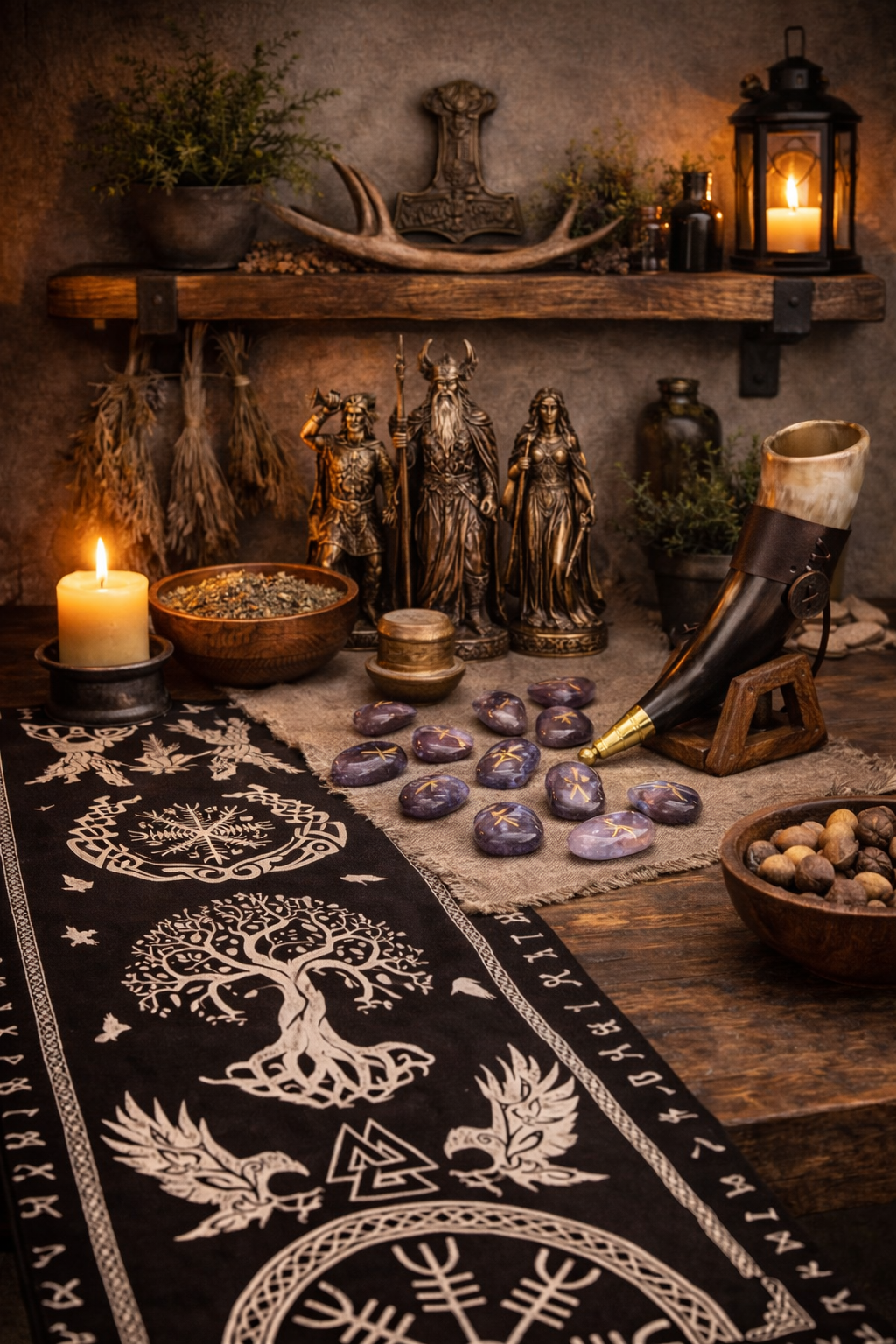
If you are building a Norse altar (or thinking about starting one) it can be difficult to know what you actually need. There is a lot of noise online. A lot of aesthetics. A lot of things being sold as “essential.”
This guide breaks it down clearly and practically. No gimmicks. No trend-based décor. Just solid, meaningful items that serve a purpose on a working Norse altar.
Now, before we talk about what to buy, we need to understand what an altar actually is.
Did the Norse have altars the way we picture them today? Not in the decorative sense. They did not build themed shelves filled with matching ornaments. They built places for action.
In the old Norse world, worship was practical and woven into daily life. It happened in halls, near the hearth, in forest clearings, at standing stones, beside burial mounds. A raised wooden platform. A sturdy table. A flat stone outdoors. The space itself was simple. What mattered was what happened there.
The word blót means offering. Not wishing. Not manifesting. Offering. It was an exchange. Something was given with intention - food, drink, thanks, honour. An altar was simply the place where that exchange occurred.
Today, many people feel pressure to create something elaborate. Social media shows dramatic setups layered with crystals, symbols, statues, and themed décor. It can feel as though your altar must look impressive to be meaningful. But historically, simplicity carried more weight than decoration.
A solid surface. A bowl for offerings. Fire for light and presence. A cup for drink. That was enough.
An altar in the Norse sense is not a display shelf. It is a working space. It is somewhere you return to. Somewhere you stand with awareness. Somewhere you give before you ask.
This guide focuses on practical, grounded items that serve a purpose. Natural materials. Solid construction. Tools you will actually use. Whether you are building your first altar or refining one you already have, the goal is not aesthetic perfection. The goal is intention.
Your altar does not need to be large. It does not need to be expensive. It does not need to look like anyone else’s. It needs to feel steady. It needs to feel honest.
Choose weight over trend. Choose wood and iron over plastic imitation. Choose items that will last and that you will return to again and again.
When built with purpose, an altar becomes more than a surface. It becomes a place of presence.
The Foundation - Choosing Your Altar Surface
Before anything else, you need a steady place to work from.
An altar is not defined by what sits on it. It is defined by the surface that holds it. In the old Norse world, this might have been a wooden platform in a hall, a raised stone outdoors, or a section of the hearth set aside for offering. The materials were natural. Solid. Built to last.
Today, your altar surface can be simple. A small wooden table. A sturdy side unit. A wall-mounted shelf if space is limited. It does not need to be large, but it should feel stable. When you place your hand on it, it should not wobble. When you set down a bowl or horn, it should not feel temporary.
Wood is the strongest and most natural choice. Oak, pine, acacia, or reclaimed timber all work well. Wood carries warmth and grounding. It feels steady. Avoid flimsy metal stands or lightweight decorative units that are built more for display than use.
Your altar is a working space. Choose something that can hold weight.
Recommended Wooden Altar Tables
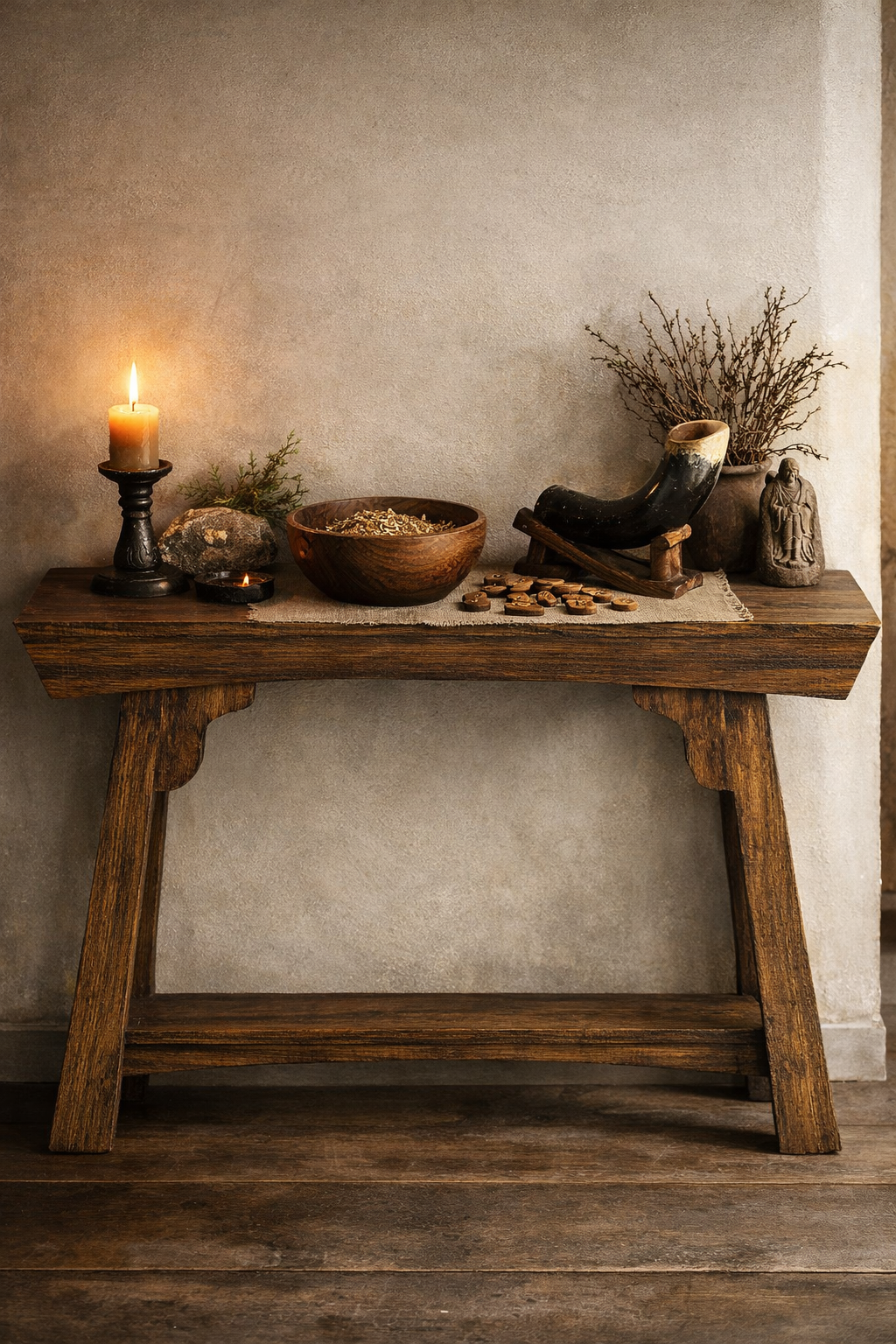
If you are starting from scratch, a simple wooden side table is often perfect. You do not need elaborate carving. Clean lines and solid material are enough.
Look for:
Solid wood rather than veneer
A stable, flat surface
Enough depth for a bowl and candle holder
Weight over lightweight foldable designs
You can browse good examples here:
Rustic reclaimed wood table (As pictured above)
Wall-Mounted Wooden Shelves (For Small Spaces)
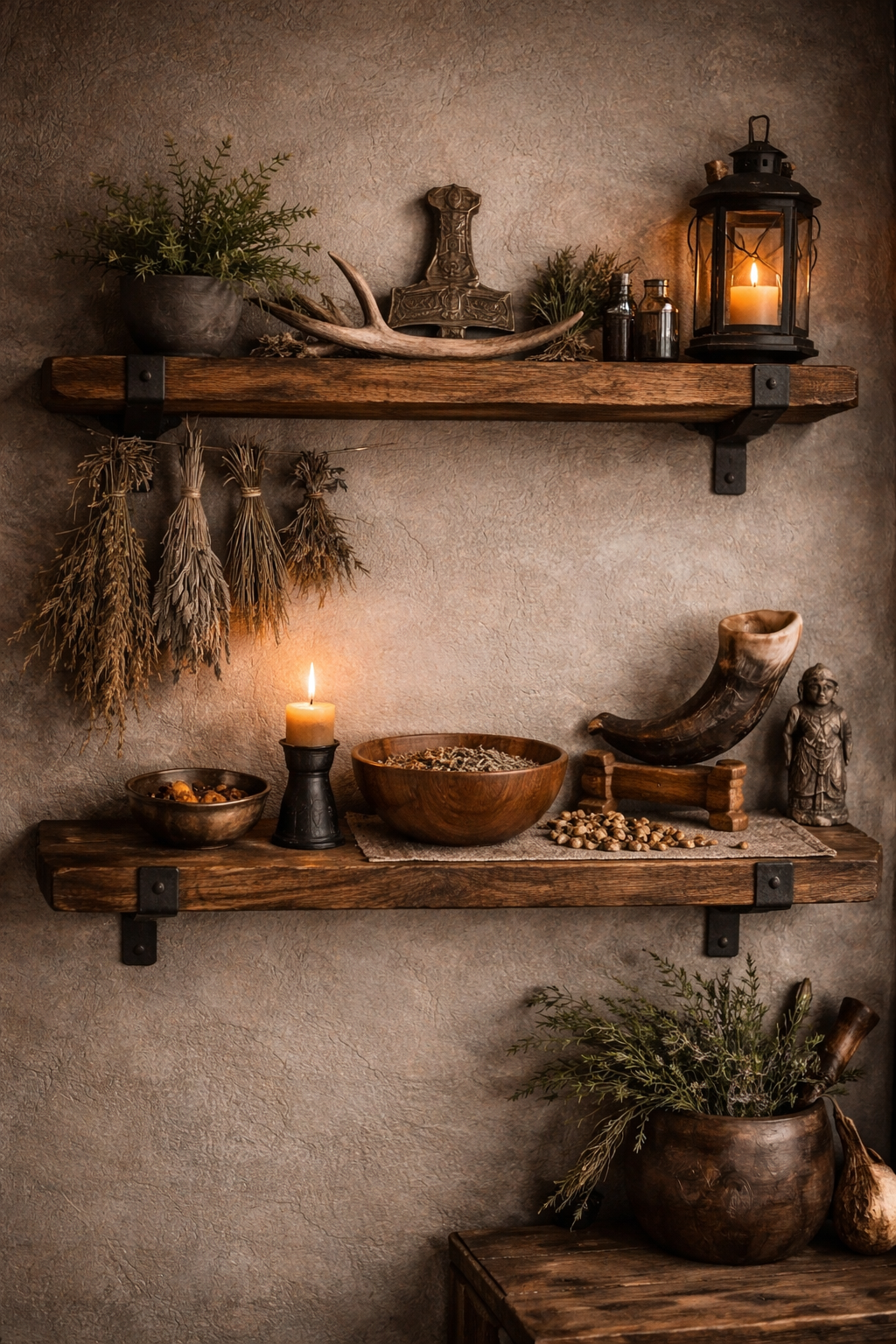
If space is limited, a wall shelf can serve as a compact altar. This works well in flats or shared homes where a full table is not practical.
Look for:
Thick wood shelves
Strong wall fixings
Minimal brackets (black iron works well)
Enough width to safely hold a bowl and candle
You can browse good examples here:
Rustic wooden wall shelf (as seen in the image)
Keep the shelf clear. Avoid overcrowding it. A small altar benefits from breathing space.
Outdoor Altar Surfaces
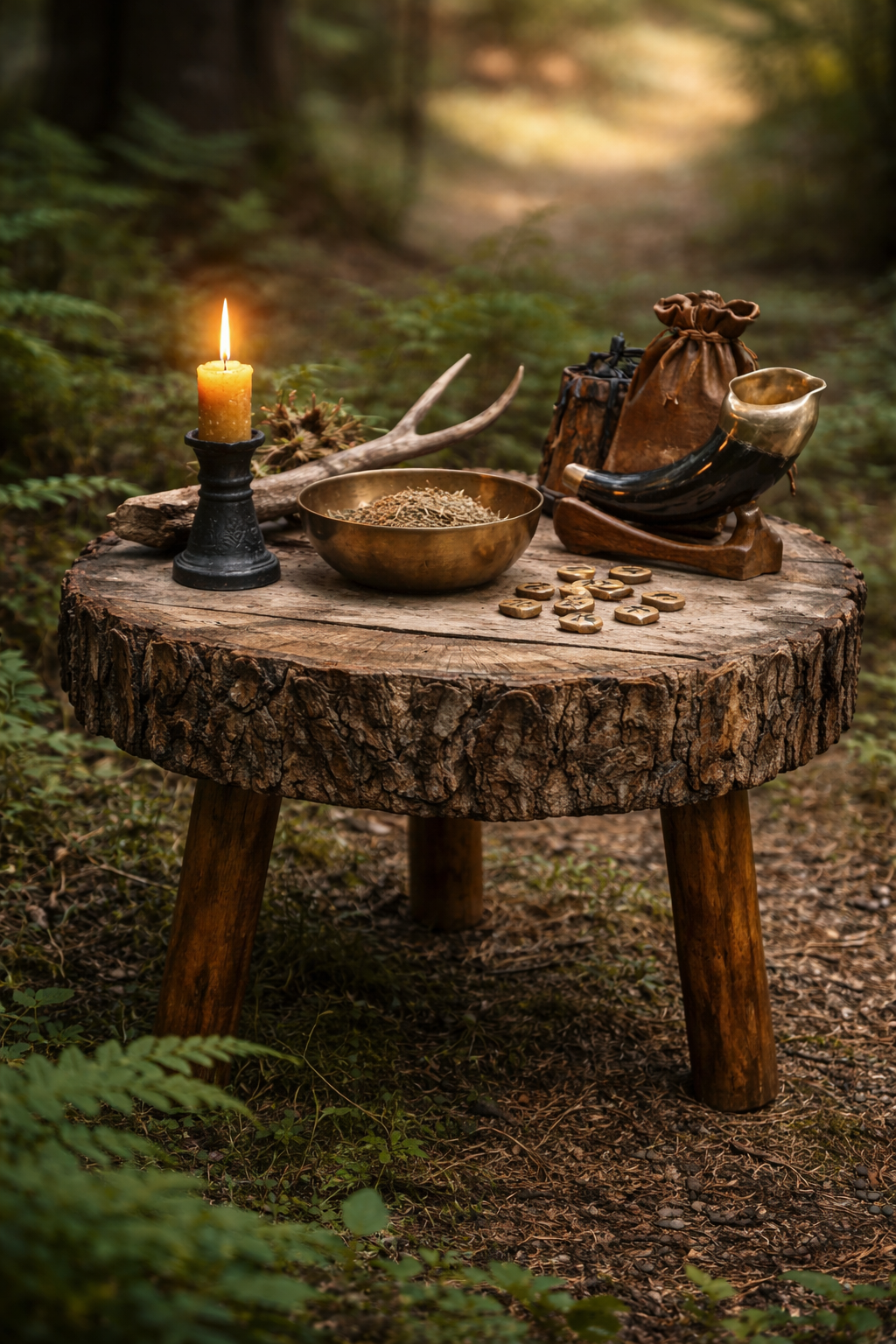
Historically, many offerings were made outside. If you have a garden, a wooden stump, flat stone, or small outdoor table can work beautifully.
Look for:
Weather-resistant wood
Heavy, stable construction
Simple outdoor side tables
Treated wood surfaces
You can browse good examples here:
Rustic outdoor plant stand (as seen in the image)
If placing an altar outdoors, ensure it is protected from excessive rain and wind. Stability matters even more outside.
A Practical Note
Your altar surface sets the tone. Choose strength over style. Choose natural materials over plastic imitation. Choose something you can return to regularly without adjusting or fixing each time.
A steady foundation makes everything else feel intentional.
The Offering Vessel - The Blót Bowl
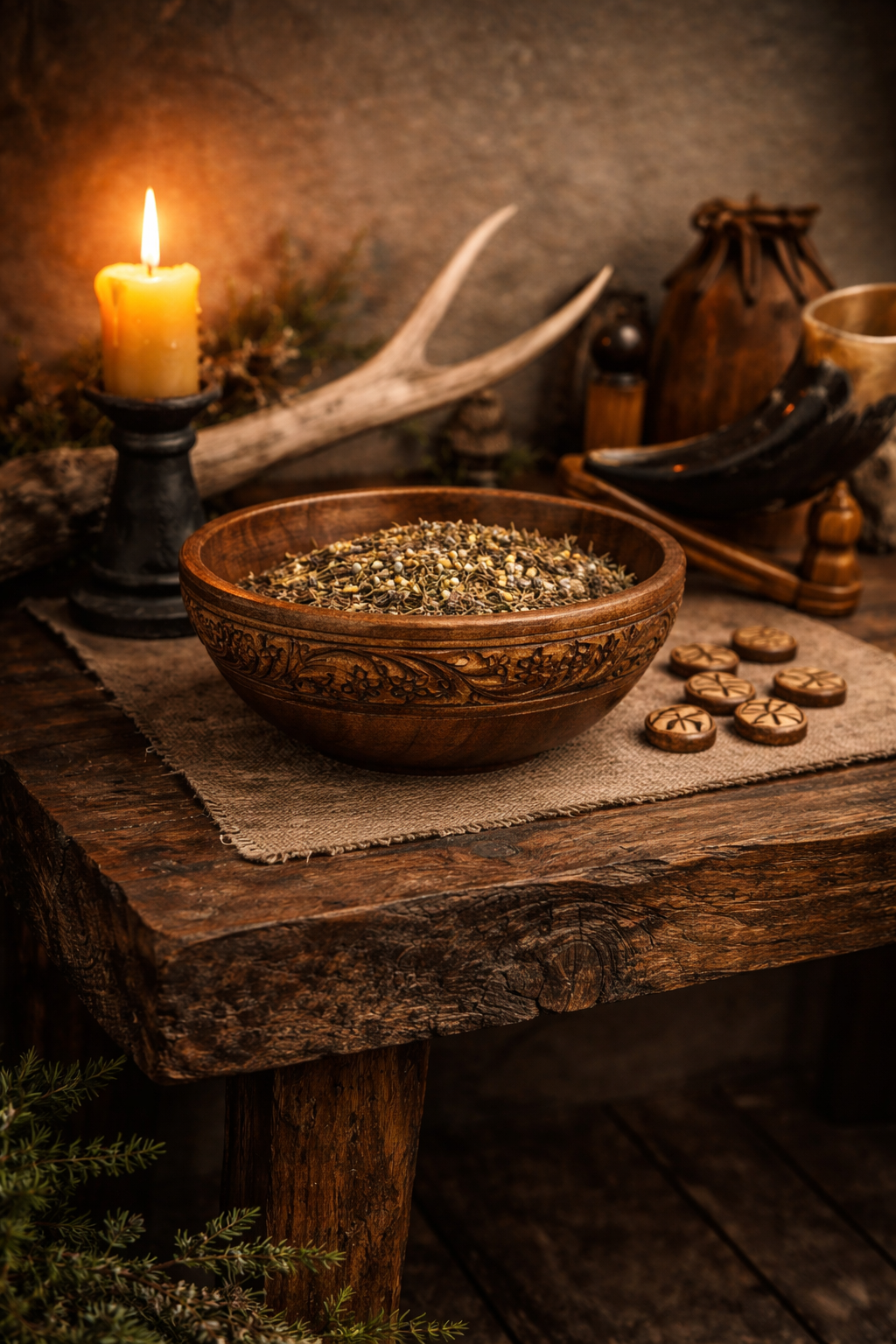
If an altar is a place of exchange, then the offering bowl is its centre.
The Old Norse word blót means offering. Food, drink, grain, bread, meat, ale -something of value given freely. Historically, offerings were placed in vessels before being shared, poured, or carried to sacred spaces. The bowl was not decorative. It was functional.
On a modern Norse altar, the offering bowl gives form to the act of giving. It is where bread is placed before a seasonal rite. Where a small measure of mead is poured. Where herbs, coins, or grain can rest before being returned to the land.
Choose something solid and natural. Wood, stone, or simple ceramic are ideal. Avoid lightweight plastic or heavily themed pieces. This is a working vessel, not an ornament.
It does not need to be large. It needs to feel steady.
Look for:
Solid wood rather than thin veneer
Thick ceramic with a stable base
Enough depth to safely hold liquid
Natural tones over bright glaze
You can browse good examples here:
Wooden offering bowl (as seen in the image)
A Practical Note
Offerings should not be left to rot indoors. Traditionally, they were shared, burned, buried, or returned to the land. Clean your bowl regularly and treat it with respect.
It is not about accumulation. It is about exchange.
Fire on the Altar
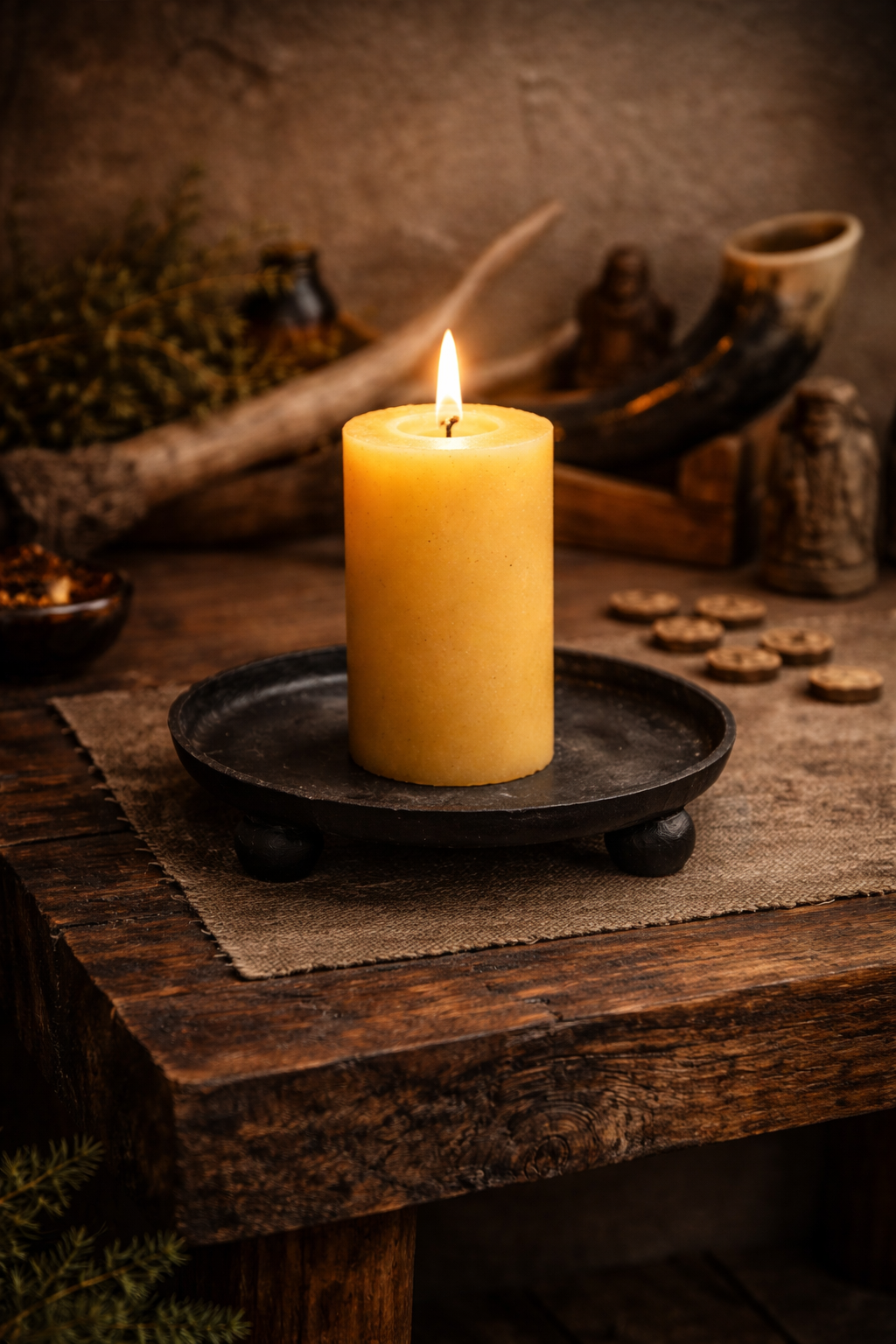
Fire is one of the oldest sacred presences in the Norse world.
Before temples, before carved idols, there was the hearth. Fire gave warmth, light, protection, and a place to gather. It was both practical and symbolic. It marked a boundary between the wild and the held space of the home.
On a modern altar, fire represents presence. It is not about scented intention candles or colour-coded spells. It is about light and awareness.
A single steady flame is enough.
Choose candle holders that feel solid and weighty. Iron, dark metal, or thick ceramic work well. Avoid lightweight decorative pieces that tip easily. Stability matters.
Beeswax candles are a strong choice. They burn cleanly, smell natural, and feel grounded. Paraffin works practically, but natural wax aligns better with a simple altar setting.
If using fire indoors, always prioritise safety. Keep flame away from fabrics and never leave it unattended.
Look for:
Iron or dark metal candle holders
Wide, stable base
Beeswax or natural wax candles
Simple pillar or taper designs
You can browse good examples here:
Iron candle holder (as seen in the image)
Beeswax pillar candles (as seen in the image)
A Practical Note
You do not need multiple candles burning at once. One steady flame is enough. Fire is not about excess. It is about presence.
The Ritual Cup or Drinking Horn
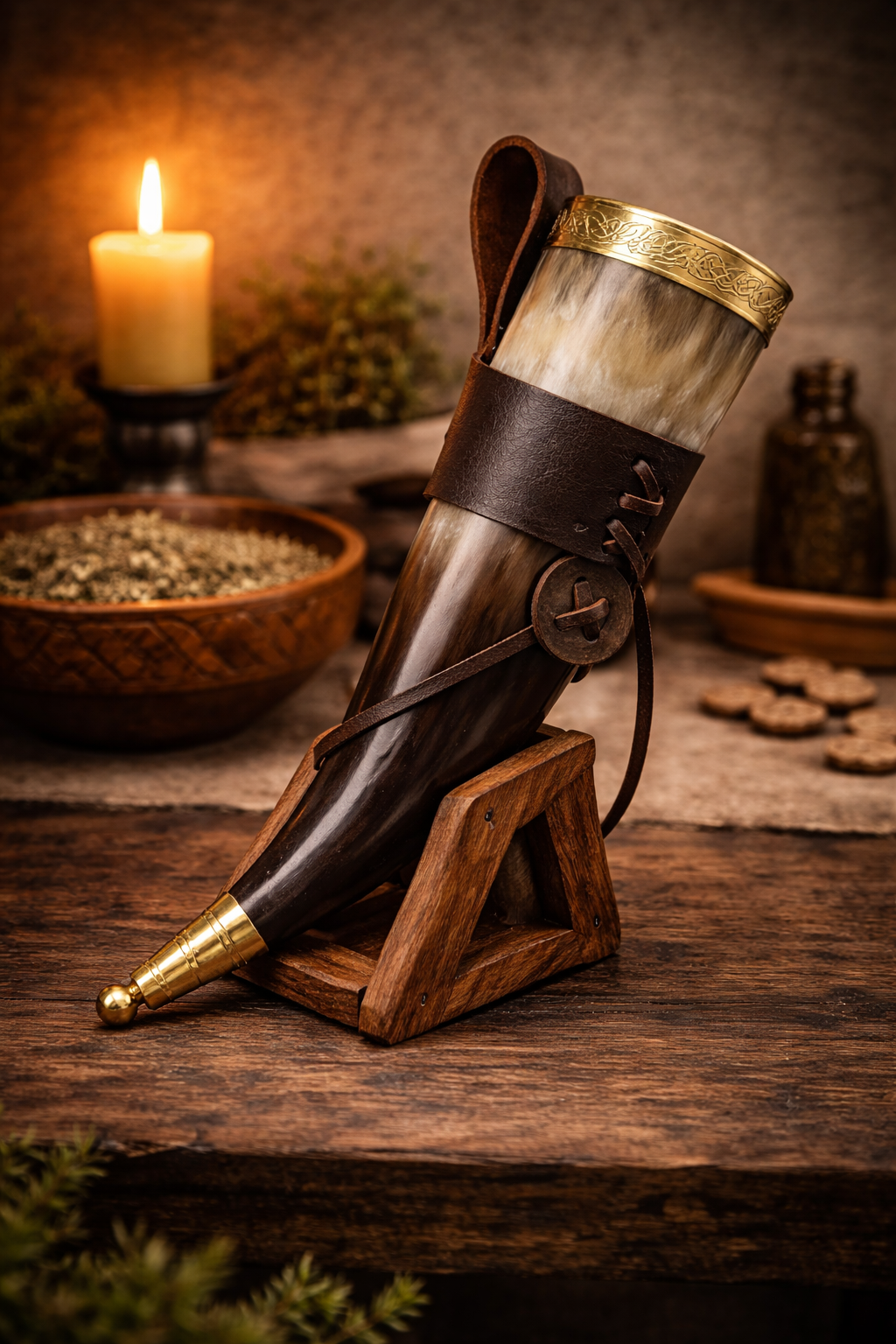
The ritual cup is tied to one of the most recognisable parts of Norse culture - shared drink.
In the old world, drink was not casual. It sealed oaths. It marked alliances. It honoured the gods. Mead, ale, or simple water could be raised in respect during blót or symbel. The vessel itself mattered because it carried what was being offered.
On a modern altar, a ritual cup or drinking horn represents offering and acknowledgement. It is used to pour a small libation before placing it outside. It can be raised in quiet thanks. It can sit empty as a reminder that exchange flows both ways.
You do not need an oversized decorative horn. Choose something practical and stable. If you plan to use it for liquid, stainless steel lining inside a horn is wise. It makes cleaning easier and protects the horn material. If you prefer something simpler, a solid wooden or metal cup works just as well.
The purpose is not display. It is use.
Look for:
Stainless steel lined drinking horns
Horns with a stable wooden stand
Solid wooden ritual cups
Simple metal goblets (iron or brass tone)
Avoid lightweight plastic imitation horns. They may look the part but lack durability and weight.
You can browse good examples here:
Stainless steel lined drinking horn with stand (as seen in the image)
A Practical Note
If you use your horn or cup for offerings, clean it regularly. Do not leave liquid sitting inside for long periods. Traditionally, offerings were poured out after being presented - returned to the earth rather than stored indoors.
The vessel is not about decoration. It is about participation.
Representation of the Gods
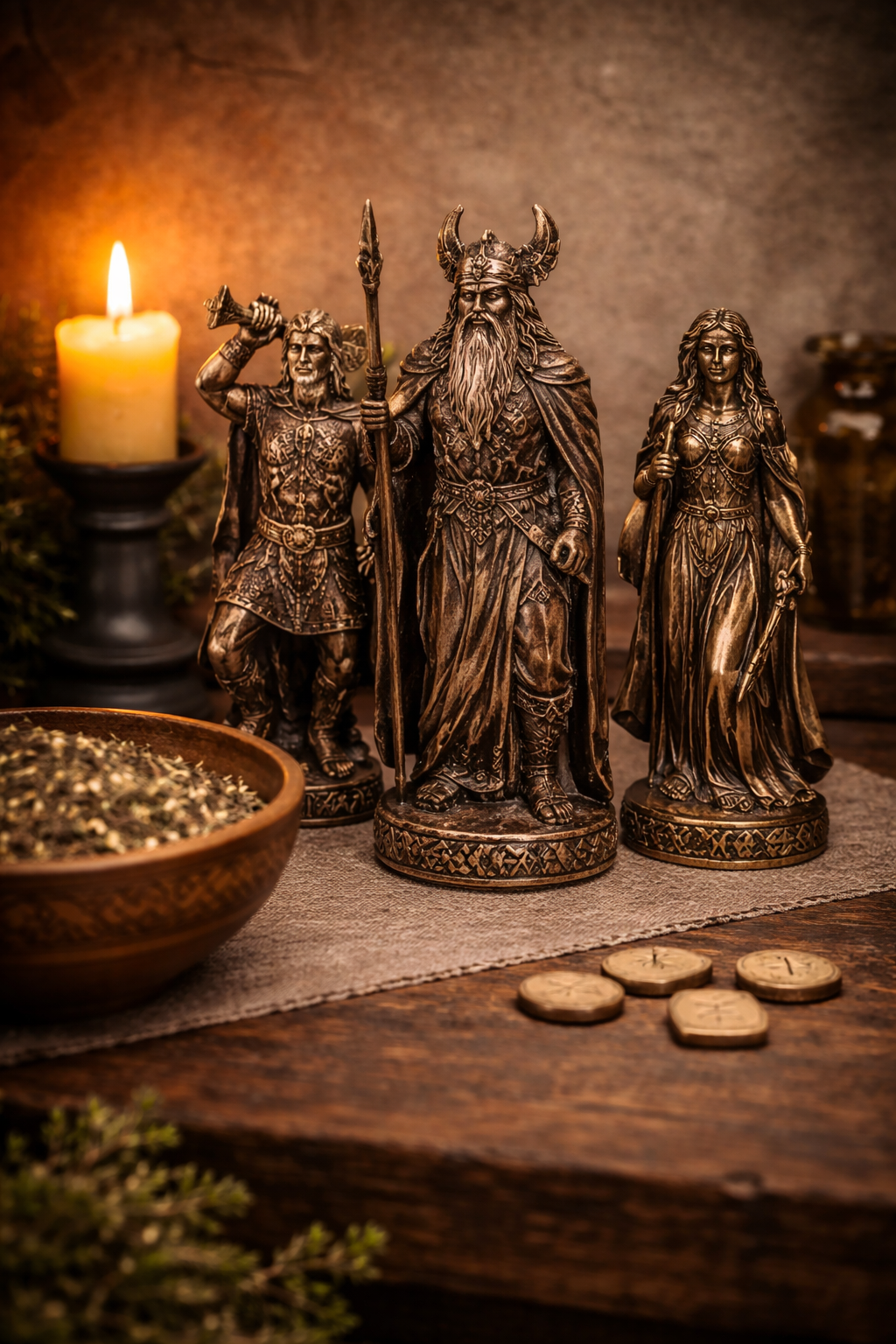
Many modern Norse altars include statues of the gods. Historically, this was not always the case.
In the pre-Christian Norse world, worship did not depend on permanent carved figures in every home. Sacred spaces existed in halls, groves, and at cult sites. Some larger temples may have housed images of gods, but everyday practice was often simpler - offerings, spoken words, and shared ritual mattered more than decoration.
That said, representation can help focus attention.
A statue, carving, or symbol on an altar can act as a visual anchor. It reminds you who you are addressing. It creates presence. For some, it strengthens connection. For others, it is unnecessary.
This is a personal choice.
If you do choose to include a representation, keep it simple. Solid materials feel more grounded than lightweight resin figures. Wood, stone, or dark metal tend to sit more naturally on a Norse altar.
You do not need an oversized dramatic piece. A small carving is often enough.
Options to Consider:
Small wooden carvings of Odin, Thor, or Freyja
Simple stone figurines
Rune carvings representing a specific deity
Symbolic items (a hammer for Thor, keys for Frigg, a spear symbol for Odin)
Avoid overly glossy, theatrical statues that feel more like film props than sacred objects. Subtlety often carries more weight.
You can browse good examples here:
12 statues Gods & Goddesses (as seen in the image)
A Practical Note
An altar does not require a statue to function. The gods are not confined to objects. Representation can support focus, but offering and intention are what matter most.
If you include a figure, treat it with respect. Keep the space around it clean and uncluttered.
A Rune Set for Guidance and Presence
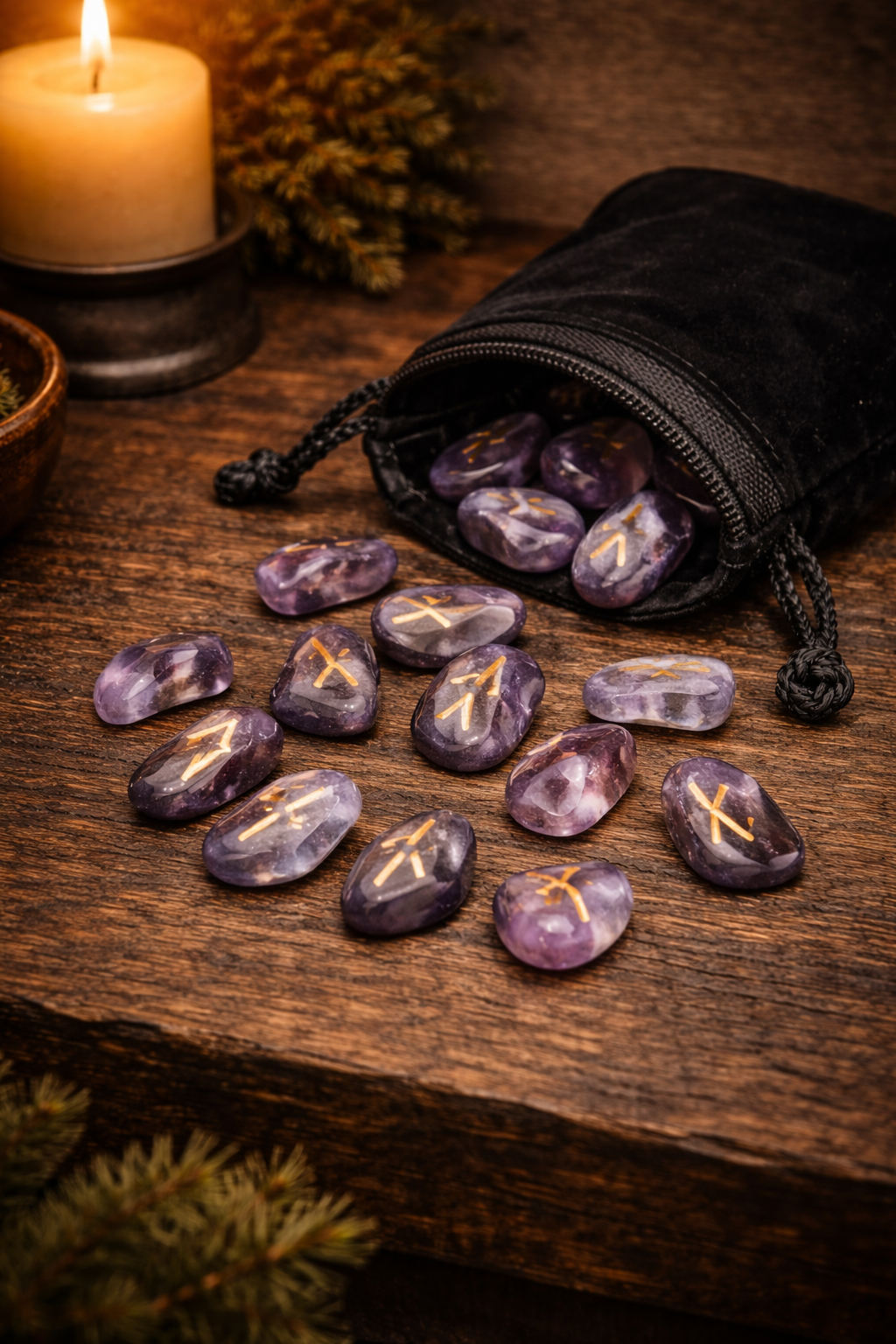
Runes were not decorative symbols. They were letters. They were sounds. They were tools of communication.
In the early Germanic and Norse world, runes appeared on weapons, stones, jewellery, memorial markers, and everyday objects. They carried meaning. They marked ownership. They recorded memory. Over time, they also became associated with divination and deeper symbolic understanding.
On a modern altar, a rune set can serve two purposes.
First, it can be practical. Runes may be drawn before a rite. A single rune can be placed beside the offering bowl. A question can be asked quietly and reflected upon.
Second, they act as presence. The runes represent the structure of the old language. They anchor the altar in something historically rooted rather than purely symbolic.
Wooden rune sets tend to feel the most grounded. They sit naturally on a wooden altar surface and age well over time. Stone rune sets feel heavier and more permanent. Both are valid choices.
What matters is that you learn them. An unused rune set is simply ornament. A known rune set becomes a tool.
Look for:
Elder Futhark rune sets (24 runes)
Solid wood rather than thin plywood
Clearly carved symbols, not printed paint
A simple storage pouch
Avoid sets with symbols that are not historically part of the Elder Futhark unless you understand why they are included.
You can browse good examples here:
Stone rune set with storage pouch (as seen in picture)
A Practical Note
You do not need to cast runes daily. You do not need elaborate spreads. One rune drawn with attention can be enough.
Runes are not props. They are a system. Learn them slowly and use them with respect.
Altar Cloths and Natural Textiles
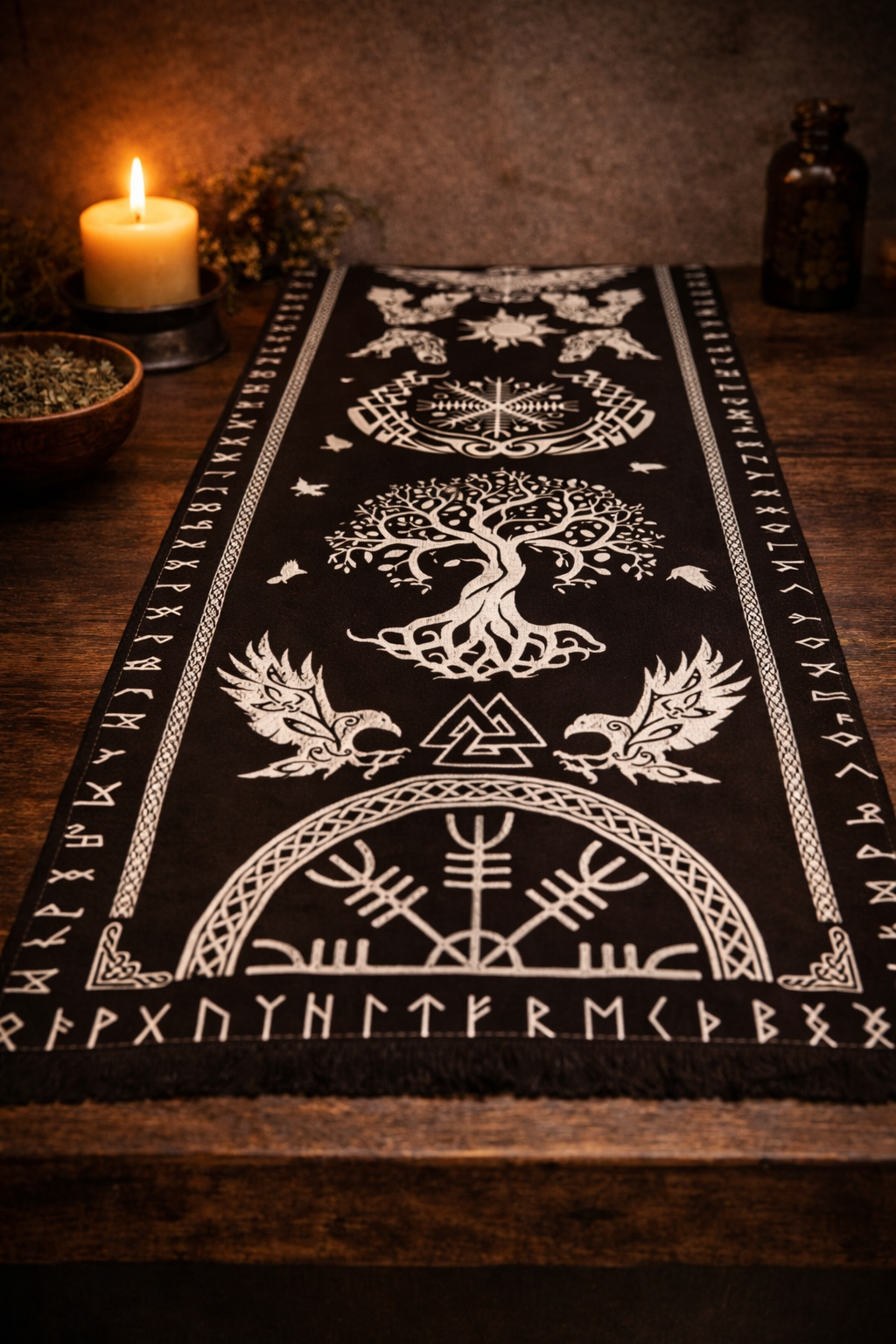
An altar does not require a cloth. A bare wooden surface is perfectly valid.
However, a simple textile can help define the space. It creates a visual boundary. It softens the surface. It marks the altar as intentional rather than accidental.
Historically, natural materials were the norm. Linen, wool, and woven fabrics were part of everyday life in the Norse world. Synthetic materials did not exist. If you choose to use a cloth, keep it natural and uncomplicated.
Avoid overly printed “Viking” designs or loud symbolic patterns unless they genuinely mean something to you. A plain cloth often carries more presence than one covered in imagery.
Neutral colours work well. Off-white, deep green, brown, charcoal, or muted red can all sit naturally on a wooden altar. The goal is not decoration. It is grounding.
A cloth should frame the altar, not overwhelm it.
Look for:
Linen table runners
Plain wool cloths
Natural cotton with minimal pattern
Earth-toned fabric
Choose weight over thin decorative fabric. A slightly heavier cloth tends to sit better and feel more substantial.
You can browse good examples here:
Table runner (As seen in the image)
A Practical Note
A cloth should be kept clean. If it becomes stained from offerings, wash or replace it. The altar is a working space. Care for it as you would any space of importance.
What You Do Not Need on a Norse Altar
It is easy to believe that you must buy everything. Social media, online shops and themed collections can make it seem as though a “proper” altar requires layers of decoration and constant additions. It does not.
The historical Norse world was not built on aesthetic shopping lists. It was built on practicality. Most offerings were simple. Most ritual acts were direct. There was no expectation of elaborate carved furniture or shelves filled with ornaments. Sacred space was defined by action and intention, not excess.
An altar does not need dozens of statues. It does not need plastic “Viking” decorations. It does not need symbols you cannot explain or objects you never actually use. More items do not make a space more powerful. In many cases, they only create distraction.
Clarity is stronger than clutter.
A wooden surface. A bowl for offering. A source of fire. A cup for drink. Perhaps a single representation of a god you honour. That is enough. Anything beyond that should have purpose.
It is better to build slowly. Add only what you use. Let your altar reflect your real practice rather than a trend. Over time, the space will shape itself naturally through repetition and meaning.
The old world valued usefulness. Let your altar do the same.
Build With Intention, Not Impulse
An altar is not something you finish in a weekend.
It grows.
It changes as your understanding deepens. It shifts as seasons turn. Objects move. Some are removed. Others are added slowly, with purpose.
There is no single correct layout. There is no required aesthetic. What matters is that the space reflects your relationship with the gods, with offering, and with your own discipline.
If you are just beginning, start small. A stable surface. A bowl. A candle. A cup. That alone is enough to begin honouring.
If you have practised for years, you may already know what feels necessary and what does not. Let your altar remain a working space rather than a display. Let it show signs of use. That is not disorder. That is life.
Buy carefully. Choose quality over quantity. Avoid novelty for the sake of appearance. When you do purchase something, ask yourself whether it will actually be used in ritual, or whether it simply looks the part.
An altar should feel steady.
It should feel intentional.
It should feel like something that could remain in place for years without needing constant replacement.
Build slowly. Learn deeply. Honour properly.
Everything else is secondary.